
This study investigates the thermal runaway propagation, combustion dynamics, and fire suppression effectiveness of 100Ah LiFePO4 battery modules under external heating conditions. A 16S1P module configuration with natural cooling was subjected to controlled thermal abuse testing, followed by comparative analysis of perfluorohexanone and hot aerosol extinguishing agents.
1. Experimental Methodology
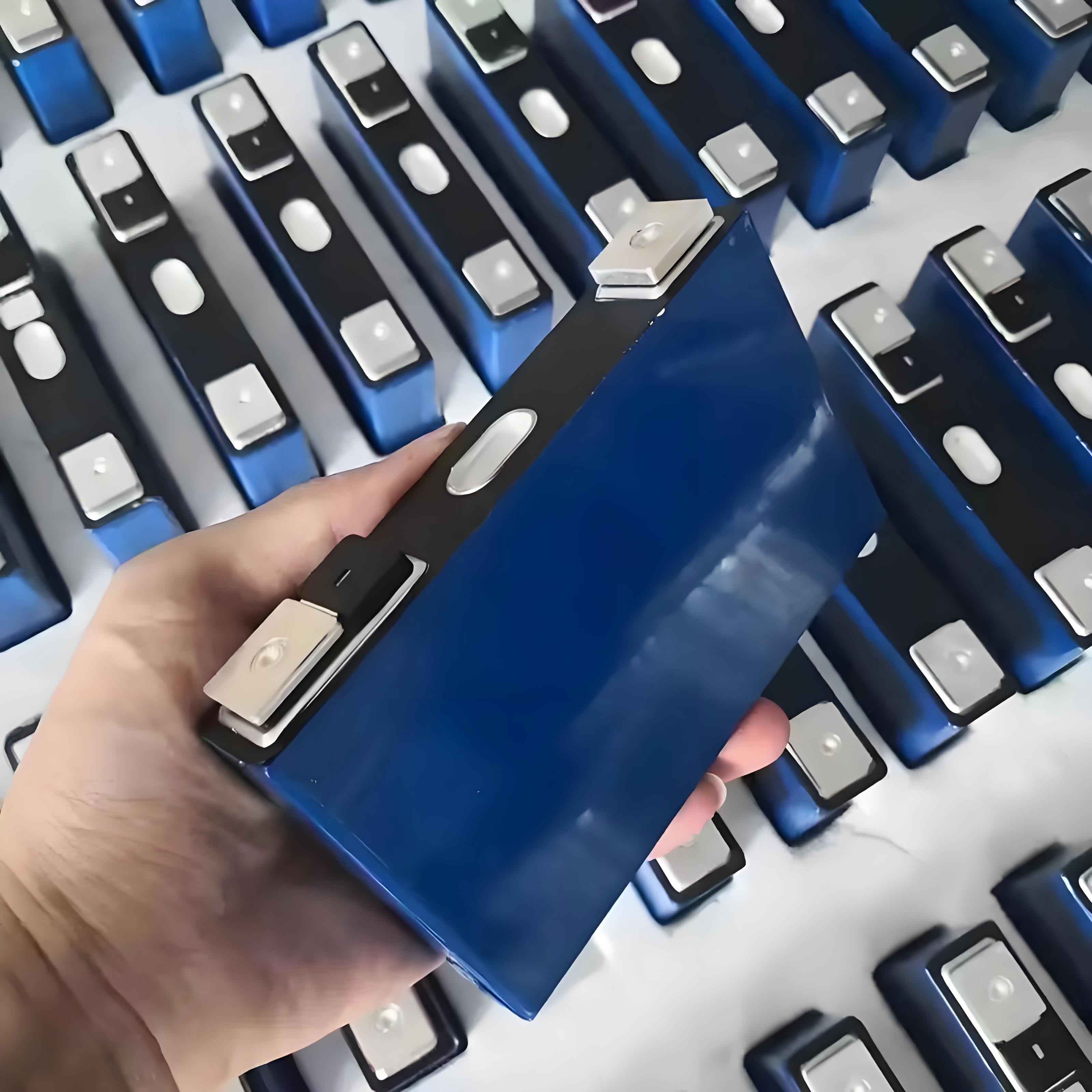
The experimental setup consisted of:
- Module configuration: 16 series-connected prismatic LiFePO4 cells (3.2V, 100Ah)
- Heating system: 675W ceramic plate between cells 12-13
- Monitoring: 15kV ignition source, K-type thermocouples, and voltage sensors
- Suppression systems: 15kg perfluorohexanone (PFH) and 30g KNO₃-based hot aerosol
Key parameters were recorded using:
$$
T_{\text{max}} = \max(T_1, T_2, \ldots, T_{16}) \quad (1)
$$
$$
\Delta t_{\text{TR}} = t_{\text{ignition}} – t_{\text{initial\; venting}} \quad (2)
$$
2. Thermal Runaway Characteristics
The LiFePO4 battery module exhibited distinct thermal behavior:
| Time (min) | Event | Temperature (°C) |
|---|---|---|
| 61.7 | First cell venting | 225 ± 15 |
| 63.1 | Second cell venting | 287 ± 20 |
| 69.8 | Thermal runaway propagation | 523 ± 25 |
| 124.7 | External ignition | 647 ± 30 |
The thermal propagation followed:
$$
\frac{dT}{dt} = \alpha e^{\beta t} \quad (3)
$$
Where α = 0.25 ± 0.03 s⁻¹ and β = 0.018 ± 0.002 K⁻¹ for LiFePO4 cells.
3. Fire Suppression Performance
Comparative analysis revealed distinct suppression mechanisms:
| Parameter | Perfluorohexanone | Hot Aerosol |
|---|---|---|
| Extinguishing Time (s) | 9 ± 2 | 1 ± 0.5 |
| Temperature Drop (°C) | 78 ± 12 | ≤ 15 |
| Reignition Probability | 83% | 7% |
| Electrolyte Fire Control | Limited | Effective |
The suppression efficiency (η) can be expressed as:
$$
\eta = \frac{t_{\text{control}} – t_{\text{extinguish}}}{t_{\text{total}}} \times 100\% \quad (4)
$$
For LiFePO4 modules, hot aerosol achieved η = 92 ± 3% compared to PFH’s η = 68 ± 5%.
4. Thermal Runaway Propagation Dynamics
The critical parameters governing LiFePO4 module failure include:
$$
Q_{\text{gen}} = \sum_{i=1}^{n} m_i c_{p,i} \Delta T_i \quad (5)
$$
$$
P_{\text{elec}} = V_{\text{short}} \times I_{\text{arc}} \times \Delta t_{\text{short}} \quad (6)
$$
Where electrical shorts contributed 58 ± 7% of total ignition energy in tested modules.
5. Multi-phase Suppression Strategy
Optimal fire control requires combined approaches:
- Phase 1: Rapid flame suppression (t ≤ 5s)
- Phase 2: Thermal inertia reduction (5s < t ≤ 60s)
- Phase 3: Long-term inerting (t > 60s)
The required suppression agent mass (Mreq) for LiFePO4 modules follows:
$$
M_{\text{req}} = k \times \left( \frac{V_{\text{module}}}{T_{\text{initial}}} \right)^{0.5} \quad (7)
$$
Where k = 0.45 ± 0.05 g·K0.5/L for PFH and k = 0.28 ± 0.03 g·K0.5/L for hot aerosol.
6. Critical Findings
Key conclusions for LiFePO4 battery safety management:
- Thermal runaway initiation threshold: 225 ± 15°C
- Maximum combustion temperature: 647 ± 30°C
- Required suppression concentration: 12 ± 2% v/v for PFH
- Optimal aerosol deployment: ≤ 3s post-ignition detection
This research demonstrates that while both suppression agents effectively control LiFePO4 module fires, integrated solutions combining rapid flame suppression and sustained cooling are essential for complete thermal runaway mitigation. Future work should address electrolyte fire management and multi-module interaction effects in full-scale energy storage systems.