
Introduction
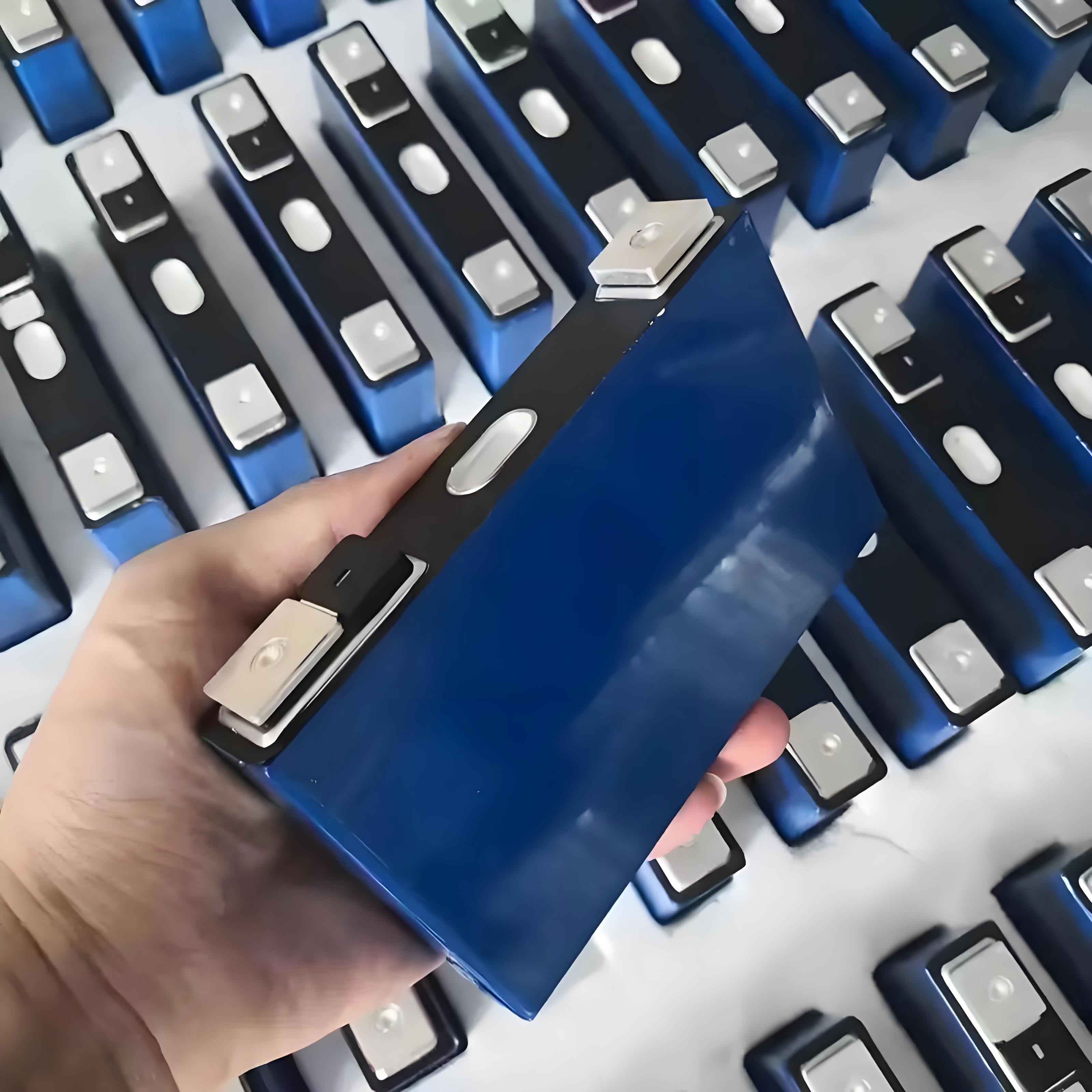
The rapid development of lithium-ion battery energy storage systems, particularly LiFePO4 (lithium iron phosphate) batteries, plays a pivotal role in achieving global carbon neutrality goals. LiFePO4 batteries dominate the market due to their superior thermal stability, higher thermal runaway initiation temperatures, and lower peak thermal runaway temperatures compared to ternary lithium batteries. However, safety incidents, such as thermal runaway-induced fires, remain critical challenges. This study investigates the combustion dynamics of a 100Ah LiFePO4 battery module under external heating and evaluates the efficacy of two fire extinguishing agents: perfluorohexane and hot aerosol.
Experimental Methodology
1. Battery Module Configuration
The test object was a 16-series, 1-parallel LiFePO4 battery module with a capacity of 100Ah. Key specifications include:
- Dimensions: 470 mm × 481 mm × 155 mm
- Weight: 47.3 kg
- Cell configuration: Natural cooling
- Heating method: Ceramic heating plate (675W) between cells 12 and 13.
2. Fire Suppression Systems
Two extinguishing agents were tested:
- Perfluorohexane:
- Nozzle diameter: 3.4 mm
- Supply pressure: 1.2 MPa
- Total agent mass: 15 kg
- Hot Aerosol:
- Agent composition: Potassium nitrate, melamine, phenolic resin
- Agent mass: 30 g
3. Experimental Procedure
- Pre-test conditions:
- Ambient temperature: 31°C
- Humidity: 50%
- State of charge (SOC): 100%
- Heating phase: External heating until thermal runaway initiation.
- Fire ignition: Electronic igniter triggered after voltage drop in non-heated cells.
- Suppression phase: Fire extinguishers activated 10s after flame appearance.
Combustion Characteristics of LiFePO4 Battery Modules
1. Thermal Runaway Dynamics
Thermal runaway in LiFePO4 batteries follows distinct stages:
| Time (min:s) | Event | Temperature (°C) |
|---|---|---|
| 61:42 | First cell venting | 225 |
| 102 | Second cell venting | 300 |
| 424 | Third cell thermal runaway | 523 |
| 1539 | Electrical short-circuit-induced fire | 450 |
Key observations:
- Peak temperature: 523°C at the heating surface.
- Ignition source: Electrical short-circuit due to insulation failure.
- Combustion duration: 1644 seconds (27.4 minutes).
2. Temperature Evolution
The temperature profile during thermal runaway is modeled using the Arrhenius equation:dTdt=α⋅e−EaRTdtdT=α⋅e−RTEa
Where:
- TT: Temperature (K)
- tt: Time (s)
- αα: Pre-exponential factor
- EaEa: Activation energy (J/mol)
- RR: Universal gas constant (8.314 J/mol·K)
The experimental data (Figure 1) shows rapid temperature escalation post-short-circuit, with heat propagation rates exceeding 15°C/s.
Fire Suppression Efficiency
1. Perfluorohexane Performance
- Extinguishing time: 9 seconds.
- Cooling capacity: Maximum temperature drop = 78°C.
- Limitations:
- Re-ignition occurred 62s post-suppression.
- Ineffective against electrolyte leakage fires.
Table 1: Perfluorohexane vs. Hot Aerosol
| Parameter | Perfluorohexane | Hot Aerosol |
|---|---|---|
| Extinguishing time (s) | 9 | 1 |
| Cooling capacity (°C) | 78 | <10 |
| Re-ignition risk | High | None |
| External fire control | Poor | Poor |
2. Hot Aerosol Performance
- Extinguishing time: 1 second.
- Mechanism: Radical scavenging via ionized particles:H++OH−→H2OH++OH−→H2O
- Limitations: Minimal cooling effect; thermal runaway propagation unaffected.
Critical Findings
- LiFePO4 Battery Thermal Runaway:
- Peak temperatures exceed 500°C, driven by internal short circuits.
- Electrolyte leakage exacerbates external fires.
- Fire Suppression Challenges:
- No agent fully halts thermal runaway.
- External electrolyte fires require supplementary suppression strategies.
- Design Recommendations:
- Hybrid suppression systems combining rapid-fire knockdown (hot aerosol) and prolonged cooling (perfluorohexane).
- Enhanced module sealing to prevent electrolyte leakage.
Mathematical Modeling of Fire Dynamics
1. Heat Transfer Analysis
The heat flux (QQ) during thermal runaway is expressed as:Q=k⋅A⋅ΔTΔxQ=k⋅A⋅ΔxΔT
Where:
- kk: Thermal conductivity (W/m·K)
- AA: Cross-sectional area (m²)
- ΔTΔT: Temperature gradient (°C)
- ΔxΔx: Thickness (m)
2. Fire Propagation Rate
The flame spread velocity (vv) correlates with oxygen concentration (CO2CO2):v=β⋅CO20.5v=β⋅CO20.5
Where ββ is a material-specific constant.
Conclusion
LiFePO4 battery modules exhibit intense thermal runaway behavior under external heating, with peak temperatures exceeding 500°C. While hot aerosol outperforms perfluorohexane in extinguishing speed and re-ignition prevention, neither agent fully mitigates thermal runaway or external electrolyte fires. Future fire protection systems must integrate multi-agent strategies and module redesigns to address these limitations.