
The ever-increasing consumption of fossil fuels and the urgent need for renewable energy integration have propelled electrochemical energy storage devices, particularly the lithium-ion battery, to the forefront of modern technology. A lithium-ion battery offers a compelling combination of high energy density, long cycle life, and environmental benignity, making it indispensable for portable electronics, electric vehicles, and grid-scale storage. However, the performance ceiling of conventional graphite anodes, with their limited theoretical capacity (372 mAh g-1) and moderate rate capability, has driven intensive research into alternative high-capacity materials. Among the various candidates, cobalt-based compounds, including oxides, sulfides, phosphides, and selenides, have emerged as a highly promising class of anode materials for the next generation of lithium-ion batteries.
These compounds offer distinct advantages: cobalt oxides exhibit high catalytic activity; cobalt sulfides boast high theoretical capacities; cobalt phosphides demonstrate superior thermal stability; and cobalt selenides possess high intrinsic electrical conductivity. Compared to graphite, they generally deliver significantly higher specific capacities. Nonetheless, their practical deployment is hampered by intrinsic challenges, most notably severe volume expansion during lithiation/delithiation and relatively poor electronic conductivity, leading to rapid capacity fade and unstable electrochemical performance. This article provides a comprehensive, first-person perspective on the crystal structures, inherent lithium storage mechanisms, persistent challenges, and the recent, innovative modification strategies employed to unlock the full potential of cobalt-based compounds as high-performance anodes for lithium-ion batteries.
Fundamental Aspects of Cobalt-based Anode Materials
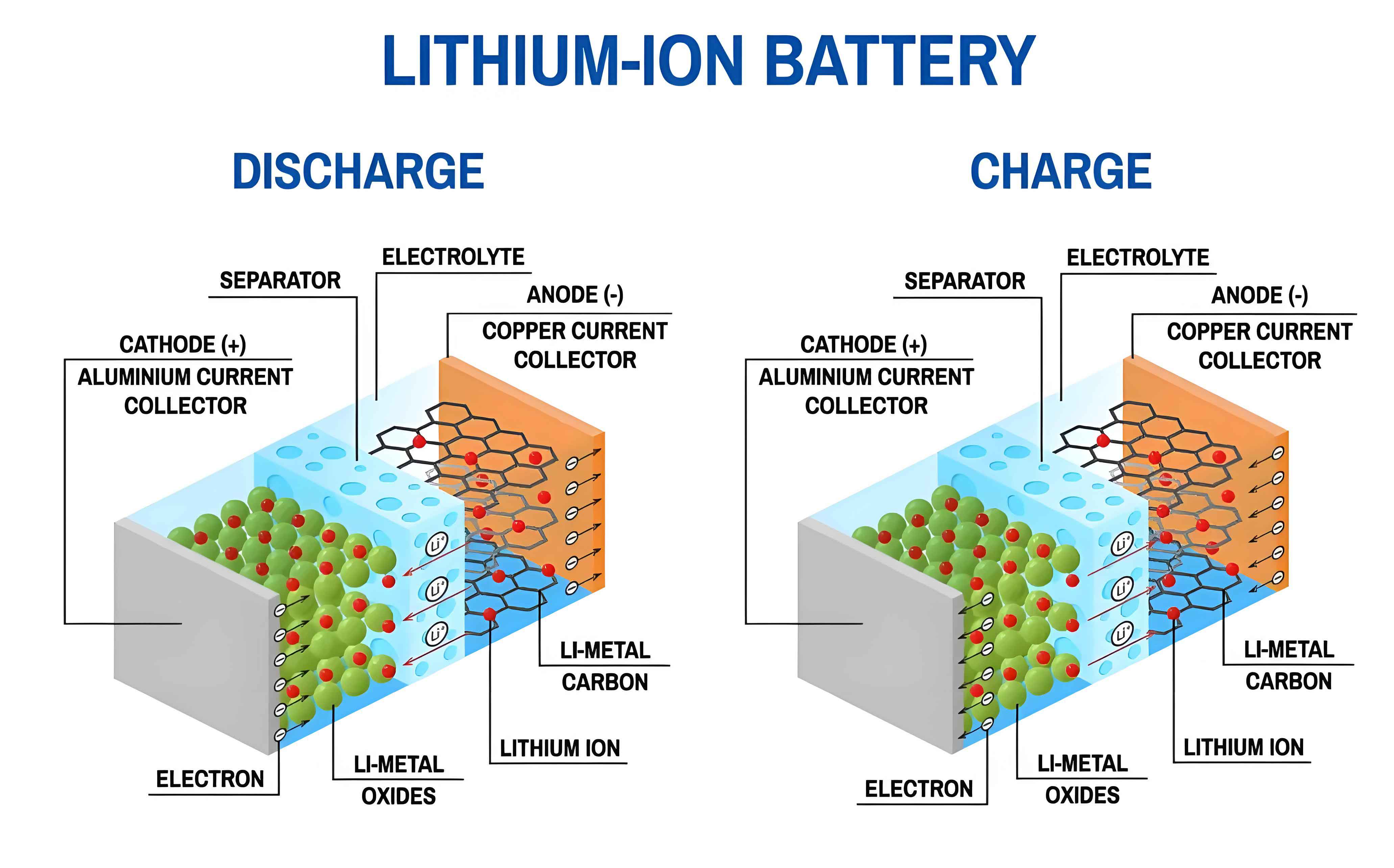
The electrochemical performance of any electrode material is fundamentally rooted in its crystal structure and the associated reaction mechanism with lithium. Cobalt-based compounds typically undergo a conversion reaction upon cycling, which is distinct from the intercalation mechanism of graphite. This reaction involves the complete reduction of the transition metal cation and the simultaneous formation of lithium compounds (e.g., Li2O, Li2S), offering the potential for multi-electron transfer and thus high capacity. The general form of this conversion reaction for a cobalt compound CoxXy (where X = O, S, P, Se) can be represented as:
$$\text{Co}_x\text{X}_y + (n)\text{Li}^+ + (n)e^- \rightleftharpoons x\text{Co} + y\text{Li}_n\text{X}$$
However, this profound structural rearrangement is a double-edged sword, being the source of both high capacity and the detrimental volume changes.
Cobalt Oxide (Co3O4)
Cobalt oxide, particularly in the form of Co3O4, is one of the most studied conversion anodes. It crystallizes in a normal spinel structure (space group Fd-3m). In this lattice, Co2+ ions occupy tetrahedral sites, while Co3+ ions reside in octahedral sites within a cubic close-packed array of oxygen anions. This structure provides a robust framework, but the conversion reaction is drastic:
$$\text{Co}_3\text{O}_4 + 8\text{Li}^+ + 8e^- \rightleftharpoons 3\text{Co} + 4\text{Li}_2\text{O}$$
With a high theoretical capacity of 890 mAh g-1, it is attractive. However, the low intrinsic electronic conductivity and the massive volume change associated with the formation and decomposition of Li2O lead to particle pulverization, loss of electrical contact, and consequently, poor cycle life and rate performance in a standard lithium-ion battery configuration.
Cobalt Sulfide (CoS2)
Cobalt disulfide (CoS2) adopts a pyrite-type crystal structure (space group Pa-3). In this configuration, cobalt atoms sit at the centers of octahedra formed by sulfur atoms at the vertices. This structure allows for a favorable conversion reaction:
$$\text{CoS}_2 + 4\text{Li}^+ + 4e^- \rightleftharpoons \text{Co} + 2\text{Li}_2\text{S}$$
Delivering a theoretical capacity of about 870 mAh g-1, CoS2 is a strong contender. The challenge lies in the polysulfide shuttle effect—a phenomenon where intermediate lithium polysulfides dissolve into the electrolyte—and the large volume expansion that destabilizes the electrode structure over repeated cycles in a lithium-ion battery, leading to rapid capacity decay.
Cobalt Phosphide (CoP)
Cobalt phosphide exhibits several stoichiometries (e.g., CoP, Co2P), with CoP being a prominent example. It often crystallizes in an orthorhombic structure (space group Pnma). The CoP6 octahedra share faces, creating a unique network. Its lithium storage involves conversion, but the reaction pathway can be complex, potentially involving intermediate phases:
$$\text{CoP} + 3\text{Li}^+ + 3e^- \rightarrow \text{Co} + \text{Li}_3\text{P} \quad \text{or} \quad \text{CoP} + \text{Li}^+ + e^- \rightarrow \text{Co} + \text{LiP}$$
With a theoretical capacity reaching 894 mAh g-1 and a lower operating voltage plateau compared to oxides, it improves energy density. However, the significant volume change during the phase transformation between CoP and Li3P remains a critical issue for sustained cycling in a high-performance lithium-ion battery.
Cobalt Selenide (CoSe2)
Similar to its sulfide counterpart, CoSe2 commonly possesses a pyrite-type structure. The larger ionic radius of Se2- compared to S2- results in a more open and conductive framework. The conversion reaction proceeds as:
$$\text{CoSe}_2 + 4\text{Li}^+ + 4e^- \rightleftharpoons \text{Co} + 2\text{Li}_2\text{Se}$$
While the intrinsic electronic conductivity is superior, the theoretical capacity based on this reaction is lower (~389 mAh g-1 for CoSe). Furthermore, the volume changes, though sometimes partially mitigated by the softer lattice, and the potential for selenium dissolution still pose challenges to the long-term stability of a lithium-ion battery employing these anodes.
| Compound | Crystal Structure | Theoretical Capacity (mAh g-1) | Primary Reaction | Main Challenges |
|---|---|---|---|---|
| Co3O4 | Spinel (Cubic) | 890 | Co3O4 + 8Li+ + 8e– ⇌ 3Co + 4Li2O | Low conductivity, large volume expansion. |
| CoS2 | Pyrite (Cubic) | ~870 | CoS2 + 4Li+ + 4e– ⇌ Co + 2Li2S | Polysulfide shuttle, volume change. |
| CoP | Orthorhombic | 894 | CoP + 3Li+ + 3e– → Co + Li3P | Significant phase change volume strain. |
| CoSe2 | Pyrite (Cubic) | ~389 (for CoSe) | CoSe2 + 4Li+ + 4e– ⇌ Co + 2Li2Se | Lower capacity, volume change, Se dissolution. |
Advanced Modification Strategies for Enhanced Lithium-ion Battery Performance
To overcome the aforementioned limitations, a multitude of sophisticated modification strategies have been developed. These approaches aim to engineer the material’s architecture at the nano- and micro-scale, enhance its electronic and ionic transport properties, and mechanically buffer volume changes, thereby transforming the electrochemical fate of cobalt-based anodes in a lithium-ion battery.
1. Nanostructuring and Composite Engineering with Carbon Materials
This is the most prevalent and effective strategy. Integrating cobalt-based compounds with conductive carbon matrices (graphene, carbon nanotubes, porous carbon) addresses both conductivity and volume expansion issues synergistically.
- Graphene Encapsulation: Wrapping Co3O4 nanoparticles or quantum dots with graphene sheets creates a flexible, conductive cage. The graphene layer not only facilitates rapid electron transfer but also applies a confining force that counteracts the outward expansion of the active material during lithiation. This “anti-volume expansion” effect is crucial for maintaining electrode integrity over hundreds of cycles in a lithium-ion battery.
- Three-Dimensional Conductive Networks: Constructing hybrids where CoS2 nanoparticles are anchored within a 3D interconnected network of reduced graphene oxide (rGO) and carbon nanotubes (CNTs) provides multiple benefits. The 3D scaffold offers an abundance of active sites, shortens Li+ diffusion pathways, and most importantly, acts as a resilient, elastic backbone that prevents nanoparticle aggregation and accommodates strain without disintegration.
- Nitrogen-Doped Carbon Coating: Derived from precursors like metal-organic frameworks (MOFs) or g-C3N4, N-doped carbon layers offer more than just conductivity. The nitrogen doping creates defects and active sites that enhance Li+ adsorption and surface charge transfer kinetics. A porous N-doped carbon shell surrounding CoP or CoS2 nanoparticles provides both conductive pathways and reserved void space to buffer expansion, significantly boosting the rate capability and cycle life of the lithium-ion battery anode.
2. Construction of Heterostructures and Multi-Metal Compounds
Combining two or more active compounds can create synergistic effects through built-in electric fields, interfacial engineering, and complementary properties.
- Bimetal Oxide Composites: Designing hollow heterostructures like NiO/Co3O4 microspheres on rGO leverages the individual strengths of both oxides. The different reaction potentials can facilitate sequential lithiation, reducing stress. More importantly, the intimate contact at hetero-interfaces can enhance ionic conductivity and provide more abundant active sites for lithium storage, leading to exceptional specific capacities often exceeding the theoretical value of individual components due to additional interfacial storage mechanisms.
- Multi-Anion Doping: Introducing co-dopants like nitrogen and sulfur into the carbon matrix of a CoSe/C composite can significantly modify the electronic structure and interlayer spacing of the carbon. The N/S co-doping not only improves electronic conductivity but also widens the carbon interlayers, facilitating faster intercalation and de-intercalation of lithium ions, thereby enhancing both capacity and rate performance for the lithium-ion battery anode.
3. Morphology Control and Templated Synthesis from MOFs
Precise control over the morphology and the use of sacrificial templates, particularly Metal-Organic Frameworks (MOFs), have opened new avenues.
- MOF-Derived Architectures: Zeolitic Imidazolate Frameworks like ZIF-67 are ideal precursors. Pyrolysis and subsequent phosphidation/selenization of ZIF-67 yield CoP or CoSe nanoparticles embedded in a highly porous, N-doped carbon polyhedral matrix. This inherited porous structure offers a large surface area, ample active sites, and internal void space to tolerate volume changes. The derived materials often exhibit a unique “nanocubes in carbon” or “tube-sheath” morphology that optimizes mass transport and charge transfer.
- Designed Porous Structures: Techniques like colloidal crystal templating using polystyrene spheres can be used to create inverse opal or honeycomb-like carbon structures. In-situ growth of CoSe nanoparticles within the 3D honeycomb carbon pores effectively locks the active material, ensures high electrochemical activity, and provides a robust, porous carbon skeleton that maintains structural stability during cycling, which is vital for a durable lithium-ion battery.
| Strategy | Mechanism/Function | Key Benefits for the Anode | Exemplary Material Design |
|---|---|---|---|
| Carbon Nanomaterial Composite | Conductive network + Mechanical buffer. | Enhances electron transport; suppresses particle aggregation/pulverization; buffers volume strain. | Co3O4 QDs@graphene; CoS2/rGO/CNT 3D network. |
| Elemental Doping (N, S, P) | Electronic structure modulation + Defect creation. | Improves intrinsic conductivity; creates active sites for Li+ storage; enhances surface reactivity. | CoP@N-doped porous carbon; CoSe/C-N,S co-doped cubes. |
| Heterostructure Formation | Synergistic effect + Interfacial engineering. | Creates built-in electric fields for faster charge transfer; provides complementary redox activity. | NiO/Co3O4@rGO hollow microspheres. |
| MOF-Derived Templating | Pre-defined porous architecture. | Yields high surface area, uniform porosity, and confined active sites; excellent structural stability. | ZIF-67 derived CoP@NPC nanocubes; CoxP@NC tube-sheath. |
| Morphology Engineering | Nanoscale design of particles. | Shortens Li+/e– diffusion paths; provides strain relaxation pathways. | CoSe@honeycomb carbon; hollow/porous microspheres. |
4. Core-Shell and Yolk-Shell Structures
A specialized form of nano-engineering involves creating architectures with deliberate empty space. A yolk-shell structure, where a movable active core (e.g., CoP nanoparticle) is enclosed within a porous carbon shell with a gap in between, is particularly effective. This gap is engineered to be just enough to allow for the full expansion of the core during lithiation without rupturing the protective shell. This design elegantly solves the volume change problem, leading to exceptionally stable cycling performance in a lithium-ion battery, as the carbon shell remains intact and electrically connected throughout.
Quantitative Insights and Performance Metrics
The effectiveness of these strategies is quantitatively demonstrated by the enhanced electrochemical metrics. A well-engineered composite anode for a lithium-ion battery must excel in specific capacity (C, in mAh g-1), cycle life (number of cycles, N), rate capability (performance at high current density, j), and Coulombic efficiency (CE, the ratio of delithiation to lithiation capacity). The improvement can be conceptually linked to fundamental parameters:
Enhanced Capacity & Stability: The composite capacity often stems from both the conversion reaction and additional capacitive storage at interfaces and defects:
$$C_{\text{total}} = C_{\text{conversion}} + C_{\text{capacitive}}$$
The capacitive contribution, which is highly reversible and rate-fast, is significantly amplified by nanostructuring and carbon integration.
Kinetics: The apparent diffusion coefficient of lithium (DLi) is enhanced in nanocomposites, shortening the diffusion time constant (τ):
$$\tau = \frac{L^2}{D_{Li}}$$
where L is the diffusion length. Nanostructuring drastically reduces L, while conductive coatings increase DLi, leading to much smaller τ and superior rate performance.
Strain Management: The stress (σ) generated due to volume expansion is mitigated by the compliant carbon matrix, which can be thought of as imparting an effective modulus (Ecomp) lower than that of the bare active material, reducing the risk of fracture.
Future Perspectives and Concluding Remarks
The journey to develop commercially viable cobalt-based anodes for lithium-ion batteries is advancing rapidly, yet several frontiers demand further exploration. First, the precise atomic-scale understanding of interfaces in heterostructures and the role of dopants requires advanced in-situ/operando characterization techniques. Second, while laboratory-scale synthesis often produces excellent materials, scalable, cost-effective, and environmentally benign manufacturing processes must be developed. Third, the optimization must consider the full cell, requiring matching with appropriate high-voltage cathodes, stable electrolytes resistant to decomposition at the reactive anode surface, and suitable binders.
Furthermore, the fundamental principles and modification strategies discussed herein—nanocomposite design with conductive buffers, heteroatom doping, and morphological control—are broadly applicable beyond lithium-ion batteries. They are directly relevant to the development of anode materials for sodium-ion batteries, potassium-ion batteries, and even lithium-sulfur batteries, where cobalt-based compounds can serve as catalytic hosts or multifunctional interlayers.
In conclusion, cobalt-based compounds represent a versatile and high-potential platform for next-generation lithium-ion battery anodes. Their intrinsic challenges of volume expansion and moderate conductivity are no longer insurmountable barriers, but rather design parameters that can be systematically addressed through intelligent material engineering. The synergistic combination of nanostructuring, carbon hybridization, elemental doping, and advanced morphological control has proven highly effective in unlocking their high capacity and enabling long-term cyclability. As research continues to deepen our understanding of interface phenomena and scale-up processes, it is anticipated that engineered cobalt-based composites will transition from promising laboratory prototypes to key components in high-energy-density, long-lasting, and safe lithium-ion batteries, powering the future of sustainable energy storage.