
The pursuit of high-energy-density energy storage systems has positioned the lithium-ion (Li-ion) battery as a cornerstone technology for modern society, powering everything from portable electronics to electric vehicles. Its success is attributed to a favorable combination of high energy density, long cycle life, and declining cost. However, a fundamental and persistent challenge limits the realization of even higher energy densities: the irreversible loss of active lithium during the initial formation cycles.
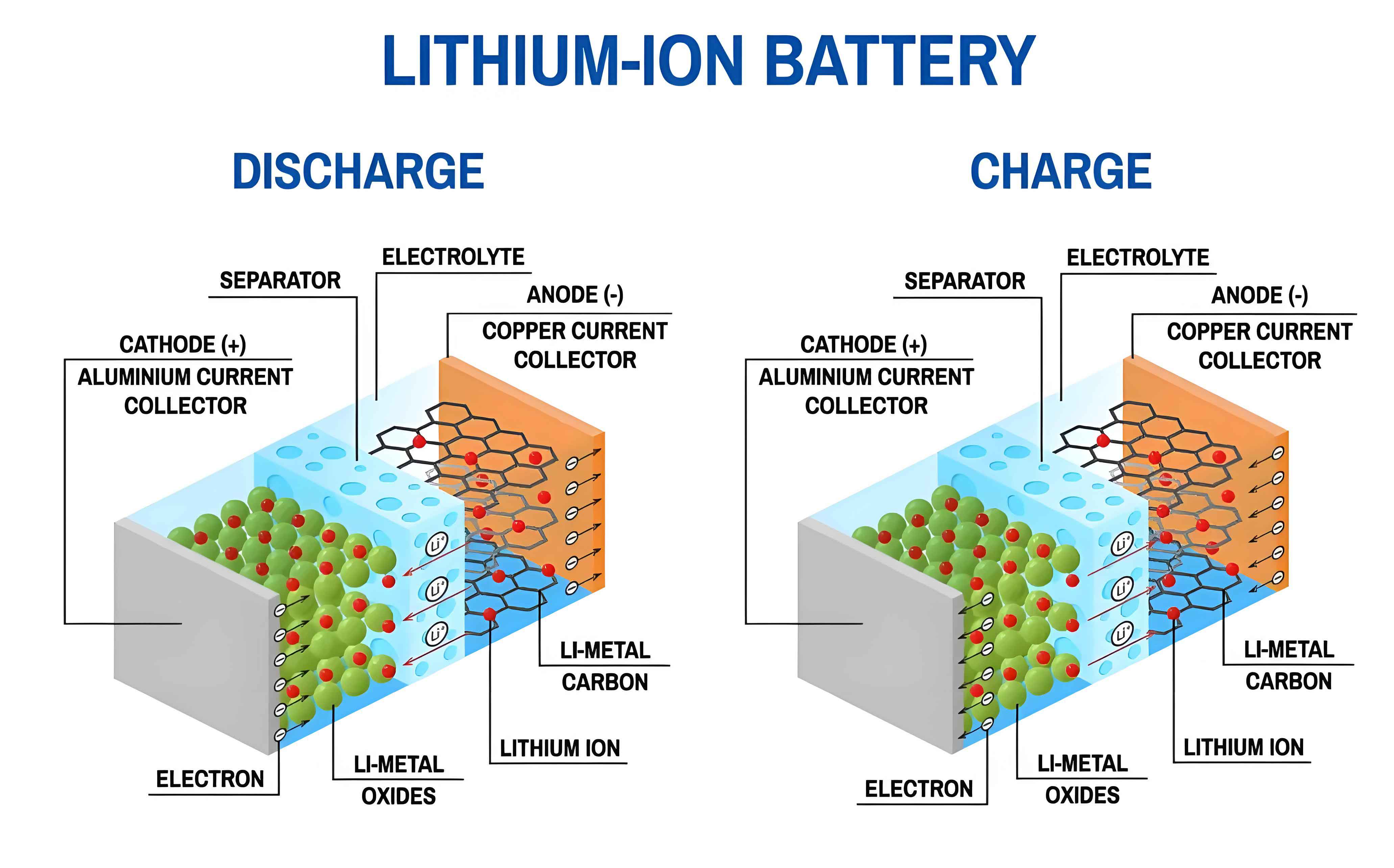
In every Li-ion battery, the first charge-discharge cycle triggers the formation of a passivating layer on the anode surface, known as the solid electrolyte interphase (SEI). While essential for long-term stability by preventing continuous electrolyte decomposition, the SEI formation irreversibly consumes lithium ions sourced from the cathode. This phenomenon directly results in a lowered first-cycle Coulombic efficiency (FCE), representing a permanent loss of capacity from the very beginning of the cell’s life. For graphite anodes, this irreversible capacity can be 50-150 mAh/g, but for next-generation high-capacity anodes like silicon (Si) or silicon oxide (SiOx), the loss skyrockets to 500-1500 mAh/g due to severe volume changes and continuous SEI reformation. Given that the practical capacity of mainstream cathode materials (e.g., 140-220 mAh/g for NCM or LFP) is often lower than the anode’s irreversible loss, this initial deficit becomes the primary bottleneck for enhancing the energy density of the full Li-ion battery.
To counteract this loss, prelithiation (or lithiation compensation) techniques have been developed. Among various strategies, the incorporation of sacrificial cathode prelithiation additives is particularly promising due to its simplicity, cost-effectiveness, and high compatibility with existing Li-ion battery manufacturing processes. This approach involves blending a small amount of a lithium-rich compound directly into the cathode slurry. During the first charge, this additive decomposes, releasing its lithium ions to be incorporated into the anode, thereby compensating for the lithium consumed in SEI formation. An ideal cathode prelithiation additive for Li-ion batteries should possess: 1) a high specific capacity to minimize the amount needed; 2) an appropriate operating voltage below the cathode’s upper cutoff to avoid electrolyte decomposition; 3) high irreversibility (lithium release is not re-intercalated upon discharge); 4) good chemical/air stability for easy processing; and 5) decomposition products that are benign to the long-term electrochemistry of the Li-ion battery.
In this article, we delve into the research progress of cathode prelithiation additives, categorizing them into three main families, discussing their mechanisms, challenges, and recent advancements aimed at making them viable for the next generation of high-energy Li-ion batteries.
1. Prelithiation Additives Based on Li-Rich Ternary Compounds
This category primarily includes transition metal oxides with excess lithium in their structure, such as Li2NiO2, Li5FeO4, and Li6CoO4. Their prelithiation mechanism typically involves the extraction of lithium alongside the oxidation of the transition metal, often in a multi-electron process.
$$ \text{Li}_2\text{NiO}_2 \rightarrow \text{Li}^+ + \text{e}^- + \text{LiNiO}_2 \ (\text{ca. 3.6 V}) $$
$$ \text{LiNiO}_2 \rightarrow \text{Li}^+ + \text{e}^- + \text{NiO}_2 \ (\text{ca. 4.2 V}) $$
These materials offer moderate theoretical capacities (typically 300-400 mAh/g) and operate within voltage windows compatible with high-voltage cathodes. However, they face significant challenges: poor air stability due to surface reaction with H2O and CO2, structural collapse upon delithiation, and the retention of electrochemically inactive metal oxide residues that dilute the energy density of the cathode in the subsequent cycles of the Li-ion battery.
Recent research has focused on surface engineering to improve stability. For instance, coating Li2NiO2 with a thin layer of Al2O3 has proven effective. The inert oxide layer acts as a physical barrier, significantly retarding the formation of surface Li2CO3 and LiOH, thereby preserving the core material’s electrochemical activity and allowing for handling in ambient conditions. Similarly, the air instability of high-capacity Li5FeO4 (theoretical capacity ~870 mAh/g) has been addressed by creating a core-shell structure with Li6CoO4 as the shell. This coating not only protects the Li5FeO4 core but also provides additional lithium, creating a synergistic effect. Another strategy involves forming solid solutions, such as incorporating Li2MoO3 into a LiFeO2 matrix, which stabilizes the crystal structure during charging and suppresses the dissolution of Mo, a common failure mechanism.
| Additive | Typical Loading (wt.%) | Paired Cathode | Key Challenge | Mitigation Strategy | Reversible Capacity Contribution |
|---|---|---|---|---|---|
| Li2NiO2 | 4-10% | LCO, NCM | Air instability, structural collapse | Al2O3 coating | ~300-400 mAh/g |
| Li5FeO4 (LFO) | 5-10% | LCO, NCM, LFP | Extreme hygroscopicity, high voltage plateau | Li6CoO4 coating, inert processing | ~700-800 mAh/g |
| Li6CoO4 | 10-15% | LCO | Moderate air stability, residual Co oxides | – | ~350-400 mAh/g |
| Li2MoO3 | ~10% | LCO | Mo dissolution, structural instability | Forming solid solutions (e.g., with LiFeO2) | ~200-250 mAh/g |
While surface modifications have improved processability, the intrinsic issue of inactive residue remains. The leftover transition metal oxides (e.g., NiO2, Fe2O3) after prelithiation contribute dead mass, which is a fundamental trade-off for this class of additives in a Li-ion battery. Research is ongoing to identify compounds where residues might offer secondary benefits, such as enhanced ionic conductivity or structural stability.
2. Prelithiation Additives Based on Binary Lithium Compounds
This class encompasses simple lithium compounds with non-metals, such as Li2O, Li2O2, Li3N, Li2S, Li3P, and Li2Se. They are characterized by exceptionally high theoretical capacities, often exceeding 1000 mAh/g, due to their high lithium-to-mass ratio. The prelithiation reactions are typically irreversible decomposition processes.
$$ \text{Li}_2\text{O}_2 \rightarrow 2\text{Li}^+ + \text{O}_2 \uparrow + 2\text{e}^- $$
$$ 2\text{Li}_3\text{N} \rightarrow 6\text{Li}^+ + \text{N}_2 \uparrow + 6\text{e}^- $$
$$ \text{Li}_2\text{S} \rightarrow 2\text{Li}^+ + \text{S} + 2\text{e}^- $$
$$ \text{Li}_3\text{P} \rightarrow 3\text{Li}^+ + \text{P} + 3\text{e}^- $$
The primary challenges for binary lithium compounds in Li-ion battery applications are threefold: 1) Severe air and moisture sensitivity, making electrode fabrication difficult; 2) Gas evolution (O2, N2) during decomposition, which can cause electrode delamination, increased impedance, and safety concerns; 3) For some, like Li2O, a high activation overpotential requiring voltages >4.5 V, which risks electrolyte oxidation.
Innovative strategies are being developed to tackle these issues. For gas-generating additives like Li2O2, research focuses on nano-confinement and the use of radical scavengers in the electrolyte to manage the released oxygen. To enhance air stability, a common approach is the creation of a passivating surface layer. For example, Li3N can be annealed to form a protective shell of Li2CO3 and Li2O, enabling brief handling in air. Similarly, Li2O2 particles can be coated with a thin layer of Li3PO4 or carbon. Beyond stability, the nature of the decomposition product is also critical. Compounds like Li2S, Li2Se, and Li3P are attractive because their residues (S, Se, P) are solid and can sometimes be beneficial. Sulfur and selenium are electronically conductive, potentially improving cathode kinetics. Phosphorus can act as a flame retardant, adding a safety feature to the Li-ion battery.
| Additive | Theoretical Capacity (mAh/g) | Decomposition Product(s) | Main Challenge | Recent Improvement Strategy |
|---|---|---|---|---|
| Li2O | >1000 | O2 (gas) | High activation voltage, gas evolution | Using as nano-composite (see Section 3) |
| Li2O2 | >1100 | O2 (gas) | Gas evolution, air instability | Surface coating (e.g., Li3PO4), electrolyte additives |
| Li3N | >2300 | N2 (gas) | Extreme hygroscopicity, gas evolution | Annealing to create Li2O/Li2CO3 passivation layer |
| Li2S | 1166 | S (solid) | Air instability, low conductivity of S | Nano-confinement in carbon matrices |
| Li3P | ~1550 | P (solid, flame retardant) | Air instability | Dispersion on conductive graphene (rGO) |
| Li2Se | ~580 | Se (solid, conductive) | Air instability | – |
The future of binary compounds lies in designing composite structures that encapsulate the active material, manage gas release, and integrate seamlessly into cathode architectures, pushing the boundaries of capacity compensation in Li-ion batteries.
3. Prelithiation Additives Based on Inverse Conversion Reaction Nanocomposites
This innovative class leverages the principle of “inverse conversion reaction” to create materials with a built-in, significant voltage hysteresis. These are nanocomposites where a binary lithium compound (like Li2O, LiF, or Li2S) is intimately mixed with a nanoscale metal phase (M = Co, Fe, Mn, etc.). The general formula is LixY/M (where Y=O, F, S).
$$ \text{Li}_2\text{O}/\text{Co} \rightarrow 2\text{Li}^+ + \text{CoO} + 2\text{e}^- \ (\text{Charging, ~3.8V}) $$
$$ \text{CoO} + 2\text{Li}^+ + 2\text{e}^- \nrightarrow \text{Li}_2\text{O}/\text{Co} \ (\text{Discharging, large overpotential}) $$
During charging, the composite decomposes, releasing Li+ and forming a metal oxide/fluoride/sulfide. The key is that the reverse reaction (re-formation of the original nanocomposite) is kinetically hindered or requires a much lower potential, making the lithium release effectively irreversible within the normal operating window of the Li-ion battery cathode. This provides high prelithiation capacity (500-800 mAh/g) without gas evolution.
The synthesis of these nanocomposites is typically achieved via a mechanochemical or a direct chemical reduction route. For example, LiF/Co can be synthesized by reacting CoF3 with molten lithium metal. The main challenge for these materials is the same as for ternary compounds: the inactive residue (CoO, FeF3, etc.) remains in the cathode. However, the residue is often nano-dispersed and may have less detrimental effects on conductivity compared to some bulk metal oxides. A significant advancement in this area is the development of ternary nanocomposites like Fe/LiF/Li2O. Here, the presence of LiF significantly enhances the environmental stability of the composite compared to the more reactive Fe/Li2O, as LiF is less prone to react with atmospheric moisture and CO2. This dramatically improves the processability for manufacturing Li-ion batteries.
| Nanocomposite | Theoretical Capacity (mAh/g) | Voltage Plateau (V vs. Li/Li+) | Key Advantage | Residue After Prelithiation |
|---|---|---|---|---|
| Li2O/Co | ~724 | ~3.8 | High capacity, no gas | CoO |
| Li2O/Fe | ~799 | ~2.8 / ~3.8 | Higher capacity, low-cost Fe | Fe2O3 |
| LiF/Co | ~520 | ~3.2 – 4.2 | Excellent air stability | CoF2/Co |
| Li2S/Co | ~670 | ~2.0 | Low voltage operation | CoSx |
| Fe/LiF/Li2O | ~550 | ~3.1 / 3.8-4.5 | Superior air stability, dual-plateau | Fe/FeOx/LiF mixture |
The design of these nanocomposites represents a sophisticated materials engineering approach to prelithiation, balancing high capacity with improved stability. The choice of metal and anion allows for tuning the operating voltage and the nature of the residue, providing a versatile toolkit for compensating lithium loss in various Li-ion battery systems.
4. Conclusion and Future Perspectives
Cathode prelithiation via sacrificial additives has emerged as a highly pragmatic and effective strategy to overcome the first-cycle capacity loss, a critical hurdle for advancing Li-ion battery technology. We have explored three principal families of additives: Li-rich ternary compounds, binary lithium compounds, and nanocomposites based on inverse conversion reactions. Each class presents a distinct trade-off between specific capacity, air stability, side reactions (like gassing), and the impact of decomposition residues.
The journey from laboratory discovery to industrial implementation in commercial Li-ion batteries requires surmounting several key challenges. Future research should be directed along the following avenues:
1. Advanced Stabilization Strategies: The environmental instability of most high-capacity additives remains a primary barrier. Developing more robust, scalable, and cost-effective coating technologies—or designing intrinsically stable novel compounds—is paramount. This pursuit must not come at the expense of the additive’s core capacity or introduce detrimental interfacial resistance within the Li-ion battery.
2. Management of Decomposition By-products: For binary compounds, intelligent management of gaseous products through tailored electrolytes with radical scavengers or through physical confinement in porous matrices is essential. For all additives, understanding and mitigating the long-term impact of solid residues (metal oxides, fluorides, etc.) on cathode impedance, lithium-ion diffusion, and overall cycle life of the Li-ion battery is a critical area of study.
3. System-Level Integration and Evaluation: Research must extend beyond half-cell metrics. Comprehensive evaluation in full-cell configurations, especially with high-capacity anodes like silicon, under realistic cycling conditions and different formats (e.g., pouch cells), is necessary to validate performance and safety. The interaction between the additive’s decomposition products and other cell components (binder, conductive agent, separator) over hundreds of cycles needs thorough investigation.
4. Exploration of Novel Chemistries and Synergistic Effects: The search for new lithium-rich phases with favorable properties should continue. Furthermore, designing additives that offer secondary functions is a promising direction. For instance, an additive whose residue acts as a cathode coating to suppress transition metal dissolution or as a source of dopants to enhance ionic conductivity would provide multifunctional benefits to the Li-ion battery.
In conclusion, cathode prelithiation additives hold immense promise for unlocking the full potential of next-generation anode materials and pushing the energy density of Li-ion batteries to new heights. While significant progress has been made in understanding and engineering these materials, the path forward requires a concerted effort in materials science, electrochemistry, and battery engineering to transform these promising concepts into reliable, safe, and commercially viable solutions that will power the future.