
Perovskite solar cells have emerged as a pivotal technology in the field of photovoltaics due to their solution-processability, low cost, and high theoretical efficiency. The power conversion efficiency of perovskite solar cells has skyrocketed from 3.8% to over 26% within a decade, positioning them as strong competitors to conventional silicon-based solar cells. However, the commercialization of perovskite solar cells is hindered by challenges such as long-term stability, hysteresis effects, and scalability. In addressing these issues, carbon nanomaterials have gained significant attention as electron transport materials owing to their high electron mobility, tunable Fermi levels, and exceptional stability. This review delves into the application of carbon nanomaterials—specifically fullerenes, carbon nanotubes, and graphene—as electron transport layers in perovskite solar cells, analyzing their mechanisms in enhancing device performance and stability.
The structure of perovskite solar cells typically includes an electrode layer, electron/hole transport layers, and a perovskite active layer. Conventional device architectures are categorized into mesoscopic and planar heterojunctions, with planar structures further divided into n-i-p and p-i-n configurations. The electron transport layer plays a critical role in extracting and transporting electrons while blocking holes to minimize recombination. Ideal electron transport materials for perovskite solar cells must exhibit excellent electrical properties, such as appropriate energy level alignment with the perovskite layer, high electron mobility, and minimal defects. Additionally, the film morphology should be pinhole-free and dense to prevent current leakage and charge recombination. Chemical stability and hydrophobicity are also essential to protect the perovskite layer from moisture and environmental degradation.
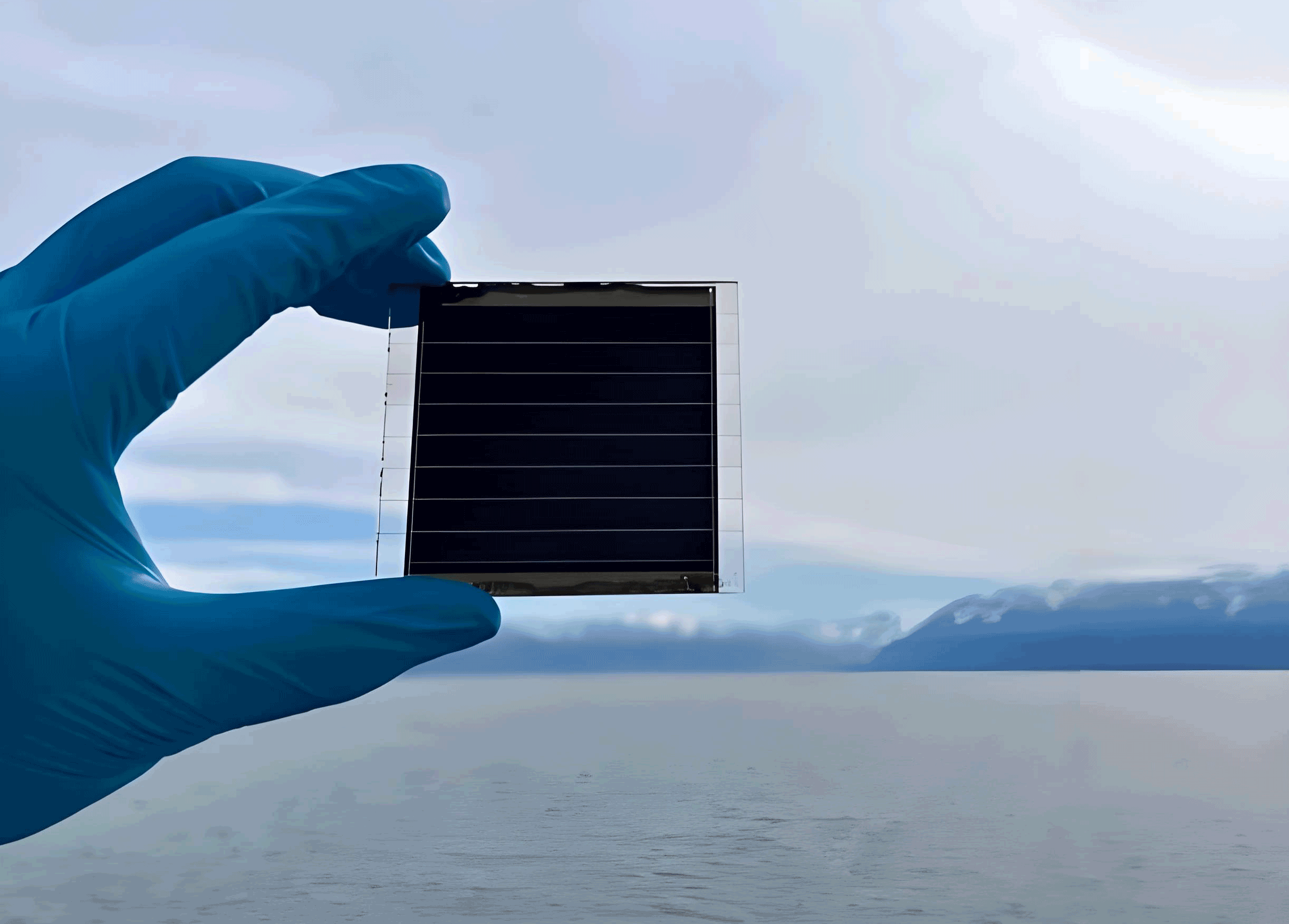
Carbon nanomaterials, with their diverse allotropes and modifiable structures, offer a promising avenue for developing high-performance electron transport layers in perovskite solar cells. Their inherent properties, such as high charge carrier mobility, chemical inertness, and solution processability, make them ideal candidates. For instance, fullerenes and their derivatives have been extensively used in inverted perovskite solar cells due to their high electron affinity and ability to passivate defects. Carbon nanotubes, with their metallic or semiconducting characteristics, enhance charge transport when incorporated into metal oxide-based electron transport layers. Graphene and its derivatives, known for their two-dimensional structure and high conductivity, improve interface properties and stability. In this review, I explore the recent advancements in utilizing these carbon nanomaterials as electron transport materials, highlighting their impact on the efficiency and stability of perovskite solar cells.
Performance Metrics for Ideal Electron Transport Materials
The performance of perovskite solar cells is governed by parameters such as open-circuit voltage (Voc), short-circuit current density (Jsc), and fill factor (FF). The Voc is influenced by the energy level alignment between the perovskite and charge transport layers, while Jsc relates to the light absorption spectrum and carrier recombination rates. The FF depends on charge extraction and transport efficiency, which are affected by carrier mobility, film morphology, and interface recombination. Thus, an ideal electron transport material for perovskite solar cells should possess the following characteristics:
- Electrical Properties: The lowest unoccupied molecular orbital (LUMO) level of the electron transport material should align with or be slightly lower than that of the perovskite layer to facilitate electron transfer. High electron mobility is crucial to prevent space-charge limitations and reduce recombination. The electron mobility (μe) can be described by the equation: $$μ_e = \frac{v_d}{E}$$ where vd is the drift velocity and E is the electric field. Additionally, low defect density in the electron transport layer minimizes non-radiative recombination.
- Film Morphology: A uniform, pinhole-free electron transport layer ensures efficient charge extraction and reduces interface recombination. The quality of the electron transport layer film directly impacts the Voc and FF of the perovskite solar cell.
- Stability and Hydrophobicity: Chemical stability prevents reactions with the perovskite layer or electrodes, while hydrophobicity shields the perovskite from moisture-induced degradation, enhancing the long-term stability of perovskite solar cells.
Carbon nanomaterials excel in these aspects due to their tunable Fermi levels, high electron mobility, and structural robustness. For example, the electron mobility of fullerenes can reach up to 10−2 cm2/(V·s), while graphene exhibits values exceeding 104 cm2/(V·s). The following sections delve into the specific applications of fullerenes, carbon nanotubes, and graphene in perovskite solar cells.
Fullerenes and Their Derivatives
Fullerenes, particularly C60 and C70, have been widely adopted as electron transport materials in inverted perovskite solar cells due to their high electron affinity and excellent electron transport capabilities. The unique spherical structure of fullerenes allows for efficient electron acceptance and transport, reducing electron-hole recombination. Moreover, the chemical functionalization of fullerenes enables the tuning of their solubility, energy levels, and defect passivation abilities. For instance, fullerene derivatives like [6,6]-phenyl-C61-butyric acid methyl ester (PC61BM) and [6,6]-phenyl-C71-butyric acid methyl ester (PC71BM) have demonstrated remarkable performance in perovskite solar cells by passivating surface defects and reducing hysteresis.
The mechanism of defect passivation involves the interaction between functional groups on fullerene derivatives and undercoordinated Pb2+ ions on the perovskite surface. This interaction suppresses ion migration and non-radiative recombination, leading to improved Voc and FF. For example, the introduction of pyridine groups in PC61BPy enhances its Lewis basicity, facilitating stronger coordination with Pb2+ and resulting in a power conversion efficiency of 17.46%. Similarly, fullerene-pyrrolidine derivatives with cyanoethyl groups (e.g., F4) achieve efficiencies exceeding 20% due to optimized molecular packing and charge transfer properties.
To illustrate the properties of various fullerene-based electron transport materials, Table 1 summarizes their electron mobility, energy levels, and device performance in perovskite solar cells.
| Electron Transport Material | Perovskite Composition | Electron Mobility [cm²/(V·s)] | HOMO/LUMO Levels (eV) | PCE (%) |
|---|---|---|---|---|
| C60 | CH3NH3PbI3−xClx | — | −5.7/−3.9 | 8.82 |
| PC61BM | CH3NH3PbI3−xClx | 1.3×10⁻³ | −5.9/−3.8 | 12.4 |
| PC71BM | CH3NH3PbI3−xClx | 1.0×10⁻³ | −6.1/−4.0 | 13.0 |
| C60-PMME | CH3NH3PbI3 | 6.2×10⁻² | −5.9/−3.9 | 18.38 |
| FP-C8 | Cs0.05FA0.90MA0.05PbI2.85Br0.15 | 4.9×10⁻³ | —/−4.15 | 20.82 |
| C60-TMA | Cs0.05FA0.90MA0.05PbI2.85Br0.15 | — | −5.89/−4.15 | 24.89 |
The power conversion efficiency of perovskite solar cells utilizing fullerene-based electron transport materials can be modeled using the equation: $$PCE = \frac{J_{sc} \times V_{oc} \times FF}{P_{in}} \times 100\%$$ where Pin is the incident light power density. The enhancement in PCE is often attributed to reduced recombination losses and improved charge extraction. For instance, C60-TMA, a fullerene derivative with trimethylacrylate groups, achieves a PCE of 24.89% by promoting secondary grain growth in the perovskite layer and passivating interface defects. This demonstrates the potential of tailored fullerene derivatives in advancing perovskite solar cell technology.
Despite their advantages, the synthesis of complex fullerene derivatives like PCBM remains costly, prompting research into simpler alternatives. For example, fullerene malonate esters synthesized via straightforward routes exhibit high hydrophobicity and defect passivation, yielding PCEs above 18% and enhanced stability. Future developments in fullerene-based electron transport materials should focus on rational molecular design to balance cost, processability, and performance in perovskite solar cells.
Carbon Nanotubes
Carbon nanotubes, including single-walled carbon nanotubes (SWCNTs) and multi-walled carbon nanotubes (MWCNTs), have been employed as additives or composites in electron transport layers for n-i-p structured perovskite solar cells. Their high aspect ratio, exceptional electrical conductivity (up to 108 S/m), and large specific surface area (1315 m²/g) make them ideal for enhancing charge transport and extraction. When incorporated into metal oxide electron transport materials like TiO2, ZnO, or SnO2, carbon nanotubes form conductive pathways that facilitate electron flow and reduce series resistance.
The incorporation of carbon nanotubes into electron transport layers improves the performance of perovskite solar cells through multiple mechanisms. For instance, SWCNTs blended with TiO2 nanoparticles increase electron mobility and reduce charge recombination, leading to a Jsc enhancement from 19.0 to 21.6 mA/cm² and a PCE of 16.11%. The composite electron transport layer also optimizes energy level alignment, as seen in the shift of the TiO2 conduction band minimum, which improves Voc. Furthermore, carbon nanotubes passivate surface defects on metal oxides, as demonstrated by transient absorption spectroscopy studies showing reduced recombination in CNT-TiO2 composites.
The electrical behavior of carbon nanotubes in perovskite solar cells depends on their chirality, with semiconducting SWCNTs (s-SWCNTs) and metallic SWCNTs (m-SWCNTs) exhibiting distinct roles. A mixture of s-SWCNTs and m-SWCNTs in a 2:1 mass ratio achieves a PCE of 19.40%, as s-SWCNTs facilitate electron transfer to TiO2, while m-SWCNTs accelerate charge transport and improve stability. The charge transfer dynamics can be described by the equation: $$k_{ET} = \frac{1}{\tau_{PL}} – \frac{1}{\tau_0}$$ where kET is the electron transfer rate constant, τPL is the photoluminescence lifetime with the electron transport layer, and τ0 is the lifetime without it. Shorter τPL values indicate efficient charge extraction, as observed in CNT-based composites.
In addition to TiO2, carbon nanotubes have been used to modify other electron transport materials. For example, MWCNT-graphene-TiO2 hybrids leverage the high surface area of graphene and the conductivity of MWCNTs to achieve superior charge transport. Similarly, acid-oxidized CNTs in SnO2 electron transport layers reduce hysteresis and enhance stability, with SnO2-0.4% CNT composites achieving a PCE of 20.33%. These findings underscore the versatility of carbon nanotubes in improving the efficiency and stability of perovskite solar cells.
However, the direct use of carbon nanotube films as electron transport layers is limited by their p-type character in air, which arises from oxygen adsorption. Future research should focus on developing n-type carbon nanotube films through doping or functionalization to enable their standalone application in perovskite solar cells.
Graphene and Its Derivatives
Graphene, a two-dimensional carbon allotrope, and its derivatives, such as graphene oxide (GO) and reduced graphene oxide (rGO), have been extensively explored as electron transport materials in perovskite solar cells. Their high electron mobility (over 104 cm²/(V·s)), excellent thermal conductivity, and mechanical strength make them attractive for enhancing charge transport and interface properties. Graphene-based materials are often used as additives in metal oxide electron transport layers or as interlayers to improve energy level alignment and defect passivation.
In n-i-p structured perovskite solar cells, graphene composites with TiO2 enable low-temperature processing and reduce series resistance. For instance, graphene-TiO2 nanocomposites spin-coated onto conductive substrates form continuous electron transport networks that lower the energy barrier between FTO and TiO2, resulting in a PCE of 15.6%. The work function of graphene can be tuned through chemical modification, such as lithium neutralization of GO (GO-Li), which shifts the Fermi level from 4.9 eV to 4.3 eV, improving electron injection from the perovskite to TiO2 and reducing hysteresis.
The addition of rGO to mesoporous TiO2 (mp-TiO2) reduces resistivity from 3.03×10⁵ Ω·cm to 2.58×10⁵ Ω·cm, enhancing Jsc and PCE. However, excessive rGO loading (e.g., 1 vol%) attenuates light absorption, decreasing Jsc from 21.0 to 19.3 mA/cm². This highlights the importance of optimizing graphene content in electron transport layers for perovskite solar cells. The optical absorption in graphene-based composites can be modeled using the Beer-Lambert law: $$I = I_0 e^{-\alpha d}$$ where I is transmitted intensity, I0 is incident intensity, α is absorption coefficient, and d is film thickness.
Graphene derivatives also improve the stability of perovskite solar cells by acting as ion migration barriers. For example, ZnO/GO electron transport layers protect perovskite films from moisture, maintaining 85% of initial PCE after 30 days in air. Similarly, SnO2-graphene composites enhance charge extraction and reduce recombination, achieving a PCE of 18.11% and retaining 90% efficiency after 300 hours under 40% relative humidity. Three-dimensional graphene frameworks with CuInS2 quantum dots (3D G-CuInS2) further demonstrate improved interface contact and defect passivation, yielding a PCE of 22.4%.
Despite these advancements, the large-scale fabrication of uniform graphene films remains challenging. Future efforts should focus on developing scalable deposition techniques, such as roll-to-roll processing, to integrate graphene-based electron transport layers into commercial perovskite solar cells.
Conclusion and Outlook
Carbon nanomaterials, including fullerenes, carbon nanotubes, and graphene, have demonstrated immense potential as electron transport materials in perovskite solar cells. Their unique properties—such as high electron mobility, tunable energy levels, and excellent stability—contribute to enhanced power conversion efficiency and reduced hysteresis. Fullerenes and their derivatives excel in defect passivation and charge extraction in inverted perovskite solar cells, while carbon nanotubes and graphene improve charge transport in n-i-p structures through composite formation with metal oxides.
Looking ahead, several key areas warrant further investigation. First, the fundamental mechanisms by which carbon nanomaterials influence perovskite solar cell performance, such as defect passivation and charge transfer dynamics, require in-depth characterization using advanced in situ techniques. Second, the energy level alignment of carbon-based electron transport layers should be accurately measured via methods like ultraviolet photoelectron spectroscopy and Kelvin probe force microscopy to ensure optimal interface design. Third, the solution processability and film-forming properties of carbon nanomaterials need improvement to facilitate their standalone use as electron transport layers, particularly for carbon nanotubes and graphene.
The future development of carbon nanomaterials for perovskite solar cells should emphasize rational structural modifications to achieve low-cost, solution-processable materials with rich optoelectronic properties. For instance, designing fullerene derivatives with multifunctional groups or hybridizing carbon nanotubes with two-dimensional materials could yield synergistic effects. Additionally, exploring novel carbon allotropes, such as carbon dots or graphdiyne, may open new avenues for high-performance perovskite solar cells.
In conclusion, carbon nanomaterials are poised to play a crucial role in overcoming the stability and scalability challenges of perovskite solar cells. By leveraging their versatile properties and advancing fabrication techniques, we can accelerate the commercialization of this promising photovoltaic technology. The continuous innovation in carbon-based electron transport materials will undoubtedly contribute to the realization of efficient, stable, and low-cost perovskite solar cells for sustainable energy applications.