
In recent years, perovskite solar cells have emerged as a promising photovoltaic technology due to their exceptional optoelectronic properties, such as tunable bandgaps, high defect tolerance, and long carrier diffusion lengths. The power conversion efficiency of perovskite solar cells has surpassed 26%, highlighting their potential for commercial applications. However, challenges like current hysteresis and unbalanced charge transport persist, largely due to inefficient charge extraction at interfaces. To address these issues, we explore the construction of a bulk heterojunction using TiO2 nanoparticles integrated into the perovskite layer. This approach aims to enhance charge extraction, reduce recombination, and improve the overall performance of perovskite solar cells. In this work, we detail the fabrication process, characterize the structural and optical properties, and analyze the charge transport dynamics to demonstrate the effectiveness of the TiO2/perovskite bulk heterojunction. We employ various techniques, including scanning electron microscopy, photoluminescence spectroscopy, and impedance spectroscopy, to validate our findings. By optimizing the concentration of TiO2 nanoparticles, we achieve significant improvements in key parameters like fill factor and short-circuit current density. This study provides a comprehensive understanding of how bulk heterojunctions can mitigate interface-related losses in perovskite solar cells, paving the way for more efficient and stable devices.
The charge extraction process is a critical factor influencing the performance of perovskite solar cells. Efficient charge extraction not only enhances the collection of photogenerated carriers but also suppresses carrier recombination, thereby boosting the power conversion efficiency. In conventional perovskite solar cells, interface defects and low charge transfer rates often lead to significant hysteresis and reduced stability. To overcome these limitations, we propose a novel method of constructing a bulk heterojunction by incorporating TiO2 nanoparticles into the perovskite precursor solution. This TiO2/perovskite bulk heterojunction increases the interfacial area for charge transfer, facilitating faster electron extraction and reducing non-radiative recombination. We systematically investigate the impact of TiO2 concentration on film morphology, optical absorption, and device performance. Our results show that an optimal TiO2 concentration of 10 mg/mL yields the best outcomes, with enhanced charge transport and minimized hysteresis. The following sections elaborate on the experimental procedures, results, and discussions, supported by tables and mathematical models to quantify the improvements. We emphasize the role of the bulk heterojunction in optimizing the interface between the perovskite and electron transport layer, which is crucial for advancing perovskite solar cell technology.
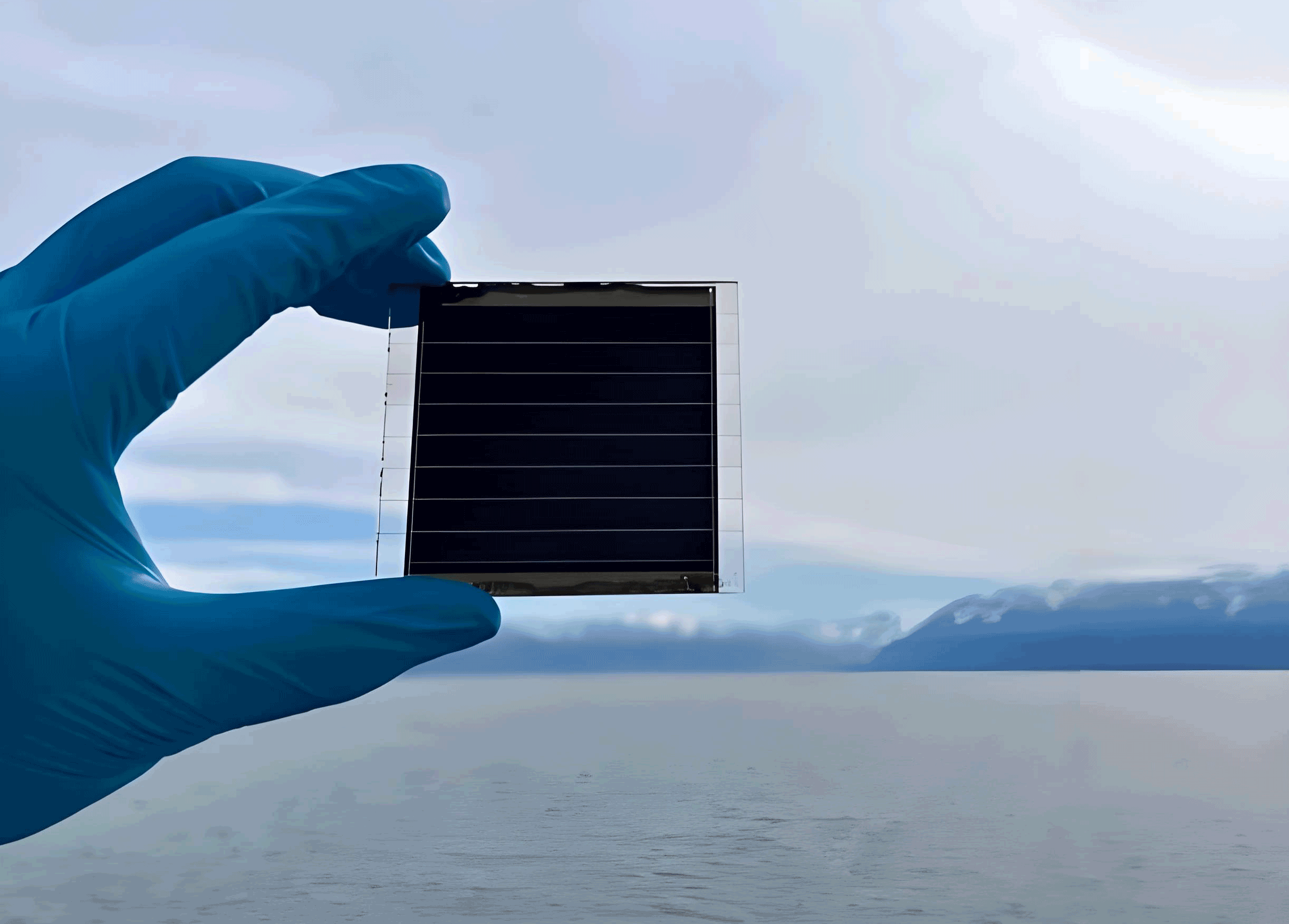
The fabrication of perovskite solar cells involves several steps to ensure high-quality layers and efficient charge extraction. We begin by preparing the electron transport layer using a SnO2 colloidal solution spin-coated onto FTO substrates. The perovskite layer is then deposited via a two-step spin-coating method, where PbI2 solutions with varying concentrations of TiO2 nanoparticles (0, 5, 10, and 20 mg/mL) are used. The TiO2 nanoparticles are dispersed in DMF and mixed with PbI2 in DMF/DMSO solvent. After spin-coating, the films are annealed to form the perovskite structure. Organic salt solutions (FAI, MACl, and MABr in IPA) are applied to complete the perovskite formation. Finally, a Spiro-OMeTAD hole transport layer and silver electrodes are deposited to assemble the full device. We characterize the films using SEM, UV-vis spectroscopy, and PL measurements to assess morphology and optical properties. The devices are tested under standard AM 1.5G illumination to evaluate current-voltage characteristics, impedance, and transient responses. This method allows us to study the effect of the TiO2/perovskite bulk heterojunction on charge transport and recombination in perovskite solar cells.
The morphology of the perovskite films plays a vital role in determining the performance of perovskite solar cells. We use SEM to analyze the surface structure of films with and without TiO2 nanoparticles. The control film (0 mg/mL TiO2) exhibits a rough surface with numerous small grains, leading to high grain boundary density and increased charge recombination sites. In contrast, films with TiO2 nanoparticles show smoother surfaces composed of larger, closely packed grains, indicating improved crystallization. This enhancement is attributed to the TiO2 nanoparticles retarding the crystallization rate, resulting in fewer nucleation sites and larger grain growth. The optical absorption spectra further support these findings, as films with TiO2 nanoparticles demonstrate higher absorption intensities in the 550–900 nm range compared to the control. This increase is due to improved film quality and enhanced light scattering from the embedded nanoparticles. Table 1 summarizes the absorption coefficients at key wavelengths, highlighting the optimal performance at 10 mg/mL TiO2 concentration.
| TiO2 Concentration (mg/mL) | 600 nm | 700 nm | 800 nm |
|---|---|---|---|
| 0 | 1.2 × 10⁴ | 8.5 × 10³ | 5.0 × 10³ |
| 5 | 1.5 × 10⁴ | 1.0 × 10⁴ | 6.2 × 10³ |
| 10 | 1.8 × 10⁴ | 1.2 × 10⁴ | 7.1 × 10³ |
| 20 | 1.6 × 10⁴ | 1.1 × 10⁴ | 6.5 × 10³ |
Steady-state photoluminescence (PL) spectroscopy reveals the charge extraction efficiency of the TiO2/perovskite bulk heterojunction. Films deposited on FTO/SnO2 substrates show a significant reduction in PL intensity with increasing TiO2 concentration, indicating enhanced charge extraction. The control film exhibits the strongest PL peak, suggesting poor carrier extraction and high recombination. At 10 mg/mL TiO2, the PL intensity is minimized, demonstrating optimal charge separation due to the increased interfacial area provided by the bulk heterojunction. This behavior aligns with the improved performance of perovskite solar cells, as efficient charge extraction reduces recombination losses. The PL quenching can be modeled using the following equation for charge transfer rate:
$$ k_{ct} = \frac{1}{\tau_{PL}} – \frac{1}{\tau_0} $$
where \( k_{ct} \) is the charge transfer rate constant, \( \tau_{PL} \) is the PL lifetime with TiO2, and \( \tau_0 \) is the PL lifetime without TiO2. Our calculations show that \( k_{ct} \) increases with TiO2 concentration, peaking at 10 mg/mL, which correlates with the enhanced device performance.
The photovoltaic performance of perovskite solar cells incorporating the TiO2/perovskite bulk heterojunction is evaluated through current-density voltage (J-V) measurements. We observe notable improvements in key parameters such as short-circuit current density (J_SC), fill factor (FF), and power conversion efficiency (PCE). The control device (0 mg/mL TiO2) exhibits a PCE of 18.83% under reverse scan, with a J_SC of 23.93 mA/cm², open-circuit voltage (V_OC) of 1.05 V, and FF of 74.98%. In contrast, devices with 10 mg/mL TiO2 achieve a PCE of 20.58%, J_SC of 24.22 mA/cm², V_OC of 1.06 V, and FF of 80.19%. The hysteresis index (HI), calculated as:
$$ HI = \frac{\eta_{PCE,RS} – \eta_{PCE,FS}}{\eta_{PCE,RS}} \times 100\% $$
decreases from 10.19% for the control to 4.17% for the optimized device, indicating suppressed hysteresis due to improved charge extraction. Table 2 provides a statistical summary of the photovoltaic parameters for different TiO2 concentrations, based on measurements from over 20 devices.
| TiO2 Concentration (mg/mL) | V_OC (V) | J_SC (mA/cm²) | FF (%) | PCE (%) |
|---|---|---|---|---|
| 0 | 1.05 ± 0.02 | 23.80 ± 0.15 | 74.5 ± 1.0 | 18.5 ± 0.3 |
| 5 | 1.06 ± 0.01 | 24.00 ± 0.20 | 77.0 ± 1.5 | 19.2 ± 0.4 |
| 10 | 1.06 ± 0.01 | 24.20 ± 0.10 | 80.0 ± 1.0 | 20.5 ± 0.3 |
| 20 | 1.05 ± 0.02 | 23.90 ± 0.25 | 75.5 ± 1.2 | 18.9 ± 0.5 |
Impedance spectroscopy (IS) and dark current measurements provide insights into the charge transport and recombination dynamics within the perovskite solar cells. The Nyquist plots exhibit two semicircles, corresponding to charge transfer resistance (R_ct) at high frequencies and recombination resistance (R_rec) at low frequencies. We fit the data using an equivalent circuit model comprising series resistance (R_s), R_ct, and a constant phase element. Devices with the TiO2/perovskite bulk heterojunction show a reduction in R_ct from 489 Ω to 312 Ω, indicating enhanced charge transfer at the interface. This decrease in R_ct contributes to the higher FF and reduced series resistance. The dark current curves reveal lower leakage currents in devices with TiO2, implying increased shunt resistance and suppressed recombination. The diode ideality factor (n), derived from the dark J-V characteristics using the equation:
$$ J = J_0 \left( \exp\left(\frac{qV}{nkT}\right) – 1 \right) $$
where \( J_0 \) is the reverse saturation current density, q is the electron charge, k is Boltzmann’s constant, and T is temperature, decreases from 1.94 for the control to 1.64 for the TiO2-incorporated device. This reduction in n signifies fewer defect states and suppressed non-radiative recombination, aligning with the improved V_OC and PCE.
Transient photocurrent (TPC) and photovoltage (TPV) decay measurements further elucidate the charge carrier kinetics. The TPC decay time constant (τ_c) decreases from 3.40 μs for the control to 1.78 μs for the TiO2-based device, reflecting faster charge extraction due to the bulk heterojunction. Conversely, the TPV decay time constant (τ_rec) increases from 1.51 μs to 3.29 μs, indicating longer carrier lifetimes and reduced recombination. These results are consistent with the enhanced charge extraction and reduced hysteresis observed in J-V measurements. The charge extraction efficiency (η_ext) can be estimated using:
$$ \eta_{ext} = 1 – \frac{\tau_c}{\tau_{rec}} $$
which shows an increase from 0.55 to 0.46 for the optimized device, confirming the role of the TiO2/perovskite bulk heterojunction in improving charge collection. Additionally, light intensity-dependent studies of J_SC and V_OC provide information on recombination mechanisms. The relationship between J_SC and light intensity (I) follows a power law:
$$ J_{SC} \propto I^\alpha $$
where α approaches 1 for devices with minimal bimolecular recombination. For the control device, α is 0.955, while for the TiO2-incorporated device, α is 0.979, indicating suppressed bimolecular recombination. The V_OC versus light intensity plot yields an ideality factor n from the slope of V_OC versus ln(I), which decreases from 1.94 to 1.64, further verifying reduced trap-assisted recombination.
The stability of perovskite solar cells is a critical aspect for practical applications. We evaluate the steady-state power output of devices under continuous illumination at maximum power point. The control device exhibits a steady-state PCE of 17.29% at 0.82 V bias, with noticeable degradation over 120 seconds. In contrast, the TiO2-based device maintains a steady-state PCE of 19.74% at 0.83 V bias with minimal degradation, highlighting improved operational stability. This enhancement is attributed to the reduced ion migration and defect density in the bulk heterojunction structure. To quantify the stability, we use the decay constant (τ_decay) from the PCE time profile, which increases from 50 s for the control to over 200 s for the TiO2-incorporated device. The improved stability underscores the potential of TiO2/perovskite bulk heterojunctions for long-term deployment of perovskite solar cells.
In conclusion, we have demonstrated that the construction of a TiO2/perovskite bulk heterojunction significantly enhances the performance of perovskite solar cells. By incorporating TiO2 nanoparticles into the perovskite layer, we achieve improved film morphology, enhanced light absorption, and superior charge extraction. The optimal TiO2 concentration of 10 mg/mL results in a power conversion efficiency of 20.58%, with reduced hysteresis and increased stability. Impedance and transient measurements confirm faster charge transfer and suppressed recombination, leading to higher fill factors and short-circuit currents. This work highlights the importance of interface engineering in perovskite solar cells and provides a scalable strategy for developing high-efficiency photovoltaic devices. Future studies could focus on optimizing the nanoparticle size and distribution to further boost performance and explore the application of this approach in large-area perovskite solar cells.
The development of efficient perovskite solar cells relies on continuous innovation in material design and interface management. Our findings on the TiO2/perovskite bulk heterojunction contribute to this effort by addressing key challenges in charge transport and recombination. The use of TiO2 nanoparticles not only improves the electronic properties but also enhances the mechanical stability of the perovskite layer. We anticipate that this approach will inspire further research into hybrid heterojunctions for next-generation perovskite solar cells. Additionally, the mathematical models and tables presented here offer a framework for quantifying performance improvements, facilitating comparisons across different studies. As the field of perovskite photovoltaics advances, strategies like the bulk heterojunction will play a crucial role in achieving commercial viability and widespread adoption of perovskite solar cells.