
The global imperative for decarbonization and ambitious national strategies, such as China’s “3060” carbon neutrality plan, have catalyzed unprecedented growth in the electric vehicle (EV) sector. This rapid evolution positions new energy vehicles as the unequivocal future of the automotive industry. At the heart of this transformation lies the power source: the lithium ion battery. Renowned for its high energy density, extended cycle life, and low self-discharge rate, the lithium ion battery is the cornerstone of modern electric mobility. However, the performance, longevity, and, most critically, the safety of an electric vehicle are intrinsically tied to the thermal environment of its battery pack. Effective thermal management is not merely an optimization feature; it is a fundamental requirement for reliable operation. Industry standards typically mandate that lithium ion battery packs operate within a temperature window of 293.15 K to 313.15 K, while maintaining a maximum temperature differential below 5 K across all cells to prevent accelerated degradation and thermal runaway.
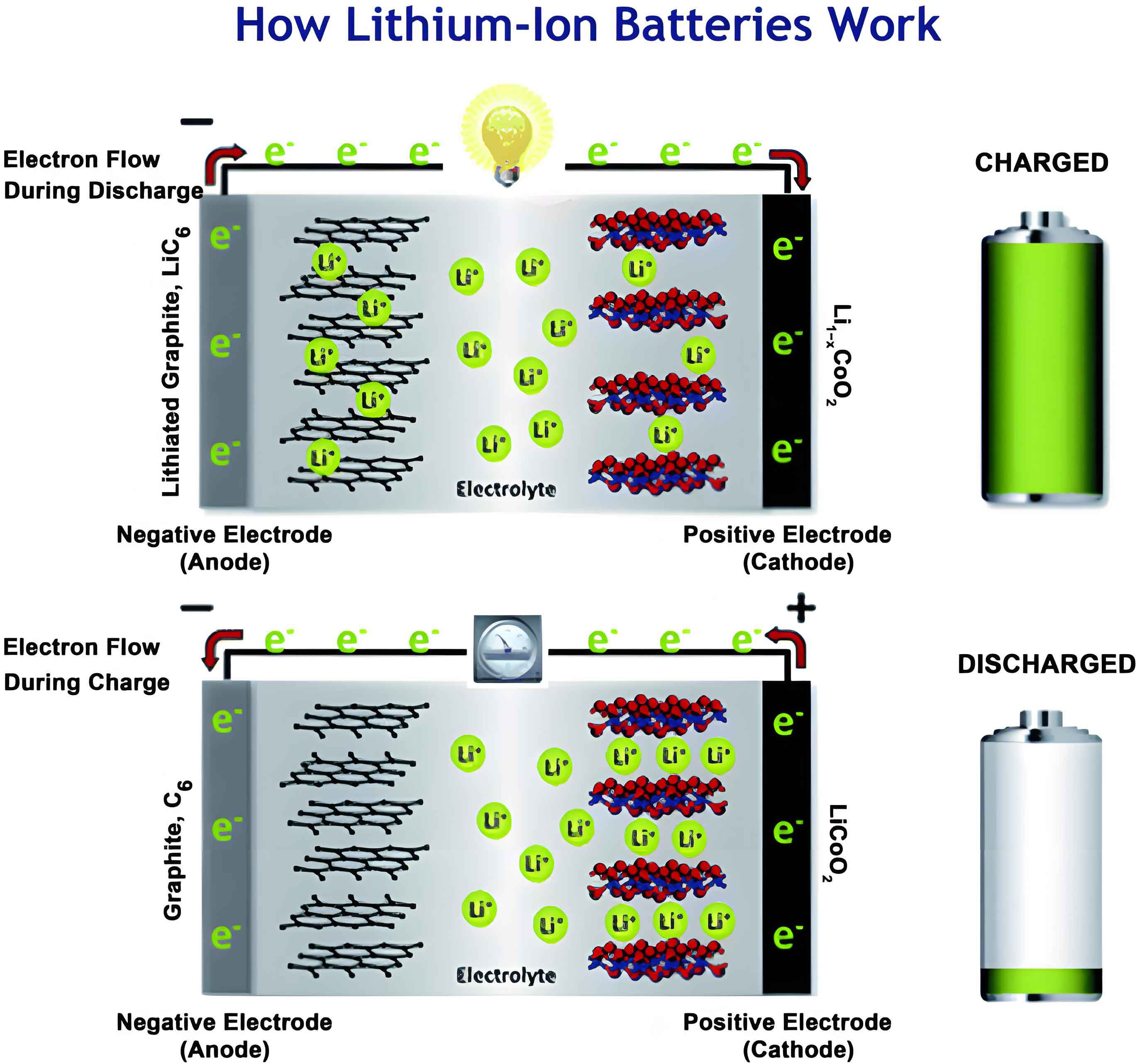
Various cooling strategies have been explored for managing the heat generated by lithium ion battery packs, including air cooling, phase change material (PCM) cooling, and heat pipe systems. However, for high-density battery modules where space is at a premium and heat generation is substantial, liquid cooling plates often represent the optimal solution. While liquid cooling systems are more complex than air-based systems, their superior heat exchange efficiency is well-documented. Traditional liquid cold plate designs, such as serpentine or parallel channels, often face a classic trade-off: improving cooling uniformity and capacity typically comes at the cost of increased pumping power due to higher pressure drops. This study addresses this challenge by drawing inspiration from nature’s highly efficient fluid distribution networks. We propose, analyze, and optimize a novel bionic cooling plate design based on the architecture of leaf veins, aiming to enhance the thermal performance of lithium ion battery packs while simultaneously minimizing hydraulic resistance.
Inspiration from Nature: The Leaf Vein Paradigm
The vascular system of a leaf, or its venation pattern, is a masterpiece of evolutionary engineering. It is designed to transport water and nutrients from the petiole to every extremity of the leaf blade with minimal energy expenditure. This network is hierarchical, starting with a main midrib that branches into successively smaller veins, ensuring uniform fluid delivery across the entire photosynthetic surface. Key characteristics of this biomimetic blueprint include:
- Hierarchical Branching: A parent channel splits into multiple daughter channels, increasing the total flow area and distribution points.
- Gradual Tapering: The diameter of the flow channels decreases progressively with each branching generation, maintaining optimal fluid velocity and pressure distribution.
- Angled Bifurcations: The branching angles are not arbitrary; they often follow principles that minimize flow resistance and energy loss at junctions.
We translate this biological paradigm into an engineering design for cooling a lithium ion battery pack. The target pack configuration consists of multiple layers, each populated with a dense array of 26650-type cylindrical lithium ion battery cells. A bionic cold plate is positioned on one or both sides of each cell layer. The core innovation lies in the flow channel pattern etched or formed within this plate. Instead of a serpentine path, the coolant flows through a network that mimics a leaf vein: it enters through a single “midrib” inlet, branches out through multiple generations of channels that cover the plate area beneath the cells, and then converges back to a single outlet. This design philosophy aims to achieve more uniform surface cooling—mimicking the uniform delivery of water in a leaf—while the specific geometry of the branches (like the bifurcation angle) is engineered to reduce localized flow disturbances that cause pressure drops.
Numerical Modeling Methodology
To rigorously evaluate the proposed bionic leaf vein channel cold plate, a comprehensive three-dimensional computational fluid dynamics (CFD) and conjugate heat transfer model is developed. The model simulates the coupled physical processes of fluid flow, heat transfer within the coolant and solid domains (cold plate and lithium ion battery cells), and the heat generation from the electrochemical reactions inside the lithium ion battery.
Governing Equations
The flow of the coolant (a 50% ethylene glycol-water solution) within the bionic channels is modeled as an incompressible, steady or transient, turbulent flow. The primary conservation equations solved are:
Continuity Equation (Mass Conservation):
$$ \nabla \cdot \vec{v} = 0 $$
where $\vec{v}$ is the fluid velocity vector.
Navier-Stokes Equations (Momentum Conservation):
$$ \rho \left( \frac{\partial \vec{v}}{\partial t} + \vec{v} \cdot \nabla \vec{v} \right) = -\nabla p + \nabla \cdot (\mu \nabla \vec{v}) $$
where $\rho$ is the fluid density, $p$ is the pressure, and $\mu$ is the dynamic viscosity.
Energy Equation (Energy Conservation):
For the fluid domain:
$$ \frac{\partial (\rho C_p T)}{\partial t} + \nabla \cdot (\rho C_p \vec{v} T) = \nabla \cdot (k \nabla T) $$
For the solid domains (battery and cold plate):
$$ \rho_s C_{p,s} \frac{\partial T}{\partial t} = \nabla \cdot (k_s \nabla T) + \dot{q}_{gen} $$
Here, $C_p$ is the specific heat capacity, $T$ is temperature, $k$ is thermal conductivity, and the subscript $s$ denotes solid properties. The term $\dot{q}_{gen}$ represents the volumetric heat generation rate within the lithium ion battery, a critical input for an accurate simulation.
Thermophysical Properties and Boundary Conditions
Accurate material properties are essential. The table below summarizes the key properties used for the lithium ion battery cell and the coolant.
| Component | Density, $\rho$ (kg/m³) | Specific Heat, $C_p$ (J/kg·K) | Thermal Conductivity, $k$ (W/m·K) |
|---|---|---|---|
| Coolant (50% EG-Water) | 1071 | 3300 | 0.384 |
| 26650 Lithium Ion Battery Cell (Radial/Axial) | 1760 | 1108 | 3.91 / 23.0 |
The boundary conditions for the simulation are set as follows:
- Inlet: Coolant inlet with a specified constant velocity (ranging from 0.2 to 0.6 m/s in this study) and a fixed temperature of 293.15 K (20°C).
- Outlet: Pressure-outlet condition, typically set to ambient pressure.
- Walls: The interfaces between the fluid (channels) and the solid (cold plate) are defined as no-slip, coupled walls for conjugate heat transfer. The external surfaces of the battery pack and cold plate are subject to natural convection with a heat transfer coefficient of 5 W/(m²·K) to an ambient temperature of 293.15 K.
- Battery Heat Generation: The heat generation rate for the lithium ion battery during a 1C discharge process is implemented as a time-dependent volumetric source term across the cell domains, validated against experimental data to ensure model fidelity.
Model Validation and Grid Independence
Prior to parametric studies, the modeling approach is validated. The simulated temperature rise of a single 26650 lithium ion battery under a 4C discharge rate is compared against established experimental data. The results show excellent agreement, with a maximum deviation of less than 2.5%, confirming the accuracy of the thermal model for the lithium ion battery. Furthermore, a grid independence study is conducted to ensure numerical results are not influenced by mesh resolution. Multiple meshes with increasing cell counts are tested for a baseline case. Key performance indicators, such as maximum battery temperature and system pressure drop, are monitored. The results stabilize beyond a certain mesh density, and that refined mesh is selected for all subsequent simulations to guarantee accuracy while maintaining computational efficiency.
Parametric Analysis of the Bionic Design
The performance of the bionic leaf vein channel cold plate is governed by several geometric and operational parameters. We focus on two of the most influential: the branching angle of the vein-like channels and the inlet coolant flow rate.
1. Influence of Branching Angle
The angle at which a main channel bifurcates into two smaller branches is a critical design variable. It significantly affects both the hydrodynamic losses and the spatial coverage of the cooling surface.
Effect on Pressure Drop: The total pressure drop ($\Delta P$) between the inlet and outlet is a direct measure of the pumping power required. In fluid networks, pressure loss arises from wall friction (along straight sections) and, more dominantly, from form losses at junctions, expansions, and contractions. The branching junction is a primary source of form loss. Our simulations investigate a range of branching angles ($\theta$) from 35° to 45°.
$$ \Delta P = f(\theta, Re, \text{geometry}) $$
A surprising but consistent trend is observed: as $\theta$ increases from 35° to approximately 42.5°, the overall system $\Delta P$ decreases. Beyond 42.5°, up to 45°, the pressure drop begins to increase again. This non-monotonic behavior indicates an optimal angle for minimizing junction losses. To isolate this effect, a simplified model of a single symmetric bifurcation (a T-junction with an adjustable angle) under constant flow conditions is analyzed. The pressure loss across this isolated junction follows the same trend, confirming that the optimum near 42.5° is a fundamental hydrodynamic characteristic of this specific bifurcation geometry, likely related to the minimization of flow separation and recirculation zones at the branch.
Effect on Cooling Performance: The cooling performance is evaluated by the maximum temperature ($T_{max}$) and the temperature uniformity, characterized by the maximum temperature difference ($\Delta T_{max} = T_{max} – T_{min}$) within the lithium ion battery pack at the end of discharge.
$$ T_{max} = \max(T_{cell,1}, T_{cell,2}, …, T_{cell,n}) $$
$$ \Delta T_{max} = \max(T_{cell,i}) – \min(T_{cell,j}) $$
The results demonstrate that a larger branching angle generally improves cooling. As $\theta$ increases from 35° to 45°, the flow paths from the inlet reach closer to the lateral edges and corners of the battery pack, which are typically the hottest zones due to lower local flow availability and heat accumulation. This improved coverage leads to a direct reduction in $T_{max}$. For instance, at an inlet velocity of 0.2 m/s, increasing $\theta$ from 35° to 45° reduces $T_{max}$ by about 0.52 K. Consequently, $\Delta T_{max}$ also decreases with increasing angle, as the cooling becomes more spatially uniform, though the rate of improvement diminishes at larger angles.
| Branching Angle, $\theta$ (°) | Max. Battery Temp, $T_{max}$ (K) | Min. Battery Temp, $T_{min}$ (K) | Max. Temp Difference, $\Delta T_{max}$ (K) | System Pressure Drop, $\Delta P$ (kPa) |
|---|---|---|---|---|
| 35.0 | 298.95 | 293.45 | 5.50 | 0.85 |
| 37.5 | 298.80 | 293.48 | 5.32 | 0.78 |
| 40.0 | 298.65 | 293.50 | 5.15 | 0.72 |
| 42.5 | 298.55 | 293.52 | 5.03 | 0.68 |
| 45.0 | 298.50 | 293.53 | 4.97 | 0.71 |
2. Influence of Inlet Coolant Flow Rate
The volumetric flow rate, often controlled by the inlet velocity ($v_{in}$), is a primary operational parameter for any liquid cooling system.
Effect on Pressure Drop: The relationship between flow rate and pressure drop is strongly non-linear. For internal flow, $\Delta P$ is generally proportional to the square of the average velocity (or flow rate) for turbulent flow, and linearly proportional for laminar flow, though geometry complicates this relationship.
$$ \Delta P \propto v_{in}^n $$
where $n$ is typically between 1 and 2. Our simulations confirm a sharp increase in $\Delta P$ with increasing $v_{in}$. For the bionic cold plate with $\theta = 45^\circ$, raising $v_{in}$ from 0.2 m/s to 0.6 m/s causes $\Delta P$ to surge from 0.66 kPa to 3.69 kPa—an increase of over 450%.
Effect on Cooling Performance: Higher flow rates enhance convective heat removal, as described by Newton’s law of cooling: $q” = h (T_{surface} – T_{coolant})$, where the convective heat transfer coefficient $h$ increases with flow velocity. Therefore, both $T_{max}$ and $T_{min}$ of the lithium ion battery pack decrease with increasing $v_{in}$. More importantly, the temperature uniformity improves, leading to a lower $\Delta T_{max}$. However, this improvement follows a law of diminishing returns. The incremental cooling benefit gained from each increase in flow rate becomes smaller, while the penalty in pumping power grows quadratically. This highlights a critical trade-off in system design: selecting a flow rate that achieves adequate thermal performance without imposing excessive parasitic energy consumption on the vehicle’s cooling system. For the studied lithium ion battery pack configuration, an inlet velocity of 0.3 m/s often represents a favorable balance.
| Inlet Velocity, $v_{in}$ (m/s) | Vol. Flow Rate (L/min)* | Max. Battery Temp, $T_{max}$ (K) | Max. Temp Difference, $\Delta T_{max}$ (K) | System Pressure Drop, $\Delta P$ (kPa) | Relative Pumping Power Increase** |
|---|---|---|---|---|---|
| 0.2 | ~0.60 | 299.25 | 5.78 | 0.31 | 1.00 (Baseline) |
| 0.3 | ~0.91 | 298.55 | 5.03 | 0.68 | ~3.30 |
| 0.4 | ~1.21 | 298.10 | 4.55 | 1.18 | ~7.66 |
| 0.5 | ~1.51 | 297.75 | 4.22 | 1.82 | ~14.70 |
| 0.6 | ~1.81 | 297.50 | 3.98 | 2.61 | ~25.30 |
| *Approximate calculation based on inlet pipe area. **Pumping power is approximately proportional to $\dot{V} \cdot \Delta P$. Values normalized to the 0.2 m/s case. |
|||||
Comparison with Conventional Serpentine Channel Design
To quantify the advancement offered by the bionic design, a direct comparison is made with a traditional serpentine flow channel cold plate. The comparison is conducted under identical operating conditions (inlet temperature, flow rate) and for the same lithium ion battery pack. The wetted surface area of both cold plates is also kept nearly equivalent to ensure a fair comparison of thermal performance.
Pressure Drop Advantage: The most striking advantage of the bionic leaf vein design is its dramatically lower flow resistance. Across the entire range of tested flow rates (0.2 to 0.6 m/s), the pressure drop for the bionic plate is significantly lower than that of the serpentine plate. At an inlet velocity of 0.2 m/s, the bionic plate (with $\theta = 42.5^\circ$) achieves an average reduction in $\Delta P$ of approximately 66.7% compared to the serpentine design. This substantial reduction translates directly into lower required pump size and a marked decrease in the parasitic power consumption of the battery thermal management system, thereby improving the overall energy efficiency of the electric vehicle.
Thermal Performance: The bionic design does not sacrifice cooling capability for this hydraulic efficiency. In fact, for most flow rates, there exists an optimal branching angle for the bionic plate that yields superior thermal performance compared to the serpentine channel. For example, at $v_{in} = 0.2$ m/s and $\theta = 45^\circ$, the bionic plate reduces the maximum temperature difference $\Delta T_{max}$ within the lithium ion battery pack by about 7.3% (or 0.3 K) compared to the serpentine plate. This improvement stems from the more uniform distribution of coolant across the plate surface, preventing localized hot spots that are common in serpentine channels where the coolant temperature rises along its path.
| Metric | Serpentine Channel | Bionic Channel ($\theta=42.5^\circ$) | Percentage Improvement |
|---|---|---|---|
| Avg. Pressure Drop (0.2-0.6 m/s) | 2.05 kPa | 0.68 kPa | -66.8% |
| Max. Battery Temp @ 0.3 m/s | 298.85 K | 298.55 K | -0.30 K |
| Max. Temp Diff. @ 0.3 m/s | 5.40 K | 5.03 K | -6.9% |
| Cooling Uniformity | Moderate (gradient along flow path) | Excellent (uniform coverage) | Significantly Better |
Conclusions and Future Perspectives
This investigation demonstrates the profound potential of bio-inspired design in advancing thermal management technology for high-power lithium ion battery systems. The proposed bionic leaf vein channel cold plate successfully decouples the traditional trade-off between hydraulic performance and cooling efficacy. Key findings include:
- The branching angle of the仿生 channels is a critical optimization parameter. An angle near 42.5° was found to minimize pressure losses due to reduced hydrodynamic resistance at the bifurcations.
- The cooling performance, measured by maximum temperature and pack temperature uniformity, improves with both increasing branching angle and inlet flow rate. However, the benefit of increasing flow rate diminishes rapidly against a quadratically increasing pressure drop penalty.
- Compared to a conventional serpentine channel design with comparable cooling area, the bionic leaf vein冷板 achieves a dramatic reduction in system pressure drop (averaging around 66.7%) while simultaneously improving temperature uniformity within the lithium ion battery pack. This leads to a more efficient, effective, and potentially safer thermal management system.
The implications for lithium ion battery pack design are significant. By lowering the pumping power requirement, the bionic system contributes to the overall energy efficiency of the electric vehicle. Enhanced temperature uniformity reduces cell-to-cell variations, promoting balanced aging and extending the useful life of the entire battery pack. Future research can build upon this foundation by exploring multi-objective optimization algorithms to fine-tune other geometric parameters such as channel taper ratios, hierarchical branching levels, and channel cross-sectional shapes. Furthermore, experimental validation with prototype冷板s under real-world dynamic loading profiles for lithium ion batteries is an essential next step to translate this promising numerical study into practical engineering solutions for the next generation of electric vehicles.