
As we navigate the evolving landscape of modern industry, I have observed a profound shift towards integrating aesthetic elegance with technological prowess. In recent years, the convergence of art and innovation has become a driving force, particularly in sectors like surface coatings and energy storage. This article delves into two pivotal developments: the brand transformation of a leading art coatings company and the establishment of an engineering center dedicated to advancing solid-state battery technology through 3D printing. From my perspective as an industry insider, these initiatives not only redefine market standards but also underscore a commitment to transcending ordinary limits. Through detailed analysis, tables, and formulas, I aim to elucidate the significance of these advancements, emphasizing the repeated importance of solid-state battery innovations in shaping our future.
The first segment explores the rebranding efforts of a prominent art coatings manufacturer. In early 2024, this company unveiled a comprehensive upgrade to its brand identity, anchored in the core concept of “transcending the ordinary on flat surfaces.” This philosophy resonates with a broader trend where consumers seek not just products but experiences that reflect confidence and elegance. The rebranding involved a holistic overhaul of visual elements, including the logo, super symbols, primary visuals, brand colors, and application extensions. From my vantage point, this move is more than a cosmetic change; it is a strategic endeavor to forge emotional connections with customers, positioning the brand as a pioneer in lifestyle enhancement. To summarize the key aspects of this upgrade, I present the following table:
| Element | Previous State | Upgraded State | Impact on Consumer Perception |
|---|---|---|---|
| Logo Design | Conventional, minimal differentiation | Modern, symbolic of elegance and innovation | Enhances brand recall and premium appeal |
| Brand Colors | Standard palette with limited vibrancy | Dynamic hues reflecting confidence and creativity | Evokes emotional resonance and aesthetic satisfaction |
| Super Symbols | Basic graphical elements | Integrated motifs representing transcendence and artistry | Strengthens visual storytelling and brand narrative |
| Application Extensions | Limited to traditional marketing materials | Expanded to digital platforms and experiential spaces | Fosters immersive engagement and lifestyle association |
| Brand Messaging | Focused on product functionality | Emphasizes emotional benefits and aspirational living | Builds long-term loyalty and community connection |
This transformation aligns with a mathematical perspective on consumer behavior, where brand value can be modeled as a function of aesthetic appeal and emotional engagement. For instance, we can express brand impact (BI) using the formula:
$$BI = \alpha \cdot A + \beta \cdot E + \gamma \cdot I$$
where \(A\) represents aesthetic score, \(E\) denotes emotional connection index, \(I\) is innovation factor, and \(\alpha, \beta, \gamma\) are weighting coefficients determined by market dynamics. Through such frameworks, we can quantify how rebranding drives market leadership, as seen in this company’s efforts to stay at the forefront of innovation.
Transitioning to the second focal point, the realm of energy storage has witnessed a groundbreaking collaboration with the establishment of a graphene-based solid-state battery 3D printing engineering center. In January 2024, a national graphene innovation center partnered with a high-tech manufacturing firm to form this hub, marking a substantial leap in solid-state battery development. As an advocate for sustainable technology, I believe this initiative is pivotal for advancing solid-state battery systems, which offer superior energy density and safety compared to conventional lithium-ion batteries. The integration of 3D printing enables customized design and manufacturing, optimizing performance metrics for solid-state battery applications. To illustrate the advantages of solid-state battery technology, consider the following table comparing key parameters:
| Parameter | Solid-State Battery | Traditional Lithium-Ion Battery |
|---|---|---|
| Energy Density (Wh/kg) | 300-500 (projected) | 150-250 |
| Safety Profile | High (non-flammable electrolyte) | Moderate (flammable liquid electrolyte) |
| Cycle Life (cycles) | >5000 | 1000-2000 |
| Operating Temperature Range (°C) | -40 to 100 | 0 to 45 |
| Customization via 3D Printing | High flexibility in design | Limited to standard shapes |
The engineering center aims to refine the production processes for solid-state battery units, leveraging graphene’s exceptional properties. Graphene, a single layer of carbon atoms, enhances ionic conductivity and mechanical strength in solid-state battery architectures. From my analysis, the synergy between graphene and solid-state battery technology can be described through electrochemical models. For example, the ionic conductivity (\(\sigma\)) in a solid-state battery electrolyte follows the Arrhenius equation:
$$\sigma = \sigma_0 \cdot e^{-\frac{E_a}{kT}}$$
where \(\sigma_0\) is the pre-exponential factor, \(E_a\) is the activation energy, \(k\) is Boltzmann’s constant, and \(T\) is the temperature. Incorporating graphene can reduce \(E_a\), thereby improving \(\sigma\) and overall solid-state battery performance. Furthermore, the energy density (\(E_d\)) of a solid-state battery is given by:
$$E_d = \frac{C \cdot V}{m}$$
where \(C\) is the capacity, \(V\) is the voltage, and \(m\) is the mass. Advances in 3D printing allow for optimized electrode geometries, maximizing \(C\) and \(V\) in solid-state battery designs.
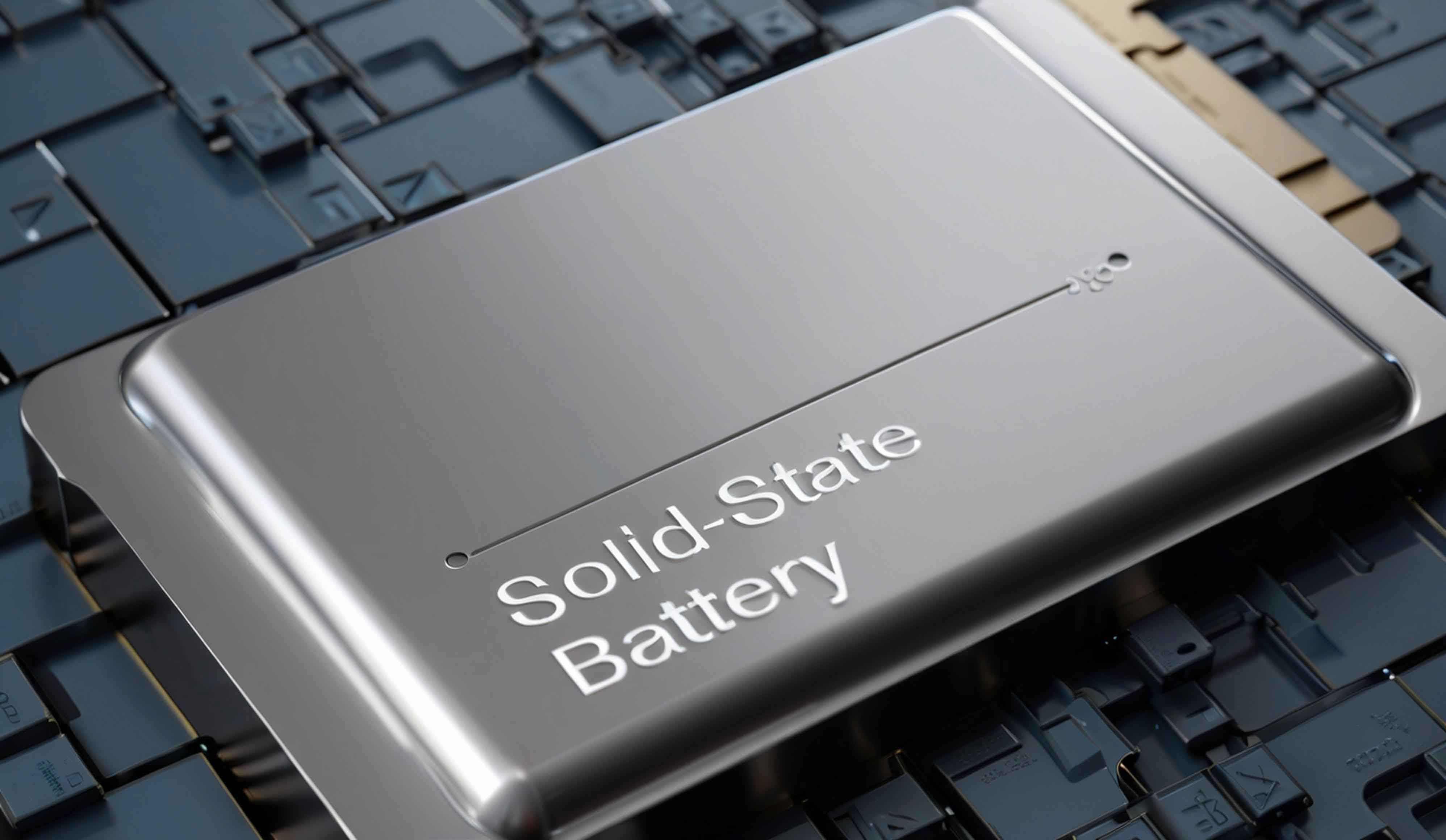
The collaboration between the graphene innovation center and the manufacturing firm represents a milestone in solid-state battery research. As I reflect on this partnership, it is clear that solid-state battery technology holds immense promise for revolutionizing energy storage across electric vehicles, renewable grids, and portable electronics. The 3D printing approach enables rapid prototyping and scalability, addressing previous bottlenecks in solid-state battery production. To delve deeper, the following table outlines the research focus areas of the engineering center:
| Research Area | Objectives | Expected Outcomes for Solid-State Battery |
|---|---|---|
| Material Synthesis | Develop graphene-enhanced solid electrolytes | Improved ionic conductivity and stability |
| 3D Printing Techniques | Optimize additive manufacturing for battery components | Customized electrode architectures and reduced waste |
| Performance Testing | Evaluate cycle life and safety under varied conditions | Validation of solid-state battery durability and reliability |
| Scalability Studies | Assess mass production feasibility | Cost-effective manufacturing processes for solid-state battery |
| Integration Protocols | Ensure compatibility with existing energy systems | Seamless adoption of solid-state battery in markets |
From my standpoint, the progress in solid-state battery technology is intertwined with broader industrial trends. Just as the art coatings brand emphasizes transcending surfaces, the solid-state battery initiative pushes boundaries in energy innovation. The mathematical modeling of these advancements can be extended to economic impact. For instance, the market growth rate (\(G\)) for solid-state battery adoption can be estimated using a logistic function:
$$G(t) = \frac{L}{1 + e^{-k(t – t_0)}}$$
where \(L\) is the maximum market penetration, \(k\) is the growth rate constant, \(t\) is time, and \(t_0\) is the inflection point. With ongoing research, solid-state battery technologies are poised to accelerate this curve, driven by partnerships like the one described.
In conclusion, as an industry participant, I am inspired by these dual narratives of aesthetic and technological elevation. The art coatings rebranding demonstrates how emotional resonance can redefine consumer markets, while the solid-state battery engineering center showcases the power of collaborative innovation. Both initiatives share a common thread: the pursuit of excellence beyond conventional limits. Through tables and formulas, I have highlighted the tangible metrics behind these movements, consistently underscoring the transformative potential of solid-state battery systems. Looking ahead, I anticipate that such endeavors will continue to shape our world, fostering environments where beauty and efficiency coexist harmoniously. The journey of innovation, whether on a painted wall or within a solid-state battery cell, remains a testament to human creativity and perseverance.