
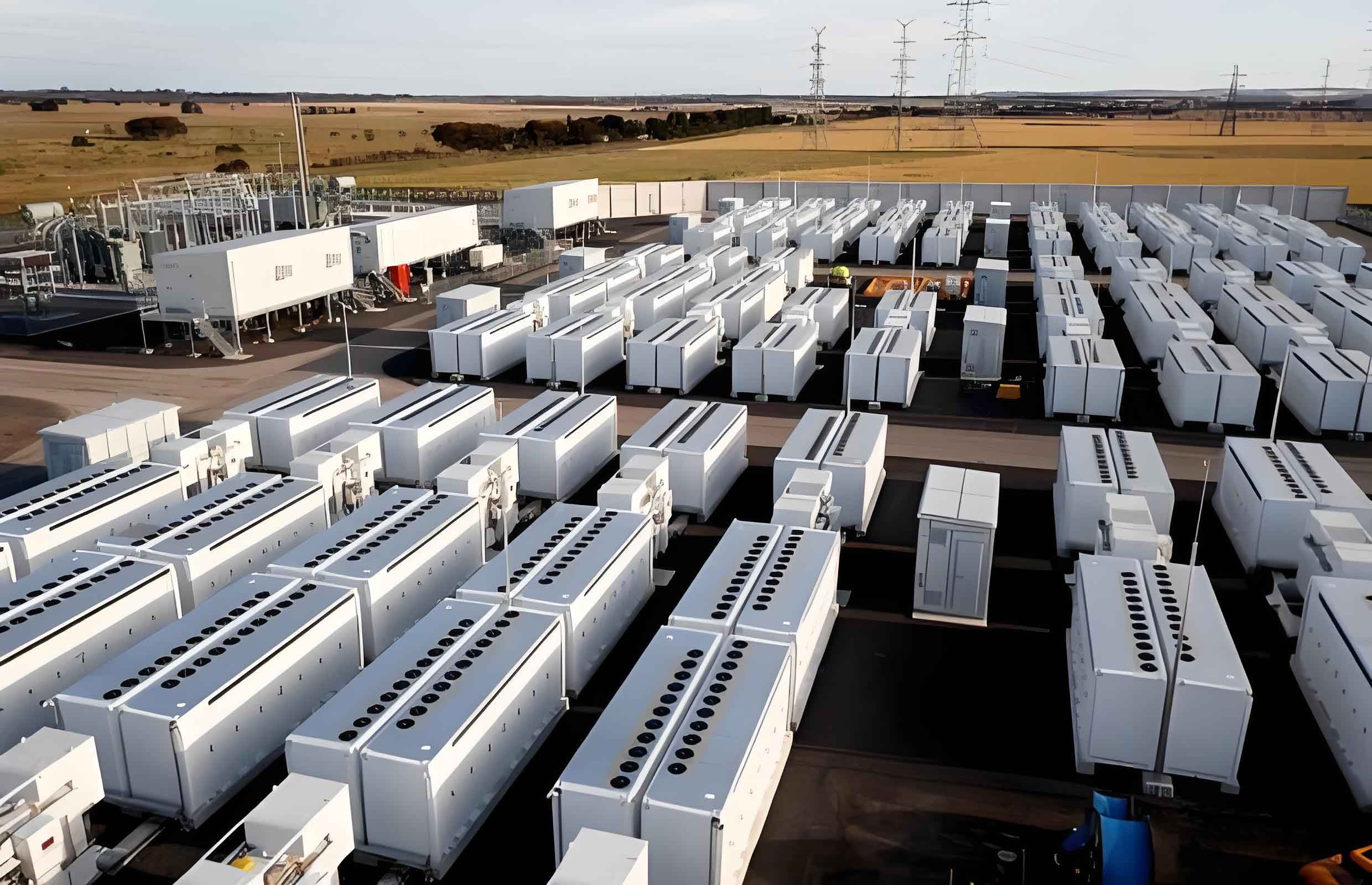
As a researcher deeply involved in the energy sector, I have observed that renewable energy sources like solar and wind power are continuously increasing their share in the global energy mix. However, these sources are characterized by intermittency, fluctuation, and unpredictability. Directly connecting them to the power grid poses significant challenges to the stable operation of the electrical system. On one hand, power fluctuations from renewable sources can lead to instability in grid frequency and voltage, necessitating energy storage systems for frequency and voltage regulation to maintain normal grid operation. On the other hand, the imbalance between energy supply and demand, such as energy surplus during low-demand periods and shortages during peak times, urgently requires energy storage systems to perform peak shaving functions for optimal energy allocation. The integration of large-scale renewable energy can also lead to insufficient absorption capacity within the power system. Energy storage systems can store excess energy during periods of high renewable generation and release it when supply is insufficient, thereby promoting the consumption of renewable energy. In extreme cases, such as large-scale blackouts due to grid failures, energy storage systems can provide black-start capabilities to help the grid recover quickly.
Battery Energy Storage Systems (BESS) represent an advanced technology that stores electrical energy in batteries and releases it during peak demand periods. The primary functions of a BESS are energy management and grid stabilization. By storing surplus electricity and supplying it when demand increases, a BESS helps balance supply and demand. As an efficient and flexible energy storage method, BESS plays a crucial role in addressing the aforementioned issues and promoting the green transformation of the energy system, as it can mitigate the impact of unstable renewable energy supply. Compared to hydropower, BESS does not require large reservoirs or alter water flow, thus having minimal environmental impact. Compared to thermal power generation, the advantages of BESS lie in its short construction period, lack of geographical limitations, and rapid response to energy demand changes. Research on BESS and power regulation technology is of great significance. In this article, I will detail the latest technological advancements in BESS and its functional positioning in different application scenarios, providing a clearer understanding of the current state and future development directions of these technologies.
Battery Energy Storage Systems (BESS)
BESS, as an efficient energy storage solution, has been widely applied in numerous fields. From home energy storage systems to large-scale grid services, BESS has demonstrated unique advantages. I have conducted in-depth research on the battery technologies, performance enhancement methods, and efficiency optimization within BESS.
Technical Progress in BESS
I have studied the application of sodium-ion battery technology in the field of mobile energy storage. I found that sodium-ion batteries, with their high energy density, long lifespan, and low cost, show advantages in mobile storage applications. For instance, at a median voltage of 3.05 V, a temperature of 25 °C, a depth of discharge (DOD) of 100%, and a charge-discharge rate of 1 C, the lifespan of a sodium-ion battery can reach 3500 cycles, with a lifetime capacity fade rate of 25%. Concurrently, the engineering technology of large-capacity BESS is continuously advancing. From a technical perspective, I have deeply analyzed the integration and optimization methods of energy storage systems. By employing reasonable system configurations and control strategies, the efficient operation and energy management of the storage system can be achieved. Furthermore, I have evaluated large-capacity storage systems from economic and environmental standpoints. I found that large-capacity storage systems not only improve grid stability and balance power loads but also optimize the integration of renewable energy, thereby enhancing energy utilization efficiency. They demonstrate excellent performance in both economic benefits and environmental impact, providing solutions for sustainable energy development. The research on battery energy storage technology and large-capacity BESS is continuously deepening. The progress in these technologies will bring more innovation opportunities to the energy sector and make significant contributions to achieving sustainable energy development and addressing climate change.
In terms of innovation and research in battery energy storage technology, I am constantly exploring ways to improve the performance and efficiency of energy storage systems. Currently, major storage technologies include lead-acid batteries, nickel-cadmium batteries, sodium-sulfur batteries, lithium-ion batteries, as well as technologies like superconducting magnetic energy storage and supercapacitors. Lead-acid batteries have an average lifespan of 300 to 1000 cycles with an energy conversion efficiency of 75% to 90%. With the development of battery technology, lithium-ion batteries can achieve a cycle life of 1500 to 5000 cycles, with an energy conversion efficiency stable around 85%. Comparatively, their cost is not far from that of lead-acid batteries. Supercapacitors have the advantages of a long lifespan and low cost, but their efficiency is lower, ranging from 75% to 85%. A comparison of the performance parameters of different types of energy storage technologies is shown in the table below.
A comparison of different energy storage technologies is shown in Table 1.
| Energy Storage Type | Specific Energy (Wh/kg) | Specific Power (W/kg) | Cycle Life | Cost ($/kWh) | Environmental Impact |
|---|---|---|---|---|---|
| Lead-Acid Battery | 30 ~ 50 | 180 ~ 300 | 500 ~ 1000 | 100 ~ 200 | High, contains toxic metals |
| Nickel-Cadmium Battery | 40 ~ 60 | 150 ~ 300 | 1500 ~ 2000 | 250 ~ 350 | High, contains toxic metals |
| Sodium-Sulfur Battery | 150 ~ 240 | 150 ~ 230 | 2500 ~ 4500 | 300 ~ 500 | Low, high-temperature operation |
| Lithium-ion Battery | 150 ~ 250 | 250 ~ 340 | 1500 ~ 5000 | 350 ~ 600 | Medium, recyclable |
| Superconducting Magnetic Storage | 0.2 ~ 2.0 | >1000 | >100,000 | >1000 | Low, no pollution |
| Supercapacitor | 5 ~ 15 | 500 ~ 1000 | >100,000 | 1000 ~ 2000 | Low, no pollution |
Functional Positioning of BESS in Different Application Scenarios
BESS plays a crucial role in supporting renewable energy integration, improving grid stability, and optimizing energy use. Different application scenarios impose different power regulation requirements on BESS, which can be mainly categorized into grid-side and user-side applications.
Grid-side BESS primarily serves the stable operation of large-scale power systems. They need to excel in frequency regulation, peak load shaving, and voltage support to address imbalances between power supply and demand, ensuring the safety and stability of the grid. Furthermore, grid-side BESS also serves an emergency backup role, providing power security during unexpected events. This type of BESS typically requires high energy density and power density to meet the demands of large-scale power dispatch, and it also needs rapid response capabilities and long lifespan to reduce maintenance frequency and costs.
User-side BESS is mainly oriented towards residential and commercial users. Its core functions are peak shaving, providing backup power, and optimizing electricity costs. On the user side, BESS not only helps users better manage their energy usage and reduce electricity bills but also supports energy independence, improving the utilization rate of renewable energy through self-generation and self-consumption. User-side BESS is usually smaller in scale, with relatively lower requirements for energy and power density, but it still needs sufficient performance to meet daily electricity needs.
The specific comparison is detailed in Table 2.
| Application Scenario | Main Functions | Specific Energy (Wh/kg) | Specific Power (W/kg) | Response Time | Scale | Typical Technology Type |
|---|---|---|---|---|---|---|
| Grid-Side | Frequency Regulation, Peak Shaving, Voltage Support, Emergency Backup | 100 ~ 200 | 200 ~ 400 | Milliseconds to Seconds | Large (MW level) | Lithium-ion, Sodium-Sulfur, Flywheel |
| User-Side | Peak Shaving, Backup Power, Cost Optimization, Self-consumption | 50 ~ 150 | 100 ~ 200 | Seconds to Minutes | Small (kW level) | Lithium-ion, Lead-Acid, Supercapacitors |
Power Regulation Technology
Current Research Status
Power regulation involves a series of control and management measures to adjust the supply and consumption of electricity in the power system, thereby maintaining grid stability and efficient energy use. It helps balance the supply and demand relationship of the grid, preventing grid failures caused by overload or under-supply. Power regulation technology plays a core role in power system management. The key lies in using various technical means to control and optimize the generation, distribution, and consumption of electricity. These can be mainly classified into power regulation technology based on energy storage systems, data-driven power regulation technology, and adaptive control-based power regulation technology. The introduction of these various technologies has driven the development of power regulation techniques.
For distributed energy storage systems, I have studied variable adjustment factor State of Charge (SOC) droop control and power regulation. This method optimizes power allocation among storage units by dynamically adjusting the droop coefficient. When the SOC of a storage unit is high, the droop coefficient increases, allowing it to bear more power output. This approach not only ensures energy balance among units within the storage system but also improves the stability and efficiency of the entire system. This control strategy performs excellently in responding to grid fluctuations and sudden load changes, enabling rapid response and system stability restoration.
Data-driven methods like big data are gaining attention in the field of power regulation. Some researchers have proposed a data-driven, information-based power regulation method that uses large amounts of historical data to train and optimize prediction models, enabling information-based and automated power regulation. For example, by collecting vast amounts of power generation data from wind farms under various weather and operating conditions, along with charging and discharging data from BESS, a model can be trained to predict the real-time power generation of the wind farm and automatically adjust the charging and discharging strategy of the BESS. This ensures the stable operation of the wind farm and improves power quality.
Besides data-driven methods, I have also explored adaptive control-based power regulation methods. Some studies discuss real-time power regulation methods for energy demand systems based on adaptive control. This method can monitor the system’s energy demand and the energy status of the storage system in real-time, automatically adjusting power output to meet the ever-changing energy demands.
Application of Power Regulation Technology in Different Scenarios
Renewable Energy
Power regulation technology plays a significant role in improving the efficiency, stability, and reliability of renewable energy systems. In the solar energy field, some researchers have addressed the output optimization control problem of photovoltaic (PV) power generation systems by using a model-free adaptive control maximum power point tracking method to improve the stability of shipborne PV system output.
Transportation
In the transportation sector, driving performance and range can be optimized by regulating the power output of motors and batteries. I have studied the power regulation systems for fuel cells used in mobile devices like automobiles. Advanced electronic control technology can precisely control the reaction process of the fuel cell, optimizing key parameters such as gas flow, pressure, and humidity to improve the efficiency and durability of the fuel cell.
Furthermore, a mobile lithium-ion battery emergency energy storage system I examined allows for convenient separation of the cabin. In active power regulation tests, this system demonstrated extremely high control accuracy (within 0.8%) and fast response time (within 0.15 s). When idle, the emergency system can be used as a stationary energy storage device, and during emergencies, it can be rapidly deployed, improving equipment utilization. It also possesses multiple functions, such as emergency charging for electric vehicles and uninterrupted power supply.
Power System
Some research involves using energy storage in conjunction with wind turbines to participate in microgrid primary frequency regulation, giving wind turbines a primary frequency regulation capability similar to synchronous generators. I have also looked into BESS power allocation methods for PV power smoothing, which specifically consider the battery’s State of Health (SOH) and SOC to address the lifespan loss issue of BESS when participating in PV smoothing.
Control Modes
Active and Reactive Power (PQ) control, Voltage and Frequency (VF) control, and grid-forming control are important control strategies in the field of power electronics, particularly in distributed generation, microgrids, and energy storage systems. They are mainly used to regulate power quality and power stability during grid-connected or islanded operation.
PQ Control
PQ control refers to controlling the active and reactive power output of a distributed generation source around a given operating value, allowing the source to operate according to the given PQ values without depending on the microgrid feeder voltage or other parameters. PQ control is used in utility grid systems, grid-connected distributed generation, or microgrid systems providing voltage support. In such cases, the distributed generation system is treated as a constant power output source. When a microgrid operates in islanded mode, distributed sources acting as slave control units typically adopt PQ control. For distributed sources, a PQ control method can be used, and based on the operating characteristics in grid-connected mode, specific PQ control strategies can be proposed.
VF Control
VF control is mainly applied when a distributed generation system or microgrid operates in islanded mode, i.e., disconnected from the main grid and supplying power independently. VF control ensures the stability of voltage and frequency, meeting the requirements of local loads and ensuring power supply quality. Some studies use a composite energy storage device consisting of supercapacitors and batteries, where the battery serves as the primary power source for the microgrid in islanded mode, employing VF control. During islanding and grid-connection transitions, pre-control for grid connection can reduce the impact of grid connection, limiting it within a reasonable range to ensure power balance and achieve smooth switching between the two operating modes of the microgrid.
Grid-Forming Control
Grid-forming control is an advanced control strategy suitable for power systems with a high penetration of renewable energy. Unlike traditional “grid-following” control, grid-forming control allows inverters or microgrid systems to autonomously form and control the grid’s voltage and frequency without a strong grid reference. This enables BESS, microgrids, or renewable energy generation units to respond quickly during grid faults or islanded conditions, providing necessary active and reactive power support to enhance system resilience and reliability.
For the poor active support capability of wind power hydrogen production systems when connected to weak grids, a dual virtual machine control strategy based on a grid-forming energy storage virtual synchronous generator and a virtual DC machine has been proposed. This strategy can provide reliable voltage and frequency support for the wind power hydrogen production system connected to a weak grid and also effectively mitigate DC bus voltage fluctuations in the hydrogen production system.
Integration and Optimization of BESS and Power Regulation Technology
BESS plays a vital role in power regulation. Its ability to quickly store and release electrical energy makes it a powerful tool for stabilizing grid power fluctuations.
Control Strategy Optimization
Regarding the optimization of control strategies for BESS and power regulation systems, I note that traditional single-pulse driving methods may not meet the efficient operation requirements of large-capacity BESS in some cases. To validate multi-pulse driving technology, experiments were conducted using a 6 kV, 600 kW 5-level (with each level having a DC power supply voltage of 1000 V and using 1700 V / 300 A IGBT switches) cascaded battery energy storage power regulation system. It was found that the encoding/decoding scheme using single-fiber transmission is very reliable and consistent with theoretical analysis. The multi-pulse driving technology offers high flexibility and precision. It can improve the operating efficiency of BESS while extending battery lifespan and can also help BESS cope with abnormal grid conditions. Issues such as voltage sags and frequency fluctuations can also be regulated by multi-pulse driving technology.
I have also studied a hybrid railway power conditioner based on an energy storage system and its control strategy. By monitoring grid power in real-time, this system utilizes the fast charging and discharging characteristics of the energy storage system to rapidly absorb or release electrical energy, thereby smoothing power fluctuations in the railway grid. This power regulation strategy can improve the stability and safety of the railway power system, reducing equipment damage and outage risks caused by power fluctuations.
Supercapacitor technology is another important technology in energy storage systems. Combining system simulation, I have explored the application effects of supercapacitors in power storage regulation systems. When facing instantaneous power fluctuations in the grid, supercapacitors can quickly perform power compensation due to their extremely fast response speed and efficient energy storage capability, thus maintaining the stable operation of the grid.
Superconducting Magnetic Energy Storage (SMES) systems also show unique advantages in power regulation. Research and development of low-temperature SMES have entered demonstration systems in some countries. Systems from 0.1 to 10.0 MW have been commercialized on a small scale in the field of power quality regulation. An SMES device can store up to 4500 MWh of energy with an energy conversion efficiency of up to 95%, and its response speed is extremely fast, taking only milliseconds whether charging or discharging. I have studied the precise regulation of SMES power using a Proportional-Integral (PI) controller, proposing an efficient PI controller. This controller can work closely with the SMES to achieve precise control over system power. The research found that superconducting technology exhibits superior performance in fast response and efficient energy storage.
Design and Application
Regarding the design and application of BESS and power regulation technology, the integration of batteries with power regulation systems is becoming increasingly important as modern energy systems demand higher stability and regulation capability. This technological integration not only optimizes energy utilization efficiency but also provides stable energy output during power fluctuations.
I have explored the integrated application of batteries and power regulation systems. Traditionally, BESS was often viewed merely as a simple storage unit used to release stored energy during peak grid demand, making it difficult to meet current requirements. Therefore, BESS needs to be considered a dispatchable active and reactive power source within the grid. This means that BESS is no longer just passively storing and releasing energy but can actively adjust based on the real-time needs of the grid to maintain its stable operation. To achieve this, the power regulation system is integrated with BESS, and an algorithm for the energy storage system control is designed. This algorithm can precisely control the active and reactive power injection of the BESS, enabling fine voltage regulation in low-voltage distribution networks. Using this control algorithm, battery lifespan was extended by approximately 60%.
Power frequency magnetic field immunity tests on traditional battery power regulation systems show that the battery’s output power and stability are somewhat affected. The research indicates that in complex electromagnetic environments, the power regulation system must possess excellent immunity to ensure the stability and safety of the battery system. A power regulation system designed to address this issue can improve the battery’s performance under electromagnetic interference, with power output fluctuations in strong electromagnetic interference environments reduced by 25%.
I have also investigated a Power Conditioning System (PCS) coupled with a Vanadium Redox Flow Battery (VRFB). Through precise modeling and control strategy design, this battery power regulation system is integrated into the wind energy storage field. The results show that the PCS/VRFB controller can operate at maximum rate under various power combinations, with an active power response time of 0.1 to 0.2 s and a reactive power response time of about 10 ms. During sudden disconnection and reconnection of the wind farm, the PCS/VRFB can balance output power fluctuations, with a response time of about 70 ms in voltage control mode, demonstrating improved stability and reliability of the system.
Integration and Optimization
The integration and optimization of BESS and power regulation technology are crucial directions for improving energy utilization efficiency and battery endurance. Precise control of battery output power can enhance the operational stability and efficiency of equipment under different loads and environments while reducing unnecessary energy consumption. I have analyzed the integrated output power regulation system in new energy battery systems. Stable energy supply is essential for the normal operation of mobile devices. An output power regulation system designed for mobile devices can automatically adjust the battery’s output power based on the load conditions, ensuring stable operation in various environments. This control system not only improves the endurance of mobile devices but also enhances their adaptability to various complex environments. For power regulation systems integrated with cascaded H-bridge converter BESS, I proposed a control strategy to optimize BESS performance. Through fine control system design, efficient and stable operation of the battery system under different power demands was achieved. To address the input current ripple problem in traditional fuel cell systems, I have designed a power regulation system. By optimizing it in conjunction with a converter, the efficiency and stability of the fuel cell system were improved.
Power regulation systems can improve the current output of new energy batteries, enhance power output quality, and improve the stability and safety of equipment under different environmental conditions.
Challenges Facing the Integration of Energy Storage Systems and Power Regulation
Energy Efficiency and Technical Issues
Lithium-ion batteries dominate the market due to their high energy density and long cycle life. However, their poor thermal stability can lead to safety issues like fires or explosions if overheated. Furthermore, some materials used in lithium-ion battery production are resource-constrained, increasing costs and raising concerns about the sustainability of these resources. Although the fast charging and discharging capabilities of batteries have improved, technical bottlenecks remain in large-scale energy storage. The chemical stability of electrolytes is insufficient, potentially leading to performance degradation. Electrode materials may undergo structural degradation during long-term charge-discharge cycles. These issues all affect the efficiency and lifespan of batteries.
Cost-Effectiveness Issues
From an economic perspective, the high initial investment and relatively long payback period are major obstacles to the widespread adoption of BESS. The manufacturing and maintenance costs of batteries are high, and those using high-end materials and advanced technologies are even more expensive. The infrastructure required for mass production and application also demands substantial investment. Market acceptance of emerging energy storage technologies is still insufficient, and the market lacks stable policy support and incentives, causing hesitation for investors and consumers in their decision-making.
Safety Issues
Safety is an indispensable aspect of battery technology. The design of the battery system must be able to prevent situations like overheating, short circuits, or overcharging. The recycling and disposal of waste batteries also require strict environmental standards to prevent the leakage of hazardous substances, which is especially important at the end of the battery’s lifecycle.
Power Regulation and Large-Scale Renewable Energy Handling Issues
For power regulation systems, a major challenge is handling the frequency and voltage fluctuations from large-scale renewable energy sources like wind and solar. The intermittency and unpredictability of renewable energy require BESS not only to have high capacity but also to respond rapidly to grid demands to maintain stability. This requires advanced management systems and real-time data processing capabilities to optimize the performance and lifespan of the storage devices.
Future Developments
The development of BESS and power regulation technology requires technical support, policy support, and economic support. Technological innovation, especially breakthroughs in battery materials, battery design, and power regulation technology, will drive the performance improvement and cost reduction of energy storage systems. The development of solid-state battery technology is expected to solve safety issues and increase energy density, potentially causing a significant market shift. With the application of artificial intelligence and big data technology, the optimization of Battery Management Systems (BMS) will improve battery usage efficiency and lifespan. In terms of policy support, governments worldwide are introducing policies to support renewable energy and its supporting energy storage systems to achieve carbon neutrality goals. These include financial subsidies, tax incentives, and R&D funding. These measures will lower the investment cost of energy storage systems and increase market acceptance. The increasing market demand is also a significant factor driving the development of energy storage systems. With the rapid growth of the global electric vehicle market and large-scale deployment of renewable energy, the demand for efficient, high-density energy storage solutions is increasing. The modernization and upgrade of power systems also require more efficient energy storage technologies to ensure stable grid operation.
With the advancement of information technology, BESS and power regulation technology are gradually moving towards multi-technology integration, intelligence, and modularization. Battery technology will also develop towards higher energy density, longer lifespan, and lower cost. Computer and network technology will be increasingly applied in energy storage system power regulation, such as using real-time data analysis and cloud computing for information-based and modernized monitoring and management of battery status, optimizing the charge-discharge process, and extending battery life. With the development of distributed energy resources and microgrid technology, energy storage systems will increasingly exist in modular and flexibly configurable forms. They can quickly adjust output according to demand, adapting to the fluctuation and distribution of renewable energy, achieving optimal allocation of energy supply.
The development of BESS and power regulation technology will promote the widespread application of renewable energy. Energy storage systems can mitigate the intermittency and instability of renewable energy, improve the flexibility and stability of the grid, help reduce dependence on fossil fuels, and decrease environmental pollution and greenhouse gas emissions. A more stable and reliable power supply will improve the quality of life, especially in remote areas and developing countries. The application of energy storage technology can enhance electricity services and promote balanced socio-economic development.
Conclusion and Outlook
In the current context of global energy transition and climate change response, Battery Energy Storage Systems (BESS) and power regulation have become key technologies driving the advancement of energy storage technology. Power regulation technology plays a crucial role in energy storage systems, helping BESS respond quickly during peak power demand or unstable production, thereby enhancing equipment operational stability and energy efficiency. BESS and power regulation technology play a significant role in ensuring the efficient, reliable, and green transformation of the energy system. They not only promote the utilization and development of renewable energy but also enhance the operational flexibility and economic efficiency of the energy system. They play a key role in promoting environmental sustainability and addressing climate change. With the development of data science and artificial intelligence, data-driven prediction models and real-time power regulation strategies are increasingly used in grid management, further optimizing the performance of the power system. The progress in these technologies can improve energy utilization efficiency, enhance grid stability, and promote the widespread application of renewable energy.
The power $P$ in a system is fundamentally related to voltage $V$ and current $I$ by the formula:
$$P = V \times I$$
For a battery energy storage system, the state of charge (SOC) is a critical parameter, often estimated by:
$$SOC(t) = SOC(t_0) + \frac{1}{C_{rated}} \int_{t_0}^{t} I_b(\tau) \, d\tau$$
where $C_{rated}$ is the rated capacity and $I_b$ is the battery current. The power injected or absorbed by the BESS, $P_{BESS}$, can be expressed as:
$$P_{BESS} = V_{bus} \times I_{batt}$$
This integration of power regulation and battery energy storage systems is central to modern grid stability.