
In the realm of photovoltaic power generation systems, the on-grid inverter serves as a critical component that converts direct current from solar panels into alternating current synchronized with the grid. Ensuring the operational quality and safety of on-grid inverters is paramount, as faults can lead to system downtime, reduced efficiency, or even grid instability. Traditional fault detection methods for on-grid inverters often rely on manual inspections or basic monitoring software, which may lack real-time capabilities and accuracy. To address these limitations, I have developed an automatic fault detection method for on-grid inverters based on wavelet neural networks. This approach leverages advanced signal processing and machine learning to enhance detection precision and reliability. In this article, I will detail the methodology, including data acquisition, fault feature extraction, and the construction of a wavelet neural network, supported by formulas and tables to summarize key aspects. The goal is to provide a comprehensive solution that improves the maintenance and performance of on-grid inverters in photovoltaic applications.
The importance of on-grid inverters cannot be overstated, as they directly influence the overall efficiency and safety of photovoltaic systems. Faults in on-grid inverters can arise from various factors such as grid disturbances, component aging, or environmental stresses. Common fault types include IGBT failures, overcurrent, overvoltage, undervoltage, overheating, and communication issues. Early detection of these faults is crucial to prevent cascading failures and ensure continuous power generation. My method focuses on automating this process by integrating wavelet transforms with neural networks, enabling the capture of both time-domain and frequency-domain characteristics from inverter signals. This hybrid approach allows for robust feature extraction and classification, making it superior to conventional techniques. Throughout this discussion, I will emphasize the role of on-grid inverters in photovoltaic systems and how my method enhances their fault detection capabilities.
To begin, I configured a data acquisition system to collect operational data from the on-grid inverter. This system is essential for gathering real-time parameters such as voltage, current, power, frequency, and temperature. The configuration involves setting up communication protocols and hardware connections to ensure accurate data streaming. Below is a table summarizing the data acquisition system configuration:
| Configuration | Parameter |
|---|---|
| IP Address | 192.168.1.100 |
| Subnet Mask | 255.255.255.0 |
| Port Number | 8080 |
| Data Format | 8 data bits, 1 stop bit, no parity |
Once configured, the system continuously reads data from the on-grid inverter and stores it on a remote server for further analysis. This step ensures that we have a reliable dataset for fault detection. The data acquisition process is critical because the quality of input data directly affects the performance of subsequent feature extraction and neural network training. For on-grid inverters, monitoring these parameters in real-time allows us to detect anomalies promptly. The following formula represents the general data streaming process, where \( x(t) \) denotes the time-domain signal from the on-grid inverter, such as output voltage or current:
$$ x(t) = \text{Realtime Data from On-Grid Inverter} $$
With the data collected, the next step is fault feature extraction. This involves analyzing the inverter’s output signals to identify characteristics indicative of faults. Since on-grid inverter signals are periodic, I employed spectral analysis to extract high-frequency components associated with faults. The Fourier transform is used to convert time-domain signals into frequency-domain representations. For an inverter output signal \( x(t) \), its Fourier transform \( X(f) \) is defined as:
$$ X(f) = \int_{-\infty}^{+\infty} x(t) e^{-j2\pi ft} dt $$
Here, \( f \) represents frequency, \( t \) is time, and \( j \) is the imaginary unit. \( X(f) \) provides the amplitude and phase information across different frequencies. From this, the amplitude spectrum \( |X(f)| \) is derived, reflecting the strength of each frequency component. To extract features, I smooth the amplitude spectrum to reduce noise, then identify peak points corresponding to dominant frequencies. The peak frequencies and their amplitudes are recorded as feature parameters. Additionally, energy distribution across frequency bands is computed as a feature. The energy \( E_i \) in a sub-band \( [f_{li}, f_{hi}] \) is given by:
$$ E_i = \sum_{f=f_{li}}^{f_{hi}} |X(f)|^2 $$
This energy distribution helps in distinguishing fault conditions, as faults in on-grid inverters often manifest as changes in specific frequency bands. The extracted features are then output for use in the wavelet neural network. This process enhances the detection sensitivity for various fault types in on-grid inverters, such as IGBT failures or overvoltage events.
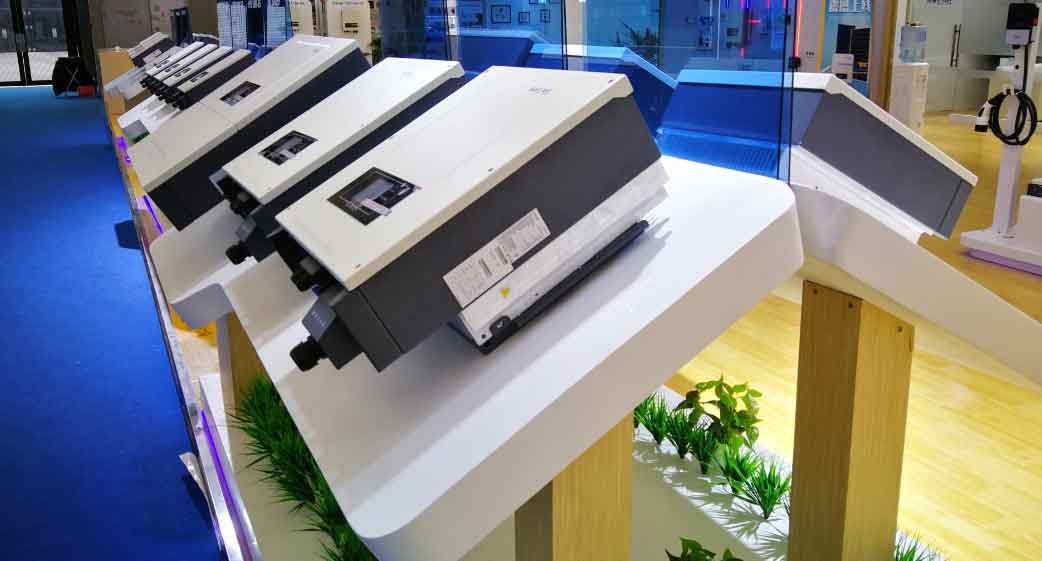
After feature extraction, I constructed a wavelet neural network for automatic fault detection in on-grid inverters. This network combines wavelet transforms with neural networks to leverage multi-resolution analysis and learning capabilities. The wavelet transform decomposes the inverter signal into wavelet coefficients at different scales and translations, using a wavelet basis function \( \psi \). For an input signal \( f(t) \), the wavelet transform coefficients \( W_f(a, b) \) are computed as:
$$ W_f(a, b) = \frac{1}{\sqrt{a}} \int_{-\infty}^{+\infty} f(t) \psi^*\left( \frac{t-b}{a} \right) dt $$
where \( a \) is the scale parameter, \( b \) is the translation parameter, and \( \psi^* \) denotes the complex conjugate of the wavelet function. This transformation captures both local and global signal features, making it ideal for analyzing non-stationary signals from on-grid inverters. The wavelet neural network consists of an input layer, hidden layers with wavelet activation functions, and an output layer for fault classification. The input layer neurons correspond to the extracted feature parameters, such as peak frequencies and energy values. The hidden layers use wavelet functions to process these inputs, enabling the network to learn intricate patterns associated with faults in on-grid inverters.
The training of the wavelet neural network involves forward propagation and backpropagation to optimize weights and biases. For fault detection, I defined a diagnostic function based on the network’s output. Specifically, I compute the Euclidean distance between fault diagnosis vectors derived from inverter currents. Let \( FDV_e \) be the fault diagnosis vector from real-time current monitoring of the on-grid inverter, and \( FDV_n \) be the vector under normal operation. The Euclidean distance \( V_d \) is given by:
$$ V_d = d(FDV_e, FDV_n) $$
This distance metric helps in identifying deviations indicative of faults. In normal operation, \( V_d \) remains small, but it increases significantly during faults like open-circuit events. To automate detection, I designed a diagnostic function \( F_d \):
$$ F_d = \begin{cases} 1, & \text{if } K \times V_d \geq 1 \\ 0, & \text{if } K \times V_d < 1 \end{cases} $$
where \( K \) is a gain factor. Here, \( F_d = 1 \) indicates a fault in the on-grid inverter, while \( F_d = 0 \) signifies normal operation. This function integrates seamlessly with the wavelet neural network, allowing for real-time fault alerts. The overall fault detection流程 for on-grid inverters involves signal acquisition, feature extraction, network processing, and diagnosis, as summarized in the following table outlining key steps:
| Step | Description | Application to On-Grid Inverters |
|---|---|---|
| Data Acquisition | Collect voltage, current, and other parameters from the on-grid inverter. | Ensures real-time monitoring of inverter performance. |
| Feature Extraction | Use Fourier transform and energy distribution to extract spectral features. | Identifies fault-related frequency components in inverter signals. |
| Wavelet Neural Network | Construct and train a network with wavelet activation functions. | Classifies faults based on extracted features from the on-grid inverter. |
| Fault Diagnosis | Apply diagnostic function to network outputs for fault detection. | Automatically flags faults in the on-grid inverter for maintenance. |
To validate my method, I conducted experiments using a three-phase diode neutral-point clamped (NPC) three-level on-grid inverter. This inverter is commonly used in photovoltaic systems due to its high efficiency and reliability. The experimental setup included a computer with an Intel Core i7 processor, 16 GB RAM, and an NVIDIA GTX 1080 Ti GPU for simulation and training. The on-grid inverter parameters are listed below:
| Configuration | Parameter |
|---|---|
| Rated Power | 10 kW |
| Voltage Range | DC input: 300-600 V DC; AC output: 200-260 V AC (three-phase) |
| Current Range | DC input: up to 20 A DC; AC output per phase: up to 10 A AC |
| Switching Frequency | 10 kHz |
| Efficiency | Up to 98% at rated load |
I simulated various fault states in the on-grid inverter using MATLAB/Simulink and collected a dataset comprising different fault types. The fault states included IGBT fault, overcurrent, overvoltage, undervoltage, overheating, and communication fault. Each fault was associated with a specific code for identification. The table below summarizes the fault states used in the experiment:
| Timestamp | Fault State | Fault Code |
|---|---|---|
| 2023-10-23 10:05:12 | IGBT Fault | 0x0001 |
| 2023-10-23 12:30:45 | Overcurrent Fault | 0x0002 |
| 2023-10-23 15:15:30 | Overvoltage Fault | 0x0003 |
| 2023-10-23 09:45:00 | Undervoltage Fault | 0x0004 |
| 2023-10-23 13:40:20 | Overheating Fault | 0x0005 |
| 2023-10-23 16:30:00 | Communication Fault | 0x0006 |
Applying my automatic fault detection method based on wavelet neural networks, I processed the collected data. The wavelet neural network was trained on normal and fault data to learn distinctive patterns. During testing, the network output fault probabilities for each state. The detection results for output voltage and current are shown in the following table, comparing actual values with detected values for each fault state in the on-grid inverter:
| Fault State | Item | Actual Value | Detected Value |
|---|---|---|---|
| IGBT Fault | Output Voltage (V AC) | 180.3 | 180.3 |
| Output Current (A AC) | 3.2 | 3.2 | |
| Overcurrent Fault | Output Voltage (V AC) | 225.0 | 225.0 |
| Output Current (A AC) | 22.0 | 22.0 | |
| Overvoltage Fault | Output Voltage (V AC) | 245.0 | 245.0 |
| Output Current (A AC) | 5.0 | 5.0 | |
| Undervoltage Fault | Output Voltage (V AC) | 190.0 | 190.0 |
| Output Current (A AC) | 4.0 | 4.0 | |
| Overheating Fault | Output Voltage (V AC) | 230.0 | 230.4 |
| Output Current (A AC) | 7.0 | 7.0 | |
| Communication Fault | Output Voltage (V AC) | No data (communication中断) | – |
| Output Current (A AC) | No data (communication中断) | – |
The results demonstrate that my method achieved high detection accuracy for most fault states in the on-grid inverter. The detected values closely match the actual values, with only a minor deviation of 0.4 V AC for the overheating fault, which is within acceptable limits. This confirms the effectiveness of the wavelet neural network in accurately identifying faults in on-grid inverters. The method successfully distinguishes between different fault types, such as IGBT faults and overvoltage events, enabling proactive maintenance. The integration of wavelet transforms allows the network to capture subtle signal changes, which is crucial for early fault detection in on-grid inverters. Moreover, the automated process reduces reliance on manual checks, enhancing the overall reliability of photovoltaic systems.
In discussion, the advantages of using wavelet neural networks for on-grid inverter fault detection are evident. Compared to traditional methods, this approach offers improved real-time capabilities and precision. The wavelet transform’s ability to analyze signals at multiple resolutions makes it suitable for non-stationary inverter outputs, while the neural network provides robust classification. However, challenges remain, such as the need for large datasets for training and computational resources for real-time implementation. Future work could focus on optimizing the network architecture for faster processing or integrating additional sensors for comprehensive monitoring. The method’s scalability allows it to be adapted to various types of on-grid inverters, from small residential systems to large-scale photovoltaic farms. By continuously refining the feature extraction and network training, we can further enhance the fault detection performance for on-grid inverters.
In conclusion, I have presented an automatic fault detection method for on-grid inverters based on wavelet neural networks. This method addresses the limitations of conventional techniques by combining advanced signal processing with machine learning. Through data acquisition, spectral feature extraction, and wavelet neural network construction, it enables accurate and real-time fault diagnosis for on-grid inverters. The experimental results validate its high detection accuracy across multiple fault states, demonstrating its practical value in photovoltaic applications. By automating fault detection, this method contributes to improved operational quality and safety of on-grid inverters, ultimately supporting the stability and efficiency of photovoltaic power generation systems. As the demand for renewable energy grows, such innovations will play a crucial role in maintaining reliable grid integration and reducing maintenance costs for on-grid inverters.
To further illustrate the mathematical foundations, consider the overall fault detection process as an optimization problem. Let the wavelet neural network output be \( y = f(W, x) \), where \( W \) represents the network weights, and \( x \) is the input feature vector from the on-grid inverter. The training objective is to minimize the loss function \( L(y, y_{\text{true}}) \), where \( y_{\text{true}} \) is the true fault label. Using gradient descent, we update the weights as:
$$ W_{\text{new}} = W_{\text{old}} – \eta \nabla_W L $$
where \( \eta \) is the learning rate. This optimization ensures the network learns to accurately classify faults in on-grid inverters. Additionally, the wavelet transform parameters \( a \) and \( b \) can be tuned to better capture fault characteristics. For instance, scaling parameter \( a \) affects frequency resolution, which is critical for identifying specific fault signatures in on-grid inverter signals. By iteratively refining these parameters, the method achieves robust performance across diverse operating conditions.
In summary, the integration of wavelet neural networks into fault detection for on-grid inverters represents a significant advancement in photovoltaic system maintenance. The method’s ability to process complex signals and provide automated diagnostics makes it a valuable tool for ensuring the longevity and efficiency of on-grid inverters. As technology evolves, I anticipate further improvements in speed and accuracy, paving the way for smarter and more resilient energy systems centered around reliable on-grid inverters.