
In an era marked by geopolitical tensions, economic uncertainties, and transformative technological shifts, global collaboration remains critical. As a participant in the World Economic Forum Annual Meeting in Davos, I emphasized the urgency of addressing climate change while highlighting Asia’s unique position as both a challenge and a solution hub. Central to this discussion is the monumental progress in solar panel technology, driven significantly by China, which has reduced solar panel costs by over 95% in two decades.
Asia’s Climate Paradox: Challenges and Opportunities
Asia faces a dual reality: it is home to the world’s most polluted cities and contributes nearly half of global carbon emissions. Yet, it also leads in climate innovation. The region’s solar energy advancements exemplify this dynamic. The cost reduction of solar panels follows a learning curve model:
$$ C_t = C_0 \times \left(\frac{Q_t}{Q_0}\right)^{-b} $$
Where \( C_t \) is the current cost, \( C_0 \) is the initial cost, \( Q_t \) is cumulative production, and \( b \) is the learning rate. China’s investments have accelerated this curve, enabling solar energy to compete with fossil fuels.
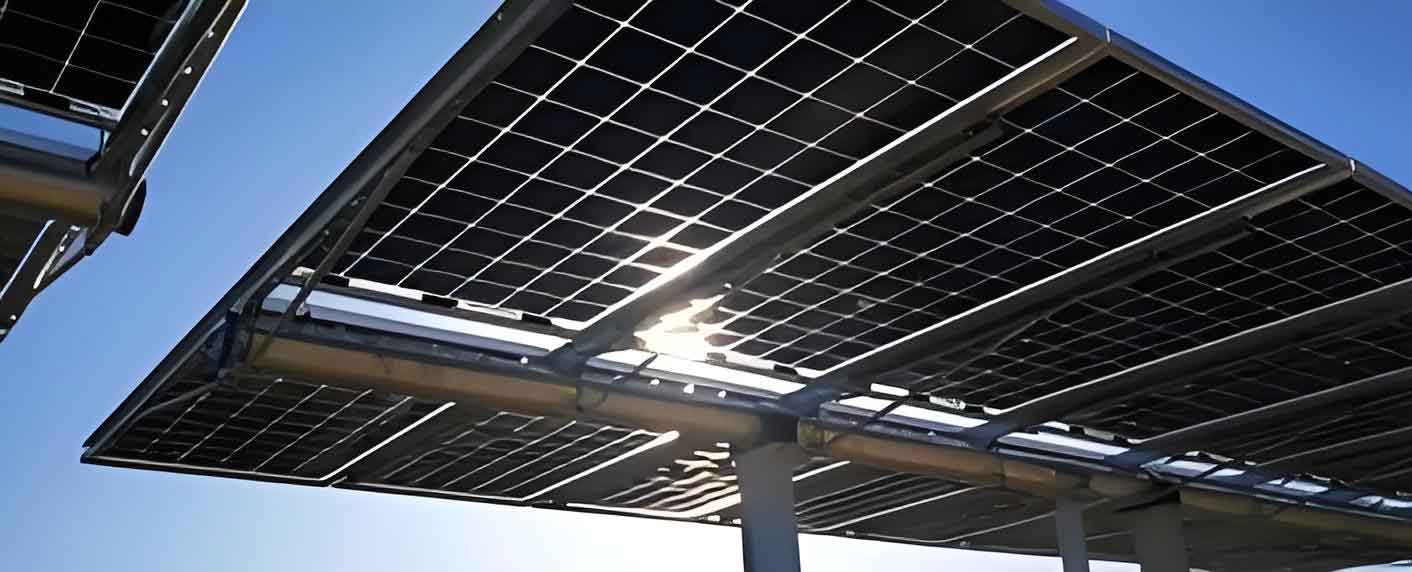
Solar Panel Adoption and Cost Trends
| Year | Global Solar Panel Cost ($/W) | China’s Share of Global Production |
|---|---|---|
| 2000 | 4.50 | 1% |
| 2010 | 2.00 | 45% |
| 2023 | 0.20 | 80% |
This cost decline has made solar energy economically viable, with Asia projected to install twice the solar capacity of Western nations by 2030. Bifacial solar panels, which capture sunlight on both sides, further enhance efficiency. The energy output can be modeled as:
$$ P = \eta \times A \times (I_{\text{front}} + I_{\text{rear}}) $$
Where \( \eta \) is panel efficiency, \( A \) is area, and \( I \) represents irradiance on each surface.
Strategic Shifts in Corporate Globalization
Chinese enterprises are redefining global expansion strategies. Key trends include:
| Strategy | Focus | Example Industries |
|---|---|---|
| Greenfield Investments | Localized infrastructure in emerging markets | Renewables, EV manufacturing |
| Targeted M&A | Technology and brand acquisition | Battery storage, AI startups |
Financing the Climate Transition
Despite progress, Asia’s climate financing gap exceeds $1.1 trillion annually. Public-private partnerships are essential to scale solutions. For solar panel deployment, the required investment \( I \) to achieve capacity \( C \) (GW) by 2030 is:
$$ I = C \times \left( \frac{\text{Cost per GW}}{\text{Financing Leverage}} \right) $$
Assuming a 20% leverage ratio, Asia needs $180 billion annually to meet its 500 GW solar target.
Conclusion: Collaboration as the Catalyst
Asia’s climate journey hinges on balancing growth with sustainability. Solar panel innovations exemplify how technology can bridge this divide. However, success requires cross-border cooperation, adaptive policies, and sustained investment. As Davos discussions emphasized, the next five years will determine whether we unlock Asia’s full potential or succumb to fragmented progress.