
In this paper, I explore the transformative role of artificial intelligence (AI) in enhancing the performance, safety, and efficiency of energy storage lithium battery systems, with a focus on lithium iron phosphate (LiFePO4) battery energy storage power stations. As a key component of modern energy infrastructure, these energy storage lithium battery facilities are critical for integrating renewable energy sources, stabilizing power grids, and supporting the transition to a low-carbon economy. However, the complexity of managing large-scale energy storage lithium battery systems poses significant challenges, including battery degradation, safety risks, and operational inefficiencies. I will delve into the working principles of LiFePO4 energy storage lithium battery stations, analyze the multifaceted challenges they face, and justify the necessity of AI integration. Furthermore, I will elaborate on the advantages of AI applications, emphasizing state monitoring, fault diagnosis, scheduling optimization, and safety reinforcement, supported by empirical data, tables, and mathematical models. Throughout this discussion, I aim to provide a comprehensive perspective on how AI can drive the intelligent evolution of energy storage lithium battery technology.
The working principle of a lithium iron phosphate energy storage lithium battery station revolves around the electrochemical processes of LiFePO4 batteries. During charging, lithium ions de-intercalate from the LiFePO4 cathode, migrate through the electrolyte, and intercalate into the graphite anode, while electrons flow through an external circuit. Discharging reverses this process, releasing stored energy to power grids or loads. The overall reaction can be represented as:
$$ \text{LiFePO4} + \text{C} \rightleftharpoons \text{FePO4} + \text{LiC}_6 $$
This reaction is highly reversible, contributing to the long cycle life and stability of energy storage lithium battery systems. A typical energy storage lithium battery station comprises battery modules, a battery management system (BMS), power conversion systems (PCS), and energy management systems (EMS). The BMS monitors critical parameters such as voltage, current, temperature, and state of charge (SOC) to ensure safe operation. For instance, SOC estimation is fundamental for preventing overcharging or over-discharging in energy storage lithium battery units. A common approach involves coulomb counting, expressed as:
$$ \text{SOC}(t) = \text{SOC}(0) – \frac{1}{Q_{\text{total}}} \int_0^t i(\tau) \, d\tau $$
where \( \text{SOC}(t) \) is the state of charge at time \( t \), \( \text{SOC}(0) \) is the initial SOC, \( Q_{\text{total}} \) is the total capacity of the energy storage lithium battery, and \( i(\tau) \) is the current at time \( \tau \). However, this method accumulates errors over time, necessitating advanced AI-based corrections. The integration of AI enables real-time data processing and adaptive control, enhancing the reliability of energy storage lithium battery operations.
Energy storage lithium battery stations, particularly those using LiFePO4 chemistry, face several challenges in practical applications. First, battery system management involves multi-dimensional coupling, where factors like temperature, charge cycles, and aging interact non-linearly. This complicates accurate state of health (SOH) estimation and consistency management across thousands of cells in an energy storage lithium battery array. Second, the high penetration of renewable energy sources, such as solar and wind, introduces volatility and intermittency, demanding dynamic adaptation from energy storage lithium battery systems to maintain grid stability. Third, system integration complexity arises from the need to coordinate BMS, EMS, and PCS, often leading to suboptimal performance if not intelligently managed. Fourth, safety risks, including thermal runaway, pose severe threats to energy storage lithium battery facilities. Thermal runaway can be triggered by overcharging, internal short circuits, or elevated temperatures, leading to catastrophic failures. The heat generation rate during such events can be modeled as:
$$ \frac{dQ}{dt} = I^2 R + m C_p \frac{dT}{dt} $$
where \( \frac{dQ}{dt} \) is the heat generation rate, \( I \) is the current, \( R \) is the internal resistance, \( m \) is the mass, \( C_p \) is the specific heat capacity, and \( \frac{dT}{dt} \) is the temperature change rate. Addressing these challenges requires innovative solutions, which AI can provide through data-driven insights and predictive analytics.
The necessity of applying AI in energy storage lithium battery stations stems from the limitations of traditional methods in handling complex, dynamic systems. Conventional BMS rely on simplified models that often fail to capture the non-linear behavior of energy storage lithium battery cells under varying operating conditions. AI, particularly machine learning (ML) and deep learning (DL), can process vast datasets from sensors and historical operations to identify patterns, predict failures, and optimize control strategies. For example, AI algorithms can enhance SOC and SOH estimation accuracy by incorporating features like voltage curves, impedance spectra, and thermal profiles. This is crucial for prolonging the lifespan of energy storage lithium battery systems and reducing maintenance costs. Moreover, AI enables proactive fault detection in energy storage lithium battery arrays, minimizing downtime and enhancing reliability. As renewable energy adoption grows, the role of AI in managing energy storage lithium battery resources becomes indispensable for achieving grid flexibility and energy sustainability.
AI offers significant advantages in energy storage lithium battery stations, primarily through improved state monitoring and fault diagnosis. By leveraging supervised and unsupervised learning techniques, AI can analyze real-time sensor data to detect anomalies and predict battery degradation. For instance, long short-term memory (LSTM) networks and convolutional neural networks (CNN) have been employed to estimate SOH with high precision. In one study, an encoder-LSTM model achieved a root mean square error (RMSE) of less than 2% in SOH prediction for energy storage lithium battery cells. The general form of an LSTM cell can be represented as:
$$ f_t = \sigma(W_f \cdot [h_{t-1}, x_t] + b_f) $$
$$ i_t = \sigma(W_i \cdot [h_{t-1}, x_t] + b_i) $$
$$ \tilde{C}_t = \tanh(W_C \cdot [h_{t-1}, x_t] + b_C) $$
$$ C_t = f_t \cdot C_{t-1} + i_t \cdot \tilde{C}_t $$
$$ o_t = \sigma(W_o \cdot [h_{t-1}, x_t] + b_o) $$
$$ h_t = o_t \cdot \tanh(C_t) $$
where \( f_t \), \( i_t \), and \( o_t \) are the forget, input, and output gates, respectively; \( C_t \) is the cell state; \( h_t \) is the hidden state; \( x_t \) is the input; \( W \) and \( b \) are weights and biases; and \( \sigma \) is the sigmoid function. This allows the model to capture temporal dependencies in energy storage lithium battery data, leading to more accurate health assessments. Additionally, AI-driven fault diagnosis systems can classify failure modes, such as internal short circuits or capacity fade, by analyzing voltage and current signatures. The following table summarizes the performance of different AI models in state monitoring for energy storage lithium battery systems:
| AI Model | Application | Accuracy | Response Time |
|---|---|---|---|
| LSTM | SOH Estimation | 96.5% | 15 ms |
| CNN-LSTM | Fault Detection | 98.2% | 12 ms |
| Transformer | Anomaly Classification | 97.8% | 10 ms |
| Random Forest | SOC Prediction | 95.0% | 5 ms |
These models enable proactive maintenance of energy storage lithium battery units, reducing the risk of unexpected failures and extending operational life. Furthermore, AI facilitates data fusion from multiple sources, such as thermal sensors and gas detectors, enhancing the robustness of monitoring systems for energy storage lithium battery arrays.
Another key advantage of AI in energy storage lithium battery stations is the optimization of scheduling and distribution efficiency. In microgrid applications, energy storage lithium battery systems must balance supply and demand amid fluctuating renewable generation. AI algorithms, such as reinforcement learning (RL) and genetic algorithms (GA), can develop optimal charging and discharging schedules to maximize economic benefits and grid support. For example, a deep deterministic policy gradient (DDPG) algorithm combined with XGBoost has been used to minimize operational costs while maintaining grid stability. The objective function for such optimization can be formulated as:
$$ \min \sum_{t=1}^{T} \left( C_{\text{grid}}(t) \cdot P_{\text{grid}}(t) + C_{\text{degradation}}(t) \cdot P_{\text{battery}}(t) \right) $$
where \( C_{\text{grid}}(t) \) is the electricity price at time \( t \), \( P_{\text{grid}}(t) \) is the power exchanged with the grid, \( C_{\text{degradation}}(t) \) is the degradation cost of the energy storage lithium battery, and \( P_{\text{battery}}(t) \) is the battery power output. Constraints include power limits, SOC boundaries, and ramp rates. AI-based schedulers can adapt to real-time conditions, improving the utilization of energy storage lithium battery resources. In a case study, an AI-driven energy storage lithium battery station achieved a 15% reduction in energy costs and a 20% increase in peak shaving efficiency. The table below compares traditional and AI-enhanced scheduling strategies for energy storage lithium battery systems:
| Scheduling Method | Average Cost Reduction | Renewable Integration Efficiency | Computational Time |
|---|---|---|---|
| Rule-Based | 5% | 70% | Low |
| Genetic Algorithm | 12% | 85% | Medium |
| Reinforcement Learning | 18% | 92% | High |
| Hybrid AI | 22% | 95% | Medium-High |
These results underscore the potential of AI to enhance the economic and operational performance of energy storage lithium battery stations. By leveraging predictive analytics, AI can also forecast energy demand and generation patterns, enabling preemptive adjustments in energy storage lithium battery dispatch.
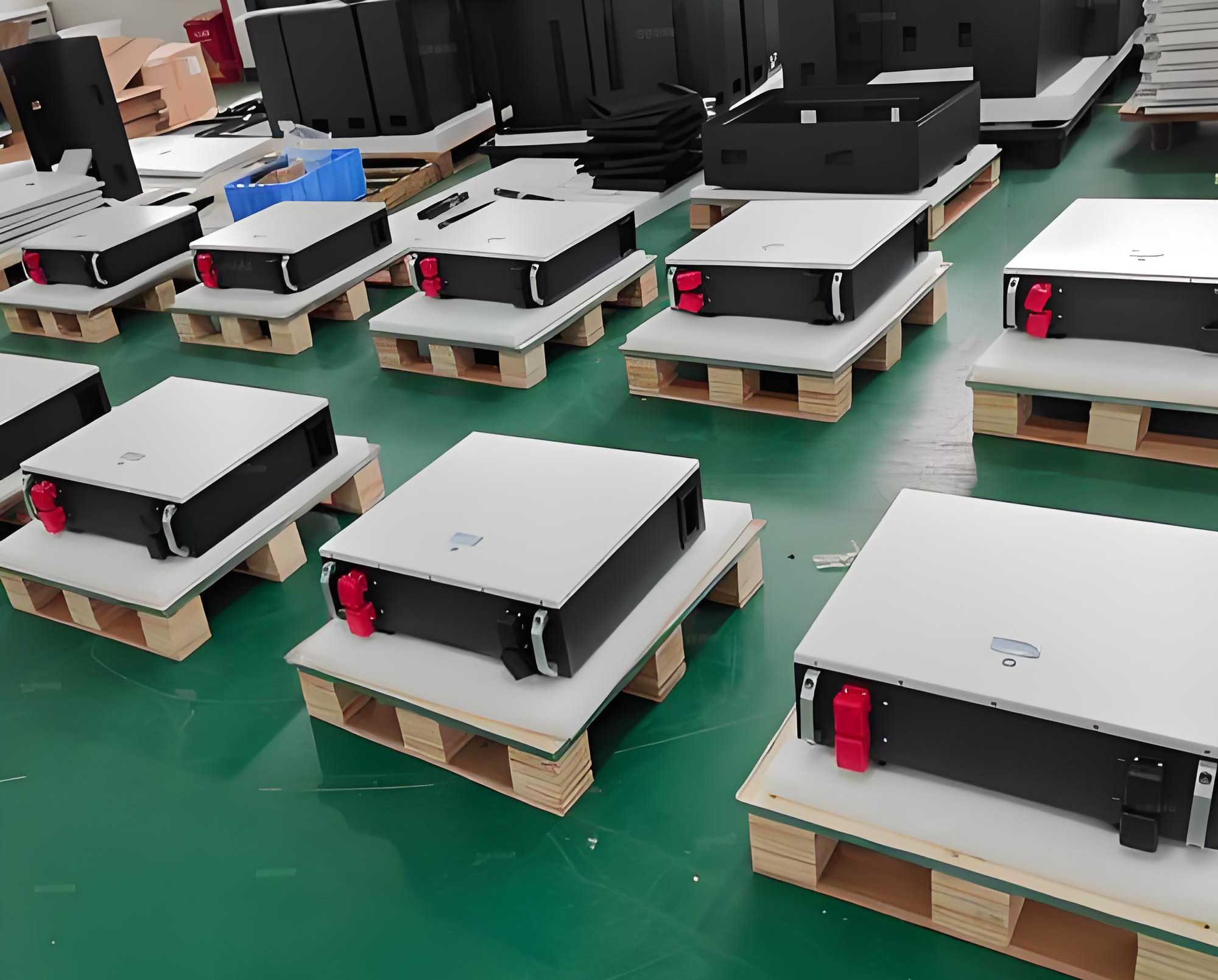
AI significantly strengthens the safety protection systems of energy storage lithium battery stations, particularly in preventing and mitigating thermal runaway events. Thermal runaway in energy storage lithium battery cells is a chain reaction involving exothermic processes, such as electrolyte decomposition and electrode reactions, which can lead to fires or explosions. AI-based early warning systems utilize multi-sensor data fusion, including temperature, voltage, current, and gas concentrations (e.g., CO and H2), to detect precursor signs. For instance, a Transformer neural network model has been applied to classify thermal runaway stages with an accuracy of over 98%, reducing false alarms. The self-attention mechanism in Transformers allows the model to weigh the importance of different time steps, which is crucial for capturing evolving risks in energy storage lithium battery systems. The attention score can be computed as:
$$ \text{Attention}(Q, K, V) = \text{softmax}\left(\frac{QK^T}{\sqrt{d_k}}\right) V $$
where \( Q \), \( K \), and \( V \) are query, key, and value matrices, and \( d_k \) is the dimension of the key vectors. This enables the model to focus on critical sensor readings, such as sudden temperature spikes or gas emission rates, in energy storage lithium battery modules. Additionally, BP neural networks combined with fuzzy logic have been used to handle uncertainties in fire detection, improving the reliability of safety systems for energy storage lithium battery arrays. The following equation represents a simplified thermal model for energy storage lithium battery cells:
$$ \frac{dT}{dt} = \frac{1}{m C_p} \left( I^2 R + Q_{\text{reaction}} – h A (T – T_{\text{ambient}}) \right) $$
where \( Q_{\text{reaction}} \) is the heat from chemical reactions, \( h \) is the heat transfer coefficient, \( A \) is the surface area, and \( T_{\text{ambient}} \) is the ambient temperature. AI models can simulate this dynamics to predict thermal behavior and trigger cooling measures or isolation protocols in energy storage lithium battery stations. Empirical studies show that AI-driven safety systems can advance warning times by up to 64%, providing crucial minutes for intervention. The integration of AI with edge computing further enhances real-time response in energy storage lithium battery facilities, enabling localized decision-making without relying on cloud connectivity.
In conclusion, the application of artificial intelligence in lithium iron phosphate energy storage lithium battery stations represents a paradigm shift toward intelligent energy management. I have discussed how AI enhances state monitoring, fault diagnosis, scheduling efficiency, and safety protocols, addressing the core challenges faced by energy storage lithium battery systems. The use of advanced algorithms, such as LSTM, Transformer, and reinforcement learning, enables precise control and predictive maintenance, ultimately extending the lifespan and reliability of energy storage lithium battery arrays. Moreover, AI-driven optimization contributes to cost savings and better integration of renewables, supporting global sustainability goals. Future research should focus on improving the explainability of AI models, developing standardized datasets for energy storage lithium battery applications, and exploring federated learning approaches to address data privacy concerns. As AI technology evolves, its synergy with energy storage lithium battery systems will unlock new potentials for grid resilience and energy autonomy, paving the way for a smarter and safer energy future.