
In the realm of advanced energy storage, lithium-ion batteries have emerged as a cornerstone technology due to their high energy density, environmental friendliness, and versatility. As a researcher deeply involved in battery materials, I have focused on enhancing the performance and longevity of these power sources, particularly for demanding applications like electric vehicles and grid storage. One critical yet often overlooked component is the binder, which plays a pivotal role in maintaining electrode integrity. In this study, we delve into the application of styrene butadiene rubber (SBR) emulsion as a binder in lithium-ion batteries, exploring how its composition affects mechanical, thermal, and electrochemical properties. The goal is to optimize SBR for improved cycle life and reduced swelling in high-energy-density li-ion batteries, addressing common challenges such as capacity fade and dimensional instability. Throughout this work, the term ‘li ion battery’ will be frequently referenced to emphasize our focus on this essential energy storage system.
The performance of a li-ion battery hinges on multiple factors, including active materials, electrolytes, and binders. Binders, though constituting a small fraction of the electrode, are crucial for cohesion, ensuring that active particles, conductive agents, and current collectors remain adherent during cycling. SBR, a copolymer of styrene and butadiene, offers a balance of rigidity and flexibility, making it a popular choice for anode formulations. However, the styrene-to-butadiene ratio significantly influences its behavior, impacting chain mobility, adhesion, and resilience. This research systematically examines three SBR variants with different styrene contents, evaluating their effects on anode properties and overall battery performance. By integrating structural characterization, thermal analysis, and electrochemical testing, we aim to establish guidelines for tailoring SBR binders to enhance li-ion battery durability.
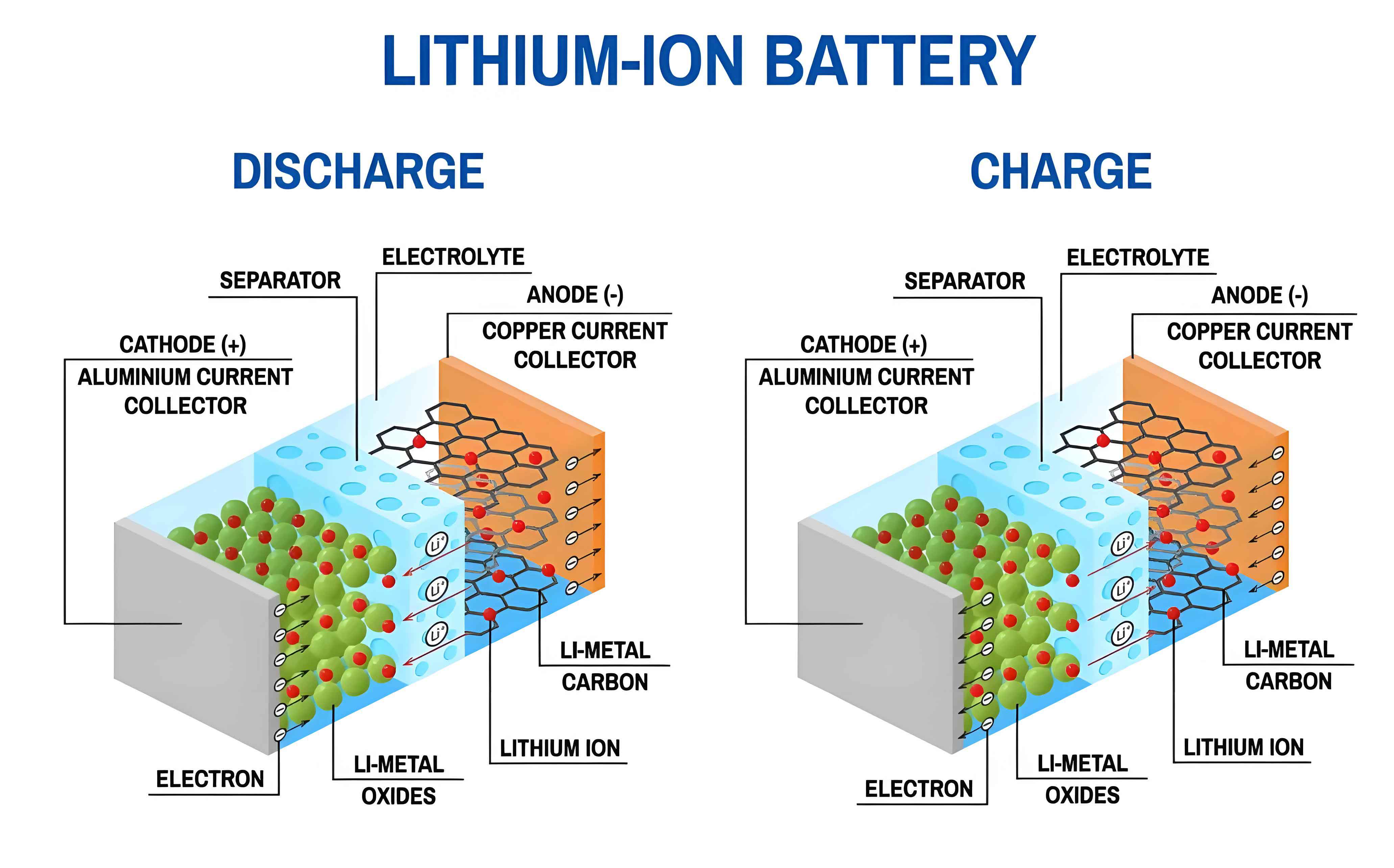
To provide a comprehensive overview, we begin with the experimental methodology. The materials and instruments used in this study are summarized in Tables 1 and 2. All chemicals were of industrial grade, ensuring relevance to commercial li-ion battery production. The SBR emulsions, denoted as SBR-20, SBR-25, and SBR-30 based on styrene content (20%, 25%, and 30% respectively), were characterized using Fourier-transform infrared spectroscopy (FTIR), X-ray diffraction (XRD), thermogravimetric analysis (TGA), differential scanning calorimetry (DSC), and mechanical testing. Electrodes were fabricated by mixing graphite, silicon oxide, conductive carbon, carboxymethyl cellulose sodium (CMC), and SBR in deionized water, followed by coating onto copper foil. The slurry viscosity was controlled between 2000 and 3500 mPa·s to ensure uniform coating. For the cathode, LiNi0.9Co0.04Mn0.06O2 was blended with polyvinylidene fluoride (PVDF) and conductive agents in N-methyl-2-pyrrolidone (NMP). Soft-pouch li-ion batteries with a nominal capacity of 5 Ah were assembled using these electrodes, a ceramic-coated polypropylene separator, and a standard electrolyte (1.0 M LiPF6 in EC:DMC:EMC, 4:3:3 by volume). Formation and cycling tests were conducted using a battery tester, with electrochemical impedance spectroscopy (EIS) employed to analyze ion transport kinetics.
| Instrument Name | Model | Application |
|---|---|---|
| Intelligent Electronic Tensile Tester | XLW-H | Mechanical property measurement |
| Electronic Balance | FA1004 | Precision weighing |
| Vacuum Drying Oven | DZF-6020 | Sample drying |
| Film Thickness Gauge | C1216M | Electrode thickness measurement |
| Thermogravimetric Analyzer | TG209F1 | Thermal stability analysis |
| Multifunction Electric Stirrer | DW-2 | Slurry mixing |
| Infrared Spectrometer | Spectrum 3 | Molecular structure characterization |
| Differential Scanning Calorimeter | DSC 200PC | Glass transition temperature determination |
| Battery Testing System | CT2001A-5V5A | Electrochemical performance evaluation |
| Material | Purity | Function |
|---|---|---|
| LiNi0.9Co0.04Mn0.06O2 | Industrial | Cathode active material |
| Artificial Graphite | Industrial | Anode active material |
| Conductive Carbon Black | Industrial | Conductive additive |
| Carboxymethyl Cellulose Sodium | Industrial | Thickener and auxiliary binder |
| Styrene Butadiene Rubber (SBR) | Industrial | Primary binder for anode |
| Silicon Oxide | Industrial | Anode capacity enhancer |
| Polyvinylidene Fluoride | Industrial | Cathode binder |
| N-Methyl-2-pyrrolidone | Industrial | Solvent for cathode slurry |
| Electrolyte (LiPF6 in organic carbonates) | Industrial | Ion transport medium in li-ion battery |
The structural characterization of SBR binders revealed insightful trends. FTIR spectra showed characteristic peaks for methyl and methylene groups around 2926 cm-1, C=C stretching from polybutadiene at 1649 cm-1, and polystyrene-related vibrations at 1447 cm-1 and 1495 cm-1. As styrene content decreased, the intensity of the C=C peak increased, indicating higher polybutadiene presence. XRD patterns further highlighted crystallinity differences, with a prominent peak at 2θ = 19.8° corresponding to polybutadiene crystallinity. The crystallinity index, calculated from XRD data, increased with lower styrene content, suggesting enhanced chain mobility. This can be expressed using a simplified crystallinity formula: $$ X_c = \frac{I_c}{I_c + I_a} \times 100\% $$ where $X_c$ is the crystallinity percentage, $I_c$ is the integrated intensity of crystalline peaks, and $I_a$ is the integrated intensity of amorphous regions. For SBR-20, $X_c$ was highest, aligning with its superior flexibility. Such structural attributes are vital for binders in li-ion batteries, as they influence adhesion and stress dissipation during electrode expansion.
Thermal properties of SBR were assessed via TGA and DSC. Table 3 summarizes the key thermal decomposition data under nitrogen atmosphere. The maximum decomposition temperature ($T_{max}$) decreased with lower styrene content, from 424°C for SBR-30 to 402°C for SBR-20, indicating that polystyrene enhances thermal stability due to aromatic ring rigidity. The residual char yield at 600°C followed a similar trend, with higher styrene content leading to more char formation, which can be modeled using a kinetic equation: $$ \frac{d\alpha}{dt} = k(1-\alpha)^n $$ where $\alpha$ is the conversion degree, $k$ is the rate constant, and $n$ is the reaction order. This char residue may contribute to electrode stability at elevated temperatures in a li-ion battery. DSC curves revealed glass transition temperatures ($T_g$) of 10°C, 1.1°C, and -11°C for SBR-30, SBR-25, and SBR-20, respectively. The reduction in $T_g$ with decreasing styrene content underscores improved chain segment mobility, which is crucial for maintaining binder elasticity during lithium-ion insertion and extraction cycles. These thermal characteristics directly impact the safety and longevity of li-ion batteries, especially under high-load or extreme temperature conditions.
| Sample | $T_{max}$ (°C) | Char Yield at 600°C (%) | $T_g$ (°C) from DSC |
|---|---|---|---|
| SBR-30 | 424 | 10.29 | 10.0 |
| SBR-25 | 419 | 8.85 | 1.1 |
| SBR-20 | 402 | 3.68 | -11.0 |
Mechanical performance of SBR films, both pristine and after electrolyte immersion, was evaluated to simulate conditions in a li-ion battery. The results, compiled in Table 4, show that tensile strength increased with styrene content, while elongation at break decreased. For instance, SBR-30 exhibited a tensile strength of 32.4 MPa but an elongation of 197.4%, whereas SBR-20 had a lower strength of 27.8 MPa but higher elongation of 270.4%. After soaking in electrolyte at 80°C, all samples experienced degradation, but SBR-20 retained significantly better elongation (160.4%) compared to SBR-30 (35.4%). This resilience can be attributed to the flexible polybutadiene segments, which absorb stress more effectively. The mechanical behavior can be described using the constitutive equation for viscoelastic materials: $$ \sigma(t) = \int_0^t E(t-\tau) \dot{\epsilon}(\tau) d\tau $$ where $\sigma$ is stress, $E$ is the relaxation modulus, and $\epsilon$ is strain. For li-ion battery anodes, such durability is essential to counteract volume changes during charging and discharging, thereby preventing electrode cracking and capacity loss.
| Sample | Tensile Strength (MPa) | Elongation at Break (%) | Tensile Strength After Soaking (MPa) | Elongation After Soaking (%) |
|---|---|---|---|---|
| SBR-30 | 32.4 ± 0.5 | 197.4 ± 5 | 20.4 ± 0.5 | 35.4 ± 3 |
| SBR-25 | 29.6 ± 0.4 | 231.6 ± 7 | 19.5 ± 0.4 | 56.6 ± 4 |
| SBR-20 | 27.8 ± 0.4 | 270.4 ± 6 | 18.6 ± 0.4 | 160.4 ± 3 |
The impact of SBR binders on anode performance was assessed through peel strength and swelling rate measurements. Peel strength, which reflects adhesion between the electrode coating and current collector, showed minimal variation across samples, averaging around 14 N/m. This consistency suggests that CMC, as a co-binder, primarily governs adhesion, while SBR contributes more to elasticity. However, the swelling rate upon full charging (SOC = 100%) differed markedly. The swelling rate $R$ was calculated using the formula: $$ R = \frac{d_1 – d}{d} \times 100\% $$ where $d_1$ is the electrode thickness after full charge and $d$ is the initial rolled thickness. As shown in Table 5, SBR-30 yielded the lowest swelling rate of 32.9%, whereas SBR-20 resulted in 35.7%. This indicates that higher styrene content imparts greater modulus, better restraining electrode expansion. In li-ion batteries, controlling swelling is critical to minimize mechanical degradation and prolong cycle life, especially for anodes incorporating high-capacity materials like silicon.
| Sample | Peel Strength (N/m) | Rolled Thickness (μm) | Fully Charged Thickness (μm) | Swelling Rate (%) |
|---|---|---|---|---|
| SBR-30 | 14.0 ± 0.3 | 128 ± 3 | 174 ± 2 | 32.9 ± 0.2 |
| SBR-25 | 14.2 ± 0.2 | 128 ± 3 | 169 ± 3 | 34.4 ± 0.3 |
| SBR-20 | 13.9 ± 0.1 | 128 ± 3 | 165 ± 2 | 35.7 ± 0.2 |
Electrochemical performance of the assembled li-ion batteries provided compelling insights. Cycling tests at room temperature (25°C) over 110 cycles revealed that SBR-20-based cells achieved the highest capacity retention of 96.3%, compared to 96.1% for SBR-25 and 95.9% for SBR-30. This improvement correlates with enhanced chain mobility in SBR-20, facilitating lithium-ion transport and accommodating volume changes more effectively. The capacity fade can be modeled using an empirical equation: $$ C_n = C_0 \cdot e^{-k \cdot n} $$ where $C_n$ is capacity at cycle $n$, $C_0$ is initial capacity, and $k$ is the degradation rate constant. For SBR-20, $k$ was lowest, indicating slower degradation. EIS analysis further supported these findings, showing lower charge-transfer resistance for SBR-20 electrodes, which aligns with better ion conductivity. The Nyquist plot data were fitted to an equivalent circuit model comprising solution resistance ($R_s$), charge-transfer resistance ($R_{ct}$), and Warburg impedance ($W$), described as: $$ Z = R_s + \frac{R_{ct}}{1 + (j\omega R_{ct}C_{dl})^\alpha} + W $$ where $\omega$ is angular frequency, $C_{dl}$ is double-layer capacitance, and $\alpha$ is a constant. Reduced $R_{ct}$ values for SBR-20 underscore its efficacy in promoting electrochemical kinetics within the li-ion battery.
Post-cycling electrode morphology examination revealed distinct differences. Anodes with SBR-20 remained intact with uniform lithium plating, while those with SBR-25 and SBR-30 showed particle detachment and cracks, particularly near the tabs. This visual evidence underscores the role of binder flexibility in maintaining structural integrity. In li-ion batteries, such mechanical failures can lead to increased internal resistance and accelerated capacity fade. The stress generation during cycling can be approximated using the strain energy density function: $$ U = \frac{1}{2} \int_V \sigma_{ij} \epsilon_{ij} dV $$ where $U$ is strain energy, $\sigma_{ij}$ is stress tensor, and $\epsilon_{ij}$ is strain tensor. Binders with higher elongation, like SBR-20, dissipate this energy more efficiently, mitigating damage.
To contextualize these results, it is essential to consider the broader implications for li-ion battery technology. The optimization of binders like SBR is not merely a materials science endeavor but a strategic approach to enhancing battery reliability. For instance, in electric vehicles, where li-ion batteries are subjected to rapid charging and discharging, robust binders can reduce maintenance costs and extend service life. Similarly, for grid storage applications, long-term stability is paramount, and tailored SBR formulations can contribute to sustained performance. Our findings suggest that lowering styrene content in SBR improves cycle life by enhancing chain mobility, though at a slight trade-off in thermal stability and swelling control. This trade-off can be managed through composite binder systems or additive engineering, offering avenues for future research.
In conclusion, this study demonstrates the profound influence of SBR binder composition on the performance of li-ion batteries. Through detailed characterization, we established that reducing styrene content from 30% to 20% increases chain mobility, crystallization, and elongation, leading to better capacity retention (96.3% after 110 cycles) and improved lithium-ion transport. While higher styrene content offers advantages in thermal stability and swelling suppression, the flexibility imparted by polybutadiene-rich SBR proves more beneficial for cycle life. These insights pave the way for designing advanced binders that balance mechanical, thermal, and electrochemical properties, ultimately contributing to the development of more durable and efficient li-ion batteries. As the demand for energy storage grows, continued innovation in binder technology will remain a key enabler for next-generation li-ion batteries.