
In the cotton textile industry, electricity consumption constitutes a significant portion of operational costs, making energy efficiency a critical concern for enterprises. As a researcher focused on sustainable energy solutions, I have investigated the integration of solar power systems through Energy Performance Contracting (EPC) models to address this issue. EPC is a market-based mechanism where energy savings fund project costs, and it has been successfully applied across various sectors to promote energy conservation. The adoption of distributed solar power systems, in particular, offers substantial economic and environmental benefits by replacing conventional electricity and reducing carbon emissions. With advancements in solar technology and decreasing costs, solar power systems are increasingly viable for high-energy-consumption industries like cotton textile processing. This study explores the implementation of a solar power system EPC project in a cotton textile enterprise, evaluating its technical and economic feasibility to provide insights for broader industry application.
Electricity expenses in cotton textile factories are driven by high-power equipment operations, often during peak tariff periods, leading to increased costs. Traditional measures to reduce consumption include shifting work schedules to off-peak hours, enhancing energy management, and improving efficiency. However, these approaches have limitations, and the integration of renewable energy sources like solar power systems presents a promising alternative. The EPC model facilitates this by allowing specialized companies to invest in and manage solar power system installations, sharing the resulting energy savings with the host enterprise. This not only lowers electricity bills but also supports global efforts toward carbon neutrality. In this analysis, I examine a case where a solar power system was deployed on the rooftops of a cotton textile facility, detailing the operational模式, technical design, and financial outcomes to demonstrate its practicality.
The project involved installing a distributed solar power system on the roofs of production workshops in a cotton textile plant. The facility, covering a large area with multiple buildings, had an annual electricity consumption of approximately 2.364 million kWh, with a peak load of 3.86 MW, primarily from motor-driven equipment. Power demand peaked between 9:00 and 17:00, aligning with high-tariff periods under the local time-of-use pricing structure. This pricing scheme included peak, flat, and off-peak rates, with ratios of 1.64:1:0.41, respectively. Specifically, peak rates were 1.025 CNY/kWh, flat rates 0.725 CNY/kWh, and off-peak rates 0.425 CNY/kWh. Seasonal production fluctuations further exacerbated electricity costs, as operations often coincided with high-tariff intervals. To address this, the enterprise opted for an EPC-based solar power system to generate on-site power, reduce grid dependence, and achieve economic savings.
The EPC model adopted for this solar power system was of the energy-saving sharing type. Under this arrangement, the EPC service company fully funded the installation of the solar power system. Post-installation, the textile enterprise purchased electricity from the EPC company at the local grid’s flat rate, and the energy cost savings were shared in a 1:9 ratio between the enterprise and the EPC provider. The contract spanned 15 years, after which ownership and operational rights of the solar power system transferred entirely to the textile company. The implementation process included signing a cooperation agreement, regulatory approvals, system design, project execution, and benefit sharing. This model ensured minimal upfront costs for the enterprise while guaranteeing long-term energy efficiency through the solar power system.
The technical design of the solar power system began with determining the installed capacity based on available rooftop space and local solar conditions. The site, located at a latitude of 34.03°N, experienced an average annual sunshine duration of 2,021 to 2,118 hours, with solar radiation of 4,803 MJ/m². After assessment, approximately 8,452.5 m² of rooftop area across three workshops was allocated for the solar power system, supporting a total capacity of 0.75 MW. The system comprised 3,090 multicrystalline silicon photovoltaic panels, each with a peak power of 250 W, fixed at a 29° tilt angle to optimize energy capture. The spacing between solar panel arrays was calculated to prevent shading during critical hours, using the formula: $$D = L \cos \beta + L \sin \beta \frac{0.707 \tan \phi + 0.4338}{0.7074 – 0.4338 \tan \phi}$$ where \(D\) is the distance between rows in mm, \(L\) is the length of the solar panel, \(\beta\) is the tilt angle (29°), and \(\phi\) is the local latitude (34.03°). This resulted in a spacing of 1,860 mm.
The solar power system consisted of three main components: solar panels, grid-tied inverters, and supporting structures including mounts and cables. The panels, model HR-250P-24/Ba, had a conversion efficiency exceeding 16%, with key parameters summarized in Table 1. Inverters, model KSG-300K, converted DC power from the panels to AC power, synchronizing with the grid and preventing reverse flow. Their specifications are listed in Table 2. The system was divided into three 257.5 kW sub-arrays, each connected to an inverter and transformer, and integrated into the plant’s 10 kV distribution room. This setup enabled the solar power system to supply power directly to the facility’s loads, with excess electricity fed into the grid and shortfalls supplemented by the grid. Remote metering monitored energy flow, and a central control system allowed real-time oversight of the solar power system’s performance. Key system parameters are provided in Table 3.
| Parameter | Value |
|---|---|
| Maximum Power (W) | 250 |
| Peak Voltage (V) | 30.08 |
| Peak Current (A) | 8.33 |
| Open-Circuit Voltage (V) | 36.0 |
| Short-Circuit Current (A) | 8.91 |
| Dimensions (mm) | 1640 × 992 × 40 |
| Voltage Temperature Coefficient (%/°C) | -0.38 |
| Current Temperature Coefficient (%/°C) | 0.11 |
| Power Temperature Coefficient (%/°C) | -0.55 |
| Internal Series Resistance (Ω) | 0.4 |
| Curve Correction Coefficient (Ω/°C) | 0.00125 |
| Number of Series Cells | 60 |
| Parameter | Value |
|---|---|
| Maximum Input Open-Circuit Voltage (V) | 1000 |
| Maximum Input Current (A) | 40 × 3 |
| MPPT Voltage Range (V) | 290–950 |
| Maximum Output Power (kW) | 300 |
| Rated Output Power (kW) | 290 |
| Protection Rating | IP65 |
| Parameter | Value |
|---|---|
| Installed Capacity (kW) | 772.5 |
| Panel Power (W) | 250 |
| Inverter Capacity (kW) | 300 |
| MPPT Range (V) | 290–950 |
| Number of Inverters | 3 |
| Grid Voltage (V) | 380 |
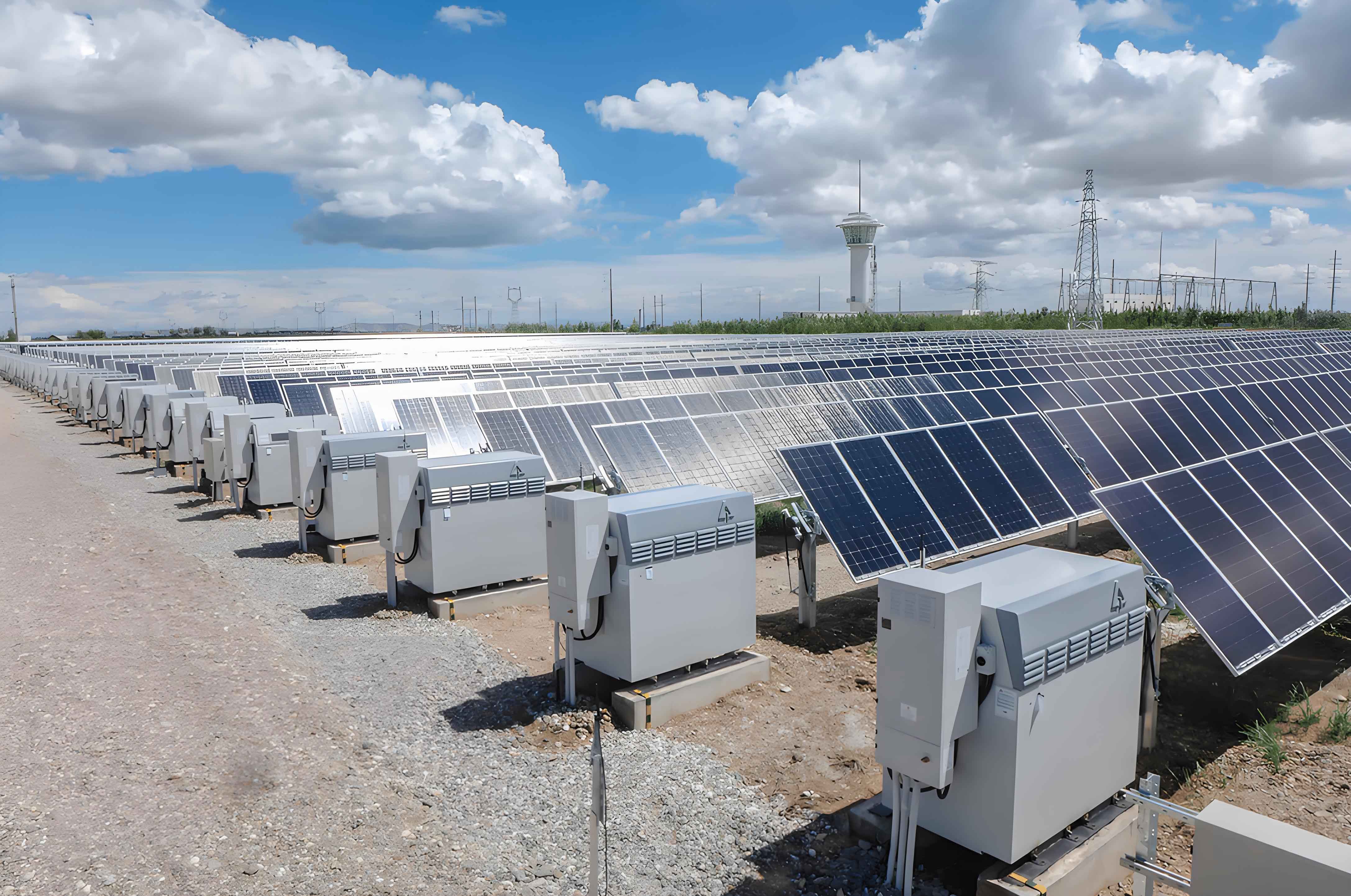
After commissioning in May 2020, the solar power system underwent performance testing. On May 6, 2022, parameters were measured under solar irradiance of 710–740 W/m² and ambient temperatures of 18.2–19.6°C. Random samples of 10 solar panels showed power degradation rates between 0.5% and 2.6%, with an average of 1.6%, complying with industry standards that allow up to 2.5% first-year degradation and 0.7% annually thereafter. This confirmed the solar power system’s reliable operation over two years.
For the application study, I analyzed the initial investment, annual energy generation, and economic metrics. The initial investment for the solar power system totaled 4.557 million CNY, with a per-kilowatt cost of 5,899 CNY/kW. Breakdowns are shown in Table 4. Annual electricity generation was projected using the formula: $$Q_n = P \times T_s \times K \times (1 – \gamma)^{n-1}$$ where \(Q_n\) is the annual output in kWh for year \(n\), \(P\) is the installed capacity (772.5 kW), \(T_s\) is the peak sun hours (derived from local data), \(K\) is the system efficiency coefficient (78.68%), and \(\gamma\) is the annual degradation rate (based on standards). Over the 15-year contract, cumulative generation was forecasted at 14.0229 million kWh, with annual averages of 934,900 kWh, as illustrated in Figure 2.
| Component | Cost |
|---|---|
| Solar Panels | 162.2 |
| Inverters | 140.6 |
| Mounts and Accessories | 80.3 |
| Installation | 56.3 |
| Transport and Other | 16.3 |
| Total | 455.7 |
The cumulative net cash flow was calculated using: $$\text{PR}_n = \sum_{t=1}^{n} \left( Q_t \times p_s \times 0.9 – C_t \right) – C_0$$ where \(\text{PR}_n\) is the cumulative net cash flow in year \(n\), \(p_s\) is the electricity price (0.725 CNY/kWh), \(C_t\) is the annual maintenance cost (0.1% of initial investment), and \(C_0\) is the initial investment. Results are plotted in Figure 3, showing positive returns over time. Economic indicators, including levelized cost of electricity (LCOE), net present value (NPV), internal rate of return (IRR), and payback period, were derived assuming a discount rate of 4.9% (long-term loan rate). As summarized in Table 5, the LCOE was 0.36 CNY/kWh, below the industrial flat rate, with an NPV of 2.26 CNY/W, IRR of 10.3%, and payback period of 8.9 years. These metrics confirm the solar power system’s economic viability, though the payback period could be improved with subsidies or extended contracts.
| Indicator | Value |
|---|---|
| Levelized Cost of Electricity (CNY/kWh) | 0.36 |
| Net Present Value (CNY/W) | 2.26 |
| Internal Rate of Return (%) | 10.3 |
| Payback Period (years) | 8.9 |
In conclusion, this study demonstrates that deploying a solar power system via the EPC model in cotton textile enterprises is technically feasible and economically beneficial. The solar power system provided a lower-cost electricity alternative, reducing grid reliance and carbon emissions. With declining solar equipment costs, such projects will become increasingly attractive, offering shorter payback periods and enhanced returns. The solar power system not only supports energy efficiency but also aligns with global sustainability goals, making it a strategic investment for the cotton textile industry and other high-energy sectors. Future work could explore optimization strategies and policy incentives to accelerate adoption.