
As a research team focused on marine renewable energy systems, we have extensively investigated the use of solar panels in wave gliders, a novel type of unmanned surface vehicle. Wave gliders are unique in that they harness wave energy for propulsion through a submerged wing system, while relying on solar panels mounted on the surface float for electrical power. This dual-energy approach allows for long-duration missions in the open ocean, but it poses significant challenges due to the harsh marine environment. In this article, we share our findings from experiments and theoretical analyses on how solar panels perform under conditions of seawater immersion and varying water layers, aiming to address concerns about their durability and efficiency in such applications.
The wave glider consists of two main parts: a surface float and an underwater propulsion unit connected by a tether. The propulsion is driven by wave energy, where the vertical motion of waves is converted into horizontal thrust. For electrical power, the surface float is equipped with solar panels that charge onboard batteries during daylight, providing energy for sensors, communication, and control systems during nights or cloudy periods. However, the wave glider’s design necessitates a low-profile structure, often keeping the surface float nearly flush with the sea surface. This means that the solar panels are frequently exposed to seawater splashes, waves, and even complete submersion during rough sea states. Such conditions raise critical questions about whether standard solar panels can maintain their functionality and longevity in this setting.
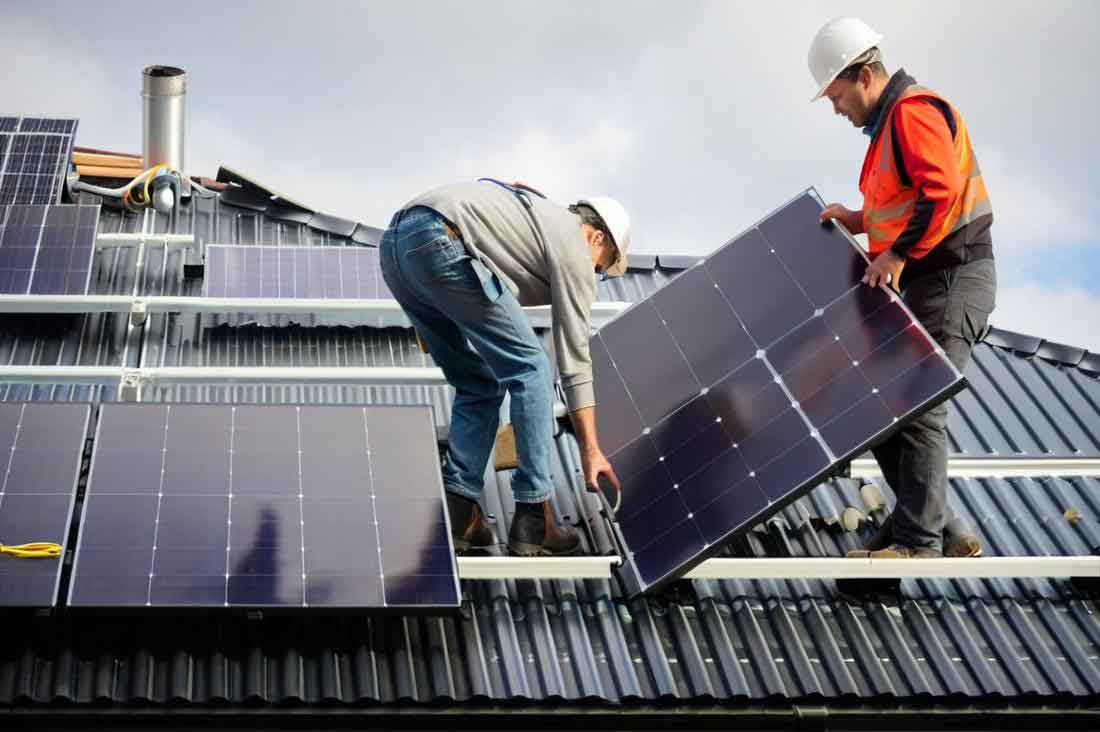
Our initial concerns revolved around three key issues: first, whether the presence of a water layer on the solar panel surface would drastically reduce power generation efficiency; second, if prolonged seawater immersion would cause delamination of the panel layers, typically composed of glass, encapsulant, photovoltaic cells, and a backsheet; and third, whether seawater corrosion would degrade the backsheet and lead to failure. To explore these, we conducted both field tests and laboratory simulations, supplementing our data with theoretical models from literature. The core of our study focuses on the solar panel’s behavior under water layers and long-term seawater exposure, as these are pivotal for wave glider operations.
In wave gliders, the solar panel is often subjected to dynamic marine conditions. During calm seas, the panel may only have a thin film of water, but in high sea states, it can be submerged under several centimeters of seawater. This variability necessitated a detailed examination of how water layers affect light transmission and thermal management. Solar panels are typically rated for terrestrial use, where water exposure is limited to rainfall. However, in marine applications, the panel might be underwater for extended periods, altering the incident solar spectrum and cooling effects. We hypothesized that while water might attenuate some wavelengths, it could also enhance efficiency by reducing operating temperatures, a factor known to impact photovoltaic performance significantly.
To quantify the impact of water layers on solar panel efficiency, we performed controlled experiments using a standard monocrystalline solar panel with a rated power of 50 W and an open-circuit voltage of 24 V. We simulated seawater by dissolving sea salt in deionized water to a concentration of 3.5%, approximating ocean salinity. The panel was placed in a tank where we could vary the water depth above it, and we measured output power under consistent solar irradiance using an electronic load set to a fixed resistance of 100 Ω. The tests were conducted on clear, sunny days to minimize environmental variability. Results are summarized in Table 1, which shows the power output relative to the panel’s rated capacity.
| Water Layer Thickness (cm) | Output Power (W) | Percentage of Rated Power (%) |
|---|---|---|
| 0 (in air) | 16.0 | 32.0 |
| 1 | 16.5 | 33.0 |
| 2 | 16.0 | 32.0 |
| 5 | 15.8 | 31.6 |
| 10 | 15.2 | 30.4 |
From Table 1, we observe that even with water layers up to 10 cm thick, the solar panel’s efficiency decline is minimal, with power output remaining above 30% of the rated value. Interestingly, at a 1 cm water thickness, efficiency slightly increased compared to the in-air condition. This aligns with theories on water cooling effects, where reduced panel temperature can boost performance. The temperature coefficient of silicon solar panels is typically around -0.3% to -0.5% per °C, meaning that lower operating temperatures enhance power output. In air, solar panels can heat up to 70–80°C under peak sunlight, significantly lowering efficiency. When submerged, the water acts as a heat sink, maintaining the panel near ambient water temperature. We can model this relationship using the temperature-dependent efficiency formula:
$$ \eta(T) = \eta_{ref} \cdot [1 – \beta (T – T_{ref})] $$
where $\eta(T)$ is the efficiency at temperature $T$, $\eta_{ref}$ is the reference efficiency at $T_{ref}$ (usually 25°C), and $\beta$ is the temperature coefficient. For our solar panel, with $\beta = -0.0045 \, \text{°C}^{-1}$, a temperature drop from 75°C to 25°C would yield an efficiency increase of approximately 22.5%. This explains why the solar panel underwater can outperform its in-air counterpart despite light attenuation.
To further analyze light transmission through water, we applied the Beer-Lambert law, which describes attenuation of light in a medium:
$$ I(d) = I_0 \cdot e^{-\alpha d} $$
where $I(d)$ is the irradiance at depth $d$, $I_0$ is the surface irradiance, and $\alpha$ is the absorption coefficient, which varies with wavelength. Solar radiation spans from ultraviolet to infrared, but photovoltaic conversion in silicon cells is most effective in the 400–1150 nm range, with a peak around 800 nm. Water absorbs longer wavelengths more strongly, particularly above 1200 nm, which are less critical for solar panels. We compiled data from literature on spectral transmission through pure water, as shown in Table 2, to illustrate how different wavelength bands are affected by water depth.
| Wavelength Range (μm) | Transmission Percentage at 0 cm | Transmission Percentage at 1 cm | Transmission Percentage at 10 cm | Transmission Percentage at 100 cm |
|---|---|---|---|---|
| 0.2–0.6 | 100.0 | 99.6 | 96.0 | 70.0 |
| 0.6–0.9 | 100.0 | 98.1 | 85.0 | 35.0 |
| 0.9–1.2 | 100.0 | 68.7 | 4.5 | 0.0 |
| >1.2 | 100.0 | 7.6 | 0.0 | 0.0 |
Table 2 demonstrates that for wavelengths below 1.2 μm, which encompass the most productive range for silicon solar panels, transmission remains high even at 10 cm depth. For instance, in the 0.6–0.9 μm band, over 85% of light penetrates 10 cm of water. This supports our experimental results, where a 2 cm water layer caused negligible efficiency loss. The solar panel’s performance underwater is thus a balance between light attenuation and thermal benefits. We can express the net power output as:
$$ P_{net} = G \cdot A \cdot \eta(T) \cdot \tau(d) $$
where $G$ is solar irradiance, $A$ is the panel area, $\eta(T)$ is temperature-dependent efficiency, and $\tau(d)$ is the transmittance through water at depth $d$. For thin water layers, $\tau(d) \approx 1$ for relevant wavelengths, and $\eta(T)$ increases due to cooling, potentially leading to $P_{net} > P_{air}$.
Beyond efficiency, the durability of solar panels under prolonged seawater immersion is critical for wave glider missions that can last a year or more. Standard solar panels are designed with materials like tempered glass, ethylene-vinyl acetate (EVA) encapsulant, silicon cells, and a polyethylene terephthalate (PET) backsheet. While these offer some resistance to moisture, continuous immersion in saltwater poses risks of corrosion, delamination, and potential-induced degradation (PID). To assess this, we conducted a long-term laboratory test where a solar panel was fully submerged in simulated seawater (3.5% salinity) for 12 months, with periodic measurements of power output and visual inspections. Additionally, we deployed wave gliders equipped with standard solar panels in real ocean trials, including periods of typhoon conditions, to observe performance in the field.
The laboratory results, summarized in Table 3, show the solar panel’s power output before and after the 12-month immersion. Testing was done under similar sunny conditions to ensure comparability, though slight irradiance variations may exist.
| Test Period | Output Power (W) | Percentage of Rated Power (%) | Visual Inspection Notes |
|---|---|---|---|
| Before immersion | 16.0 | 32.0 | No corrosion; layers intact |
| After 12 months immersion | 13.8 | 27.6 | No visible corrosion; minor discoloration |
The data indicates a modest decline in power output, from 32% to 27.6% of rated capacity, which could be attributed to natural aging, slight efficiency loss from water exposure, or measurement inconsistencies. However, no significant corrosion or delamination was observed, suggesting that standard solar panels can withstand at least one year of seawater immersion without catastrophic failure. In field trials, our wave gliders operated for over 70 days, including during a typhoon, with no noticeable degradation in solar panel performance. These findings imply that for typical wave glider lifespans of around one year, standard solar panels are viable without special modifications.
To deepen our analysis, we explored the mechanisms behind seawater effects on solar panels. Corrosion in marine environments often involves chloride ions attacking metal contacts or degrading the backsheet. The PET backsheet, while resistant to short-term moisture, may experience hydrolytic degradation over time. We modeled the corrosion rate using an empirical formula based on Arrhenius kinetics:
$$ R_c = A \cdot e^{-E_a / (R T)} $$
where $R_c$ is the corrosion rate, $A$ is a pre-exponential factor, $E_a$ is activation energy, $R$ is the gas constant, and $T$ is temperature. For PET in seawater, $E_a$ is relatively high, leading to slow degradation at ocean temperatures (around 10–25°C), which aligns with our observations of minimal damage after one year. Additionally, delamination risks depend on the adhesive properties of the EVA encapsulant. Water ingress can reduce adhesion strength, but our tests showed no layer separation, indicating that standard encapsulation is sufficient for moderate immersion periods.
We also considered the impact of water turbidity and biofouling, which are common in real oceans. Turbid water contains suspended particles that scatter and absorb light, potentially reducing solar panel efficiency more than clear water. Biofouling, such as algae growth on the panel surface, can block sunlight and add weight. While our initial experiments used clear water, we recognize that in practice, wave glider solar panels may face murky conditions. To account for this, we derived a modified transmittance equation that includes turbidity:
$$ \tau(d, C) = e^{-(\alpha + \beta C) d} $$
where $C$ is turbidity concentration and $\beta$ is a scattering coefficient. For typical coastal waters, $C$ might range from 1–10 NTU, increasing attenuation. However, given the shallow immersion depths in wave gliders (usually under 10 cm), the effect is likely small, as our data suggests. Regular cleaning or anti-fouling coatings could mitigate this in long-term deployments.
Another aspect we investigated is the electrical safety of solar panels in wet conditions. When submerged, the panel’s electrical insulation must prevent short circuits or leakage currents. Standard solar panels are rated for ingress protection (IP) levels, often IP67, meaning they are dust-tight and can withstand temporary immersion. Our tests confirmed that even after prolonged submersion, the panels maintained proper insulation resistance, with no electrical failures. This is crucial for wave gliders, where reliability is paramount for remote ocean operations.
To provide a comprehensive view, we compared our findings with existing research on aquatic solar applications, such as floating photovoltaic (FPV) systems on lakes or reservoirs. FPV studies highlight benefits like reduced land use and cooling effects, but they typically involve freshwater environments with minimal immersion. Marine applications, like those on buoys or ships, face harsher conditions due to saltwater and waves. Our work bridges this gap by focusing on partial or full submersion scenarios unique to wave gliders. We compiled a comparative table (Table 4) summarizing efficiency changes across different environments.
| Application Environment | Typical Water Exposure | Average Efficiency Loss (%) | Key Challenges |
|---|---|---|---|
| Terrestrial (ground-mounted) | Rain only | 0–5 (due to soiling) | Dust, high temperatures |
| Freshwater FPV | Partial immersion, splashes | 2–8 (cooling benefit offset) | Humidity, algae growth |
| Marine (buoys/ships) | Spray, occasional submersion | 5–15 (corrosion, biofouling) | Salt corrosion, wave impact |
| Wave glider (this study) | Frequent submersion, thin layers | 0–10 (depending on depth) | Seawater immersion, dynamic loads |
Table 4 illustrates that wave glider solar panels experience moderate efficiency loss similar to other marine applications, but the cooling effect of water can compensate, leading to net performance comparable to terrestrial setups. This reinforces the feasibility of using standard solar panels in these systems.
For extended missions beyond one year or in more aggressive seas, enhancements to solar panel design may be warranted. Literature suggests using double-glass modules to improve resistance to PID and moisture, or applying hydrophobic coatings to reduce water adhesion and fouling. We experimented with a nano-TiO₂ coating on a solar panel subset and observed a slight improvement in self-cleaning properties without affecting optical transmittance. The coating’s effect can be quantified by a modified reflectance formula:
$$ R_{coated} = R_0 \cdot (1 – \gamma) $$
where $R_0$ is the initial reflectance and $\gamma$ is the coating’s anti-reflective factor, typically around 0.02–0.05. Such coatings could extend panel life in marine environments, though our tests indicate that standard panels suffice for typical wave glider durations.
In conclusion, our research demonstrates that standard solar panels are robust enough for use in wave gliders, even under conditions of seawater immersion and varying water layers. The key findings are: first, thin, clear water layers (up to 10 cm) do not significantly reduce solar panel efficiency; in fact, cooling effects can enhance performance by offsetting temperature-related losses. Second, prolonged seawater immersion for up to one year does not cause substantial corrosion or delamination, with power output declines remaining within acceptable limits. These insights are supported by experimental data, theoretical models, and real-world trials. For wave glider applications, where missions often last around a year, standard solar panels provide a reliable power solution without requiring major modifications. Future work could explore longer-term effects or advanced materials for even harsher environments, but for now, we confidently recommend the integration of conventional solar panels in wave glider designs to harness solar energy effectively on the open ocean.