
In the rapidly evolving field of renewable energy, the demand for efficient and reliable solar inverters has never been higher. As a researcher focused on power electronics, I have explored various simulation techniques to enhance the design and testing of solar inverter controllers. Among these, semi-physical simulation technology stands out due to its ability to bridge the gap between purely digital models and physical prototypes. This approach integrates real hardware components with virtual models, enabling real-time interaction and high-fidelity testing. In this article, I will delve into the principles, advantages, and practical applications of semi-physical simulation in solar inverter controller testing, with a particular emphasis on platforms like RT-LAB. By incorporating tables, equations, and case studies, I aim to provide a comprehensive overview that underscores the transformative potential of this technology in advancing solar energy systems.
Semi-physical simulation, also known as hardware-in-the-loop (HIL) simulation, combines actual controller hardware with simulated environments to replicate real-world conditions. This method allows for rigorous testing of solar inverters under dynamic scenarios, such as varying solar irradiance and grid disturbances, without the risks and costs associated with full-scale physical trials. The core of this technology lies in its real-time processing capabilities, which ensure that the simulation clock aligns precisely with physical time. For solar inverters, this means that controllers can be evaluated for critical functions like maximum power point tracking (MPPT), voltage regulation, and fault response in a controlled yet realistic setting. As I discuss the intricacies of semi-physical simulation, I will highlight how it addresses the limitations of traditional offline and all-digital methods, ultimately leading to more robust and efficient solar inverters.
Overview of Semi-Physical Simulation Technology
Semi-physical simulation technology has its roots in aerospace and defense industries, where it was initially developed to test flight hardware in simulated environments. Over the decades, it has evolved into a versatile tool applicable across multiple domains, including power electronics. The fundamental principle involves interfacing physical devices, such as solar inverter controllers, with computer-based models that emulate the behavior of interconnected systems, like photovoltaic (PV) arrays and electrical grids. This integration is typically achieved through real-time simulators that use high-performance processors and I/O interfaces to handle data exchange between hardware and software components.
In the context of solar inverters, semi-physical simulation enables the testing of control algorithms under a wide range of operating conditions. For instance, the MPPT algorithm, which is crucial for maximizing energy harvest from PV panels, can be fine-tuned by simulating changes in sunlight intensity and temperature. The real-time aspect ensures that the controller’s responses are evaluated without delay, mimicking actual field performance. A typical semi-physical simulation platform consists of several key elements: a host computer for model development (e.g., using MATLAB/Simulink), a target real-time simulator (e.g., RT-LAB), and the physical solar inverter controller. Communication between these components is facilitated by protocols like TCP/IP, allowing seamless data flow.
The current state of semi-physical simulation technology is marked by advancements in computational power and integration capabilities. Platforms such as OPAL-RT’s RT-LAB have become industry standards due to their scalability and precision. These systems support complex power electronics simulations, including those for solar inverters, by leveraging field-programmable gate arrays (FPGAs) for high-speed processing. This has made semi-physical simulation an indispensable tool for researchers and engineers aiming to accelerate the development cycle of solar energy systems while ensuring reliability and compliance with grid standards.
| Company | Software | Hardware Support | Application Areas |
|---|---|---|---|
| National Instruments (NI) | LabVIEW | PXI Systems, CompactRIO | Automotive, Aerospace, Industrial |
| dSPACE | MATLAB-based Solutions | Comprehensive Hardware and Software | Automotive Electronics, Power Control |
| MathWorks | Simulink, Simulink Real-Time | Real-Time Hardware | Real-Time System Simulation |
| OPAL-RT | RT-LAB | FPGA-based Simulators | Power Systems, Solar Inverters, Electric Vehicles |
The mathematical foundation of semi-physical simulation often involves differential equations that model the dynamics of power electronic systems. For example, the behavior of a solar inverter can be described using state-space representations. Consider a simplified model of a PV system connected to an inverter:
$$ \frac{di}{dt} = \frac{1}{L} (V_{pv} – V_{inv}) $$
$$ \frac{dV_{dc}}{dt} = \frac{1}{C} (I_{pv} – I_{inv}) $$
where \( i \) is the inductor current, \( V_{pv} \) is the PV voltage, \( V_{inv} \) is the inverter voltage, \( L \) and \( C \) are inductance and capacitance values, and \( I_{pv} \) and \( I_{inv} \) are currents from the PV array and inverter, respectively. These equations are solved in real-time by the simulator to provide feedback to the physical solar inverter controller, enabling accurate performance assessment.
Comparison with Traditional Simulation Methods
Traditional simulation methods for solar inverters include offline simulation and all-digital simulation. Offline simulation, conducted in non-real-time environments using tools like PSCAD/EMTDC, involves pre-recorded data to analyze system behavior. While useful for initial design phases, it lacks the interactivity required for dynamic testing of solar inverter controllers. All-digital simulation, on the other hand, employs real-time digital simulators (e.g., RTDS) to model entire systems, including the solar inverter and grid, but without physical hardware. This approach offers high precision but may not fully capture the nonlinearities and latency effects inherent in actual solar inverter components.
Semi-physical simulation bridges these gaps by incorporating the physical solar inverter controller into the loop. This allows for testing the controller’s response to simulated disturbances, such as grid faults or rapid changes in solar input, in real-time. The key advantages include:
- Real-Time Performance: The simulation runs synchronously with physical time, ensuring that the solar inverter controller experiences conditions akin to real operation.
- High Fidelity: By including actual hardware, effects like sensor noise and actuator delays are naturally incorporated, leading to more accurate validation.
- Cost-Effectiveness: It reduces the need for expensive prototypes and field trials, as most testing can be done in a lab setting.
- Safety: Hazardous scenarios, such as fault conditions, can be simulated without risk to equipment or personnel.
However, semi-physical simulation is not without limitations. The setup can be complex and costly, requiring specialized equipment like real-time simulators and I/O interfaces. Additionally, the accuracy depends on the quality of the models and the interface between hardware and software. For solar inverters, this means that the PV array and grid models must be sufficiently detailed to represent actual environmental and electrical conditions. Despite these challenges, the benefits often outweigh the drawbacks, especially for complex solar inverter systems where reliability is paramount.
| Simulation Type | Key Features | Advantages | Disadvantages |
|---|---|---|---|
| Offline Simulation | Non-real-time, uses pre-recorded data | Low cost, suitable for initial analysis | Lacks real-time interaction, limited dynamic testing |
| All-Digital Simulation | Real-time, software-only models | High precision, scalable for large systems | May miss hardware-specific effects |
| Semi-Physical Simulation | Real-time with physical hardware | Realistic testing, incorporates nonlinearities | Higher cost, complex integration |
To quantify the performance of solar inverters in semi-physical simulations, efficiency metrics are often used. The overall efficiency of a solar inverter can be expressed as:
$$ \eta = \frac{P_{ac}}{P_{dc}} \times 100\% $$
where \( P_{ac} \) is the AC power output and \( P_{dc} \) is the DC power input from the PV array. In semi-physical tests, this efficiency can be monitored in real-time as the controller adjusts to simulated changes, providing insights into the optimization of MPPT algorithms and other control strategies for solar inverters.
Application in Solar Inverter Controllers
In my research, I have applied semi-physical simulation to various aspects of solar inverter controller development, from initial design to final validation. One prominent area is the optimization of MPPT algorithms, which are essential for ensuring that solar inverters operate at the peak power point of the PV array under varying environmental conditions. By using a platform like RT-LAB, I can simulate the PV array’s I-V characteristics in real-time and connect them to the physical solar inverter controller. This allows for testing algorithms such as Perturb and Observe (P&O) or Incremental Conductance under dynamic scenarios, like partial shading or rapid irradiance changes.
Another critical application is fault diagnosis and low-voltage ride-through (LVRT) testing. Grid codes often require solar inverters to remain connected and support the grid during voltage sags. In semi-physical simulations, I can inject simulated voltage dips into the system and observe the controller’s response. For example, the solar inverter must adjust its current output to maintain stability. The real-time data collected during these tests help identify weaknesses in the control strategy and guide improvements. This is particularly important for large-scale solar inverters integrated into smart grids, where reliability is crucial.
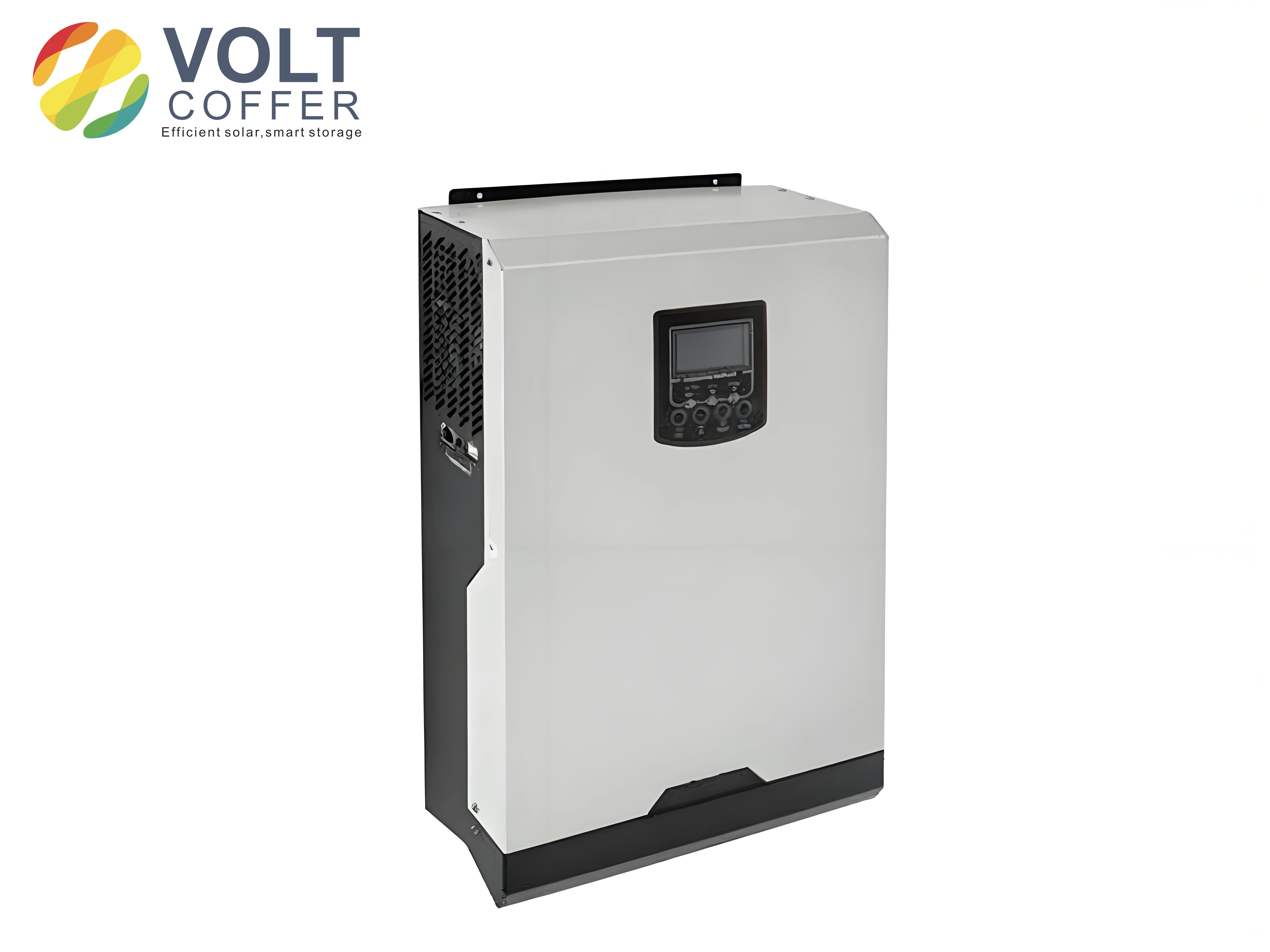
The hardware system in a semi-physical simulation for solar inverters typically includes the physical solar inverter controller, power electronic components like IGBTs or MOSFETs, and sensors for measuring voltage and current. These elements are interfaced with the real-time simulator through I/O cards. For instance, the simulator generates the PV array’s output based on mathematical models, and this output is converted to analog signals that drive the solar inverter controller. The controller’s commands are then fed back into the simulator to close the loop. This setup enables comprehensive testing without the need for actual PV panels or grid connections.
On the software side, I often use MATLAB/Simulink to develop the simulation models. These models include detailed representations of the PV array, DC-DC converters, and the grid interface. For example, the PV array can be modeled using the single-diode model, which describes the I-V relationship as:
$$ I = I_{ph} – I_0 \left( \exp\left(\frac{V + I R_s}{a V_t}\right) – 1 \right) – \frac{V + I R_s}{R_{sh}} $$
where \( I_{ph} \) is the photocurrent, \( I_0 \) is the diode saturation current, \( R_s \) and \( R_{sh} \) are series and shunt resistances, \( a \) is the ideality factor, and \( V_t \) is the thermal voltage. This model is implemented in the simulator and updated in real-time to reflect changes in solar irradiance and temperature, providing a realistic environment for testing the solar inverter controller.
In terms of control strategy optimization, semi-physical simulation allows for iterative refinement of parameters. For instance, the proportional-integral (PI) gains in the voltage and current control loops of the solar inverter can be tuned based on simulation results. I typically run multiple test cases, such as step changes in load or grid voltage, and use performance indices like settling time and overshoot to evaluate the controller’s behavior. The table below summarizes common test scenarios for solar inverters in semi-physical simulations.
| Scenario | Description | Key Parameters Monitored |
|---|---|---|
| MPPT Efficiency | Varying solar irradiance from 200 W/m² to 1000 W/m² | Power output, tracking speed, steady-state error |
| Grid Fault Response | Simulated voltage sag to 50% of nominal for 500 ms | Current injection, phase lock loop stability |
| Thermal Stress | High ambient temperature (e.g., 50°C) operation | Component temperatures, efficiency degradation |
For fault diagnosis, I leverage the semi-physical platform to inject specific faults, such as open-circuit failures in switches or sensor drifts, and assess the solar inverter controller’s ability to detect and mitigate them. This process often involves designing fault detection algorithms that run concurrently with the control logic. The performance verification phase includes comparing simulation results with theoretical expectations and standards, such as IEEE 1547 for grid-connected solar inverters. By analyzing data from these tests, I can validate the controller’s robustness and make necessary adjustments before deployment.
Overall, the application of semi-physical simulation in solar inverter controller testing has proven invaluable in my work. It not only accelerates the development cycle but also enhances the reliability and efficiency of solar inverters, contributing to the broader adoption of solar energy. As the technology evolves, I anticipate even greater integration with artificial intelligence and machine learning for predictive maintenance and adaptive control of solar inverters.
Conclusion and Future Directions
In conclusion, semi-physical simulation technology offers a powerful framework for testing and optimizing solar inverter controllers. By combining real hardware with virtual models, it provides a realistic and safe environment for evaluating performance under diverse conditions. My experiences with platforms like RT-LAB have demonstrated significant improvements in the accuracy and efficiency of solar inverter designs, particularly in areas like MPPT and fault response. The ability to conduct real-time tests has reduced development costs and time-to-market for new solar inverter technologies.
Looking ahead, I see several promising directions for semi-physical simulation in the context of solar inverters. First, the push for国产化 (domestication) of simulation platforms is crucial to reduce costs and increase accessibility. While international solutions like OPAL-RT are advanced, developing local alternatives could foster innovation and tailor tools to specific regional needs for solar inverters. Second, the integration of AI and big data analytics could enable smarter simulation environments. For instance, machine learning algorithms could predict solar inverter failures based on historical simulation data, allowing for proactive maintenance. Finally, as solar inverters become more integrated with energy storage and smart grids, semi-physical simulation will need to evolve to handle multi-domain systems. This might involve coupling with other simulation tools or expanding to cloud-based platforms for collaborative research.
In the future, I believe that semi-physical simulation will play a pivotal role in achieving higher penetration of solar energy by ensuring that solar inverters are reliable, efficient, and grid-compliant. By continuing to refine this technology, we can address the growing demands of the renewable energy sector and contribute to a sustainable future. The journey of enhancing solar inverter performance through simulation is ongoing, and I am excited to be part of this transformative field.