
Construction site safety has always been a paramount concern in construction management, particularly within mechanical and electrical installation engineering. The inherent characteristics of such projects—including multiple installation specialties, numerous installation locations, a high volume of end devices, prolonged durations, and repetitive tasks—coupled with the three-level temporary power supply system on site, significantly impact the safety of end work in installation. In recent years, with rapid advancements in battery technology, batteries are being applied across increasingly diverse fields and at larger scales. In this context, the wireless application of lithium iron phosphate batteries, specifically LiFePO4 batteries, has gained traction in many construction areas. However, challenges such as extended charging times and limited effective usage periods persist. From a first-person perspective as a researcher, this article delves into the practical application of LiFePO4 batteries in construction tools, drawing from project experiences to conduct an economic analysis. The focus is on how LiFePO4 battery technology can mitigate safety risks while enhancing efficiency, with extensive use of tables and formulas to summarize key findings.
Electric shock accidents represent a critical and prevalent safety issue on construction sites. Management oversights and operational habits contribute significantly to these incidents, despite overall reductions. Key factors include: (1) numerous unsupervised points in the three-level temporary power supply system, leading to unrestricted use; (2) irregular operational procedures or improper grounding of electrical equipment; (3) prolonged exposure of equipment or cables due to misuse; and (4) lack of professional electrical training for personnel. Environmental factors, such as high temperatures, humidity, and metal clutter, further exacerbate risks, with higher accident rates during the second and third quarters due to climatic conditions. The adoption of wireless tools powered by LiFePO4 batteries can directly address many of these issues by minimizing dependence on temporary electrical systems.
The project background involves a subway construction initiative, focusing on mechanical and electrical installation, fire protection engineering, and electrical systems. Key components include ventilation and air conditioning systems, water supply and drainage with fire protection systems, and low-voltage power distribution and lighting systems. Temporary power facilities required trained operators and robust inspection protocols, highlighting the complexity and safety demands. The shift to wireless tools powered by LiFePO4 batteries emerged as a solution to reduce electrical hazards in such environments.
The trend toward wireless hand-held electric tools in construction is accelerating. These tools, such as hand-held saws and drills, replace traditional plug-in tools by utilizing battery packs, thereby reducing or eliminating end cables. In complex job sites with multiple work zones, specialties, and交叉作业, the three-level temporary power configuration leads to scattered, random, and concurrent use of electrical devices, often resulting in cable wear and safety incidents. Traditional plug-in tools face limitations like restricted range, frequent use,临时 and随意 connections, and wear-induced exposure, posing significant electric shock risks and secondary injuries like falls. Wireless hand-held electric tools, powered by LiFePO4 batteries, can mitigate most shock accidents by removing cables and reducing interactions with power distribution components. Their mobility, flexibility, and lower shock risk make them ideal for standard construction phases, non-continuous tasks, and high-risk areas, though continuous use scenarios may still favor wired options.
Lithium-ion batteries are well-known for their advantages over lead-acid batteries, including higher energy storage density—typically six to seven times greater—longer cycle life (about three times that of lead-acid), superior power tolerance, lighter weight (one-fourth to one-fifth the volume), and environmental friendliness with minimal toxic elements. However, they pose safety risks like fire or explosion if not properly protected with control circuits, and production costs are higher. In contrast, LiFePO4 batteries, which use lithium iron phosphate (LiFePO4) as the anode and carbon as the cathode, offer enhanced safety and performance. Their working principle involves lithium ions moving between electrodes during charging and discharging: during charging, ions de-intercalate from the LiFePO4 anode, travel through the electrolyte to the cathode, and combine with electrons from the external circuit; during discharging, the reverse process releases energy. LiFePO4 batteries feature a wide working voltage range, high energy density, long cycle life, excellent safety in low-voltage scenarios, and no memory effect. They are increasingly replacing conventional lithium-ion batteries in niche markets, especially low-voltage applications, due to faster charging with专用 chargers, high-temperature resistance, large capacity, and lower cost. The use of LiFePO4 batteries is environmentally friendly, non-toxic, and sustainable, with abundant raw materials.
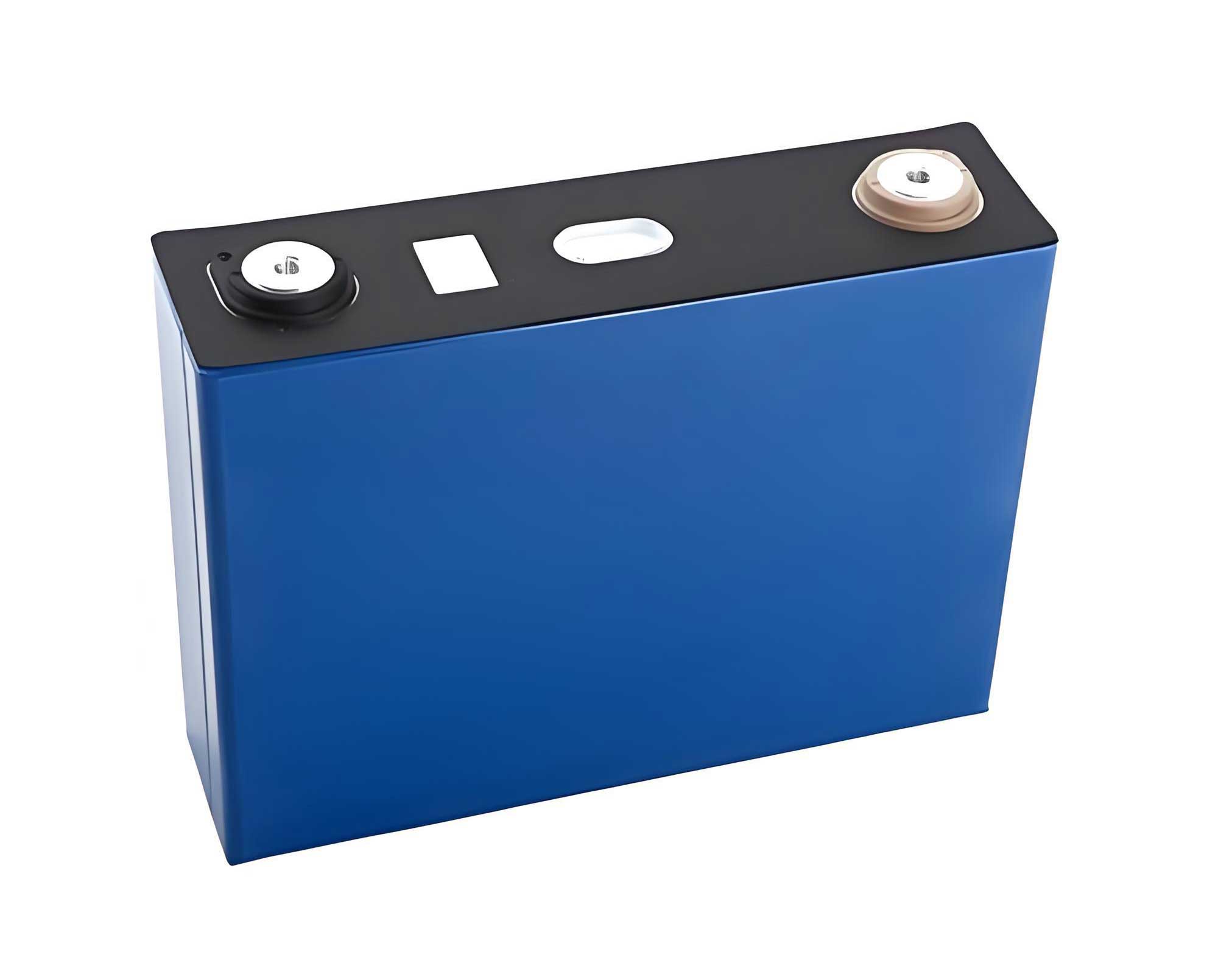
The advantages of LiFePO4 batteries can be quantified through key parameters. For instance, the energy density $\rho_E$ (in Wh/L) is a critical metric, often ranging from 270 to 340 Wh/L for cylindrical LiFePO4 batteries, as used in this project. The cycle life $N_{\text{cycle}}$ can be modeled as a function of depth of discharge (DoD) and operating temperature $T$:
$$ N_{\text{cycle}} = N_0 \cdot e^{-k \cdot \text{DoD}} \cdot f(T) $$
where $N_0$ is the baseline cycle count, $k$ is a degradation constant, and $f(T)$ is a temperature-dependent factor. Compared to lead-acid batteries, LiFePO4 batteries typically offer over 2000 cycles at 80% DoD, whereas lead-acid may only manage 500 cycles. This longevity directly impacts economic benefits, as reduced replacement frequency lowers costs. Additionally, the charging efficiency $\eta_{\text{charge}}$ of LiFePO4 batteries can exceed 95%, minimizing energy loss. The following table summarizes a comparison between LiFePO4 batteries, conventional lithium-ion batteries, and lead-acid batteries:
| Battery Type | Energy Density (Wh/L) | Cycle Life (cycles) | Safety | Cost per kWh |
|---|---|---|---|---|
| LiFePO4 Battery | 270-340 | >2000 | High | Moderate |
| Conventional Lithium-ion | 250-300 | 500-1000 | Moderate | High |
| Lead-Acid | 50-100 | 300-500 | Low | Low |
In the project, LiFePO4 batteries were employed in wireless electric tools for installation tasks, such as electrical work, plumbing, and支架 installation. These tools improved worker efficiency by eliminating the need for临时配电, enhancing portability and操作灵活度. While standard LiFePO4 batteries provided adequate power, initial limitations included 6-hour charging times and approximately 2 hours of usage per charge. For an 8-hour workday, this required at least four fully charged batteries, and under intense cycling,电池寿命 could shorten to 3–4 months, increasing project costs. The selected LiFePO4 batteries, however, offered capacities from 5 to 100 Ah, with stable discharge voltages and extended runtimes. To analyze the economic impact, three methods were applied: three-level electricity comparison analysis, factor analysis, and correlation analysis. The factor analysis, for example, related charging time $t_c$ and working time $t_w$ to battery quality指标 $Q$:
$$ Q = \alpha \cdot \frac{t_w}{t_c} + \beta \cdot \eta_{\text{cycle}} $$
where $\alpha$ and $\beta$ are weighting factors, and $\eta_{\text{cycle}}$ is the cycle efficiency. Correlation analysis examined relationships between safety incidents and tool type without implying causation. The project results are tabulated below, showing cost savings and increases:
| Item | Description | Value (yuan) |
|---|---|---|
| 1 | Reduction in labor cost for temporary power installation (per station) | 50,000 |
| 2 | Total labor savings for 2 stations | 100,000 |
| 3 | Reduction in material cost for temporary power (per station) | 150,000 |
| 4 | Total material savings for 2 stations | 300,000 |
| 5 | Reduction in dedicated electrician salary (1 person) | 180,000 |
| 6 | Increase in equipment procurement cost (10 sets) | 80,000 |
| 7 | Savings in electricity bills (after adjustment) | 150,000 |
The total economic benefit $B_{\text{total}}$ is calculated as:
$$ B_{\text{total}} = \sum \text{Savings} – \text{Increased Costs} = (100,000 + 300,000 + 180,000 + 150,000) – 80,000 = 650,000 \text{ yuan} $$
This translates to approximately $92,857 USD at an exchange rate of 7 yuan per dollar, showcasing significant cost-effectiveness. Furthermore, the reduction in临时电敷设缩短 the construction cycle by 10 days, enhancing overall project timelines. The use of time-controlled charging during off-peak hours (e.g., 0:00 to 8:00) optimized electricity costs, with monthly savings per station modeled as:
$$ S_{\text{electricity}} = P_{\text{base}} \cdot t_{\text{peak}} \cdot r_{\text{peak}} – P_{\text{LiFePO4}} \cdot t_{\text{off-peak}} \cdot r_{\text{off-peak}} $$
where $P$ denotes power consumption, $t$ time, and $r$ electricity rates. For instance, with a base monthly cost of 10,000 yuan per station over 20 months for two stations, the total was 400,000 yuan; using LiFePO4 battery-powered tools reduced this to 250,000 yuan, saving 150,000 yuan. The enhanced safety from reduced cable use also lowered potential accident costs, which can be estimated via risk assessment formulas. For example, the probability of an electric shock incident $P_{\text{incident}}$ without wireless tools might be:
$$ P_{\text{incident}} = \lambda \cdot n_{\text{cables}} \cdot t_{\text{exposure}} $$
where $\lambda$ is the failure rate, $n_{\text{cables}}$ the number of cables, and $t_{\text{exposure}}$ the exposure time. With LiFePO4 batteries, $n_{\text{cables}} \approx 0$, drastically reducing $P_{\text{incident}}$. This aligns with broader industry trends where wireless tool adoption is growing by 15% annually, driven by safety and efficiency gains. The LiFePO4 battery’s role in this is pivotal, as its durability supports high复用率, with a net present value (NPV) analysis for multi-site deployment showing positive returns. If $C_0$ is the initial investment in LiFePO4 battery tools, $CF_t$ the annual cash flow from savings, and $r$ the discount rate, NPV is:
$$ \text{NPV} = \sum_{t=1}^{n} \frac{CF_t}{(1+r)^t} – C_0 $$
For this project, assuming $C_0 = 80,000$ yuan, $CF_t = 65,000$ yuan per year (prorated from total benefit), $r = 5\%$, and $n = 3$ years, NPV calculates to approximately 120,000 yuan, indicating strong viability. Moreover, the environmental benefits of LiFePO4 batteries, such as reduced carbon footprint, add intangible value. A lifecycle assessment shows that over 5 years, LiFePO4 battery use in construction tools can cut CO₂ emissions by up to 30% compared to lead-acid systems, supporting sustainability goals.
In summary, the application of LiFePO4 batteries in wireless electric tools effectively reduces end safety hazards while boosting worker productivity. The LiFePO4 battery technology overcomes traditional drawbacks like long charging times and short usage durations, offering superior economic returns through higher复用率 and lower operational costs. This study, based on project-level analysis, demonstrates that LiFePO4 batteries are a transformative solution for construction sites, with broad推广 potential. The economic models and safety metrics presented here provide a framework for future adoptions, underscoring the value of LiFePO4 battery integration in modern construction practices. As battery technology continues to evolve, further refinements in LiFePO4 battery design are expected to amplify these benefits, driving industry-wide shifts toward safer, more efficient tooling systems.