
With the global push toward carbon neutrality and the increasing integration of renewable energy sources, the stability of power systems has become a critical concern. As an researcher in this field, I have observed that wind and solar power generation, while environmentally friendly, exhibit inherent intermittency and volatility. These characteristics can lead to frequency oscillations and challenges in grid frequency regulation, especially when large-scale centralized or distributed renewable systems are connected. In this context, energy storage systems, particularly those based on battery technology, have emerged as a pivotal solution. Among these, the energy storage cell serves as the fundamental unit, enabling rapid response and precise control. In this article, I will explore the multifaceted roles of battery energy storage systems in grid-connected renewable energy setups, emphasizing the importance of energy storage cells in enhancing grid reliability and economic viability. I will delve into technical aspects, including peak shaving, grid stabilization, and primary frequency regulation, supported by mathematical models and empirical data. Furthermore, I will present a generalized case study of an integrated photovoltaic-energy storage microgrid to illustrate the economic benefits, incorporating formulas and tables to summarize key findings. The repeated emphasis on energy storage cells throughout this discussion underscores their centrality in advancing renewable energy integration.
The integration of renewable energy sources like wind and solar into power grids has accelerated in recent years, driven by climate goals and technological advancements. However, this shift introduces operational challenges due to the variable nature of these resources. For instance, solar power generation peaks during daylight hours and drops to zero at night, while wind power can fluctuate unpredictably. This misalignment with load demand—often referred to as anti-peak characteristics—can strain traditional power systems, necessitating additional reserve capacity from fossil fuel-based plants. As an engineer focused on grid stability, I believe that battery energy storage systems, composed of numerous energy storage cells, offer a transformative approach. These systems can store excess energy during periods of low demand and release it during peak hours, effectively shifting energy temporally. This not only reduces reliance on conventional peaking plants but also enhances the grid’s ability to absorb renewable generation. In the following sections, I will analyze the core functions of battery energy storage systems, drawing on first-principles modeling and real-world applications. Each energy storage cell within these systems contributes to overall performance, and optimizing their deployment is key to achieving a sustainable energy future.
Roles of Battery Energy Storage Systems in Grid-Connected Renewable Energy
Battery energy storage systems play several critical roles in mitigating the impacts of renewable energy intermittency. Based on my analysis, these can be categorized into three primary functions: peak shaving and valley filling, grid stabilization, and primary frequency regulation. Each function relies on the efficient operation of individual energy storage cells, which are typically based on chemistries like lithium iron phosphate (LiFePO4). In this section, I will elaborate on these roles, incorporating mathematical formulations to quantify their effects.
Peak Shaving and Valley Filling
One of the most significant applications of battery energy storage systems is in peak shaving and valley filling. Renewable energy sources, such as solar and wind, often generate power when demand is low, leading to curtailment or “wind and solar abandonment.” Conversely, during peak demand periods, these sources may not contribute sufficiently, forcing grid operators to rely on expensive and polluting peaking plants. By deploying energy storage cells in a coordinated manner, we can store surplus energy during off-peak hours and discharge it during peak times. This temporal shifting aligns generation with consumption, reducing the need for additional reserve capacity. For example, consider a scenario where wind power generation peaks at midnight, when load demand is minimal. Without storage, this energy might be wasted due to transmission constraints. However, with a battery system, it can be stored and used during the evening peak demand period (e.g., 19:00 to 22:00).
To quantify the benefits, we can model the equivalent load after integrating storage. Let \( P_{\text{load}} \) represent the daily load demand, and \( P_{\text{NE}} \) denote the power output from renewable sources. The equivalent load \( P_{\text{eq}} \) is given by:
$$ P_{\text{eq}} = P_{\text{load}} – P_{\text{NE}} $$
Without storage, \( P_{\text{eq}} \) may exceed the grid’s capacity limits, leading to renewable curtailment or load shedding. With a battery energy storage system, the output \( P_{\text{BES}} \) is adjusted to constrain \( P_{\text{eq}} \) within acceptable bounds. The net power \( P \) injected into the grid becomes:
$$ P = P_{\text{NE}} + P_{\text{BES}} $$
where \( P_{\text{BES}} \) is positive during discharge and negative during charge. The goal is to ensure that \( P \) remains between the minimum and maximum allowable power levels, thereby minimizing curtailment and enhancing renewable energy utilization. In practice, the energy storage cell’s state of charge (SOC) must be managed to avoid overcharging or deep discharging, which can degrade performance. A typical SOC management strategy involves setting upper and lower limits, such as 90% and 10%, respectively, to prolong the lifespan of each energy storage cell.
The economic viability of peak shaving depends on the electricity price differential between peak and off-peak periods. For instance, if the peak-to-valley price difference is \( \Delta C \) per kWh, and the battery system has a usable energy capacity \( E_{\text{usable}} \) (considering depth of discharge, DOD), the annual revenue \( R \) from energy arbitrage can be estimated as:
$$ R = \Delta C \times E_{\text{usable}} \times N_{\text{cycles}} $$
where \( N_{\text{cycles}} \) is the number of daily cycles multiplied by 365. Assuming a DOD of 90% and daily cycling, this can yield substantial returns, as demonstrated in the case study later.
Grid Stabilization
Another crucial role of battery energy storage systems is in stabilizing the grid by smoothing the power fluctuations inherent in renewable generation. Wind and solar outputs can change rapidly over short timescales (e.g., minutes), causing frequency deviations and potential instability. Grid codes often impose limits on the rate of change of power for connected renewable systems. For example, as summarized in Table 1, the maximum allowable active power variation over 10 minutes and 1 minute depends on the installed capacity of the renewable system.
| Installed Capacity (MW) | 10-Minute Maximum Variation (MW) | 1-Minute Maximum Variation (MW) |
|---|---|---|
| < 30 | 10 | 3 |
| 30–150 | 10–50 | 3–15 |
| > 150 | 50 | 15 |
To comply with these limits, battery energy storage systems can employ control algorithms to smooth the combined output \( P = P_{\text{NE}} + P_{\text{BES}} \). Two common methods are the point-by-point limitation method and the low-pass filter method.
In the point-by-point limitation method, the permissible range for the battery output \( P_{\text{BES}}(j) \) at time \( j \) is derived from the historical power variations. Let \( \Delta P_{10}(j) \) be the change in power over the past 10 minutes, and \( \Delta P_{1}(j) \) be the change over the past 1 minute. The constraints are:
$$ \max(\Delta P_{10}(j) – P_{y,10}, \Delta P_{1}(j) – P_{y,1}) < P_{\text{BES}}(j) < \min(\Delta P_{10}(j) – P_{y,10}, \Delta P_{1}(j) – P_{y,1}) $$
where \( P_{y,10} \) and \( P_{y,1} \) are the maximum allowed fluctuation powers over 10 minutes and 1 minute, respectively. This ensures that the net power \( P \) does not violate the grid codes.
The low-pass filter method, on the other hand, uses a filter to attenuate high-frequency components of the power signal. The battery output at time \( j \) is computed as:
$$ P_{\text{BES}}(j) = \frac{\tau}{t} \left[ \sum P(j) – \sum P(j-1) \right] $$
where \( \tau \) is the time constant and \( t \) is the control period. The time constant is related to the cutoff frequency \( f_c \) of the filter:
$$ \tau = \frac{1}{2\pi f_c} $$
By selecting an appropriate \( f_c \), we can achieve the desired smoothing effect. In both methods, the performance hinges on the responsiveness of the energy storage cells, which must charge and discharge rapidly to counteract fluctuations. Each energy storage cell in the system contributes to this dynamic response, and their collective behavior determines the overall stabilization capability.
Primary Frequency Regulation
Primary frequency regulation is essential for maintaining grid stability during sudden load changes. Traditional generators like thermal and hydro plants have specific deadbands for frequency response (e.g., ±0.033 Hz for thermal plants), but renewable sources often have wider deadbands (e.g., ±0.10 Hz for wind). Battery energy storage systems can provide faster and more accurate frequency regulation due to their millisecond-level response times. When the grid frequency deviates beyond a threshold, the storage system adjusts its power output to counteract the imbalance.
For example, consider a scenario where a 300 MW thermal plant is required to provide primary frequency regulation with a limit of 8% of rated capacity (24 MW). The power adjustment per Hertz is 160 MW/Hz, and for frequency deviations between 0.033 Hz and 0.183 Hz, the regulating power ranges from 0 to 24 MW. If a battery energy storage system is tasked with this role independently, it would need to handle short-duration charge/discharge cycles. A typical configuration might be 600 kW/0.5 h, allowing for 10-second responses. Since frequency deviations can occur frequently, the energy storage cells undergo many shallow cycles around 50% SOC, which minimizes degradation and extends lifespan.
To optimize capacity utilization, a dual-boundary improved smoothing control algorithm can be employed. This algorithm频繁 adjusts the SOC of the energy storage cells, ensuring they operate within a narrow range and reducing the required system capacity. The power setpoint for frequency regulation \( P_{\text{FR}} \) can be modeled as:
$$ P_{\text{FR}} = K \cdot (f_{\text{nominal}} – f_{\text{actual}}) $$
where \( K \) is the droop coefficient, and \( f_{\text{nominal}} \) is the nominal grid frequency (e.g., 50 Hz). The energy storage cells must respond instantly to these setpoints, highlighting the importance of their high cycle efficiency and durability.
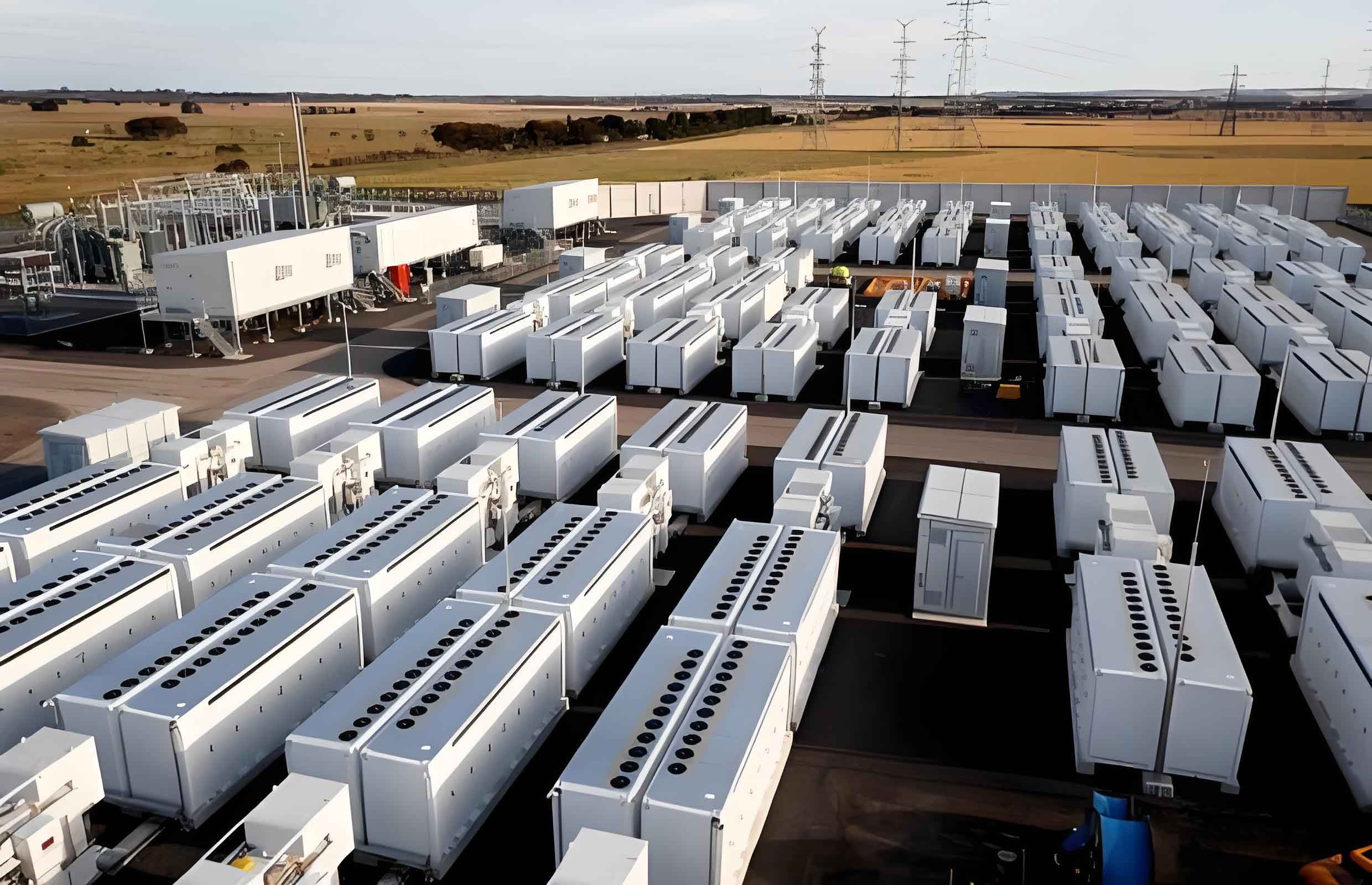
Case Study: Integrated Photovoltaic-Energy Storage Microgrid
To illustrate the practical application and economic benefits of battery energy storage systems, I will discuss a generalized case study of an integrated photovoltaic-energy storage microgrid. This project combines an 800 kW photovoltaic system with a 250 kW/500 kWh lithium iron phosphate battery energy storage system, serving local loads and interacting with the main grid. The key components are listed in Table 2, emphasizing the role of energy storage cells in the system.
| Equipment | Specifications | Quantity |
|---|---|---|
| Photovoltaic Modules | 550 W monocrystalline | 1455 units |
| Inverters | 33 kW rated power | 22 units |
| Energy Storage Cells | 3.2 V / 130 Ah LiFePO4 cells | 1224 units |
| Power Conversion System | 250 kW capacity | 1 unit |
| Step-Up Transformer | 10 kV/0.4 kV, 800 kVA | 1 unit |
The microgrid operates in multiple modes, including “black start” capability, where the battery system can initiate power supply independently during grid outages. The energy management system (EMS) coordinates these operations, optimizing the use of each energy storage cell for maximum efficiency. In the voltage-current dual-loop control mode, the system maintains DC bus voltage stability while managing charge and discharge cycles.
For economic analysis, we focus on the peak shaving mode. Assuming a peak-to-valley electricity price difference of $0.70 per kWh, and a usable battery capacity of 500 kWh with 90% depth of discharge, the daily energy shifted is:
$$ E_{\text{daily}} = 500 \times 0.9 = 450 \text{ kWh} $$
The daily revenue is then \( 450 \times 0.70 = $315 \). Over a year, this amounts to:
$$ R_{\text{annual}} = 315 \times 365 = $114,975 \approx $115,000 $$
Additionally, by reducing the peak demand, the system allows for a smaller transformer capacity, saving on equipment costs. For instance, if a 1000 kVA transformer is downsized to 800 kVA due to storage, the capital cost savings can be significant. This demonstrates how energy storage cells contribute not only to grid stability but also to economic gains.
Discussion on Challenges and Future Directions
While battery energy storage systems offer substantial benefits, their widespread adoption faces challenges, particularly in economic sustainability. In current business models, standalone applications like peak shaving or frequency regulation may not always be profitable, especially with seasonal variations in renewable generation and electricity prices. For example, in regions with low solar insolation during winter, the effectiveness of storage can diminish, affecting returns on investment. Moreover, the degradation of energy storage cells over time must be accounted for in lifecycle cost analyses.
Future research should focus on improving the performance of energy storage cells under diverse conditions. Advancements in materials science could lead to higher energy density and longer cycle life for each energy storage cell. Additionally, integrating artificial intelligence for predictive maintenance and SOC optimization could enhance system resilience. Another promising direction is the development of hybrid storage solutions, combining batteries with other technologies like supercapacitors, to handle both high-power and high-energy applications. As renewable energy forecasting accuracy improves, the scheduling and dispatch of storage systems will become more efficient, further increasing their value in grid operations.
Conclusion
In summary, battery energy storage systems, built upon reliable energy storage cells, are indispensable for the integration of renewable energy into power grids. Through functions like peak shaving, grid stabilization, and primary frequency regulation, they address the intermittency and volatility of sources like wind and solar. The case study of an integrated microgrid highlights the economic potential, with annual revenues of approximately $115,000 from energy arbitrage alone. Furthermore, the use of energy storage cells enables cost savings on grid infrastructure, such as transformers. As technology evolves, the role of energy storage cells will expand, paving the way for a more stable and sustainable energy ecosystem. Continued innovation in energy storage cell design and system integration is essential to unlocking these benefits fully.