
In my research on high-voltage direct current (HVDC) transmission systems, I have observed that traditional Static Synchronous Compensators (STATCOMs) exhibit significant limitations when performing large-capacity reactive power compensation. These limitations include reduced control accuracy of the DC-side voltage, substantial oscillations in the DC-link voltage, and the introduction of harmonic components in the output current. Consequently, the grid voltage support provided by conventional STATCOMs is often suboptimal. To overcome these challenges, I propose the integration of energy storage technology with reactive power compensation, leading to the development of a Battery Energy Storage STATCOM (STATCOM/BESS). This innovative approach combines the benefits of energy storage cells with power electronic conversion, enabling simultaneous control of active and reactive power. In this paper, I present a comprehensive analysis of the STATCOM/BESS topology, mathematical modeling, control strategies, and simulation results, with a focus on enhancing HVDC system stability and mitigating commutation failures.
The foundation of my work lies in the design of a delta-connected cascaded H-bridge structure for STATCOM/BESS. This topology is particularly suitable for high-voltage applications due to its modularity and ability to generate multilevel output voltages, reducing the voltage stress on individual switching devices. Each phase of the system comprises multiple H-bridge modules, with energy storage cells directly connected to the DC-side capacitors. The energy storage cells, typically batteries, are paired with capacitors to buffer power fluctuations between the H-bridge modules and the storage units. This configuration ensures efficient energy transfer and voltage stability. The following figure illustrates the general concept of energy storage integration in such systems:
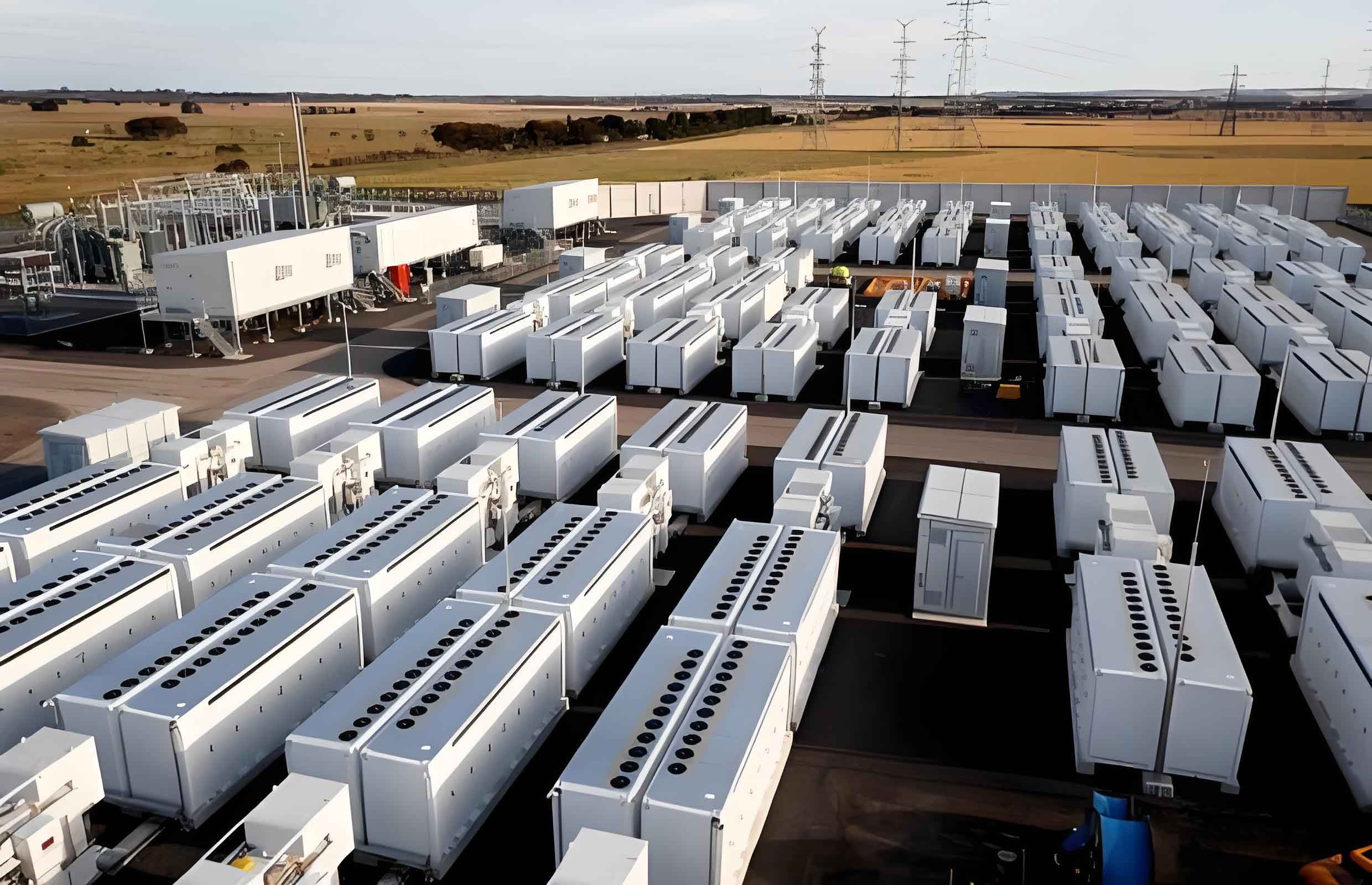
In the DC/DC part of the STATCOM/BESS, each H-bridge module incorporates energy storage cells in parallel with a capacitor. The capacitor serves as an energy buffer, smoothing the power difference between the H-bridge and the energy storage cells. For high-voltage systems, the number of cascaded modules per phase can be substantial (e.g., 36 to 42 modules), but for simulation purposes, I often simplify this to three modules per phase to balance computational efficiency with accuracy. The DC/AC part employs a multilevel topology, which minimizes the voltage rating requirements for each switch and improves waveform quality. The overall system is connected to the HVDC inverter-side AC bus via a step-up transformer, facilitating integration into the grid.
To derive the mathematical model of the STATCOM/BESS, I assume that the parameters of each phase in the delta configuration are identical. This allows me to decompose the three-phase system into three single-phase equivalents for analysis. Consider the AB phase as an example; the equivalent circuit can be represented by a voltage source, inductance, and resistance. Applying Kirchhoff’s voltage law, the equation for the AB phase is:
$$ u_{ab} = u_s – L \frac{di_{ab}}{dt} – R i_{ab} $$
where \( u_{ab} \) is the output voltage of the bridge chain, \( u_s \) is the line voltage at the point of common coupling, \( i_{ab} \) is the phase current, \( L \) is the inductance, and \( R \) is the resistance. The switching states of the H-bridge modules are defined using the states of the switches \( G_{j1} \) and \( G_{j3} \), where a value of 1 indicates conduction and 0 indicates turn-off. The overall switching state \( H_j \) for the j-th H-bridge module is given by:
$$ H_j = \begin{cases}
1 & \text{if } G_{j1} = 1, G_{j3} = 0 \\
0 & \text{if } G_{j1} = 0, G_{j3} = 0 \\
-1 & \text{if } G_{j1} = 0, G_{j3} = 1
\end{cases} $$
The current through the DC-side capacitor of the j-th module, \( i_{cj} \), is related to the phase current and switching state by:
$$ i_{cj} = H_j i_{ab} $$
The voltage across the capacitor, \( u_{dabj} \), can be described by the state equation:
$$ C \frac{du_{dabj}}{dt} = i_{cj} = H_j i_{ab} $$
where \( C \) is the capacitance. The sum of the switching states for all modules in a phase defines the overall converter switching state \( N \):
$$ N = \sum_{j=1}^{n} H_j $$
The output voltage of the j-th module, \( u_{abj} \), is proportional to its capacitor voltage and switching state:
$$ u_{abj} = H_j u_{dabj} $$
Assuming equal capacitor voltages across modules, the total bridge chain output voltage \( u_{ab} \) and the sum of capacitor voltages \( u_{dab} \) are:
$$ u_{ab} = \frac{N}{n} u_{dab} $$
and the dynamics of the total capacitor voltage are:
$$ C \frac{du_{dab}}{dt} = N i_{ab} $$
Substituting these into the initial equation, the differential equation for the current becomes:
$$ L \frac{di_{ab}}{dt} = u_s – R i_{ab} – \frac{N}{n} u_{dab} $$
This model forms the basis for designing control strategies and simulating system behavior. The integration of energy storage cells introduces additional degrees of freedom, allowing for active power control alongside reactive compensation.
A critical aspect of STATCOM/BESS operation is the management of the state of charge (SOC) of the energy storage cells. Due to the large number of modules, imbalances in SOC can occur between phases and within submodules of the same phase, especially under asymmetric grid conditions. These imbalances reduce the efficiency and lifespan of the energy storage cells. To address this, I have developed SOC balancing control strategies, including inter-phase and intra-phase SOC control.
For inter-phase SOC balancing, I calculate the average SOC of all phases, \( SOC_0 \), as:
$$ SOC_0 = \frac{SOC_{ab} + SOC_{bc} + SOC_{ca}}{3} $$
where \( SOC_{ab} \), \( SOC_{bc} \), and \( SOC_{ca} \) are the SOC values of the AB, BC, and CA phases, respectively. The difference between each phase’s SOC and the average SOC is processed through a PI controller to generate an active current command \( I_{socm} \). This command is injected into the current inner loop control. If a phase’s SOC is below average, a positive active current command charges the energy storage cells in that phase, increasing its SOC; conversely, a negative command discharges them. This ensures balanced SOC across phases.
For intra-phase submodule SOC balancing, I compute the average SOC of submodules within a phase, \( SOC_{m0} \), and compare it to individual submodule SOC values, \( SOC_{mi} \). The difference is scaled by a proportional gain to produce an additional modulation signal \( v_{socmi} \). If \( SOC_{mi} \) is greater than \( SOC_{m0} \), \( v_{socmi} \) is phased to lead the corresponding line voltage, causing the submodule to output active power and reduce its SOC. If lower, it lags, absorbing active power to increase SOC. This method maintains equilibrium among submodules, enhancing the overall performance of the energy storage cells.
The following table summarizes key parameters used in my simulations for the LCC-HVDC system integrated with STATCOM/BESS:
| Parameter | Rectifier Side | Inverter Side |
|---|---|---|
| AC System Voltage | 525 kV | 525 kV |
| Capacity | 1500 MW | 1500 MW |
| Short-Circuit Ratio (SCR) | 3 | 2.5 |
| Transformer | 890 MVA, XT=0.16 pu, 525/209 kV | 869 MVA, XT=0.16 pu, 525/204 kV |
To validate the effectiveness of STATCOM/BESS, I conducted electromagnetic transient simulations using PSCAD/EMTDC software. The model included a monopolar 12-pulse HVDC system with STATCOM/BESS connected to the inverter-side AC bus via a 35/525 kV transformer. The STATCOM/BESS had a total capacity of 150 Mvar, with three H-bridge modules per phase for simulation efficiency. I tested the system under a three-phase ground fault at the inverter side, lasting 0.2 seconds and initiated at 2 seconds.
The simulation results demonstrated significant improvements with STATCOM/BESS compared to traditional STATCOM. During the fault, the inverter-side AC voltage experienced less severe sag with STATCOM/BESS, and recovery to normal levels was faster. The extinction angle \( \gamma \), critical for commutation success, remained above 10 degrees with STATCOM/BESS, preventing commutation failure, whereas with traditional STATCOM, it dropped to 0 degrees, leading to consecutive commutation failures. Additionally, the system power transmission showed reduced跌落 with STATCOM/BESS, enhancing stability and safety. These outcomes highlight the superior capability of STATCOM/BESS in supporting grid voltage and mitigating commutation failures, thanks to the active power support from the energy storage cells.
The integration of energy storage cells into STATCOM not only improves reactive power compensation but also enables active power management, which is crucial for fault ride-through and dynamic stability. The SOC balancing controls ensure that the energy storage cells operate efficiently and uniformly, prolonging their service life. In my simulations, the Shepherd model was used for the battery dynamics, accurately representing the behavior of the energy storage cells under varying conditions.
In conclusion, my research on STATCOM/BESS reveals its substantial benefits for HVDC systems. The mathematical model and control strategies I developed effectively address the limitations of traditional STATCOMs, providing robust voltage support and commutation failure suppression. The SOC balancing mechanisms optimize the performance of energy storage cells, ensuring balanced operation across phases and submodules. Simulation results confirm that STATCOM/BESS outperforms conventional solutions in maintaining system stability during faults, making it a valuable asset for modern power grids. Future work could focus on scaling the topology for higher voltage levels and optimizing the energy management of the storage cells for long-term operation.
The following table compares key performance metrics between traditional STATCOM and STATCOM/BESS under fault conditions:
| Metric | Traditional STATCOM | STATCOM/BESS |
|---|---|---|
| DC Voltage Oscillation | High | Low |
| Harmonic Content | Significant | Reduced |
| Commutation Failure | Likely | Suppressed |
| Grid Voltage Support | Moderate | Enhanced |
Overall, the use of energy storage cells in STATCOM represents a significant advancement in power system compensation technology. By enabling bidirectional power flow and rapid response, STATCOM/BESS contributes to the reliability and efficiency of HVDC transmission, paving the way for more resilient grid infrastructures. The insights from my work can guide future implementations and innovations in this field, emphasizing the importance of integrated energy storage solutions.