
In recent years, the pursuit of advanced energy storage systems has intensified, with solid-state battery technology emerging as a pivotal frontier due to its inherent advantages in safety, energy density, and longevity. As a researcher deeply engaged in this field, I have focused on addressing one of the core challenges: the development of high-performance solid polymer electrolytes. Traditional liquid electrolytes, while offering high ionic conductivity, pose significant risks such as leakage and flammability, which limit their application in next-generation solid-state battery designs. In contrast, solid electrolytes can mitigate these issues, but often suffer from trade-offs between ionic conductivity, mechanical integrity, and interfacial stability. This study explores the potential of polyvinyl alcohol (PVA) based composite electrolytes with various lithium salts to overcome these limitations, aiming to optimize performance for practical solid-state battery applications.
The rationale behind selecting PVA lies in its excellent film-forming ability, chemical stability, and biocompatibility, which make it a promising matrix for polymer electrolytes. However, pure PVA exhibits low ionic conductivity, necessitating the incorporation of lithium salts to facilitate ion transport. In this investigation, I systematically prepared composite electrolytes by blending PVA with different lithium salts—lithium perchlorate (LiClO4), lithium hexafluorophosphate (LiPF6), and lithium bis(trifluoromethanesulfonyl)imide (LiTFSI)—at varying molar ratios. The goal was to elucidate how salt type and concentration influence key properties, ultimately guiding the design of efficient solid-state battery electrolytes. The performance metrics evaluated include ionic conductivity, thermal stability, mechanical properties, interfacial stability, and electrochemical behavior in assembled solid-state battery cells.
To provide a theoretical foundation, the ionic conductivity (σ) in polymer electrolytes can be described by the Arrhenius equation, which relates conductivity to temperature and activation energy:
$$ \sigma = \sigma_0 \exp\left(-\frac{E_a}{kT}\right) $$
where σ0 is the pre-exponential factor, Ea is the activation energy for ion hopping, k is Boltzmann’s constant, and T is the absolute temperature. In composite systems, the addition of lithium salts enhances the number of charge carriers (n), but excessive salt can lead to ion aggregation, hindering mobility (μ). Thus, the overall conductivity can be expressed as:
$$ \sigma = n e \mu $$
where e is the elementary charge. Optimizing the salt concentration is crucial to balance these factors, a central theme in this study for advancing solid-state battery technology.
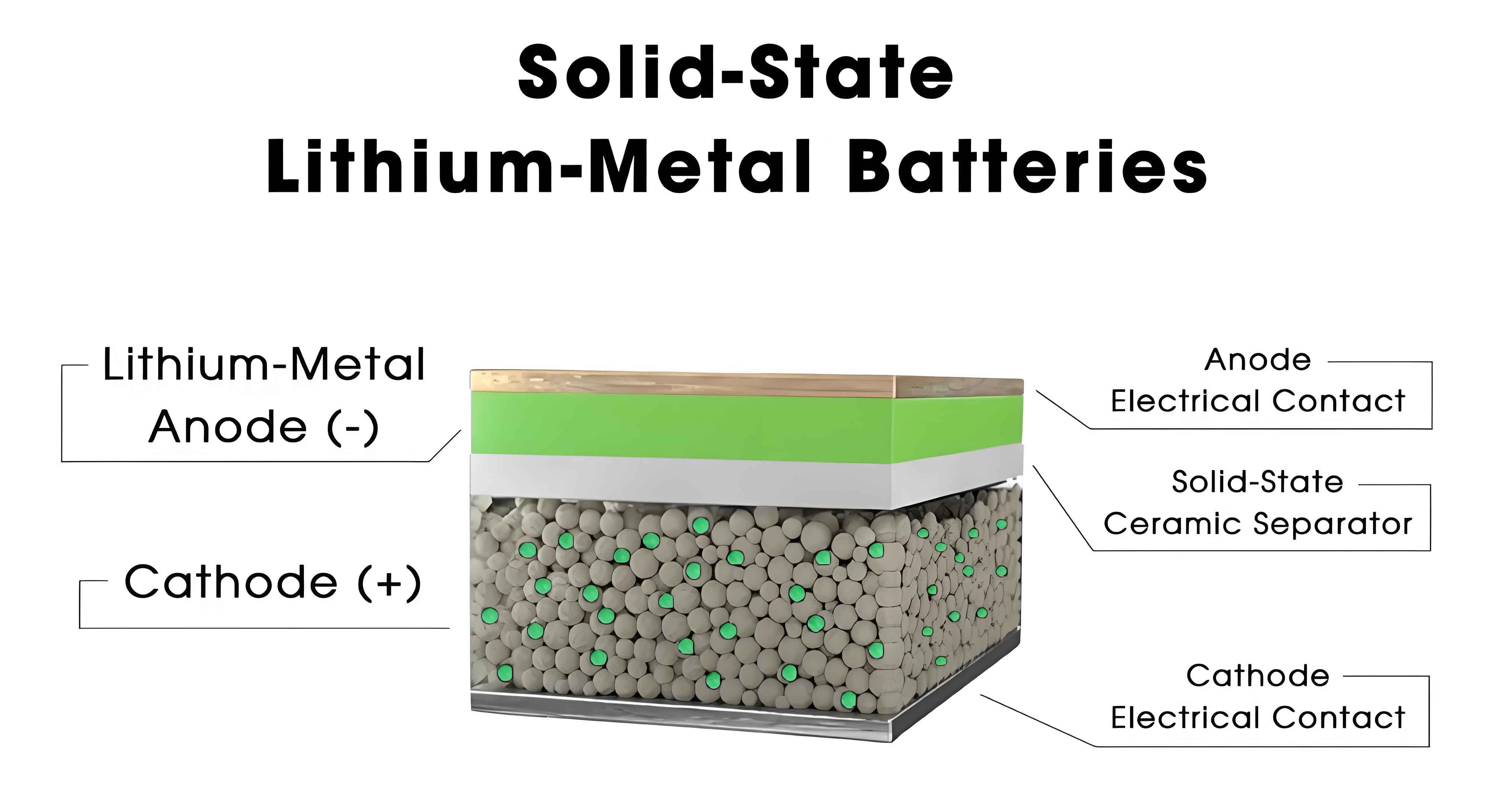
The preparation of composite electrolytes involved dissolving PVA in deionized water at elevated temperatures, followed by the addition of lithium salts in molar ratios of 5:1, 10:1, 15:1, and 20:1 (PVA to salt). After thorough mixing, the solutions were cast into films and dried, resulting in flexible membranes suitable for solid-state battery assembly. For electrochemical testing, I fabricated coin cells using LiCoO2 as the cathode, graphite as the anode, and the composite electrolyte membranes as the separator. This setup allowed for comprehensive evaluation of the electrolytes in a realistic solid-state battery environment.
The ionic conductivity of the composite electrolytes was measured via electrochemical impedance spectroscopy (EIS). The results, summarized in Table 1, reveal significant variations depending on the lithium salt type and concentration. For instance, the LiTFSI-based system demonstrated superior performance, with conductivity peaking at a molar ratio of 15:1. This enhancement can be attributed to the unique anion structure of LiTFSI, which promotes greater ion dissociation and reduces lattice energy, facilitating efficient ion transport pathways within the PVA matrix—a critical factor for high-performance solid-state battery operation.
| Lithium Salt Type | Molar Ratio (PVA:Salt) | Ionic Conductivity (S/cm) |
|---|---|---|
| LiClO4 | 5:1 | 1.3 × 10⁻⁵ |
| 10:1 | 1.9 × 10⁻⁵ | |
| 15:1 | 2.3 × 10⁻⁵ | |
| 20:1 | 1.6 × 10⁻⁵ | |
| LiPF6 | 5:1 | 0.9 × 10⁻⁵ |
| 10:1 | 1.5 × 10⁻⁵ | |
| 15:1 | 2.4 × 10⁻⁵ | |
| 20:1 | 1.2 × 10⁻⁵ | |
| LiTFSI | 5:1 | 1.4 × 10⁻⁵ |
| 10:1 | 2.1 × 10⁻⁵ | |
| 15:1 | 2.9 × 10⁻⁵ | |
| 20:1 | 2.0 × 10⁻⁵ |
Thermal stability is another vital parameter for solid-state battery electrolytes, as it ensures safe operation under varying temperature conditions. I assessed this property using Vicat softening temperature measurements, which indicate the temperature at which the material begins to deform under load. The data, presented in Table 2, show that the incorporation of lithium salts generally lowers the Vicat softening temperature due to plasticization effects, where salt molecules disrupt the intermolecular hydrogen bonding in PVA. However, the LiTFSI system exhibited relatively higher thermal resistance, maintaining a softening temperature of 146°C even at a 20:1 ratio, compared to 142°C for LiClO4 and 140°C for LiPF6. This suggests that LiTFSI interacts more favorably with PVA, preserving some structural integrity—a desirable trait for solid-state battery applications in demanding environments.
| Lithium Salt Type | Molar Ratio (PVA:Salt) | Vicat Softening Temperature (°C) |
|---|---|---|
| LiClO4 | 5:1 | 159 |
| 10:1 | 151 | |
| 15:1 | 145 | |
| 20:1 | 142 | |
| LiPF6 | 5:1 | 156 |
| 10:1 | 148 | |
| 15:1 | 143 | |
| 20:1 | 140 | |
| LiTFSI | 5:1 | 164 |
| 10:1 | 155 | |
| 15:1 | 150 | |
| 20:1 | 146 |
Mechanical properties, including tensile strength, elongation at break, and elastic modulus, were evaluated to ensure the electrolytes can withstand processing stresses and volume changes during solid-state battery cycling. The results, compiled in Table 3, indicate that increasing salt content generally degrades mechanical performance due to reduced polymer chain interactions. For example, in the LiClO4 system, tensile strength decreased from 18.2 MPa at a 5:1 ratio to 13.0 MPa at 20:1. However, the LiTFSI-based electrolyte at a 15:1 ratio offered a balanced combination: a tensile strength of 16.8 MPa, elongation at break of 11.5%, and elastic modulus of 0.69 GPa. This balance is crucial for preventing short circuits and maintaining electrode-electrolyte contact in a solid-state battery, highlighting the importance of optimized salt selection and concentration.
| Lithium Salt Type | Molar Ratio (PVA:Salt) | Tensile Strength (MPa) | Elongation at Break (%) | Elastic Modulus (GPa) |
|---|---|---|---|---|
| LiClO4 | 5:1 | 18.2 | 13.4 | 0.68 |
| 10:1 | 16.9 | 11.3 | 0.63 | |
| 15:1 | 15.7 | 9.8 | 0.59 | |
| 20:1 | 13.0 | 7.2 | 0.48 | |
| LiPF6 | 5:1 | 17.9 | 12.6 | 0.71 |
| 10:1 | 16.4 | 10.9 | 0.62 | |
| 15:1 | 14.9 | 9.2 | 0.57 | |
| 20:1 | 12.3 | 6.8 | 0.45 | |
| LiTFSI | 5:1 | 19.2 | 13.9 | 0.76 |
| 10:1 | 17.7 | 12.2 | 0.73 | |
| 15:1 | 16.8 | 11.5 | 0.69 | |
| 20:1 | 13.5 | 7.5 | 0.51 |
Interfacial stability between the electrolyte and electrodes is a critical aspect for long-term solid-state battery performance, as poor interfaces can lead to increased resistance, lithium dendrite growth, and capacity fading. I investigated this by measuring interfacial impedance and observing morphological changes after prolonged contact with lithium metal. The findings, summarized in Table 4, show that the LiTFSI system at a 15:1 ratio exhibited the lowest interfacial impedance (138 Ω·cm2) and minimal dendrite formation, indicating superior compatibility. In contrast, LiClO4 and LiPF6 systems showed higher impedance and significant degradation, such as electrolyte decomposition and lithium penetration. This underscores the role of anion chemistry in stabilizing interfaces, a key consideration for designing durable solid-state battery systems.
| Lithium Salt Type | Molar Ratio (PVA:Salt) | Interfacial Impedance (Ω·cm2) | Observed Interface Changes |
|---|---|---|---|
| LiClO4 | 5:1 | 118 | Scattered tiny lithium dendrites, slight separation |
| 10:1 | 147 | Increased dendrite aggregation, mild decomposition | |
| 15:1 | 182 | Extensive dendrite growth, severe separation | |
| 20:1 | 228 | Structural collapse, heavy decomposition products | |
| LiPF6 | 5:1 | 97 | Minor corrosion points, tight adhesion |
| 10:1 | 132 | Short dendrites, initial gap formation | |
| 15:1 | 165 | Interwoven dendrites, white decomposition | |
| 20:1 | 205 | Severe damage, rampant dendrite growth | |
| LiTFSI | 5:1 | 78 | Minimal lithium deposition, strong bonding |
| 10:1 | 109 | Few dendrite buds, no significant changes | |
| 15:1 | 138 | Slow dendrite growth, no evident decomposition | |
| 20:1 | 173 | Increased dendrites, weak decomposition signs |
The electrochemical performance of the composite electrolytes was evaluated in full solid-state battery cells to assess their practical utility. Charge-discharge cycling tests at 0.1 C rate revealed that the PVA-LiTFSI electrolyte (15:1 ratio) delivered the highest initial capacity of 130 mAh/g, with an initial coulombic efficiency of 88% and a capacity retention of 70% after 50 cycles (Table 5). This outperformed the LiClO4 and LiPF6 systems, which showed lower capacities and faster degradation. The enhanced performance can be modeled using the following equation for capacity fade, which relates to interfacial resistance (Rint) and cycle number (n):
$$ C(n) = C_0 \exp\left(-\frac{R_{\text{int}} n}{RT}\right) $$
where C0 is the initial capacity, R is the gas constant, and T is temperature. The lower Rint in the LiTFSI system contributes to slower capacity decay, aligning with the goal of developing long-lasting solid-state battery technologies.
| Electrolyte System | Initial Capacity at 0.1 C (mAh/g) | Initial Coulombic Efficiency (%) | Capacity Retention After 50 Cycles (%) |
|---|---|---|---|
| PVA-LiClO4 (15:1) | 110 | 82 | 55 |
| PVA-LiPF6 (15:1) | 120 | 85 | 60 |
| PVA-LiTFSI (15:1) | 130 | 88 | 70 |
Rate capability tests further highlighted the superiority of the LiTFSI-based electrolyte. As shown in Table 6, the PVA-LiTFSI system maintained discharge capacities of 90 mAh/g at 1.0 C and 50 mAh/g at 5.0 C, demonstrating robust ion transport kinetics even under high current densities. This behavior can be explained by the Nernst-Planck equation for ion flux (J):
$$ J = -D \frac{\partial c}{\partial x} + \frac{zF}{RT} D c \frac{\partial \phi}{\partial x} $$
where D is the diffusion coefficient, c is ion concentration, x is distance, z is charge number, F is Faraday’s constant, and φ is electric potential. The high D values in the LiTFSI system, due to its favorable anion structure, enable efficient ion diffusion, which is essential for fast-charging solid-state battery applications.
| Electrolyte System | Discharge Capacity at 0.1 C (mAh/g) | Discharge Capacity at 1.0 C (mAh/g) | Discharge Capacity at 5.0 C (mAh/g) |
|---|---|---|---|
| PVA-LiClO4 (15:1) | 110 | 70 | 35 |
| PVA-LiPF6 (15:1) | 120 | 80 | 40 |
| PVA-LiTFSI (15:1) | 130 | 90 | 50 |
Impedance spectroscopy across different temperatures provided insights into the temperature dependence of ion transport. The data in Table 7 indicate that the PVA-LiTFSI electrolyte had the lowest AC impedance values, decreasing from 400 Ω at room temperature to 100 Ω at 80°C. This reduction follows the Arrhenius relationship mentioned earlier, with the activation energy (Ea) calculated using:
$$ E_a = -k \frac{d(\ln \sigma)}{d(1/T)} $$
The lower Ea for LiTFSI systems implies easier ion hopping, contributing to enhanced performance in a wide operational range—a significant advantage for solid-state battery deployment in electric vehicles or grid storage, where temperature fluctuations are common.
| Electrolyte System | AC Impedance at Room Temperature (Ω) | AC Impedance at 50°C (Ω) | AC Impedance at 80°C (Ω) |
|---|---|---|---|
| PVA-LiClO4 (15:1) | 600 | 350 | 180 |
| PVA-LiPF6 (15:1) | 500 | 300 | 150 |
| PVA-LiTFSI (15:1) | 400 | 200 | 100 |
In summary, this comprehensive study demonstrates that PVA-based composite electrolytes, particularly with LiTFSI at an optimized molar ratio of 15:1, offer a promising solution for advancing solid-state battery technology. The synergistic combination of high ionic conductivity, adequate thermal stability, mechanical robustness, and excellent interfacial compatibility positions this system as a viable candidate for next-generation energy storage. Future work could explore further modifications, such as adding ceramic fillers or cross-linking agents, to enhance properties like conductivity at lower temperatures or cyclability beyond 50 cycles. Ultimately, the insights gained here contribute to the broader goal of developing safer, higher-energy-density solid-state battery systems that can meet the growing demands of modern applications, from portable electronics to large-scale renewable energy integration. The continuous optimization of polymer electrolytes remains a critical pathway toward realizing the full potential of solid-state battery technology, driving innovation in material science and electrochemical engineering.