
“`html
The rapid adoption of renewable energy sources, such as solar and wind power, has intensified the demand for efficient energy storage solutions. Battery energy storage systems (BESS) play a pivotal role in addressing intermittency, grid stability, and energy dispatch challenges. This article explores the integration of advanced battery technologies with maximum power point tracking (MPPT) algorithms to optimize renewable energy systems.
1. Battery Energy Storage Technologies
Modern energy storage systems utilize diverse battery chemistries, each offering unique advantages:
| Technology | Energy Density (Wh/kg) | Cycle Life | Cost ($/kWh) | MPPT Compatibility |
|---|---|---|---|---|
| Lithium-ion | 150-250 | 3,000-5,000 | 150-300 | Excellent |
| Flow Battery | 15-35 | 10,000+ | 400-800 | Moderate |
| Solid-state | 300-500 | 1,000-2,000 | 500-1,000 | Emerging |
The integration of MPPT controllers significantly enhances system efficiency. For photovoltaic systems, the optimal operating point is determined by:
$$P_{max} = V_{mp} \times I_{mp}$$
where \(V_{mp}\) and \(I_{mp}\) represent voltage and current at maximum power point.
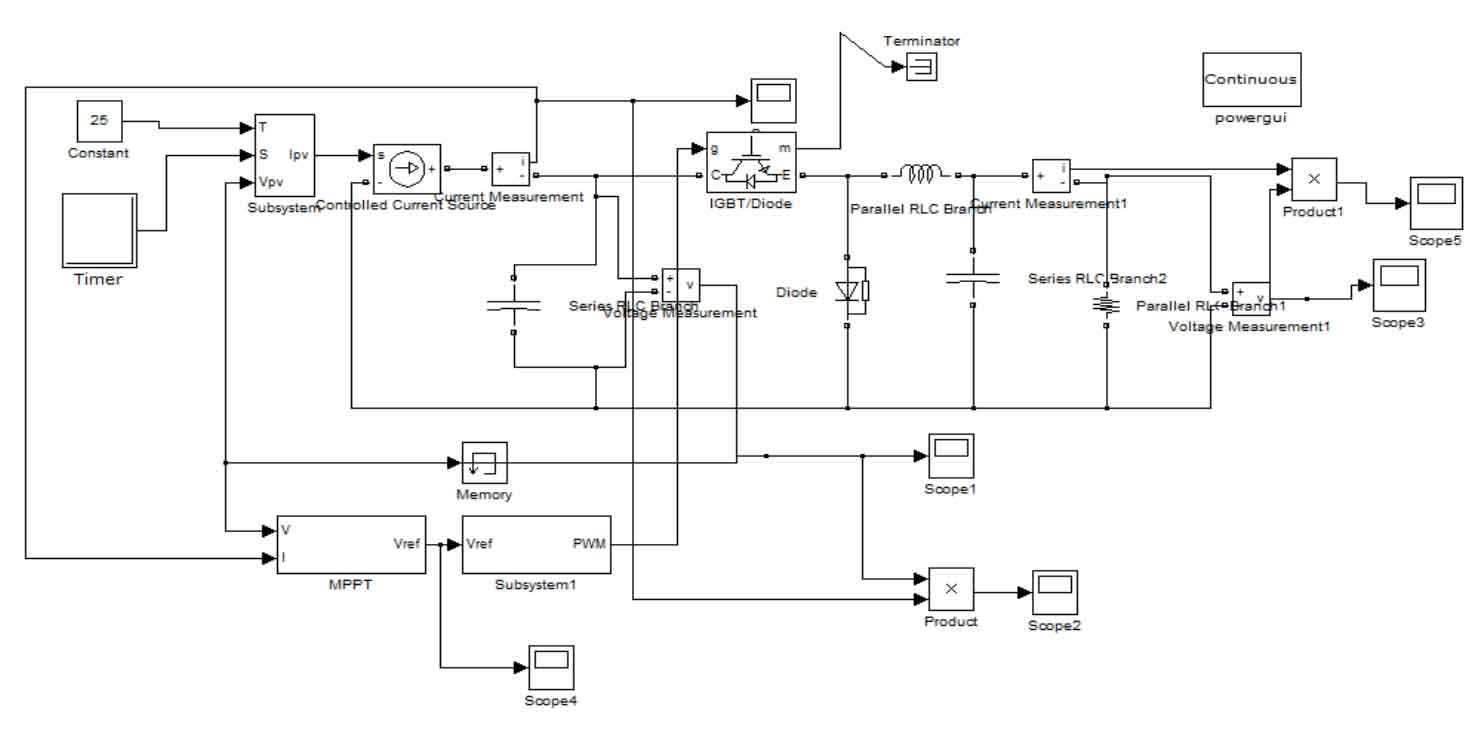
2. MPPT Algorithm Optimization
Advanced MPPT techniques improve energy harvesting efficiency by 15-30% compared to conventional methods. The incremental conductance algorithm demonstrates superior performance:
$$\frac{dP}{dV} = \frac{d(IV)}{dV} = I + V\frac{dI}{dV} = 0$$
Key MPPT implementation strategies include:
| Algorithm | Efficiency (%) | Response Time (ms) | Complexity |
|---|---|---|---|
| Perturb & Observe | 92-96 | 50-100 | Low |
| Incremental Conductance | 97-99 | 30-80 | Medium |
| Neural Network | 98-99.5 | 10-50 | High |
3. System-Level Optimization
Hybrid energy storage systems combining batteries with supercapacitors achieve enhanced performance:
$$E_{total} = \int_{t_0}^{t_1} P_{batt}(t)dt + \int_{t_0}^{t_1} P_{sc}(t)dt$$
Optimal power distribution between components can be expressed as:
$$\min \left( \alpha C_{batt} + \beta C_{sc} + \gamma \sum P_{loss} \right)$$
where α, β, γ represent weighting factors for battery cost, supercapacitor cost, and power losses.
4. Case Study: Grid-Connected PV System
A 5MW solar farm with lithium-ion storage demonstrates:
| Parameter | Without MPPT | With MPPT | Improvement |
|---|---|---|---|
| Energy Yield (MWh/day) | 18.2 | 23.7 | +30.2% |
| Battery Cycles/Day | 1.8 | 2.4 | +33.3% |
| Peak Shaving Capacity | 62% | 89% | +43.5% |
5. Future Perspectives
Emerging technologies promise further optimization:
- Adaptive MPPT for partial shading conditions
- Quantum-inspired optimization algorithms
- Solid-state battery integration with DC-coupled systems
The continuous evolution of battery technologies combined with intelligent MPPT strategies will drive renewable energy systems toward higher efficiency and grid compatibility. Future research should focus on multi-objective optimization frameworks that simultaneously address technical, economic, and environmental constraints.
“`