
In modern data center operations, the uninterrupted power supply (UPS) system plays a critical role in ensuring reliability and continuity. As an engineer specializing in power infrastructure, I have observed that the choice of battery technology within UPS systems is pivotal for optimizing performance, cost, and sustainability. Historically, lead-acid batteries have dominated this space due to their low initial cost and straightforward configuration. However, with rapid technological advancements and evolving data center demands, there is a growing shift towards more efficient and durable solutions. In this comprehensive analysis, we explore the application of lithium batteries, particularly LiFePO4 battery systems, in data center UPS configurations. We will delve into current practices, emerging trends, and comparative evaluations to substantiate why LiFePO4 battery UPS represents a transformative direction for data center power management.
The widespread adoption of lead-acid batteries in existing UPS systems can be attributed to several factors. Firstly, lead-acid batteries offer flexible capacity configurations, with standard voltage ratings of 2V and 12V, allowing for customized setups ranging from 5 Ah upwards. This adaptability has made them suitable for diverse data center requirements. Secondly, from a cost perspective, lead-acid batteries are significantly cheaper, with prices typically between $0.07 to $0.10 per Wh, compared to lithium batteries that range from $0.22 to $0.30 per Wh. This cost differential, often threefold or more, has been a major deterrent to lithium adoption. Additionally, lead-acid batteries have a familiar technology base, with established maintenance protocols and widespread availability. However, these advantages come with inherent drawbacks, such as limited cycle life, large physical footprint, and environmental concerns, which we will address in subsequent sections.
Looking ahead, data center power systems are evolving along three key trajectories: integrated monitoring, modular design, and the integration of lithium-based batteries. Integrated monitoring involves consolidating UPS units, distribution cabinets, and batteries into unified systems with centralized oversight. This approach simplifies cabling, reduces installation complexity, and enhances fault localization, thereby improving overall safety and reliability. Modular UPS designs, which support hot-swappable components and “sleep” modes for efficiency optimization, are becoming prevalent due to their scalability and ease of maintenance. These systems can achieve efficiency levels of 95-96% under optimal loads, outperforming traditional tower-style UPS. Most notably, the trend towards lithium batteries, especially LiFePO4 battery solutions, is gaining momentum. Their superior energy density, longevity, and safety profile align well with the demands of modern data centers, paving the way for widespread adoption as costs continue to decline.
To thoroughly evaluate battery options, we compare lead-acid, ternary lithium, and LiFePO4 battery technologies across multiple parameters. The performance metrics include cycle life, float life, discharge efficiency, energy density, and safety. For instance, cycle life is a crucial factor for UPS applications, as it determines how often batteries need replacement. A LiFePO4 battery can endure up to 3000 cycles at 100% depth of discharge (DOD) and 6000 cycles at 50% DOD, whereas lead-acid batteries typically manage only 150 cycles at 100% DOD and 600 cycles at 50% DOD. This can be expressed mathematically: for a LiFePO4 battery, the cycle life \( L_{Li} \) as a function of DOD \( D \) is approximately \( L_{Li}(D) = 3000 \) for \( D = 1 \) and \( L_{Li}(D) = 6000 \) for \( D = 0.5 \). In contrast, for lead-acid batteries, \( L_{Pb}(D) = 150 \) for \( D = 1 \) and \( L_{Pb}(D) = 600 \) for \( D = 0.5 \). This stark difference underscores the long-term economic benefits of LiFePO4 battery systems.
| Parameter | Lead-Acid Battery | Ternary Lithium Battery | LiFePO4 Battery |
|---|---|---|---|
| Cycle Life (100% DOD) | 150 cycles | 2000 cycles | 3000 cycles |
| Float Life (25°C) | 3-7 years | 10-12 years | 15+ years |
| Discharge Efficiency at High Rate | Low (e.g., 20% at 4C) | High (e.g., 85% at 4C) | High (e.g., 90% at 4C) |
| Weight Energy Density (Wh/kg) | 30-50 | 150-250 | 100-150 |
| Volume Energy Density (Wh/L) | 60-90 | 250-350 | 200-300 |
| Safety (Needle Penetration Test) | Moderate risk | High risk (combustion) | No fire or leakage |
| Space Requirement | Large | Smallest | Small |
Discharge efficiency is another critical aspect, especially for data centers that may experience short-term, high-power demands. A LiFePO4 battery maintains a discharge capacity above 90% even at high discharge rates (e.g., 4C), while lead-acid batteries plummet to around 20% under similar conditions. This efficiency advantage ensures reliable backup power during peak loads. The relationship between discharge capacity \( C \) and discharge rate \( R \) can be modeled as: for LiFePO4 battery, \( C_{Li}(R) = C_0 \times e^{-k_{Li} R} \), where \( k_{Li} \) is a small constant, indicating minimal capacity loss. For lead-acid batteries, \( C_{Pb}(R) = C_0 \times e^{-k_{Pb} R} \), with \( k_{Pb} \) being larger, leading to rapid decline. This mathematical representation highlights the robustness of LiFePO4 battery systems in dynamic operating environments.
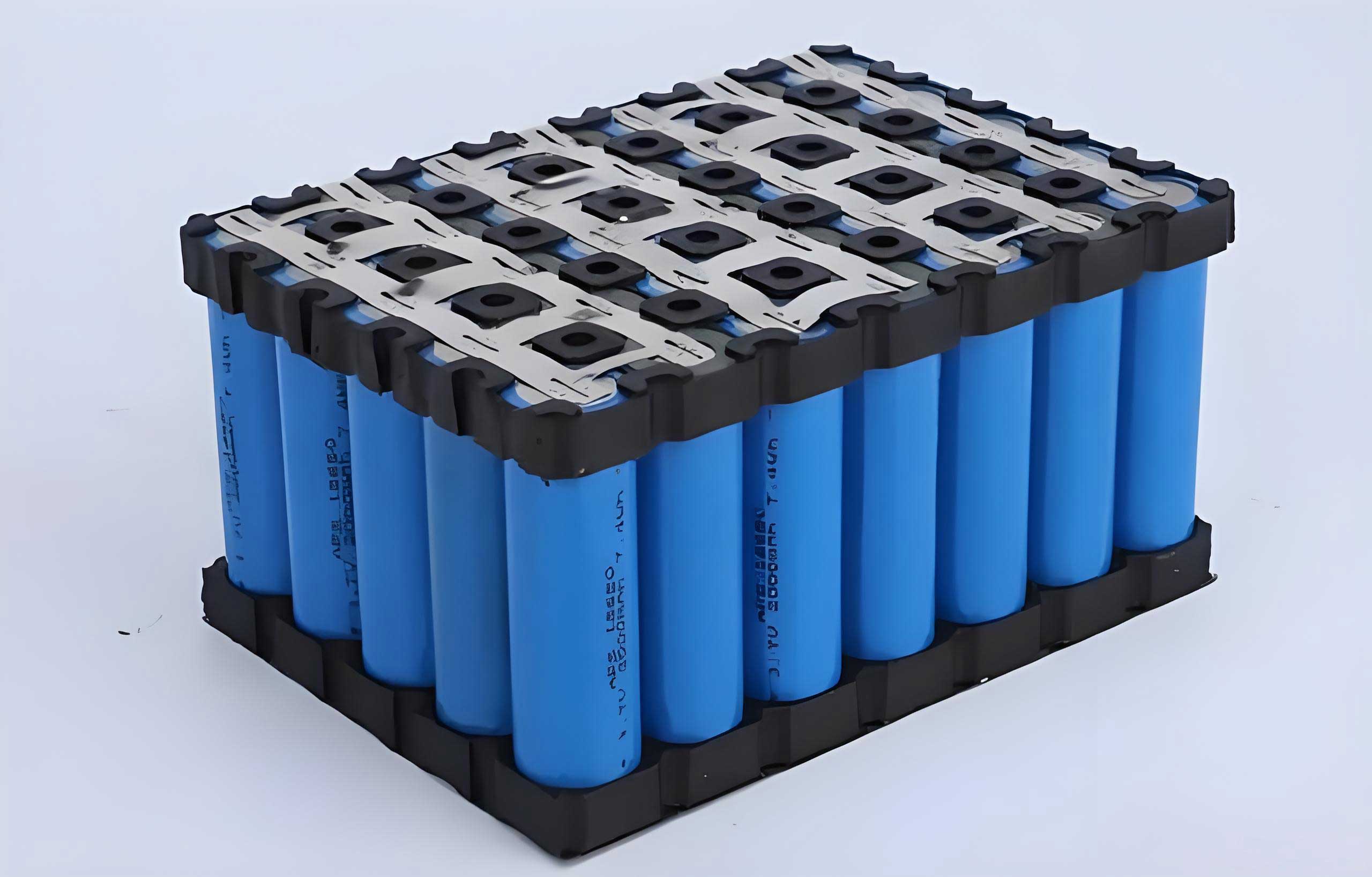
Safety is paramount in data center settings, where battery failures can lead to catastrophic outcomes. Among lithium variants, LiFePO4 battery chemistry stands out due to its exceptional thermal stability. In needle penetration tests, which simulate internal short circuits, a LiFePO4 battery typically reaches a maximum temperature of only 80°C without fire or leakage, whereas ternary lithium batteries can ignite and exceed 450°C. This safety margin is derived from the olivine structure of LiFePO4, which prevents oxygen release and exothermic reactions. The heat generation rate \( Q \) during a fault can be approximated by \( Q = I^2 R t \), where \( I \) is current, \( R \) is internal resistance, and \( t \) is time. For LiFePO4 battery, \( R \) remains stable and low, minimizing \( Q \), while for ternary lithium, \( R \) can spike dramatically. Thus, the LiFePO4 battery offers a safer alternative, reducing risks in densely packed data center rooms.
Energy density and space savings are further advantages of LiFePO4 battery systems. With weight energy density ratios of 3:1 compared to lead-acid batteries, and volume energy density ratios similarly favorable, LiFePO4 batteries reduce footprint by over 65%. This is crucial for urban data centers where real estate is expensive and space is constrained. The energy density \( \rho \) can be expressed as \( \rho = E / m \) for weight and \( \rho_v = E / V \) for volume, where \( E \) is energy, \( m \) is mass, and \( V \) is volume. For a LiFePO4 battery, \( \rho \approx 125 \) Wh/kg and \( \rho_v \approx 250 \) Wh/L, whereas lead-acid values are \( \rho \approx 40 \) Wh/kg and \( \rho_v \approx 75 \) Wh/L. This allows data center operators to allocate more space for IT equipment, enhancing overall efficiency. Moreover, the reduced weight simplifies installation and structural requirements, contributing to lower operational costs.
Float life, or the longevity under continuous charging, is another area where LiFePO4 battery excels. In controlled tests at 25°C, LiFePO4 batteries have demonstrated float lives exceeding 15 years, compared to 3-7 years for lead-acid batteries. This extended lifespan reduces replacement frequency and total cost of ownership. The degradation mechanism can be modeled using the Arrhenius equation: \( k = A e^{-E_a / RT} \), where \( k \) is degradation rate, \( E_a \) is activation energy, \( R \) is gas constant, and \( T \) is temperature. For LiFePO4 battery, \( E_a \) is higher, indicating slower degradation at given temperatures. Consequently, over a 10-year period, a data center using LiFePO4 battery UPS may avoid multiple battery replacements, saving on both capital and maintenance expenses.
Cost analysis over the lifecycle further supports the adoption of LiFePO4 battery. While initial procurement costs are higher, the total cost of ownership (TCO) is often lower due to longer life, higher efficiency, and reduced maintenance. We can formulate TCO as: $$ TCO = C_{initial} + \sum_{t=1}^{n} (C_{maintenance,t} + C_{energy,t} + C_{replacement,t}) $$ where \( n \) is the system lifespan. For LiFePO4 battery, \( n \) is larger, \( C_{replacement,t} \) is negligible, and \( C_{energy,t} \) is lower due to higher efficiency. In contrast, lead-acid batteries incur higher replacement and energy costs. As lithium prices continue to drop—driven by scale in electric vehicle and renewable energy sectors—the TCO advantage of LiFePO4 battery will become even more pronounced, making it an economically viable choice for data centers.
Integration with modern UPS designs is seamless for LiFePO4 battery systems. Modular UPS platforms, which emphasize scalability and hot-swappability, benefit from the compact form factor and BMS (Battery Management System) intelligence of LiFePO4 batteries. The BMS ensures balanced charging and discharging, monitors cell health, and prevents overvoltage or thermal runaway. In a modular setup, each LiFePO4 battery pack can be independently managed, enhancing system resilience. Furthermore, the high discharge rate capability of LiFePO4 battery aligns with the transient load demands of servers, ensuring uninterrupted power during grid failures. This synergy between modular UPS and LiFePO4 battery technology fosters a future-proof infrastructure for data centers.
Environmental considerations also favor LiFePO4 battery over lead-acid alternatives. Lead-acid batteries contain toxic materials like lead and sulfuric acid, posing disposal challenges and environmental hazards. In contrast, LiFePO4 battery chemistry is less hazardous, with lower toxicity and better recyclability. The environmental impact can be quantified using life cycle assessment (LCA) metrics, such as global warming potential (GWP). Studies indicate that over its lifespan, a LiFePO4 battery system has a lower GWP due to reduced material usage and longer service life. This aligns with the growing emphasis on green data centers, where sustainability goals drive technology selection. Thus, adopting LiFePO4 battery UPS contributes to corporate social responsibility and regulatory compliance.
Looking at specific performance tests, empirical data reinforces the superiority of LiFePO4 battery. For example, in discharge efficiency tests, a LiFePO4 battery maintained 95% capacity at 2C discharge, while lead-acid dropped to 50%. This efficiency translates to less energy waste and lower cooling requirements in data centers. The efficiency \( \eta \) can be defined as \( \eta = E_{out} / E_{in} \), where \( E_{out} \) is usable energy and \( E_{in} \) is stored energy. For a LiFePO4 battery, \( \eta \) often exceeds 95% across various loads, whereas lead-acid batteries average around 80-85%. Additionally, charge acceptance rates are higher for LiFePO4 battery, allowing faster recharge times—critical for data centers facing frequent power fluctuations. These operational benefits underscore why LiFePO4 battery is becoming the preferred choice for high-availability environments.
In terms of scalability, LiFePO4 battery systems offer flexible configurations through advanced BMS that manage series and parallel connections. Unlike lead-acid batteries, which may suffer from imbalance in large arrays, LiFePO4 battery packs with integrated BMS maintain uniformity, prolonging overall life. The BMS algorithm can be described by a control equation: $$ V_{cell,i} = V_{avg} + \Delta V_i $$ where \( V_{cell,i} \) is individual cell voltage, \( V_{avg} \) is average voltage, and \( \Delta V_i \) is corrected by balancing circuits. This ensures all cells in a LiFePO4 battery bank operate within safe limits, preventing premature failure. Such technical sophistication makes LiFePO4 battery ideal for large-scale UPS deployments in data centers, where reliability is non-negotiable.
Future trends in data center power infrastructure will likely accelerate the adoption of LiFePO4 battery. With the rise of edge computing and hyperscale data centers, there is increasing demand for dense, efficient, and reliable power solutions. LiFePO4 battery, with its compact size and high performance, fits perfectly into these trends. Moreover, advancements in smart grid and renewable integration will require UPS systems with fast response and high cycle stability—attributes inherent to LiFePO4 battery. We anticipate that within the next decade, LiFePO4 battery UPS will become the standard, displacing lead-acid batteries in most new installations. Continuous research into cathode materials and electrolytes may further enhance the energy density and cost-effectiveness of LiFePO4 battery, solidifying its dominance.
To conclude, the application of LiFePO4 battery in data center UPS systems represents a significant leap forward in power management technology. Through detailed comparison, we have established that LiFePO4 battery outperforms lead-acid and other lithium chemistries in cycle life, safety, efficiency, and space utilization. The integration of LiFePO4 battery with modular UPS designs and comprehensive monitoring systems aligns with the evolving needs of data centers for scalability, sustainability, and reliability. As costs decrease and performance improves, the LiFePO4 battery UPS will undoubtedly play a pivotal role in shaping the future of data center infrastructure. Therefore, for engineers and decision-makers, investing in LiFePO4 battery technology is not merely an upgrade but a strategic imperative for long-term operational excellence.