
In the context of global energy transition and sustainable development, optimizing energy structures and advancing smart grid technologies have become pivotal drivers of societal progress. Energy storage systems, as critical components for balancing grid supply and demand while enhancing energy efficiency, are increasingly vital. Among various energy storage lithium battery technologies, lithium iron phosphate (LFP) batteries stand out due to their excellent safety profile and long cycle life, making them widely adopted in applications such as smart grids, residential energy storage, and electric vehicles. However, as deployment scenarios grow more complex, safety concerns in energy storage lithium battery systems remain prominent. Stress variations induced by structural constraints in battery modules have emerged as a key factor affecting performance and safety. During charge and discharge cycles, internal stress generation can lead to structural deformation or even safety incidents. Therefore,深入研究磷酸铁锂电池的应力特性, exploring the intrinsic relationship between stress changes and battery states, and developing state estimation algorithms that integrate stress and electrical parameters are essential for enhancing the digital twin capabilities and safety management of energy storage lithium battery systems.
LFP batteries exhibit wide voltage plateaus in both positive and negative electrodes, complicating state of charge (SOC) estimation due to limited voltage sensor precision in battery management systems. When operating within these plateaus, SOC correction becomes challenging. Additionally, the relatively stable currents in energy storage systems hinder the observability of battery model parameters, further impeding accurate SOC estimation. Since SOC cannot be directly measured, it must be inferred from physical quantities such as current, voltage, temperature, and stress. Common SOC estimation methods for energy storage lithium batteries include ampere-hour integration, open-circuit voltage (OCV) correlation, model-based filtering, and machine learning approaches. Ampere-hour integration, a fundamental method, estimates SOC by integrating current over time but suffers from error accumulation and dependency on initial SOC accuracy. OCV-based methods leverage the stable relationship between OCV and SOC, yet the flat voltage-SOC curve of LFP batteries reduces reliability in plateau regions. Model-based approaches, such as equivalent circuit or electrochemical models combined with filters like Kalman filters, address nonlinearities but require precise parameter identification. With advancements in computing, data-driven methods using machine learning and deep learning have gained traction, leveraging large datasets to map parameters to SOC. Recent studies highlight that stress characteristics in energy storage lithium batteries can provide additional insights for state estimation. For instance, appropriate compressive forces improve electrode-electrolyte contact, enhancing performance. In module assembly, pressures ranging from tens to hundreds of kilograms are applied, and stress variations with charge levels offer a new dimension for SOC estimation. Integrating multi-physics data, such as electrical, thermal, and stress parameters, through digital twin platforms can improve estimation accuracy and stability. This study focuses on stress characteristic analysis and state estimation for LFP energy storage lithium batteries, addressing challenges in voltage plateau regions by combining stress data with deep learning models.
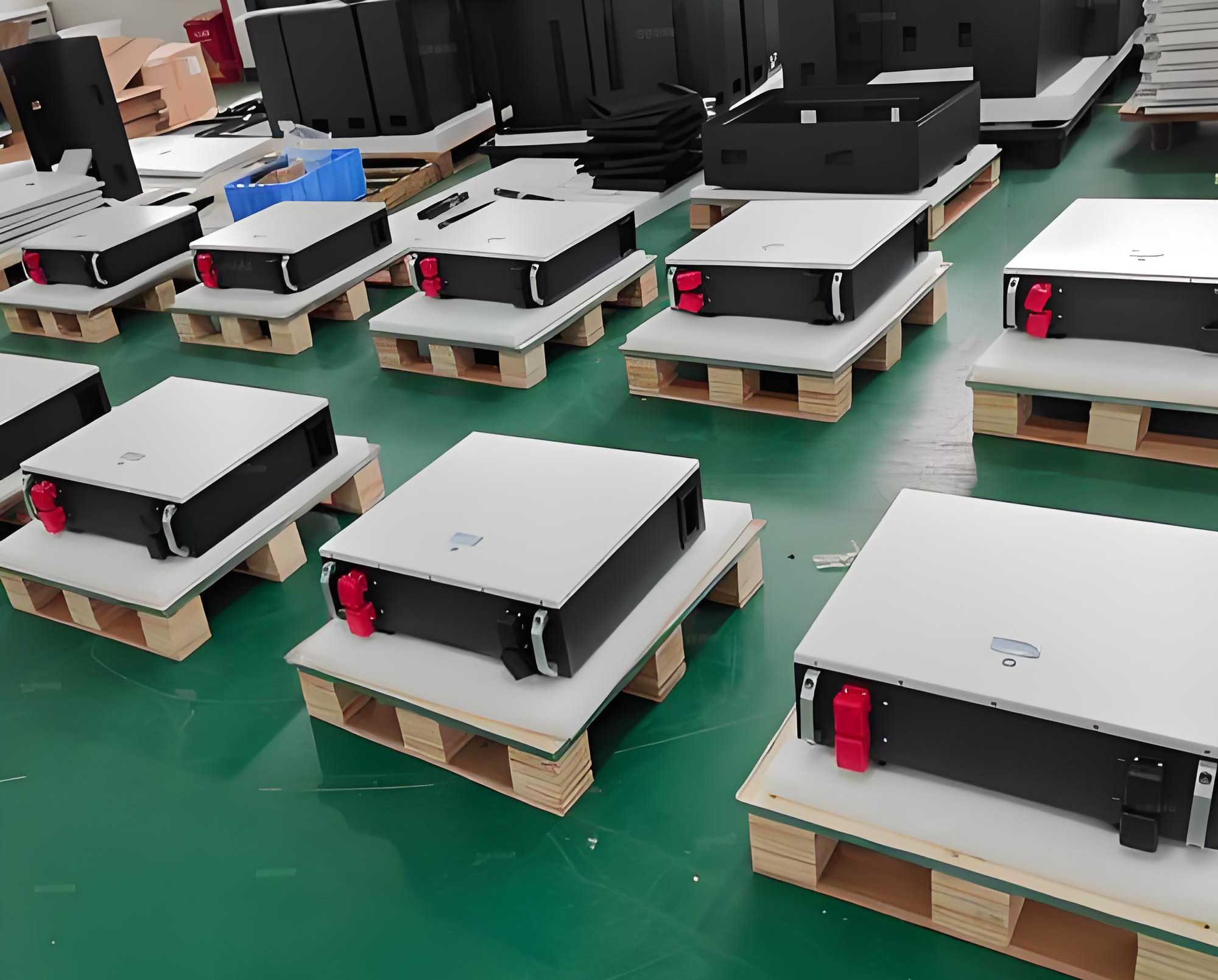
To analyze the stress characteristics of energy storage lithium batteries, experiments were conducted on LFP batteries under various charge/discharge rates and pre-stress conditions. The battery samples, with a nominal capacity of 25 Ah and voltage of 3.2 V, were subjected to cyclic tests involving constant current charge and discharge. A specialized setup with steel plates and a load cell was used to apply and measure stress, while data on voltage, current, temperature, and stress were recorded at intervals. The experimental procedure included applying a pre-stress of 500 kg, followed by charge cycles at 1 C to 3.65 V and discharge cycles at 1.5 C to 2.5 V, with rest periods in between. Over 40 cycles, data from cycles 10–30 were used for model training to ensure stability, as initial cycles showed stress inconsistencies due to fixture settling. Data preprocessing involved time alignment, outlier removal using 3-sigma rule, and smoothing with moving average filters. Features such as charge variation (ΔQ), stress variation (ΔF), voltage (V), current (I), stress (F), and temperature (T) were extracted, with ΔQ and ΔF computed through differential processing to emphasize dynamic changes. The dataset was split into 60% training, 20% validation, and 20% testing sets.
The core of this research is the development of a CNN-BiLSTM model for SOC estimation in energy storage lithium batteries, integrating stress and electrical parameters. The model input consists of six features: ΔQ, ΔF, V, I, F, and T. The CNN component employs one-dimensional convolutional layers with 3×1 kernels to extract local morphological features from data curves, such as inflection points in voltage plateaus and stress slope changes. This is followed by ReLU activation and pooling layers to reduce redundancy. The output from CNN is fed into a BiLSTM network with two bidirectional LSTM layers, each containing 128 memory units, to capture temporal dependencies from both past and future contexts. The BiLSTM output is concatenated into a 256-dimensional vector before passing through fully connected layers with dropout regularization to prevent overfitting. The model uses mean squared error (MSE) as the loss function and Adam optimizer with a learning rate of 0.001 for training. Key equations in the LSTM gates include the forget gate: $$ f_t = \sigma(W_f \cdot [h_{t-1}, x_t] + b_f) $$, input gate: $$ i_t = \sigma(W_i \cdot [h_{t-1}, x_t] + b_i) $$, cell update: $$ \tilde{C}_t = \tanh(W_c \cdot [h_{t-1}, x_t] + b_c) $$, cell state: $$ C_t = f_t \odot C_{t-1} + i_t \odot \tilde{C}_t $$, and output gate: $$ o_t = \sigma(W_o \cdot [h_{t-1}, x_t] + b_o) $$, $$ h_t = o_t \odot \tanh(C_t) $$, where \( \sigma \) is the sigmoid function, \( \odot \) denotes element-wise multiplication, and \( W \) and \( b \) are weights and biases. This architecture leverages CNN’s feature extraction for plateau regions and BiLSTM’s bidirectional时序 modeling for state evolution, enhancing SOC estimation accuracy for energy storage lithium batteries.
Analysis of stress characteristics in energy storage lithium batteries revealed non-monotonic stress changes during charge and discharge cycles. Under a pre-stress of 500 kg, stress varied by approximately 35 kg, peaking at 530 kg. During charging, stress generally increased but showed fluctuations in mid-SOC ranges (e.g., 40%–90%), while discharging exhibited a decreasing trend with similar non-monotonic behavior. These stress patterns correlate with electrode volume changes: LFP cathodes contract linearly by up to 7%, whereas graphite anodes expand non-monotonically by 8%, resulting in complex stress-SOC relationships. At low rates (0.1 C), stress curves displayed distinct inflection points at SOC=30% and 60%, but these diminished at higher rates (1 C) due to polarization effects. The voltage-SOC curve remained flat in mid-ranges, complicating estimation, but stress variations provided complementary information. For example, stress change rates (ΔF) helped distinguish SOC states where voltage was ambiguous. Data from cycles 10–30 showed consistent stress patterns, unlike initial cycles, indicating stable battery-fixture interaction. The table below summarizes key battery parameters and stress observations under different conditions.
| Parameter | Value | Condition |
|---|---|---|
| Nominal Capacity | 25 Ah | Standard |
| Nominal Voltage | 3.2 V | Standard |
| Pre-stress | 500 kg | Applied |
| Max Stress Change | 35 kg | During cycling |
| Charge Rate | 1 C | Constant current |
| Discharge Rate | 1.5 C | Constant current |
The SOC estimation results for energy storage lithium batteries using the CNN-BiLSTM model demonstrated high accuracy. On the test set (cycles 30–40), the root mean square error (RMSE) was 1.5% for charging and 5.6% for discharging. In mid-SOC ranges (40%–90%), where voltage plateaus occur, the model maintained low errors by leveraging stress features. For non-full cycles (e.g., SOC segments from 60%–90% in charging and 40%–90% in discharging), the model reliably estimated SOC without error accumulation. Comparative analysis with a method using only electrical parameters (V, I, T) showed higher errors in mid-SOC regions, with RMSE up to 6.8%, underscoring the value of stress integration. The equation for SOC estimation can be generalized as: $$ \text{SOC} = f(\Delta Q, \Delta F, V, I, F, T) $$, where \( f \) represents the CNN-BiLSTM mapping function. Additional comparisons with standalone LSTM and BiLSTM models highlighted the superiority of the combined approach: LSTM alone had RMSE of 3.6%, BiLSTM 2.5%, and CNN-BiLSTM 1.5% for charging, confirming the efficacy of convolutional feature extraction and bidirectional时序 modeling for energy storage lithium batteries. The table below compares performance metrics across methods.
| Method | Input Features | RMSE (%) | MAE (%) |
|---|---|---|---|
| Proposed CNN-BiLSTM | ΔQ, ΔF, V, I, F, T | 1.5 | 1.1 |
| LSTM (Comparison) | V, I, T | 6.8 | 5.7 |
| BiLSTM (Comparison) | V, I, T | 6.4 | 5.1 |
| CNN-BiLSTM (Comparison) | V, I, T | 5.4 | 4.5 |
In conclusion, this study successfully analyzed stress characteristics and developed a state estimation method for energy storage lithium batteries using a CNN-BiLSTM model integrated with stress and electrical parameters. The approach addresses challenges in LFP batteries, such as wide voltage plateaus and stable currents, by leveraging stress variations that provide distinct features in mid-SOC ranges. Experimental results confirmed that the model achieves low estimation errors (e.g., 1.5% RMSE in charging) and outperforms methods relying solely on electrical parameters. The integration of stress data into machine learning frameworks enhances the digital twin capabilities of energy storage lithium battery systems, contributing to improved safety and operational efficiency. Future work could explore long-term aging effects and real-time deployment in grid-scale energy storage applications.