
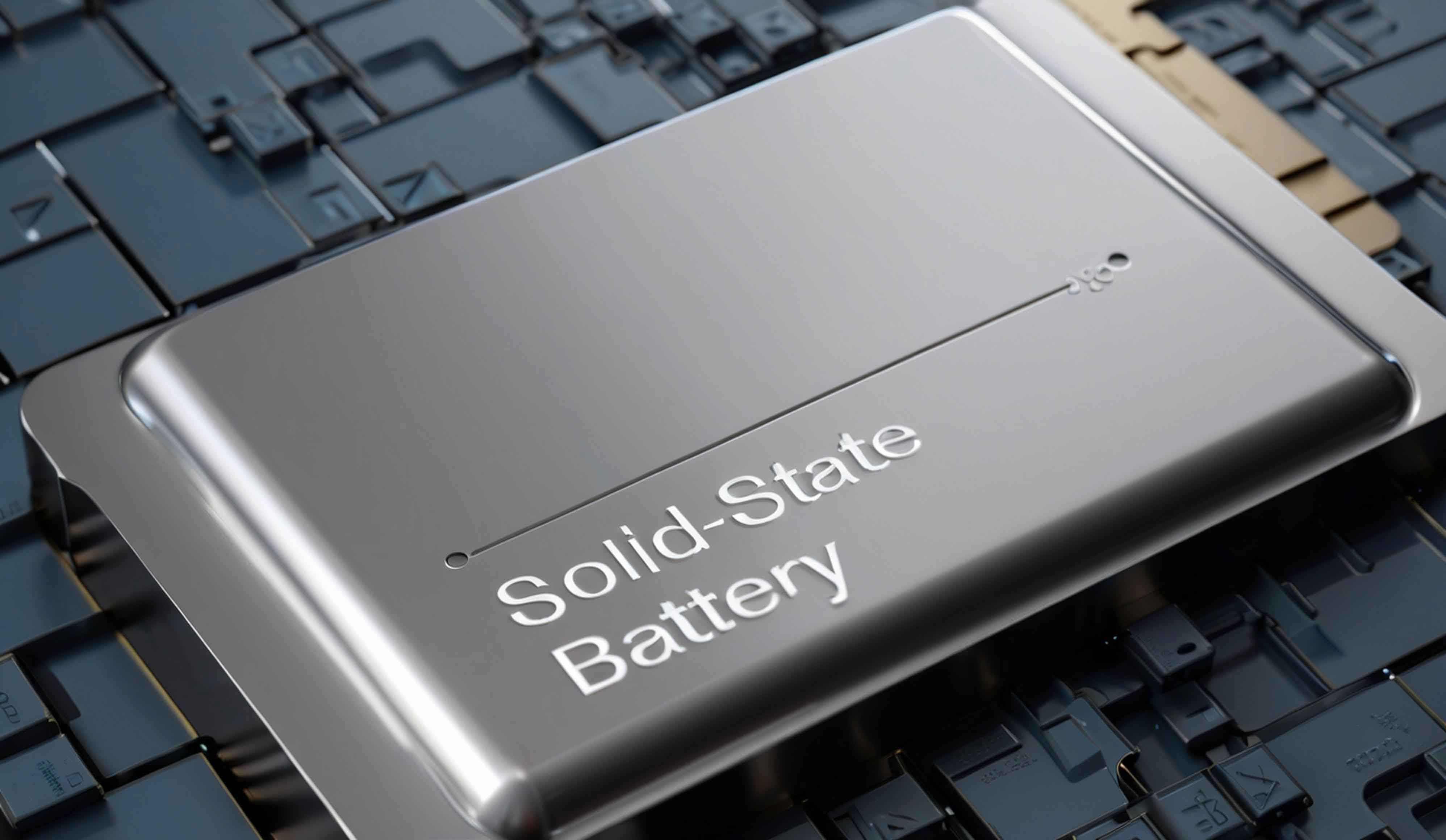
As the demand for high-energy-density and safe energy storage solutions grows, solid-state batteries have emerged as a promising alternative to conventional lithium-ion batteries. The core component of these systems is the solid-state electrolyte, which replaces flammable organic liquid electrolytes, thereby enhancing safety and enabling the use of high-capacity electrodes like lithium metal. In this analysis, I explore the technological maturity of various solid-state electrolytes—including oxides, sulfides, polymers, and halides—and their integration into solid-state batteries. The focus is on evaluating their current development stages based on public information up to 2024, using frameworks such as the Technology Readiness Level (TRL) to provide a comparative perspective. Solid-state batteries represent a transformative advancement, but their commercialization hinges on overcoming challenges like interfacial instability, cost, and scalability. Throughout this discussion, I will emphasize the progress and hurdles associated with solid-state battery technologies, underscoring their potential to revolutionize energy storage.
The evolution of solid-state batteries can be traced back to the 1970s, with significant acceleration in research since 2010. By 2022, over 4,000 scientific papers were published annually on solid-state batteries, reflecting a growing interest that now accounts for nearly 10% of battery-related research. This surge is driven by the limitations of traditional lithium-ion batteries, which struggle with energy density ceilings and safety risks due to organic electrolytes. Solid-state batteries, by contrast, offer inherent safety benefits and the potential for higher energy densities, making them ideal for applications like electric vehicles and grid storage. However, the path to commercialization is complex, as each type of solid-state electrolyte presents unique advantages and drawbacks. For instance, oxide-based electrolytes exhibit high ionic conductivity and thermal stability but face interfacial issues, while sulfide-based electrolytes boast superior conductivity yet suffer from air sensitivity and instability with electrodes. Polymer electrolytes, though flexible and easier to process, often require composites to enhance performance. Halide electrolytes are a newer addition, still in early research stages. In this analysis, I will delve into each category, assessing their TRL and highlighting key developments. The goal is to provide a comprehensive overview that aids in understanding the current landscape of solid-state battery technology and its future trajectory.
Oxide-Based Solid-State Electrolytes and Batteries
Oxide solid-state electrolytes are renowned for their high ionic conductivity, excellent mechanical properties, and superior thermal stability, making them a focal point in solid-state battery research. Common types include garnet-type (e.g., Li7La3Zr2O12 or LLZO), NASICON-type (e.g., Li1+xAlxTi2−x(PO4)3 or LATP), and perovskite-type (e.g., Li3xLa2/3−xTiO3 or LLTO) materials. These electrolytes typically achieve ionic conductivities in the range of 10−4 to 10−3 S/cm, which is sufficient for many applications. For example, doped LLZO can reach conductivities of up to 1.6 × 10⁻³ S/cm through elements like Ta or Al, enhancing lithium ion transport. The ionic conductivity in these materials can be described by the Arrhenius equation: $$\sigma = A \exp\left(-\frac{E_a}{kT}\right)$$ where $\sigma$ is the conductivity, $A$ is the pre-exponential factor, $E_a$ is the activation energy, $k$ is Boltzmann’s constant, and $T$ is the temperature. This equation highlights how doping and sintering processes optimize performance by reducing $E_a$.
Despite these advantages, oxide-based solid-state batteries grapple with interfacial challenges due to rigid solid-solid contacts, leading to high impedance and lithium dendrite growth. To address this, researchers have developed interface engineering strategies, such as incorporating polymer layers or small amounts of liquid electrolytes. For instance, the use of polyacrylic acid (PAA) at the LLZO/lithium metal interface can reduce interfacial resistance from over 1,000 Ω·cm² to about 55 Ω·cm², significantly improving cycle life. Moreover, thermal stability is a key strength; oxide electrolytes like LLZO decompose only at temperatures above 1,000°C, whereas composites with electrodes may lower this threshold, necessitating careful design for safety.
The production of oxide electrolytes involves methods like solid-state synthesis and sol-gel processes, with companies in China achieving ton-scale production. For example, Tianmu Xiandao and Ganfeng Lithium produce LATP and LLZO powders with conductivities exceeding 0.1 mS/cm, indicating a TRL of 6-8 for these materials. In terms of solid-state batteries, ProLogium Technology has demonstrated prototypes like large-format lithium ceramic batteries, suggesting a TRL of 5-6 for oxide-based systems. However, full commercialization remains hindered by cost and interface issues, leading many to adopt hybrid approaches with liquid electrolytes. The table below summarizes the TRL of key oxide electrolytes and their solid-state batteries:
| Electrolyte Type | Example Materials | Ionic Conductivity (S/cm) | TRL Level |
|---|---|---|---|
| Garnet | LLZO | ~10−3 | 6-7 |
| NASICON | LATP | ~10−3 | 7-8 |
| Perovskite | LLTO | ~10−4 to 10−3 | 6-7 |
| Thin Film | LiPON | ~10−6 to 10−5 | 8-9 |
In solid-state batteries, oxide electrolytes are often used in composite forms with polymers or liquids to mitigate interface problems. For instance, Qingtao Energy and others have developed solid-state battery samples with energy densities up to 360 Wh/kg, though these are typically hybrid systems. The inherent safety of oxides—such as LLZO’s resistance to thermal runaway with lithium metal—makes them attractive, but overall, oxide-based solid-state batteries are still evolving, with TRL estimates of 5-6 for most applications. As research progresses, optimizing sintering techniques and interface modifications will be crucial for advancing these systems toward widespread use in solid-state batteries.
Sulfide-Based Solid-State Electrolytes and Batteries
Sulfide solid-state electrolytes stand out for their exceptionally high ionic conductivities, often exceeding 10−2 S/cm, which rivals those of liquid electrolytes. Key materials include Li10GeP2S12 (LGPS), Li6PS5Cl (LPSCl), and glass-ceramic systems like 70Li2S·30P2S5. For instance, LGPS achieves a conductivity of 1.2 × 10⁻² S/cm at room temperature, enabling efficient ion transport even at low temperatures. The conductivity in sulfide electrolytes can be modeled using the Nernst-Einstein relation: $$D = \frac{\sigma kT}{Nq^2}$$ where $D$ is the diffusion coefficient, $N$ is the carrier concentration, and $q$ is the charge. This highlights how structural adjustments, such as halogen doping in Li6PS5X, enhance ion mobility by creating favorable pathways.
However, sulfide electrolytes face significant challenges, including poor air stability—where exposure to moisture generates toxic H2S gas—and thermodynamic instability with electrodes. For example, the electrochemical window of LGPS is narrow (1.71–2.14 V vs. Li/Li+), leading to side reactions with high-voltage cathodes or lithium metal anodes. To combat this, interface engineering is essential; strategies like applying protective coatings or using multilayer electrolytes have shown promise. In one study, a Li/G-LPSCl-LGPS-LPSCl-G/Li structure enabled all-solid-state batteries to cycle over 10,000 times with minimal capacity loss, demonstrating the potential for long-life solid-state batteries. Additionally, thermal stability is a concern, as sulfides can undergo exothermic reactions with electrodes, releasing up to 2,100 J/g of heat and posing safety risks.
Production methods for sulfide electrolytes include solid-state synthesis and liquid-phase routes, with companies like Ganfeng Lithium producing kg-scale materials with conductivities above 20 mS/cm. This indicates a TRL of 4-6 for sulfide electrolytes. For solid-state batteries, prototypes have been developed, such as Enpower Greentech’s ampere-hour cells with energy densities of 300 Wh/kg, suggesting a TRL of 4-5. The table below summarizes the TRL for key sulfide electrolytes:
| Electrolyte Type | Example Materials | Ionic Conductivity (S/cm) | TRL Level |
|---|---|---|---|
| LGPS Family | Li10GeP2S12 | ~10−2 | 4-6 |
| Argyrodite | Li6PS5Cl | ~10−3 to 10−2 | 4-6 |
| Glass-Ceramic | 70Li2S·30P2S5 | ~10−2 | 4-6 |
In solid-state battery applications, sulfide-based systems often require external pressure to maintain good contact, which can reduce energy density. Recent advances, such as flexible composite membranes with polymers, have improved cycle life—for example, achieving over 20,000 cycles with 71% capacity retention. Despite these innovations, the commercialization of sulfide-based solid-state batteries is still in early stages, with ongoing efforts to enhance air stability and reduce costs. The high conductivity of sulfides makes them a strong candidate for all-solid-state batteries, but safety and interface issues must be resolved to achieve higher TRL levels and broader adoption in solid-state batteries.
Polymer-Based Solid-State Electrolytes and Batteries
Polymer solid-state electrolytes, particularly those based on poly(ethylene oxide) (PEO), offer advantages in flexibility, processability, and compatibility with existing battery manufacturing. These electrolytes typically consist of polymers like PEO, poly(methyl methacrylate) (PMMA), or poly(vinylidene fluoride) (PVDF) combined with lithium salts such as LiTFSI or LiFSI. However, pure polymer electrolytes suffer from low ionic conductivities (around 10−5 S/cm) and narrow electrochemical windows, limiting their use in high-voltage solid-state batteries. To address this, researchers have developed composite polymer electrolytes by incorporating inorganic fillers like Al2O3, LLZO, or LATP. For instance, adding 12 vol% of nano-sized LLZO to PEO can increase conductivity to over 10−4 S/cm due to percolation effects. The conductivity enhancement can be described by the effective medium theory: $$\sigma_{\text{eff}} = \sigma_p \phi_p + \sigma_i \phi_i$$ where $\sigma_{\text{eff}}$ is the effective conductivity, $\sigma_p$ and $\sigma_i$ are the conductivities of the polymer and inorganic phases, and $\phi_p$ and $\phi_i$ are their volume fractions.
In solid-state battery configurations, polymer electrolytes enable flexible designs and can be integrated via in-situ polymerization, which improves electrode-electrolyte contact. For example, using 1,3-dioxolane (DOL) with initiators forms gel polymer electrolytes in situ, enhancing cycle stability in cells with LiFePO4 cathodes. Companies like Bolloré have commercialized PEO-based solid-state batteries for electric vehicles, with 30 kWh packs offering 250 km range, indicating a TRL of 7-8 for such systems. Similarly, Weilan New Energy has demonstrated hybrid solid-state batteries with energy densities up to 360 Wh/kg using in-situ polymerization, suggesting a TRL of 5-6 for these technologies. Safety remains a concern, as polymers can be flammable, but additives like decabromodiphenyl ethane (DBDPE) in polyimide-based composites have shown improved fire resistance.
The table below summarizes the TRL of polymer-based electrolytes and solid-state batteries:
| Electrolyte Type | Example Materials | Ionic Conductivity (S/cm) | TRL Level |
|---|---|---|---|
| Pure Polymer | PEO with LiTFSI | ~10−5 | 8-9 |
| Composite Polymer | PEO-LLZO | ~10−4 | 6-7 |
| In-Situ Polymerized | DOL-based gels | ~10−4 | 5-6 |
Polymer-based solid-state batteries are particularly suited for applications requiring flexibility and ease of production. For instance, PVDF composites with oxide electrolytes have been used in hybrid batteries at pilot scales. However, challenges like low ion transference number and limited high-voltage stability persist. Research into novel polymers, such as polyurethane blends, has extended voltage windows to 4.8 V, enabling compatibility with high-nickel cathodes. Overall, polymer-based solid-state batteries are advancing, but further improvements in conductivity and safety are needed to reach higher TRL levels and compete with other solid-state battery technologies.
Halide-Based Solid-State Electrolytes and Emerging Trends
Halide solid-state electrolytes, such as Li3YCl6 or Li3InCl6, represent an emerging class with high ionic conductivities (up to 10−3 S/cm) and good stability against oxide cathodes. These materials are typically synthesized via solid-state or solution methods, and their conductivity can be optimized through doping—for example, fluorine substitution in Li3InCl6 improves moisture tolerance. The ionic transport in halides often follows a vacancy mechanism, which can be expressed as: $$\mu = \frac{qD}{kT}$$ where $\mu$ is the mobility, $q$ is the charge, $D$ is the diffusion coefficient, $k$ is Boltzmann’s constant, and $T$ is the temperature. This equation underscores how structural tuning enhances ion migration in these materials.
Despite their promise, halide electrolytes are still in early research stages, with a TRL of 4. They face challenges like sensitivity to humidity and limited compatibility with lithium metal anodes. For solid-state batteries, halides have shown potential in lab-scale cells with high-voltage cathodes, but scalability and long-term stability remain unproven. As such, they are not yet integrated into commercial solid-state batteries, but ongoing studies focus on interface engineering and cost reduction to elevate their TRL.
Hybrid and Solid-State Battery Industrialization
The industrialization of solid-state batteries is progressing through hybrid approaches that combine solid electrolytes with small amounts of liquid electrolytes. These solid-liquid hybrid batteries mitigate interface issues and are easier to manufacture, with TRL estimates of 5-6. Companies like Guoxuan High-Tech, Ganfeng Lithium, and Weilan New Energy have developed prototypes with energy densities up to 360 Wh/kg and cycle lives exceeding 1,000 cycles. For instance, Ganfeng Lithium’s hybrid batteries for electric vehicles demonstrate improved safety in nail penetration tests, while Weilan New Energy’s cells achieve high-rate performance with in-situ polymerization. The energy density of these systems can be approximated by: $$E = \frac{C \times V}{m}$$ where $E$ is the energy density, $C$ is the capacity, $V$ is the voltage, and $m$ is the mass. This formula highlights how solid-state batteries aim to maximize $C$ and $V$ while minimizing $m$.
Fully solid-state batteries, particularly sulfide-based, are at TRL 4-5, with companies like Enpower and Hongqi showcasing ampere-hour cells. However, challenges such as cost—solid electrolytes can exceed $50/kg—and the need for pressure management hinder mass adoption. The table below compares the TRL of different solid-state battery types:
| Battery Type | Electrolyte System | Energy Density (Wh/kg) | TRL Level |
|---|---|---|---|
| Oxide-Based | LLZO or LATP | 250-360 | 5-6 |
| Sulfide-Based | LGPS or LPSCl | 300-900 (Wh/L) | 4-5 |
| Polymer-Based | PEO composites | 210-270 | 7-8 |
| Hybrid | Solid-liquid mixes | 240-360 | 5-6 |
Global efforts, especially in Japan and China, are accelerating solid-state battery development, with patents focusing on sulfide and oxide systems. As research advances, reducing liquid content in hybrids and solving interface problems will be key to achieving all-solid-state batteries with TRL 7 and above. The future of solid-state batteries depends on interdisciplinary innovations in materials science and engineering, ultimately enabling safer, higher-energy-density storage solutions.
Conclusion and Future Perspectives
In summary, solid-state batteries represent a transformative technology with the potential to address the limitations of conventional lithium-ion batteries. The maturity of solid-state electrolytes varies significantly: oxide-based systems are at TRL 6-8 for materials and 5-6 for batteries, sulfide-based systems at TRL 4-6 for materials and 4-5 for batteries, polymer-based systems at TRL 8-9 for materials and 7-8 for batteries, and halide-based systems at TRL 4. Hybrid solid-state batteries, with TRL 5-6, serve as a pragmatic step toward full solid-state implementation, offering improved safety and performance while overcoming interface challenges.
Looking ahead, the commercialization of solid-state batteries will require continued research into interface engineering, cost reduction, and scalable manufacturing. For instance, in-situ polymerization and composite electrolytes show promise for enhancing compatibility with high-voltage electrodes. Moreover, safety assessments must evolve to account for thermal runaway mechanisms unique to solid-state systems. As global investment grows, collaboration between academia and industry will be crucial to overcome barriers and achieve TRL 9 for all-solid-state batteries. Ultimately, the success of solid-state batteries hinges on a holistic approach that balances material properties with system-level design, paving the way for next-generation energy storage in electric vehicles and beyond.