
The open-circuit voltage (OCV) versus state-of-charge (SOC) relationship is a fundamental characteristic of any electrochemical cell, serving as a critical fingerprint for battery management systems (BMS) to accurately estimate SOC. For lithium iron phosphate (LiFePO4 or LFP) batteries, renowned for their safety, long cycle life, and cost-effectiveness, understanding the nuances of the OCV-SOC curve is paramount for their reliable application in electric vehicles and energy storage systems. This characteristic curve is not a fixed entity; it is influenced by a multitude of factors ranging from the intrinsic properties of the active materials to the operational history of the cell. A comprehensive analysis of these influencing factors and the underlying electrochemical mechanisms is essential for advancing battery technology and optimizing BMS algorithms. This article delves into a systematic investigation of the OCV-SOC curve for LiFePO4/graphite batteries, exploring the impact of material variations, testing protocols, aging conditions, and material modifications, ultimately elucidating the root cause of its distinctive shape.
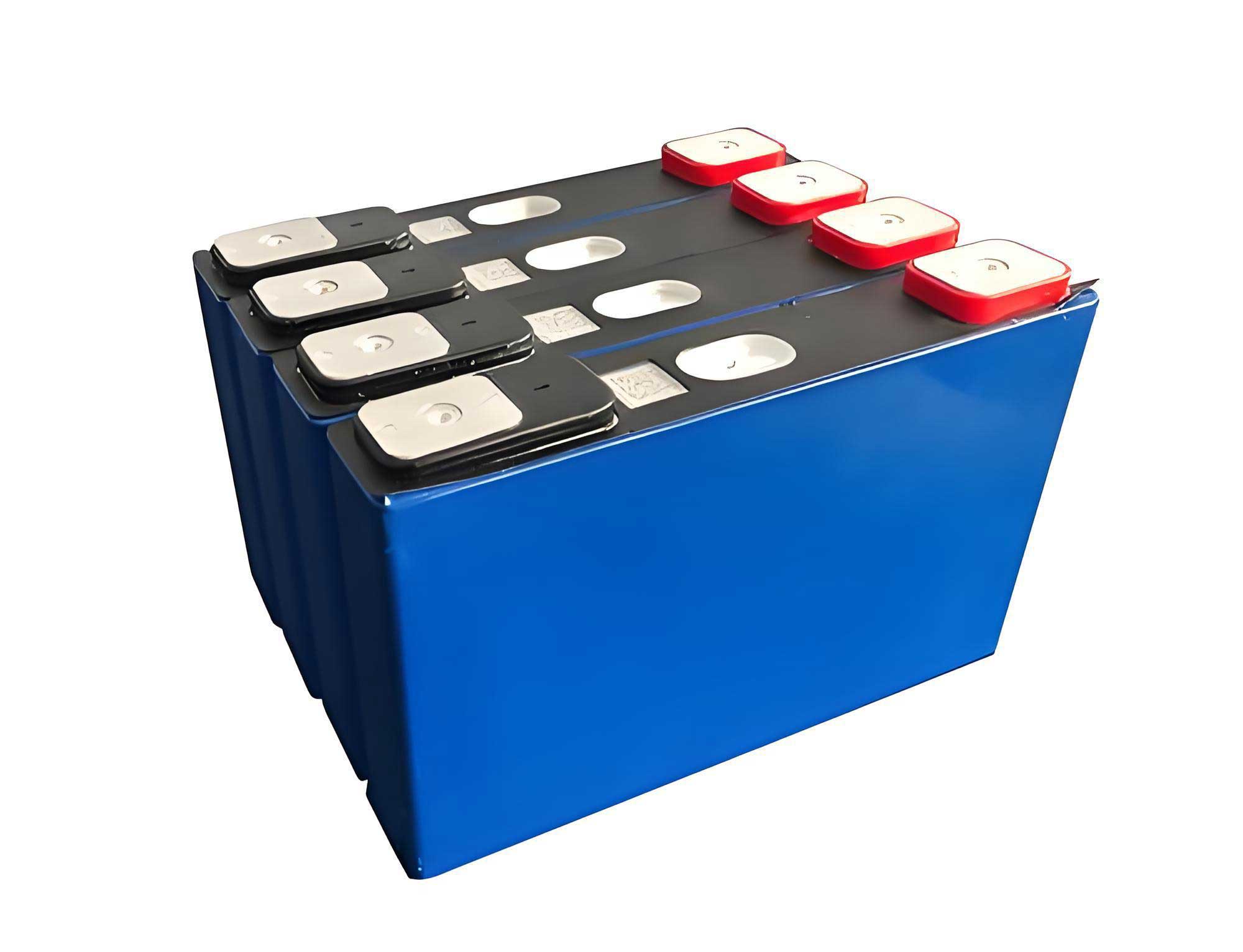
The OCV of a lithium-ion battery is defined as the potential difference between its positive and negative electrodes under equilibrium conditions, where no external load is applied, and internal polarizations have relaxed. For a LiFePO4/graphite cell, it can be expressed as:
$$ OCV(SOC) = E_{LFP}(SOC) – E_{Gr}(SOC) $$
where $E_{LFP}(SOC)$ is the equilibrium potential of the LiFePO4 cathode and $E_{Gr}(SOC)$ is the equilibrium potential of the graphite anode, both functions of the lithium content, i.e., SOC. The SOC itself is typically defined as:
$$ SOC(t) = SOC_0 + \frac{1}{C_{nominal}} \int_{0}^{t} I(\tau) \, d\tau $$
where $SOC_0$ is the initial state, $C_{nominal}$ is the nominal capacity, and $I$ is the current (positive for charge). The OCV-SOC curve is experimentally obtained by incrementally adjusting the SOC, allowing sufficient rest time for voltage stabilization at each step, a method known as the galvanostatic intermittent titration technique (GITT) in a broad sense.
Experimental Methodology
The analysis is based on data from commercial-grade LiFePO4/graphite cells. Both prismatic aluminum-can power batteries (approx. 172 Ah) and laminated pouch cells (approx. 2.2 Ah) were utilized to examine form factor influences. The active materials included various sources of LiFePO4 cathode powders (labeled LFP-1 to LFP-4) and graphite anode powders (Gr-1 to Gr-4), with key properties summarized in Table 1. Modified cells with silicon suboxide (SiOx) blended into the anode and cells with pre-lithiated anodes were also tested.
The primary testing sequence for obtaining the OCV-SOC curve involved the following steps: 1) Bring the cell to a reference state (0% or 100% SOC) using a constant current (typically 0.33C). 2) Apply a current pulse to change the SOC by a fixed increment (e.g., 5% or 10%). 3) Rest the cell for a specified period (typically 1 to 4 hours) to allow the voltage to relax to a quasi-equilibrium OCV. 4) Record the OCV and repeat steps 2-3 until the full SOC range is covered. This was performed in both charge and discharge directions to assess hysteresis. Aging studies involved cycling cells to end-of-life (EOL) or storing them at high temperatures (45-80°C) at full charge to induce capacity fade.
| Material Code | Carbon Content (%) | BET Surface Area (m²/g) | Particle Size D10 (μm) | Particle Size D50 (μm) | Particle Size D90 (μm) |
|---|---|---|---|---|---|
| LFP-1 | 1.1 | 9.5 | 0.58 | 1.27 | 2.41 |
| LFP-2 | 1.2 | 11.6 | 0.44 | 1.03 | 2.71 |
| LFP-3 | 1.4 | 13.7 | 0.52 | 1.69 | 4.06 |
| LFP-4 | 1.5 | 10.0 | 0.52 | 1.42 | 3.36 |
Fundamental OCV-SOC Curve Characteristics
The typical OCV-SOC curve for a fresh LiFePO4/graphite battery exhibits a characteristic shape with distinct regions, as quantified in Table 2. The most notable feature is the extended flat voltage plateau spanning from approximately 30% to 95% SOC, which is a hallmark of the two-phase equilibrium in the LiFePO4 cathode (coexistence of LiFePO4 and FePO4). Within this plateau, a subtle but distinct voltage step of about 30-40 mV is consistently observed near 60% SOC. The steep voltage regions at the extremes (0-30% and 95-100% SOC) correspond to the single-phase regions of the electrodes.
| SOC Region (%) | OCV Range (mV) | Voltage Change (mV) | Percentage of Total ΔV* | Dominant Electrode Process |
|---|---|---|---|---|
| 0 – 32 | 2730 – 3289 | +559 | 89.4% | Graphite staging (dilute to stage II) |
| 32 – 55 | 3289 – 3293 | +4 | 0.6% | LFP main plateau; Graphite stage II |
| 55 – 65 | 3293 – 3329 | +36 | 5.8% | LFP plateau; Graphite stage II→II transition |
| 65 – 95 | 3329 – 3334 | +5 | 0.8% | LFP main plateau; Graphite stage II |
| 95 – 100 | 3334 – 3355 | +21 | 3.4% | Graphite stage II→I (LiC12→LiC6) |
*Total ΔV = V100%SOC – V0%SOC ≈ 625 mV.
Influence of Active Materials and Cell Format
The source and properties of the active materials subtly influence the OCV-SOC curve. While the overall shape remains consistent, the precise position of the curve along the SOC axis can shift. As shown in Figure 1 (conceptual), cells fabricated with different LiFePO4 or graphite materials showed variations in their delivered capacity. A clear correlation was observed: a cell with a lower delivered capacity exhibited an OCV-SOC curve shifted to the right compared to a higher-capacity cell using different active materials. This is because, at the same nominal SOC percentage, a cell with lower actual capacity holds less absolute lithium content in the graphite. Since the graphite potential $E_{Gr}$ is a function of lithium concentration (x in LixC6), a lower x results in a higher (more positive) potential. According to the OCV formula $OCV = E_{LFP} – E_{Gr}$, a higher $E_{Gr}$ leads to a lower OCV at that nominal SOC, manifesting as a rightward shift of the curve. Importantly, the 60% SOC voltage step was present in all variations, confirming it as an intrinsic feature of the LiFePO4/graphite chemistry. Furthermore, no significant difference was found between prismatic and pouch cells of similar chemistry, indicating the OCV-SOC relationship is governed by material thermodynamics and is independent of the cell casing format.
Influence of Measurement Conditions: Hysteresis and Relaxation
The OCV-SOC curve is path-dependent due to kinetic limitations and thermodynamic hysteresis, particularly pronounced in LiFePO4 due to its two-phase reaction. When the curve is measured by stepping down from 100% SOC (discharge curve), it lies slightly below the curve measured by stepping up from 0% SOC (charge curve). This voltage hysteresis $\Delta V_{hys}$ can be defined as:
$$ \Delta V_{hys}(SOC) = OCV_{charge}(SOC) – OCV_{discharge}(SOC) $$
The magnitude of this hysteresis diminishes with increasing relaxation time after each SOC step. As the rest time extends from 1 hour to 4 hours, the discharge curve gradually rises, and the charge curve falls, both converging towards the true equilibrium potential. This underscores the importance of sufficient relaxation time when characterizing the OCV-SOC curve for a high-precision BMS. The relaxation process follows a stretched exponential decay, $V(t) = OCV_{∞} + ΔV_0 \cdot e^{-(t/τ)^β}$, where $τ$ is the relaxation time constant and $β$ is the stretching exponent.
Impact of Capacity Fade from Aging
Aging, whether through calendar storage or charge-discharge cycling, leads to irreversible capacity loss, primarily due to the consumption of active lithium ions through side reactions like solid electrolyte interphase (SEI) growth. This loss has a profound effect on the OCV-SOC curve, as detailed in Table 3. The most significant change occurs in the medium-to-high SOC region (50-75% SOC), where the curve shifts substantially to the right. After aging, at a given SOC, the graphite anode contains less cyclable lithium than in a fresh cell. Therefore, its potential $E_{Gr}$ is higher, resulting in a lower cell OCV. This shift can be quantitatively related to the loss of lithium inventory (LLI). If $C_{fresh}$ and $C_{aged}$ are the capacities, the effective lithium content x in graphite at a nominal SOC is scaled: $x_{aged}(SOC) = x_{fresh}(SOC) \cdot (C_{aged}/C_{fresh})$. The associated potential change $ΔE_{Gr}$ can be estimated from the graphite half-cell curve.
| Cell Condition | Test Protocol | Capacity Retention (%) | OCV @ 60% SOC (V) | Shift Relative to Fresh (mV) |
|---|---|---|---|---|
| Fresh (BOL) | Reference | 100.0 | 3.314 | 0 |
| Calendar Aged | 45°C Storage, 100% SOC | 98.9 | 3.306 | -8 |
| Calendar Aged | 60°C Storage, 100% SOC | 96.4 | 3.300 | -14 |
| Calendar Aged | 80°C Storage, 100% SOC | 91.7 | 3.294 | -20 |
| Cycle Aged (EOL) | Charge/Discharge Cycles | ~80.0 (Example) | ~3.288 (Example) | ~ -26 |
Effects of Anode Modifications: Silicon Blending and Pre-lithiation
Modifying the graphite anode with high-capacity silicon-based materials (e.g., SiOx) or pre-lithiation techniques directly alters the anode’s potential profile, thereby shifting the OCV-SOC curve.
Silicon Blending: Introducing SiOx into the anode increases the total capacity but also raises the average lithium insertion potential compared to pure graphite. The alloying reaction of Si (e.g., Li15Si4 formation) occurs around 0.4-0.1 V vs. Li/Li+, which is higher than the low-potential plateau of graphite. Consequently, in a blended anode, at low SOCs where silicon alloys with lithium, the anode potential $E_{Gr+Si}$ is higher than $E_{Gr}$. This leads to a lower cell OCV, shifting the low-SOC portion of the curve downward and to the right.
Pre-lithiation: This process adds active lithium to the anode prior to cell assembly, compensating for initial irreversible losses. A pre-lithiated anode starts at a lower potential (more lithiated state). Therefore, during discharge to 0% SOC, it still retains some lithium, keeping $E_{Gr}$ lower. This results in a higher OCV at 0% SOC and a leftward shift of the entire curve. The voltage step near 60% SOC also appears earlier in terms of SOC. The effect can be modeled as an offset in the lithium content: $x’_{Gr}(SOC) = x_{Gr}(SOC) + Δx_{pre-lith}$, where $Δx_{pre-lith}$ is the additional lithium from pre-lithiation.
Mechanistic Origins: Decoupling Cathode and Anode Contributions
To deconvolute the contributions of each electrode, half-cell measurements against lithium metal are essential. The results are conclusive:
- LiFePO4 vs. Li: The OCV profile is extremely flat, varying by less than 10 mV over 10-100% SOC. This is dictated by the constant two-phase equilibrium potential of the LiFePO4/FePO4 redox couple, as per Gibbs’ phase rule.
- Graphite vs. Li: The OCV profile is highly structured, with multiple voltage plateaus and steps corresponding to the formation of distinct staged graphite intercalation compounds (GICs): Stage IV (LiC36), Stage III (LiC27), Stage IIL (LixC12, x~0.5), Stage II (LiC12), and Stage I (LiC6).
Comparing these to the full-cell curve reveals that the flat region (32-95% SOC) of the LiFePO4 battery is dominated by the flat potential of the LiFePO4 cathode. However, the detailed shape within this plateau, especially the 30-40 mV step near 60% SOC, is a direct reflection of the graphite anode potential change. Specifically, this step coincides with the potential drop associated with the phase transition from a liquid-like stage (Stage IIL) to the ordered Stage II (LiC12) in the graphite. The steep voltage changes at SOC extremes are also governed by the single-phase potential slopes of graphite.
This is further confirmed by post-mortem analysis. Cells disassembled at 57% SOC and 65% SOC showed that the cell OCV step correlated with a significant drop (~40 mV) in the graphite electrode potential (measured vs. Li reference), while the LiFePO4 electrode potential remained constant. The visual change in the graphite electrode color from dark purple to bronze-yellow across this step is a classic indicator of the stage transition.
Conclusion
The OCV-SOC curve of a lithium iron phosphate battery is a complex signature determined primarily by the thermodynamics of the graphite anode, superimposed on the flat voltage plateau of the LiFePO4 cathode. Its precise position on the SOC axis is sensitive to factors that alter the net cyclable lithium content or the anode’s potential profile. Key findings include: 1) Variations in active material properties that affect cell capacity cause horizontal shifts in the curve. 2) Measurement hysteresis exists but diminishes with sufficient relaxation time. 3) Capacity fade from aging uniformly shifts the medium-high SOC region of the curve to the right, a critical consideration for BMS in aged LiFePO4 battery packs. 4) Anode modifications like silicon blending shift the curve rightward, while pre-lithiation shifts it leftward. 5) The characteristic voltage step near 60% SOC is an intrinsic feature caused by a stage transition (IIL → II) within the graphite anode during lithiation.
Understanding these characteristics and their dependencies is vital for developing robust state estimation algorithms, state-of-health diagnostics, and for guiding material selection and engineering in the design of advanced lithium iron phosphate battery systems. This analysis provides a comprehensive framework for interpreting OCV-SOC data, essential for both researchers and engineers working with this pivotal battery technology.