
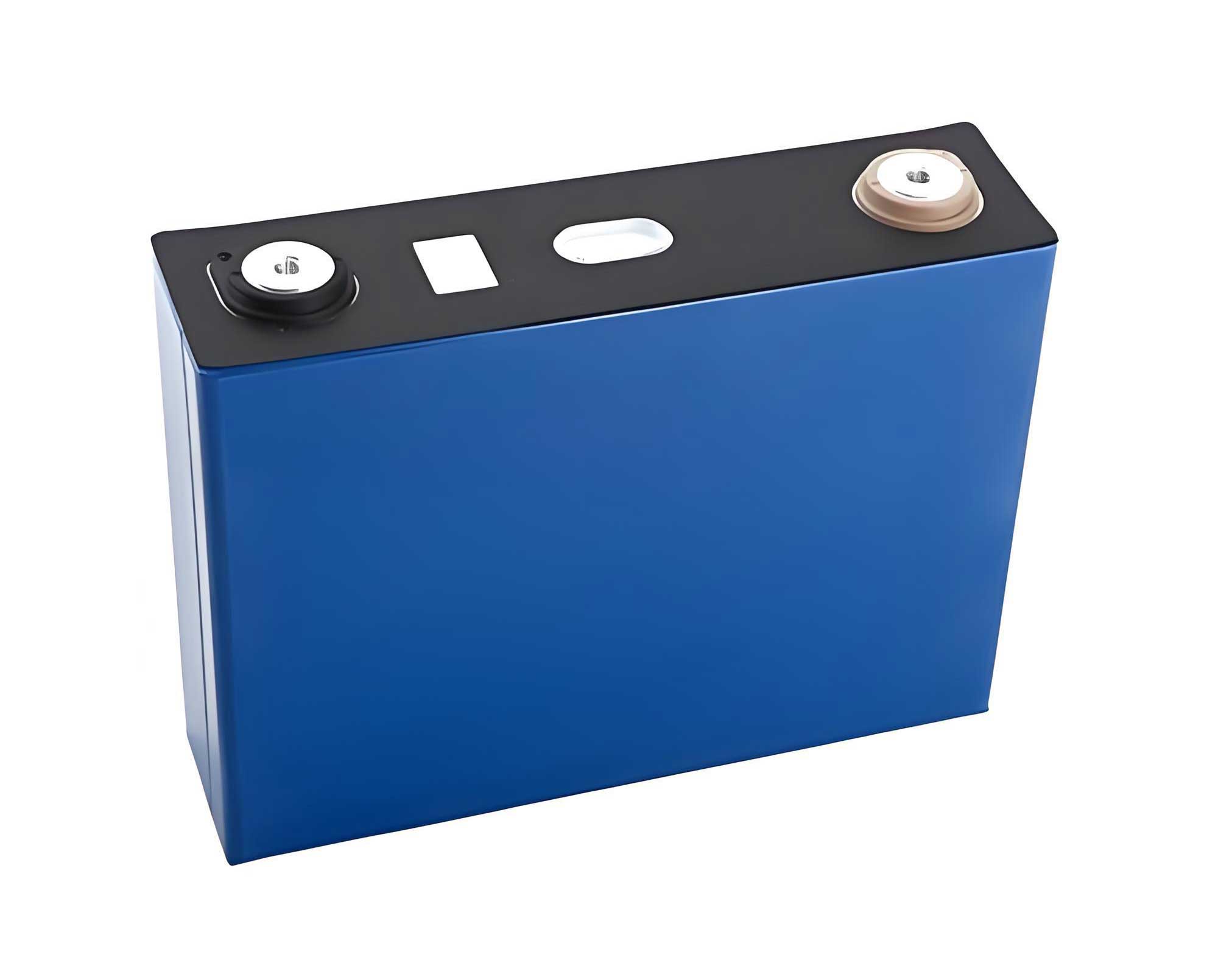
From a first-person perspective, the rapid evolution of energy storage systems, particularly lithium-ion batteries, has positioned LiFePO4 batteries as a cornerstone in applications such as electric vehicles and grid storage due to their inherent safety, cost-effectiveness, and stability. The growing deployment of LiFePO4 batteries necessitates efficient recycling methodologies to mitigate environmental hazards and recover valuable materials like lithium, iron, and phosphorus. This analysis delves into the development trends of LiFePO4 battery recycling technology through a comprehensive patent lens, leveraging global patent data to uncover insights into technological advancements, regional dominance, and future directions. The focus is on five key technical branches: pretreatment, discharge, disassembly, separation of positive and negative electrode materials, and regeneration processes. By employing patent intelligence analysis, this study aims to map the trajectory of LiFePO4 battery recycling, identify gaps, and propose strategic recommendations for innovation and intellectual property management.
The methodology centers on patent data extraction from the PatSnap global patent database, utilizing a refined search strategy to capture relevant innovations. The search query was constructed to include terms such as “LiFePO4,” “lithium iron phosphate,” “battery,” “recycling,” “disassembly,” and “regeneration,” ensuring a comprehensive dataset. After data cleaning and de-duplication, 474 patent families were analyzed, categorized into the five technical branches. This approach enables a quantitative and qualitative assessment of patent activities, including annual filing trends, geographic distributions, key applicants, and technological evolution. The analysis incorporates statistical tools, tables, and formulas to summarize findings, providing a robust framework for understanding the competitive landscape and technological maturation in LiFePO4 battery recycling.
The overall patent trend reveals a dynamic growth pattern, with China exhibiting a pronounced surge in filings since 2016, peaking around 2020, coinciding with the expansion of its new energy vehicle sector. In contrast, global filings from regions like the United States, Japan, and South Korea show fluctuations, indicating varied strategic focuses. To illustrate, the annual patent filing distribution can be modeled using a growth function: $$ P(t) = P_0 \cdot e^{kt} $$ where \( P(t) \) represents the number of patents at time \( t \), \( P_0 \) is the initial patent count, and \( k \) is the growth rate. For China, \( k \) is significantly higher post-2016, reflecting accelerated innovation. The table below summarizes the patent status across key regions, highlighting China’s dominance in active filings.
| Region | Active Patents (%) | Inactive Patents (%) | Pending Patents (%) |
|---|---|---|---|
| China | 40.92 | 17.06 | 42.02 |
| United States | 53.33 | 26.67 | 20.00 |
| Japan | 22.22 | 44.44 | 33.33 |
| South Korea | 63.64 | 9.09 | 27.27 |
| Global (Ex-China) | 46.67 | 11.67 | 41.67 |
Key applicants in the LiFePO4 battery recycling domain include academic institutions and corporations, with Central South University and Hefei Guoxuan High-Tech Power Energy Co., Ltd. leading in China, while global players like GRS Technologies International Limited and LG Chem Ltd. hold significant portfolios. The concentration of patents underscores the strategic importance of LiFePO4 battery recycling, driven by environmental regulations and resource scarcity. The regional distribution of technical branches further clarifies competitive advantages: China excels in regeneration and disassembly processes, the U.S. and Japan focus on regeneration, and South Korea emphasizes regeneration and material separation. This disparity suggests untapped opportunities in less-developed areas, such as pretreatment and discharge technologies.
Branch-wise analysis of LiFePO4 battery recycling technology reveals uneven development across the five processes. The regeneration process dominates patent filings, indicating maturity, while others like pretreatment and discharge remain nascent. The annual patent counts for each branch are summarized below, demonstrating the growth trajectory and highlighting areas for future investment.
| Year | Pretreatment | Discharge | Disassembly | Material Separation | Regeneration |
|---|---|---|---|---|---|
| 2007-2010 | 0 | 0 | 0 | 0 | 4 |
| 2011 | 0 | 0 | 0 | 0 | 6 |
| 2012 | 0 | 0 | 0 | 2 | 7 |
| 2013 | 0 | 0 | 0 | 2 | 5 |
| 2014 | 0 | 0 | 0 | 0 | 3 |
| 2015 | 3 | 0 | 0 | 0 | 11 |
| 2016 | 2 | 0 | 9 | 6 | 25 |
| 2017 | 2 | 1 | 4 | 4 | 39 |
| 2018 | 5 | 2 | 7 | 10 | 51 |
| 2019 | 5 | 0 | 5 | 6 | 65 |
| 2020 | 2 | 1 | 15 | 1 | 81 |
| 2021 | 1 | 1 | 3 | 2 | 25 |
| 2022 | 2 | 3 | 5 | 4 | 49 |
| 2023 | 2 | 1 | 9 | 8 | 39 |
The technological evolution within each branch follows distinct paths, often driven by innovation in methods and apparatus. For the pretreatment process, advancements include capacity assessment and health state evaluation techniques, which ensure safe handling of spent LiFePO4 batteries. A mathematical model for state-of-health (SOH) estimation can be expressed as: $$ \text{SOH} = \frac{C_{\text{current}}}{C_{\text{initial}}} \times 100\% $$ where \( C_{\text{current}} \) is the present capacity and \( C_{\text{initial}} \) is the nominal capacity. This formula underpins many patent innovations aimed at optimizing battery sorting and reuse. The discharge process has seen progression from salt solution methods to plasma-based techniques, enhancing safety and efficiency. The discharge rate can be modeled using Ohm’s law: $$ I = \frac{V}{R} $$ where \( I \) is the current, \( V \) is the battery voltage, and \( R \) is the discharge resistance, with patents focusing on minimizing \( R \) for rapid discharge.
In disassembly, patents have evolved from manual tools to automated systems incorporating robotics and laser cutting, improving precision and scalability. The force required for disassembly can be described by: $$ F = k \cdot \Delta x $$ where \( F \) is the applied force, \( k \) is the material stiffness, and \( \Delta x \) is the displacement, guiding designs for cutting mechanisms. Material separation technologies have advanced through solvent-based and mechanical methods, with ultrasonic stripping gaining traction. The separation efficiency \( \eta \) can be calculated as: $$ \eta = \frac{m_{\text{recovered}}}{m_{\text{total}}} \times 100\% $$ where \( m_{\text{recovered}} \) is the mass of recovered materials and \( m_{\text{total}} \) is the initial mass, a key metric in patent claims for LiFePO4 battery recycling.
The regeneration process, the most patented area, encompasses wet recycling, solid-state sintering, and electrochemical methods. Wet recycling often involves acid leaching, represented by the reaction: $$ \text{LiFePO}_4 + \text{H}_2\text{SO}_4 \rightarrow \text{Li}_2\text{SO}_4 + \text{FePO}_4 + \text{H}_2\text{O} $$ This reaction is foundational to many patents, with variations in acid concentration and temperature to enhance lithium recovery. Solid-state sintering aims to reconstruct the LiFePO4 crystal structure, governed by the Arrhenius equation: $$ k = A e^{-\frac{E_a}{RT}} $$ where \( k \) is the rate constant, \( A \) is the pre-exponential factor, \( E_a \) is activation energy, \( R \) is the gas constant, and \( T \) is temperature, optimizing sintering conditions. Electrochemical regeneration uses applied potentials to restore lithium ions, described by the Nernst equation: $$ E = E^0 – \frac{RT}{nF} \ln Q $$ where \( E \) is the cell potential, \( E^0 \) is standard potential, \( n \) is electron number, \( F \) is Faraday’s constant, and \( Q \) is the reaction quotient.
Analysis of typical applicants shows that Chinese entities, both academic and corporate, are prolific in filing patents for LiFePO4 battery recycling. Central South University leads in regeneration and discharge technologies, while Hefei Guoxuan excels in material separation. In contrast, global applicants like GRS Technologies and LG Chem focus on regeneration and separation, but with fewer filings overall. The table below compares annual patent activities for key applicants, illustrating their engagement levels.
| Applicant | 2009-2016 | 2017 | 2018 | 2019 | 2020 | 2021 | 2022 | 2023 | Total |
|---|---|---|---|---|---|---|---|---|---|
| Central South University | 1 | 7 | 5 | 2 | 8 | 1 | 2 | 1 | 27 |
| Hefei Guoxuan | 11 | 4 | 0 | 0 | 0 | 0 | 1 | 3 | 19 |
| Tianqi Lithium | 7 | 2 | 0 | 0 | 3 | 0 | 0 | 0 | 12 |
| GRS Technologies | 1 | 8 | 5 | 1 | 0 | 0 | 1 | 2 | 18 |
| LG Chem | 4 | 1 | 0 | 0 | 1 | 1 | 2 | 1 | 10 |
Technological roadmaps for each branch highlight pivotal patents that shaped innovation. In pretreatment, early patents focused on capacity testing devices, evolving into integrated systems for health assessment using algorithms. For discharge, methods progressed from conductive salt solutions to plasma discharge, reducing time and hazards. Disassembly saw a shift from mechanical cutters to automated robotic systems with vision guidance, enhancing efficiency. Material separation advanced from simple solvent washing to combined thermal and mechanical processes, improving purity. Regeneration technologies moved from basic acid leaching to sophisticated hydrothermal and electrochemical methods, boosting recovery rates. Throughout, the recurring theme is the optimization of parameters such as temperature, pressure, and chemical composition to maximize efficiency in LiFePO4 battery recycling.
Patent transaction analysis reveals that transfers are the primary form of commercialization, with China accounting for most transactions. The table below details the distribution of transferred patents by technical branch, indicating that regeneration processes dominate, followed by material separation.
| Technical Branch | Domestic Transfers (%) | International Transfers (%) |
|---|---|---|
| Pretreatment | 7 | 0 |
| Disassembly | 8 | 0 |
| Material Separation | 5 | 33 |
| Regeneration | 80 | 67 |
In conclusion, the patent landscape for LiFePO4 battery recycling technology is characterized by robust growth in China, with a focus on regeneration and disassembly processes, while other regions like the U.S., Japan, and South Korea have niche strengths. The analysis identifies technological gaps in pretreatment, discharge, disassembly, and material separation, as well as in supporting equipment for all five branches. These gaps represent opportunities for strategic patent布局, particularly in automating discharge systems, developing eco-friendly separation solvents, and enhancing pretreatment accuracy. Future innovations should leverage interdisciplinary approaches, combining robotics, chemistry, and data analytics to create integrated recycling solutions. As the demand for LiFePO4 batteries escalates, proactive intellectual property management will be crucial to securing competitive advantages and fostering sustainable practices in the circular economy. Recommendations include investing in R&D for underdeveloped branches, fostering cross-border collaborations, and utilizing patent analytics to monitor emerging trends. By addressing these aspects, stakeholders can drive advancements in LiFePO4 battery recycling, contributing to environmental stewardship and resource security.