
In the realm of DC power systems, particularly in substations and power plants, the reliability of backup energy sources is paramount. Over the years, I have observed a significant shift from valve-regulated lead-acid batteries to lithium iron phosphate (LiFePO4) batteries due to their superior energy density, longevity, thermal stability, and environmental friendliness. As these LiFePO4 batteries become integral to DC systems, ensuring their performance through accurate internal resistance testing has emerged as a critical focus. Internal resistance serves as a key indicator of battery health, reflecting degradation patterns and operational efficiency. However, testing LiFePO4 battery internal resistance presents challenges: it is typically in the milliohm range, varies with state-of-charge and temperature, and lacks standardized protocols across industries. In this article, I will delve into the testing standards for LiFePO4 battery internal resistance, emphasizing DC systems, and provide a comprehensive analysis using tables and formulas to guide engineers and researchers.
The internal resistance of a LiFePO4 battery encompasses both ohmic and polarization components, influencing voltage drop during charge and discharge cycles. Two primary methods are employed: AC internal resistance testing and DC internal resistance testing. The AC method involves applying a small alternating current signal to the battery and measuring the voltage response, while the DC method uses a short, constant current pulse to observe voltage changes. For AC internal resistance, the formula is straightforward: $$R_{ac} = \frac{U_a}{I_a}$$ where \(R_{ac}\) is the AC internal resistance in ohms, \(U_a\) is the AC voltage effective value in volts, and \(I_a\) is the AC current effective value in amperes. This method is non-invasive and quick, but it may not fully capture dynamic behaviors. In contrast, the DC internal resistance, derived from Ohm’s law, is calculated as: $$R_{dc} = \frac{\Delta U}{I}$$ where \(R_{dc}\) is the DC internal resistance, \(\Delta U\) is the voltage change over a short duration, and \(I\) is the applied constant current. This approach mimics real-world operating conditions but requires precise timing to avoid thermal effects. Throughout this discussion, I will reference these formulas to highlight the nuances in testing standards for LiFePO4 batteries.
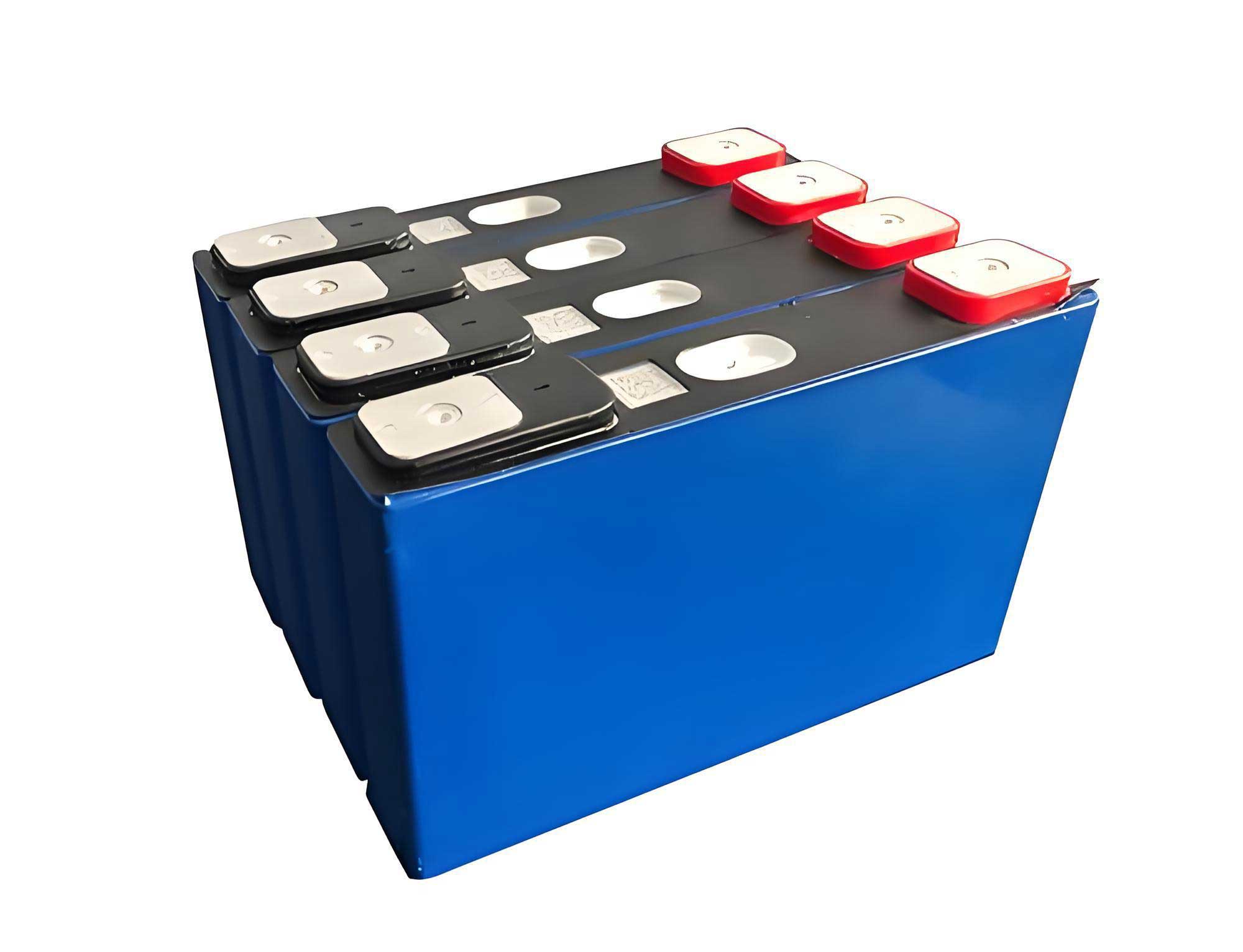
International standards play a pivotal role in harmonizing testing practices for LiFePO4 batteries. The International Electrotechnical Commission (IEC) and the Japanese Industrial Standards Committee (JISC) have established guidelines that address internal resistance measurements. Key standards include IEC 61960-3:2017 for portable applications, IEC 62620:2014 for industrial uses, and JIS C 8715-1:2018 for secondary lithium cells. These documents outline procedures for both AC and DC internal resistance tests, but they differ in applicability, sample requirements, and testing parameters. To elucidate these variations, I have compiled a comparative table summarizing the core aspects of each standard concerning LiFePO4 batteries.
| Standard | Applicable Object | Sample Requirements | Test Temperature | State-of-Charge (SOC) |
|---|---|---|---|---|
| IEC 61960-3:2017 | Battery packs only for AC and DC tests | No explicit classification | 20°C ± 5°C | 100% SOC (fully charged) |
| IEC 62620:2014 | Cells for AC test; cells and packs for DC test | Classified into four types: S (ultra-low rate), E (low rate), M (medium rate), H (high rate) | 25°C ± 5°C | 50% ± 10% SOC |
| JIS C 8715-1:2018 | Cells for AC test; cells and packs for DC test | Same classification as IEC 62620:2014 | 25°C ± 5°C | 50% ± 10% SOC |
From this table, it is evident that IEC 62620:2014 and JIS C 8715-1:2018 are more detailed in categorizing LiFePO4 battery samples based on discharge rate capabilities. For instance, the high-rate (H) type in IEC 62620:2014 requires a maximum continuous discharge current of at least 7.0C at 25°C, whereas JIS C 8715-1:2018 defines it as greater than 3.5C. This classification impacts the choice of discharge currents during DC internal resistance testing, as I will explain later. Moreover, the test temperature differs by 5°C between IEC 61960-3:2017 and the others, which can influence resistance readings due to the temperature sensitivity of LiFePO4 battery electrochemistry. The SOC condition also varies: full charge versus half-charge, affecting polarization resistance and overall accuracy. These distinctions underscore the need for careful standard selection when evaluating LiFePO4 battery performance in DC systems.
Delving into the testing procedures, the preparation phase is crucial for obtaining reliable internal resistance data. For LiFePO4 batteries, IEC 61960-3:2017 mandates charging the battery to full capacity and allowing it to rest for 1 to 4 hours before testing. In contrast, IEC 62620:2014 and JIS C 8715-1:2018 specify charging the battery first, then discharging it to 50% ± 10% of its rated capacity, followed by a 1 to 4-hour rest period. This discrepancy in SOC preparation can lead to different baseline resistances, as LiFePO4 battery internal resistance tends to decrease at mid-SOC levels due to reduced ionic diffusion limitations. Regarding test sequence, IEC 61960-3:2017 recommends performing the AC test before the DC test without intermediate charge-discharge cycles, while the other standards do not prescribe an order. This flexibility may introduce variability in results, especially for LiFePO4 batteries undergoing multiple tests.
For AC internal resistance testing, all three standards converge on a similar methodology. A sinusoidal AC current with a frequency of 1.0 kHz ± 0.1 kHz and an effective value \(I_a\) is applied to the LiFePO4 battery for 1 to 5 seconds. The AC voltage effective value \(U_a\) is measured, and the AC internal resistance is computed using the formula: $$R_{ac} = \frac{U_a}{I_a}$$ Typically, \(I_a\) is kept small to avoid perturbing the battery state, often in the range of 0.1C to 0.5C depending on the LiFePO4 battery type. This method is advantageous for quick quality checks, but it may not fully represent the DC performance of LiFePO4 batteries in real-world applications, where pulsed loads are common.
DC internal resistance testing involves a two-step current pulse process, but the parameters differ across standards. IEC 61960-3:2017 applies to battery packs and uses a discharge current \(I_1 = 0.2C\) for 10 seconds, followed by an instantaneous increase to \(I_2 = 1.0C\) for 1 second. The voltage change \(\Delta U\) is measured at the transition, and the DC internal resistance is derived from: $$R_{dc} = \frac{\Delta U}{I_2 – I_1}$$ However, for LiFePO4 batteries, this approach might oversimplify the response. In contrast, IEC 62620:2014 and JIS C 8715-1:2018 tailor the currents based on battery type, as shown in the table below, with longer pulse durations of 30 seconds for \(I_1\) and 5 seconds for \(I_2\). This extended timing allows for better stabilization of the LiFePO4 battery voltage, reducing measurement errors.
| Battery Type | Discharge Current \(I_1\) | Discharge Current \(I_2\) | Pulse Duration for \(I_1\) | Pulse Duration for \(I_2\) |
|---|---|---|---|---|
| Ultra-low rate (S) | ≥ 1/5n C (A)* | ≥ 1/n C (A)* | 30 ± 0.1 s | 5 ± 0.1 s |
| Low rate (E) | ≥ 0.04C (A) | ≥ 0.2C (A) | 30 ± 0.1 s | 5 ± 0.1 s |
| Medium rate (M) | ≥ 0.2C (A) | ≥ 1.0C (A) | 30 ± 0.1 s | 5 ± 0.1 s |
| High rate (H) | ≥ 1.0C (A) for IEC, ≥ 1.0C (A) for JIS** | ≥ 5.0C (A) for IEC, ≥ 5.0C (A) for JIS** | 30 ± 0.1 s | 5 ± 0.1 s |
* Here, \(n\) denotes the number of cells in series for battery packs; for single cells, it is 1.
** JIS C 8715-1:2018 defines high-rate as > 3.5C, but the test currents align with IEC 62620:2014 for consistency.
The DC internal resistance calculation in these standards follows a similar principle: $$R_{dc} = \frac{U_1 – U_2}{I_2 – I_1}$$ where \(U_1\) is the voltage just before the current step, and \(U_2\) is the voltage after a short period (e.g., 1 second) at \(I_2\). This method captures the instantaneous ohmic drop and some polarization effects, making it relevant for LiFePO4 batteries in DC systems where load changes occur rapidly. However, the variation in current magnitudes and durations highlights the lack of uniformity, which can lead to inconsistent results when comparing LiFePO4 batteries from different manufacturers or applications.
Beyond the procedural aspects, the acceptance criteria for internal resistance in LiFePO4 batteries are equally important. None of the standards prescribe absolute resistance values, as these depend on factors like cell design, materials, and manufacturing processes. Instead, they require that the measured AC or DC internal resistance does not exceed the manufacturer’s declared specifications. This approach acknowledges the diversity in LiFePO4 battery technologies but places the onus on manufacturers to provide accurate baseline data. For instance, a typical LiFePO4 battery might have an AC internal resistance of 1-5 mΩ and a DC internal resistance of 2-10 mΩ at 25°C, but these ranges can vary widely. To facilitate benchmarking, I have derived a generalized formula for estimating the expected internal resistance based on capacity and rate capability: $$R_{expected} = \frac{k}{C} + \alpha \cdot T$$ where \(R_{expected}\) is the predicted internal resistance in ohms, \(C\) is the battery capacity in ampere-hours, \(k\) is a material-specific constant (e.g., 0.01 for LiFePO4), \(\alpha\) is the temperature coefficient, and \(T\) is the temperature deviation from 25°C. This formula, while simplified, underscores the inverse relationship between capacity and resistance for LiFePO4 batteries.
In practice, implementing these standards for LiFePO4 batteries in DC systems requires careful attention to environmental conditions and equipment accuracy. The test temperature, as noted, should be controlled within ±5°C of the specified value (20°C or 25°C) to minimize thermal effects on internal resistance. For LiFePO4 batteries, which exhibit moderate temperature sensitivity, a deviation of 5°C can alter resistance by -2% to 5%, based on the Arrhenius equation: $$R(T) = R_0 \cdot e^{\frac{E_a}{R_g} \left( \frac{1}{T} – \frac{1}{T_0} \right)}$$ where \(R(T)\) is the resistance at temperature \(T\), \(R_0\) is the reference resistance at \(T_0\), \(E_a\) is the activation energy, and \(R_g\) is the gas constant. This equation highlights why standards like IEC 62620:2014 opt for 25°C, closer to typical operating conditions for LiFePO4 batteries in substations.
Moreover, the choice between AC and DC testing methods depends on the application context. For quality assurance in LiFePO4 battery production, AC testing offers speed and simplicity, but for performance validation in DC systems, DC testing provides more realistic insights. Some researchers advocate for a hybrid approach, where both methods are used complementarily. For example, the AC internal resistance can be measured at multiple frequencies to construct a Nyquist plot, revealing detailed electrochemical impedance spectroscopy (EIS) data for LiFePO4 batteries. The complex impedance \(Z\) is given by: $$Z(\omega) = R_s + \frac{1}{j\omega C_{dl}} + R_{ct}$$ where \(R_s\) is the series resistance, \(C_{dl}\) is the double-layer capacitance, \(R_{ct}\) is the charge-transfer resistance, and \(\omega\) is the angular frequency. This advanced analysis, though not covered in basic standards, can enhance the understanding of LiFePO4 battery degradation mechanisms.
The evolution of standards for LiFePO4 battery internal resistance testing reflects ongoing efforts to address technological advancements. Emerging trends, such as the integration of LiFePO4 batteries with renewable energy systems and electric vehicles, demand more rigorous testing protocols. For instance, dynamic stress tests (DST) that simulate real-world load profiles could supplement standard DC tests. A proposed metric is the dynamic internal resistance \(R_{dyn}\), calculated over varying current pulses: $$R_{dyn} = \frac{1}{N} \sum_{i=1}^{N} \frac{\Delta U_i}{\Delta I_i}$$ where \(N\) is the number of pulses, and \(\Delta U_i\) and \(\Delta I_i\) are the voltage and current changes for each pulse. This approach better captures the behavior of LiFePO4 batteries under fluctuating conditions in DC systems.
In conclusion, the analysis of internal resistance testing standards for LiFePO4 batteries reveals both commonalities and disparities among IEC 61960-3:2017, IEC 62620:2014, and JIS C 8715-1:2018. Key differences include test temperature, SOC preparation, and DC pulse parameters, which can influence the consistency of results. For engineers working with LiFePO4 batteries in DC systems, it is essential to align testing practices with the applicable standard and consider the battery’s rate classification. Future standardization efforts should aim to unify these protocols, perhaps by incorporating temperature-compensated formulas and hybrid testing methods. As LiFePO4 battery technology continues to advance, robust internal resistance testing will remain a cornerstone for ensuring reliability and safety in critical applications. Through this detailed exploration, I hope to provide a valuable reference for optimizing testing strategies and fostering innovation in the field.
To further illustrate the practical implications, let’s consider a case study involving a LiFePO4 battery pack rated at 100 Ah for a DC system. Using IEC 62620:2014, if it is classified as a medium-rate (M) type, the DC internal resistance test would involve \(I_1 = 20A\) (0.2C) and \(I_2 = 100A\) (1.0C). Assuming a voltage drop \(\Delta U = 0.5V\), the DC internal resistance would be: $$R_{dc} = \frac{0.5V}{100A – 20A} = 0.00625 \Omega = 6.25 m\Omega$$ This value can be compared to the manufacturer’s specification to assess health. Similarly, for AC testing at 1 kHz, if \(U_a = 0.1V\) and \(I_a = 20A\), then \(R_{ac} = 0.005 \Omega = 5 m\Omega\). The discrepancy between AC and DC resistances highlights the polarization effects in LiFePO4 batteries, which are more pronounced under DC loads.
Overall, the journey toward standardized internal resistance testing for LiFePO4 batteries is ongoing. By leveraging formulas, tables, and empirical data, stakeholders can enhance testing accuracy and drive the adoption of LiFePO4 batteries in DC systems worldwide. As I reflect on this analysis, it becomes clear that continuous collaboration between standard bodies, manufacturers, and end-users is vital to address the evolving needs of energy storage technologies.