
As a researcher focused on energy storage systems, I have extensively studied the performance of high-energy storage lithium batteries, particularly in electric vehicle applications. These batteries are critical for modern energy storage solutions due to their high energy density and efficiency. In this article, I present a comprehensive analysis of how environmental temperature affects the discharge capacity, temperature rise, and DC internal resistance of a high-energy lithium nickel manganese cobalt oxide (NMC) battery pack. The growing adoption of energy storage lithium batteries in electric vehicles underscores the importance of understanding their behavior under varying conditions to optimize performance and longevity.
Energy storage lithium batteries, such as the high-energy NMC type, are integral to electric vehicles, providing the necessary power for propulsion and auxiliary systems. The global shift toward electrification has highlighted the need for robust battery systems that can withstand diverse environmental stresses. My investigation delves into the electrochemical characteristics of these batteries, employing rigorous testing protocols to evaluate key parameters like capacity and internal resistance. The results aim to inform better design and management strategies for energy storage lithium batteries in real-world applications.
The performance of energy storage lithium batteries is heavily influenced by temperature, as it affects ion mobility, electrolyte conductivity, and overall reaction kinetics. In this study, I conducted experiments on a high-energy NMC battery pack, examining its discharge behavior across a range of temperatures from -30°C to 40°C. The battery pack, with a nominal capacity of 195 Ah and energy of 68.8 kWh, was subjected to standardized charge-discharge cycles to assess its electrical and thermal properties. By analyzing discharge curves, internal resistance values, and temperature rise data, I aim to provide insights that can enhance the reliability of energy storage lithium batteries in automotive and other high-demand scenarios.
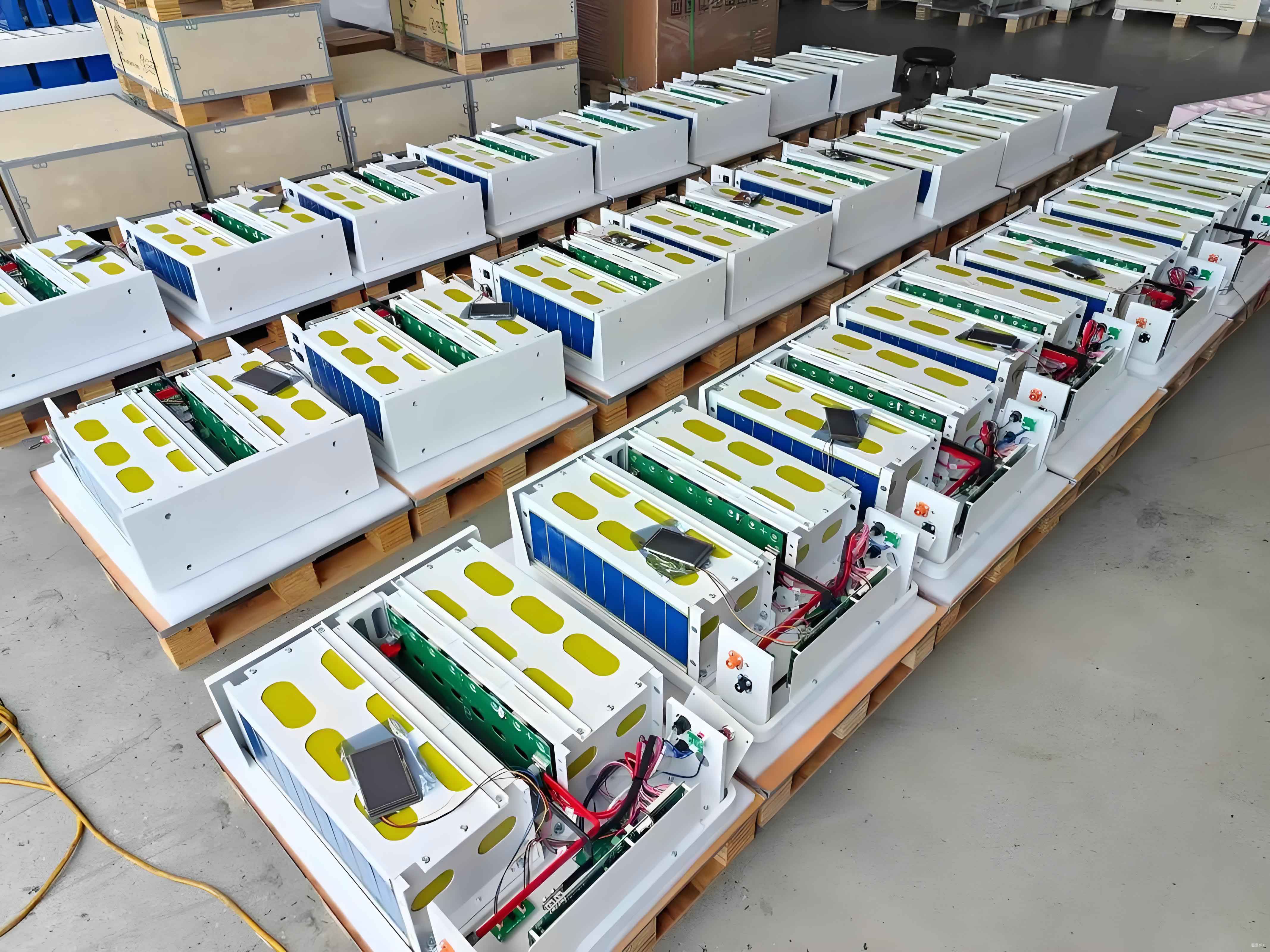
To begin, I will detail the experimental setup and methodologies used in this analysis. The battery pack system included the battery itself, a battery management system (BMS), and a thermal exchange system. Key specifications are summarized in Table 1 below, which outlines the physical and electrical parameters of the high-energy storage lithium battery pack. This table provides a foundation for understanding the test conditions and results discussed later.
| Parameter | Unit | Value |
|---|---|---|
| Dimensions | mm | 1563 × 1258 × 272 |
| Nominal Capacity | Ah | 195 |
| Nominal Energy | kWh | 68.8 |
| Rated Voltage | V | 353.3 |
| Discharge Rate | C | 1/3 |
| Operating Temperature | °C | -30 to 55 |
| Total Weight | kg | 376.4 |
The testing platform comprised a battery charge-discharge cabinet, a walk-in environmental chamber, and a computer for data acquisition. The equipment specifications are listed in Table 2, highlighting the precision and range of the instruments used. This setup ensured accurate measurement of voltage, current, and temperature, with errors kept within acceptable limits as shown in Table 3. The focus was on maintaining consistency across tests to reliably assess the energy storage lithium battery’s performance.
| Equipment | Parameter | Unit | Value |
|---|---|---|---|
| Charge-Discharge Cabinet | Voltage Range | V | 30-1200 |
| Charge-Discharge Cabinet | Current Range | A | -1000 to 1000 |
| Environmental Chamber | Temperature Range | °C | -70 to 150 |
| Parameter | Unit | Measurement Tool | Error |
|---|---|---|---|
| Ambient Temperature | °C | Environmental Chamber | ±2 |
| Current | A | Charge-Discharge Cabinet | 0.05% FS |
| Voltage | V | Charge-Discharge Cabinet | 0.05% FS |
| Timer | s | Charge-Discharge Cabinet | 0 |
Prior to each test, I performed a preconditioning procedure to activate and stabilize the energy storage lithium battery. This involved charging and discharging the battery pack at 25°C using a constant current-constant voltage (CCCV) method. The cycle was repeated until the discharge capacity variation between consecutive cycles was less than 3% of the nominal capacity, ensuring the battery was in a steady state. This step is crucial for obtaining reproducible data, as it mitigates effects from prior usage or storage.
For the discharge capacity tests, I followed a standardized protocol. After preconditioning, the battery was charged to full capacity at 25°C and then discharged at different environmental temperatures: 40°C, 25°C, 0°C, and -30°C. The discharge was conducted at a constant current of 1/3C until the cell voltage dropped below 2.8V (or 2.1V for -30°C). The discharge capacity and energy were recorded for each temperature. This approach allowed me to quantify how temperature impacts the usable energy of the energy storage lithium battery, which is vital for predicting vehicle range in varying climates.
The DC internal resistance tests were carried out using a pulse discharge method. The battery’s state of charge (SOC) was adjusted to 50%, and tests were performed at 40°C, 25°C, 0°C, and -20°C. A constant current discharge of 400A was applied for 12 seconds, and voltage and current data were sampled every 0.1 seconds. The internal resistance was calculated using the following formulas, which are standard for DC resistance measurement in energy storage lithium batteries:
For the resistance at 0.1 seconds: $$ R_{0.1} = \frac{U_0 – U_{0.1}}{I_{0.1}} $$ where \( U_0 \) is the voltage at time zero, \( U_{0.1} \) is the voltage at 0.1 seconds, and \( I_{0.1} \) is the current at 0.1 seconds.
Similarly, for the resistance at 2 seconds: $$ R_2 = \frac{U_0 – U_2}{I_2} $$ where \( U_2 \) and \( I_2 \) are the voltage and current at 2 seconds, respectively. These formulas help capture the dynamic response of the energy storage lithium battery under load, reflecting both ohmic and polarization resistances.
In the results, I observed significant variations in discharge capacity with temperature. At -30°C, the discharge capacity was 173.983 Ah, while at 0°C, it was 185.121 Ah—a difference of 5.71% relative to the nominal capacity. In contrast, at 25°C and 40°C, the capacities were 193.436 Ah and 193.595 Ah, respectively, with a minimal difference of only 0.08%. This underscores the sensitivity of energy storage lithium batteries to low temperatures, where reduced ion diffusion and increased electrolyte viscosity limit performance. The discharge voltage curves, plotted against capacity, showed a rapid initial drop in voltage at low temperatures, followed by a more gradual decline, and a sharp drop near the end of discharge. This behavior is characteristic of energy storage lithium batteries under stress and aligns with known electrochemical models.
To further illustrate, Table 4 summarizes the discharge capacity and energy values across temperatures. The data clearly indicate that energy storage lithium batteries exhibit optimal performance in moderate to high temperatures, with capacity retention exceeding 99% at 25°C and 40°C compared to significant losses at sub-zero conditions.
| Temperature (°C) | Discharge Capacity (Ah) | Discharge Energy (kWh) |
|---|---|---|
| -30 | 173.983 | ~61.5 |
| 0 | 185.121 | ~65.4 |
| 25 | 193.436 | ~68.3 |
| 40 | 193.595 | ~68.4 |
The temperature rise during discharge was another critical aspect of my analysis. As shown in the data, the temperature increase relative to ambient conditions was more pronounced at lower temperatures. For instance, at -30°C, the battery pack experienced a temperature rise of up to 33.5 K, whereas at 25°C and 40°C, the rises were only 4.5 K to 7.5 K. This can be described by the heat generation equation in energy storage lithium batteries: $$ Q = I^2 R + I \left( \frac{\partial U}{\partial T} \right) $$ where \( Q \) is the heat generation rate, \( I \) is the current, \( R \) is the internal resistance, and \( \frac{\partial U}{\partial T} \) is the entropy coefficient. At low temperatures, the higher internal resistance leads to increased Joule heating, explaining the substantial temperature rise. This has implications for thermal management systems in energy storage lithium battery packs, as excessive heating can accelerate degradation.
Regarding internal resistance, the DC measurements revealed a strong temperature dependence. At -20°C, the internal resistance reached 213.037 mΩ by the 10th second of discharge, compared to 51 mΩ at 40°C—a fourfold difference. This relationship can be modeled using the Arrhenius equation for ionic conductivity: $$ R = R_0 \exp\left(\frac{E_a}{kT}\right) $$ where \( R_0 \) is a pre-exponential factor, \( E_a \) is the activation energy, \( k \) is Boltzmann’s constant, and \( T \) is the absolute temperature. The steep increase in resistance at low temperatures is due to slowed electrochemical kinetics and increased viscosity, which are common challenges in energy storage lithium batteries. The internal resistance curves over time showed an initial spike in low-temperature conditions, stabilizing after a few seconds, whereas in higher temperatures, the resistance increased linearly, indicating more stable operation.
Table 5 provides a comparison of internal resistance values at different temperatures and time points, emphasizing how energy storage lithium batteries are less efficient in cold environments. This data is crucial for designing battery management systems that compensate for resistance variations to maintain performance.
| Time (s) | -20°C | 0°C | 25°C | 40°C |
|---|---|---|---|---|
| 0.1 | ~180 | ~120 | ~45 | ~42 |
| 2 | ~200 | ~130 | ~48 | ~45 |
| 10 | 213.037 | ~110 | ~53 | 51 |
In addition to the primary tests, I compared the performance of a new battery pack with that of a durability-tested pack from a vehicle that had covered 40,000 km. The aged energy storage lithium battery exhibited a discharge capacity of 188.155 Ah at 25°C, representing a 2.71% loss compared to the new pack. Using a simple linear degradation model, I estimated that the battery would reach 70% of its nominal capacity after approximately 341,880 km or 17 years of use, demonstrating the longevity of well-managed energy storage lithium batteries. The internal resistance of the aged pack was 55.372 mΩ, a 4.26% increase from the new pack’s 53.112 mΩ. This aligns with the general trend that repeated charge-discharge cycles in energy storage lithium batteries lead to increased resistance and capacity fade, often due to factors like solid electrolyte interface growth and active material loss.
The relationship between internal resistance and cycle life can be expressed as: $$ R_n = R_0 + k n $$ where \( R_n \) is the resistance after \( n \) cycles, \( R_0 \) is the initial resistance, and \( k \) is a degradation constant. This linear approximation, while simplified, helps in predicting the lifespan of energy storage lithium batteries in practical applications. My findings suggest that monitoring internal resistance can serve as a reliable indicator of battery health, enabling proactive maintenance and replacement strategies.
Throughout this study, I have emphasized the importance of temperature management for energy storage lithium batteries. In electric vehicles, for example, low temperatures can severely reduce range and power output, while high temperatures might risk thermal runaway. The data I collected show that energy storage lithium batteries perform best in a narrow temperature band around 25°C to 40°C, where capacity and efficiency are maximized. This has direct implications for battery thermal management systems, which should aim to maintain temperatures within this range through active cooling or heating. Moreover, the internal resistance data highlight the need for adaptive charging algorithms that adjust current based on temperature to minimize stress on the energy storage lithium battery.
In conclusion, my analysis of high-energy storage lithium batteries reveals that environmental temperature significantly influences discharge capacity, temperature rise, and DC internal resistance. Lower temperatures lead to reduced capacity, higher internal resistance, and greater temperature rise, which can impact the overall performance and safety of energy storage lithium batteries. The comparison with an aged battery pack further confirms that internal resistance increases with usage, serving as a key metric for assessing battery health. These insights are valuable for improving the design and operation of energy storage lithium batteries in various applications, from electric vehicles to grid storage. Future work could explore advanced materials and thermal management techniques to enhance the resilience of energy storage lithium batteries across a wider temperature range, ensuring their reliability in the evolving energy landscape.
This research underscores the critical role of energy storage lithium batteries in the transition to sustainable energy systems. By understanding and addressing temperature-related challenges, we can unlock the full potential of energy storage lithium batteries, supporting their integration into everyday technology. As I continue to investigate these systems, I aim to contribute to the development of more efficient and durable energy storage solutions that meet the demands of modern society.