
In modern power conversion systems, the three phase inverter plays a critical role in high-power applications due to its ability to efficiently convert DC to AC power. However, the widespread use of three phase inverters introduces several challenges, one of the most significant being the generation of common mode voltage (CMV). This voltage, defined as the average of the three output phase voltages relative to a reference point, can lead to detrimental effects such as bearing currents in motors, electromagnetic interference, and insulation degradation. In this article, I explore the analysis of common mode voltage in a three phase inverter using the double Fourier series method, a powerful mathematical tool for characterizing harmonic components in PWM-based systems. By deriving precise expressions for CMV, I aim to provide insights into its behavior and propose effective suppression techniques. The analysis presented here is universal and can be extended to any inverter topology, emphasizing the importance of understanding and mitigating CMV in three phase inverter designs.
The double Fourier series approach allows for a detailed decomposition of the switching functions in a three phase inverter, enabling the identification of harmonic components that contribute to CMV. Typically, a three phase inverter consists of six switching devices arranged in a bridge configuration, as illustrated in the following diagram. The output voltages are controlled using modulation techniques like Space Vector PWM (SVPWM), which, while improving DC link utilization, exacerbate CMV issues due to the discontinuous switching patterns. The common mode voltage for a three phase inverter can be expressed mathematically as:
$$ u_{cm} = \frac{u_{ao} + u_{bo} + u_{co}}{3} $$
where \( u_{ao} \), \( u_{bo} \), and \( u_{co} \) are the phase voltages relative to the DC bus midpoint. Under ideal sinusoidal conditions, the sum of these voltages is zero, but in PWM-controlled three phase inverters, this is not the case, leading to non-zero CMV. The double Fourier series method provides a framework to analyze these voltages by representing the switching functions as infinite sums of harmonic components. For a three phase inverter operating with SVPWM, the modulation wave and carrier wave interactions generate complex spectra, which I will derive step by step.
To begin, consider the switching function for a single phase of the three phase inverter. Using the double Fourier series, the output voltage can be expanded into its frequency components. Let \( x = \omega_s t \) and \( y = \omega_o t \), where \( \omega_s \) is the carrier frequency and \( \omega_o \) is the fundamental frequency. The switching function \( s_a(x, y) \) for phase A in a three phase inverter can be written as:
$$ s_a(x, y) = \frac{A_{00}}{2} + \sum_{n=1}^{\infty} \left[ A_{0n} \cos(nx) + B_{0n} \sin(ny) \right] + \sum_{m=1}^{\infty} \left[ A_{m0} \cos(mx) + B_{m0} \sin(my) \right] + \sum_{m=1}^{\infty} \sum_{n=-\infty}^{\infty} \left[ A_{mn} \cos(mx + ny) + B_{mn} \sin(mx + ny) \right] $$
where the coefficients \( A_{mn} \) and \( B_{mn} \) are determined by integrals over the modulation period. For a three phase inverter using SVPWM, these coefficients involve Bessel functions due to the non-linear nature of the modulation. The phase voltage \( u_{an} \) for phase A in a three phase inverter is then derived as:
$$ u_{an} = \frac{M U_{dc}}{2} \cos(\omega_o t) + \frac{3\sqrt{3} M U_{dc}}{2\pi} \sum_{n=3,9,15,\ldots}^{\infty} \frac{1}{n^2 – 1} \sin\left(\frac{n\pi}{6}\right) \sin\left(\frac{n\pi}{2}\right) \cos(n \omega_o t) + \frac{4 U_{dc}}{m \pi^2} \sum_{m=1}^{\infty} \sum_{n=-\infty}^{\infty} \left[ \frac{\pi}{6} \sin\left( \frac{(m+n)\pi}{2} \right) J_n\left( m \frac{3\pi}{4} M \right) + 2 \cos\left( \frac{n\pi}{6} \right) J_n\left( m \frac{3\pi}{4} M \right) \right] \cos(m \omega_s t + n \omega_o t) $$
This expression highlights the rich harmonic content in the output of a three phase inverter, with components at multiples of the carrier frequency and their sidebands. The common mode voltage for the three phase inverter is obtained by summing the phase voltages and dividing by three, leading to a simplified form that emphasizes the switching harmonics. After algebraic manipulation, the CMV for a three phase inverter can be expressed as:
$$ u_{cm} = \frac{3\sqrt{3} M U_{dc}}{2\pi} \sum_{n=3,9,15,\ldots}^{\infty} \frac{1}{n^2 – 1} \sin\left(\frac{n\pi}{6}\right) \sin\left(\frac{n\pi}{2}\right) \cos(n \omega_o t) + \frac{4 U_{dc}}{m \pi^2} \sum_{m=1}^{\infty} \sum_{n=3,9,15,\ldots}^{\infty} \left[ \frac{\pi}{6} \sin\left( \frac{(m+n)\pi}{2} \right) J_n\left( m \frac{3\pi}{4} M \right) + 2 \cos\left( \frac{n\pi}{6} \right) J_n\left( m \frac{3\pi}{4} M \right) \right] \cos(m \omega_s t + n \omega_o t) $$
This result shows that the common mode voltage in a three phase inverter is dominated by harmonics at odd multiples of the carrier frequency, particularly around the switching frequency and its sidebands. To suppress these harmonics, I propose a carrier phase-shifting technique, where the carrier waves for the three phases are shifted relative to each other. By setting the phase shifts to \( \alpha = 0 \), \( \beta = -2\pi/3 \), and \( \gamma = 2\pi/3 \), the CMV components at the switching frequency can be minimized. The modified CMV expression with phase shifts becomes:
$$ u_{cm} = \frac{3\sqrt{3} M U_{dc}}{2\pi} \sum_{n=3,9,15,\ldots}^{\infty} \frac{1}{n^2 – 1} \sin\left(\frac{n\pi}{6}\right) \sin\left(\frac{n\pi}{2}\right) \cos(n \omega_o t) + \frac{4 U_{dc}}{m \pi^2} \sum_{m=1}^{\infty} \sum_{n=3,9,15,\ldots}^{\infty} \left[ \frac{\pi}{6} \sin\left( \frac{(m+n)\pi}{2} \right) J_n\left( m \frac{3\pi}{4} M \right) + 2 \cos\left( \frac{n\pi}{6} \right) J_n\left( m \frac{3\pi}{4} M \right) \right] \left( e^{-jm\alpha} + e^{-jm\beta} + e^{-jm\gamma} \right) \cos(m \omega_s t + n \omega_o t) $$
where the exponential terms account for the phase shifts. This approach reduces the peak CMV magnitude significantly, as I will demonstrate through simulations and experiments. The effectiveness of this method is universal for any three phase inverter system, making it a valuable tool for designers.
To validate the analysis, I conducted simulations and experiments on a three phase inverter prototype. The key parameters are summarized in the table below, which provides a clear overview of the operating conditions. The three phase inverter was tested under resistive load conditions to isolate the CMV effects.
| Parameter | Value |
|---|---|
| Rated Power (P_o) | 15 kW |
| Line Voltage (U_Line) | 380 V |
| DC Link Voltage (U_dc) | 750 V |
| Fundamental Frequency (f_o) | 50 Hz |
| Switching Frequency (f_sw) | 5 kHz |
| Modulation Index (M) | 0.829 |
The output voltage and current waveforms for the three phase inverter showed low distortion, with a total harmonic distortion of 1% and individual harmonics below 0.5%. The common mode voltage was measured and analyzed using FFT, revealing prominent components at the switching frequency and its multiples. The following table compares the calculated and experimental CMV magnitudes at key frequencies, demonstrating the accuracy of the double Fourier series approach for the three phase inverter.
| Frequency (Hz) | Calculated CMV (V) | Experimental CMV (V) |
|---|---|---|
| 4,850 | 2.78 | 2.62 |
| 5,000 | 285.54 | 285.49 |
| 9,850 | 43.94 | 43.56 |
| 10,150 | 42.85 | 42.30 |
| 14,700 | 25.75 | 25.68 |
| 15,000 | 102.57 | 102.68 |
| 19,850 | 8.18 | 8.28 |
| 20,150 | 7.35 | 7.85 |
After applying the carrier phase-shifting technique, the CMV magnitudes were reduced substantially, as shown in the next table. The three phase inverter exhibited a drop in CMV by approximately 14.7 dB around the switching frequency, confirming the effectiveness of the method.
| Frequency (Hz) | Calculated CMV with Phase Shift (V) | Experimental CMV with Phase Shift (V) |
|---|---|---|
| 4,800 | 37.38 | 37.52 |
| 5,100 | 52.58 | 52.49 |
| 9,750 | 28.30 | 28.51 |
| 10,050 | 126.99 | 126.30 |
| 14,700 | 25.91 | 25.68 |
| 15,000 | 102.98 | 102.57 |
| 19,950 | 57.09 | 57.28 |
| 20,250 | 27.93 | 27.85 |
The experimental setup for the three phase inverter included a data acquisition system to capture voltage waveforms, which were processed in MATLAB for spectral analysis. The following image illustrates a typical three phase grid-connected inverter configuration, similar to the one used in my experiments. This setup highlights the key components, such as the DC link, switching devices, and output filters, which are essential for understanding CMV generation in a three phase inverter.
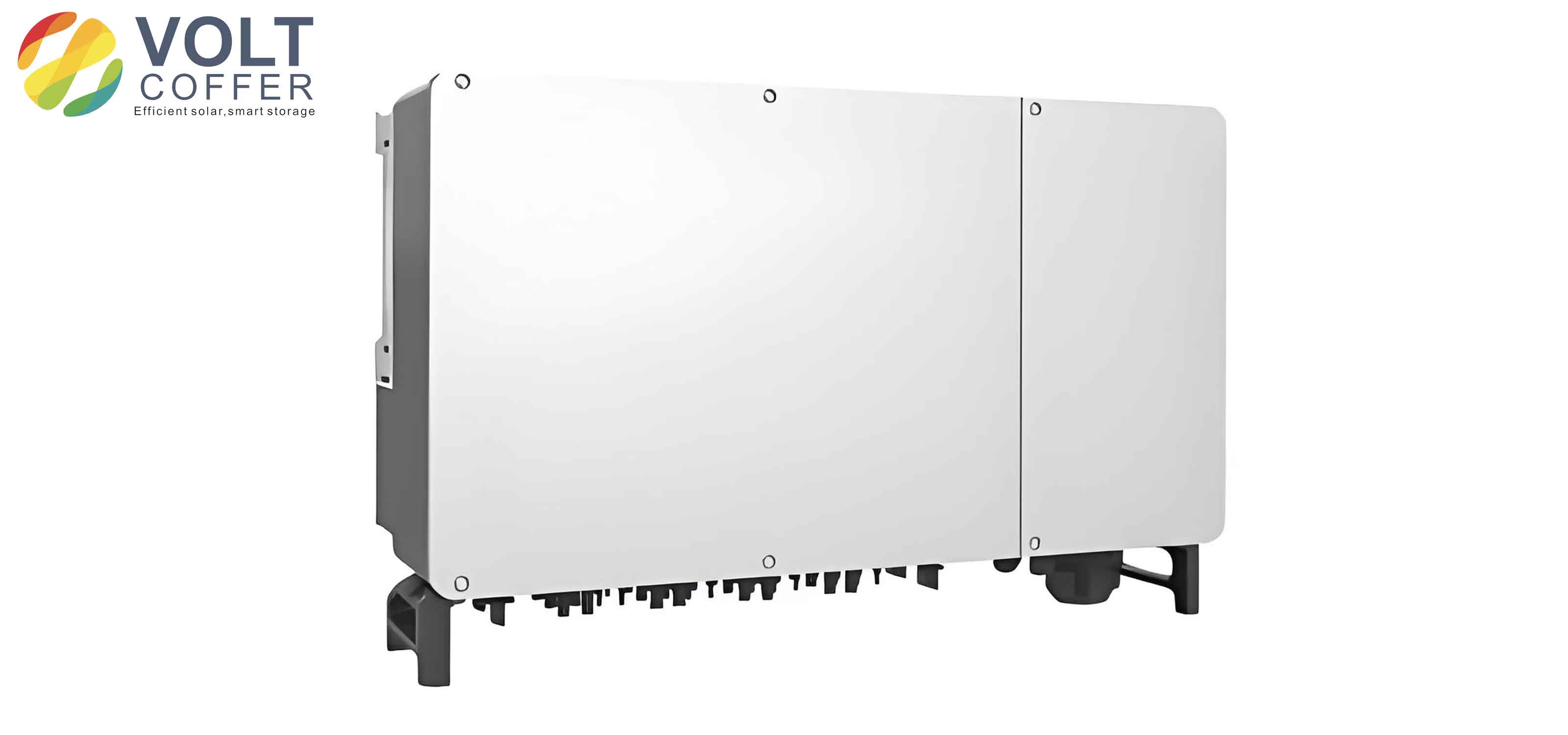
In terms of performance comparison, the carrier phase-shifting method for the three phase inverter offers advantages over other CMV suppression techniques, as summarized in the table below. While traditional SVPWM provides wide modulation range and low distortion, it results in high CMV. In contrast, the proposed method maintains a low CMV without significantly compromising other metrics, making it suitable for practical three phase inverter applications.
| Modulation Strategy | Modulation Index Range | CMV Magnitude | Total Harmonic Distortion | Sinusoidal Distortion |
|---|---|---|---|---|
| Traditional SVPWM | 0 to 1 | U_dc / 2 | 1.00% | 0.90% |
| NSPWM | 0.604 to 0.906 | U_dc / 6, U_dc / 2 | 1.18% | 1.20% |
| AZPWM | 0 to 0.906 | U_dc / 6 | 1.21% | 1.15% |
| VSVM | 0 to 0.785 | U_dc / 6 | 1.15% | 1.25% |
| Proposed Method | 0 to 1 | U_dc / 6 | 1.10% | 1.02% |
In conclusion, the double Fourier series method provides a comprehensive framework for analyzing common mode voltage in three phase inverters. By deriving exact mathematical expressions, I have shown that CMV is primarily concentrated around the switching frequency and its harmonics. The carrier phase-shifting technique effectively suppresses these components, reducing the peak CMV by a factor of six in experimental tests. This analysis is universally applicable to any three phase inverter design, emphasizing the importance of harmonic management in power electronics. Future work could explore real-time implementation of these strategies in industrial three phase inverter systems to further enhance reliability and performance.