
At present, the excessive exploitation of fossil fuels worldwide has precipitated a significant energy crisis, thereby amplifying the demand for new energy technologies within the global energy infrastructure. As a representative clean energy technology, solar power generation systems offer substantial value. The effective and reliable operation of these systems imposes specific requirements on their supporting energy storage devices. This article focuses on solar power generation systems, providing a detailed examination of the application of various battery energy storage system technologies. We will analyze the application characteristics and advantages of prevalent technologies such as Valve-Regulated Lead-Acid (VRLA) batteries, Nickel-Cadmium (Ni-Cd) batteries, Nickel-Metal Hydride (Ni-MH) batteries, and Lithium-ion batteries. Furthermore, we will summarize emerging technologies still in the R&D or early deployment phase, including Sodium-Sulfur (Na-S) batteries, redox flow batteries, and supercapacitors. Finally, using the advanced gel-type VRLA battery as a case study, we will elucidate its functional role and performance within a solar power generation framework.
1. Introduction: The Role of Energy Storage in Solar Power
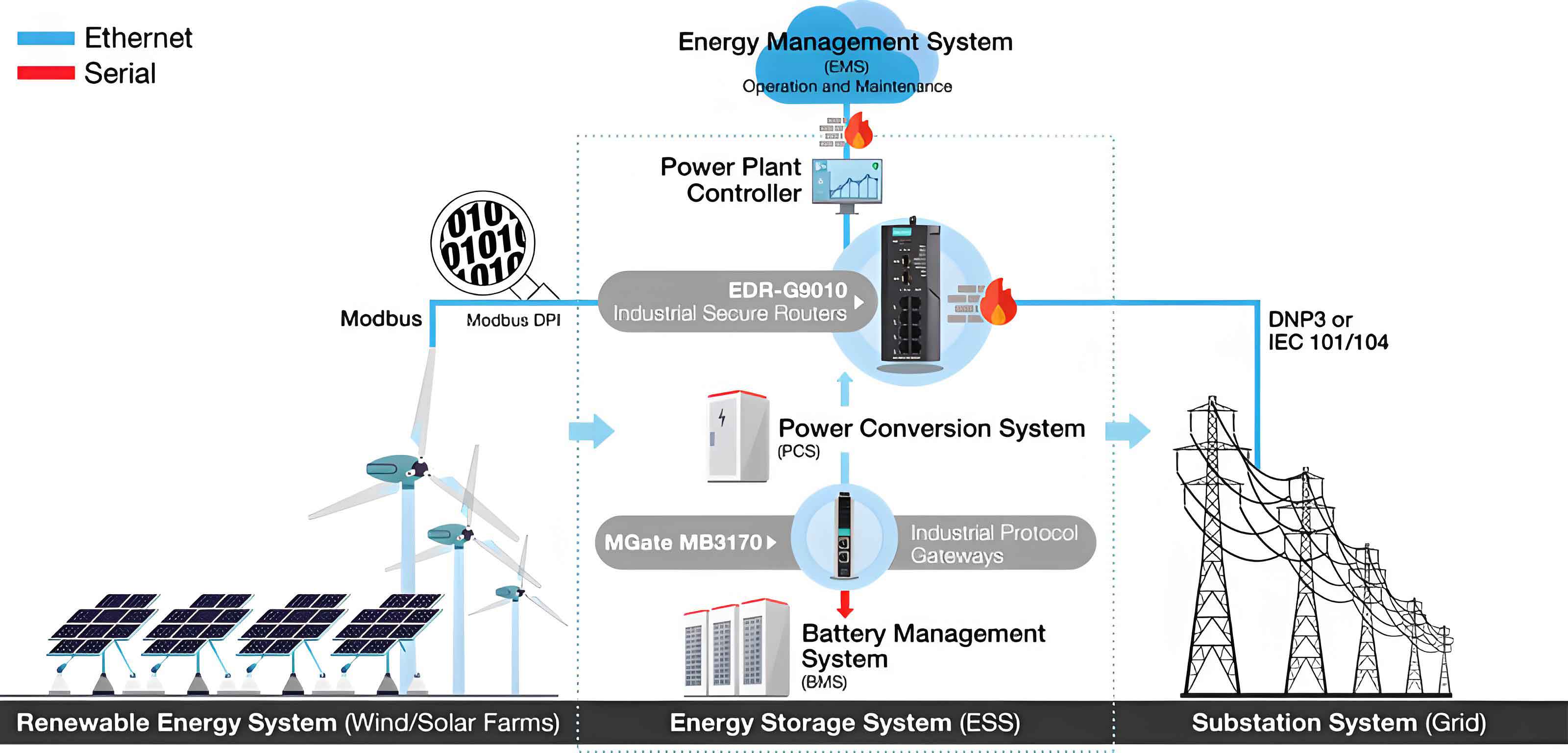
In off-grid or islanded operational states, the normal and stable functioning of a solar power generation system is fundamentally dependent on the energy buffering and supply capabilities of a battery energy storage system. As a clean energy system reliant on intermittent natural renewable resources, solar power generation is inherently susceptible to fluctuations due to diurnal cycles, weather conditions, and seasonal variations. This characteristic results in pronounced intermittency and uncontrollability in its power output. For grid-connected systems with high penetration levels, storage is crucial for grid stability, frequency regulation, and energy time-shifting.
Currently, a majority of off-grid and many backup solar installations in various regions utilize lead-acid battery banks for energy storage. However, this technology landscape is evolving rapidly. The demand for storage systems is escalating, driven by the need to support large-scale solar farms and ensure grid reliability. These systems must possess sufficient capacity for massive energy storage, exhibit high safety standards—especially since they are often deployed in remote or harsh environments—and maintain robust operational performance over extended periods. This article analyzes the spectrum of storage technologies, with a particular focus on demonstrating the applicability of advanced gel-type sealed lead-acid batteries within the specific operational context of solar power systems.
2. Current Status of Solar Power Generation Technology
The global shift towards decarbonization has placed solar power at the forefront of energy transition strategies. In many national energy mixes, the heat and power sector remains a primary contributor to carbon emissions. Consequently, ambitious carbon reduction plans, such as those outlined in various national “Five-Year Plans,” prioritize emission reductions in the power sector. Historical data indicates that a significant portion of global CO₂ emissions originates from the power generation sector, underscoring the urgent need to integrate renewable sources like solar. The successful integration and maximization of solar energy’s potential, however, are inextricably linked to advancements in and the deployment of efficient battery energy storage system solutions to manage its variability.
3. Analysis of Common Battery Energy Storage Systems for Solar Applications
Selecting an appropriate battery energy storage system requires a careful evaluation of technical parameters, economics, and lifecycle considerations. The table below summarizes the key characteristics of four traditional battery types historically or currently used in solar applications.
| Battery Type | Nickel-Cadmium (Ni-Cd) | Nickel-Metal Hydride (Ni-MH) | AGM Lead-Acid (VRLA) | Lithium-ion (Li-ion) |
|---|---|---|---|---|
| Specific Energy (Wh/kg) | 45 – 80 | 80 – 90 | 30 – 50 | 110 – 160 |
| Specific Power (W/kg) | 150 – 500 | 500 – 1000 | 150 – 350 | 1000 – 1200 |
| Internal Resistance (mΩ) | 100 – 200 | 200 – 300 | < 100 | 150 – 250 |
| Cycle Life* (to 80% Initial Capacity) | 500 – 1000 | 300 – 500 | 400 – 500 | 500 – 1000+ |
| Fast Charge Time (h) | 1 – 3 | 2 – 4 | 2 – 5 | 2 – 4 |
| Overcharge Tolerance | Medium | Low | High | Very Low |
| Self-Discharge Rate (%/month at 25°C) | ~20 | ~30 | ~5 | ~10 |
| Nominal Voltage (V) | 1.25 | 1.25 | 2.0 | 3.6 – 3.7 |
| Operating Temperature Range (°C) | -40 to 60 | -20 to 60 | -20 to 60 | -20 to 60 |
| Typical Maintenance | Periodic | Low | Low | None |
| Approximate Cost ($/kWh) | 200 – 300 | 300 – 500 | 60 – 100 | 300 – 600 |
* Cycle life is highly dependent on Depth of Discharge (DOD), temperature, and charge/discharge rates.
3.1 Lead-Acid Batteries
Lead-acid batteries have been the workhorse for stationary energy storage for decades due to their mature technology, low upfront cost, and high reliability. The modern Valve-Regulated Lead-Acid (VRLA) battery, which recombines internally generated gases, is the standard for solar applications, eliminating the need for watering. There are two main subtypes: Absorbent Glass Mat (AGM) and Gel batteries. While AGM batteries offer lower internal resistance, advanced gel batteries provide better deep-cycle performance, lower self-discharge, and superior tolerance to high temperatures and partial state-of-charge operation—a common condition in solar cycling. For large-scale storage where capacity can approach 10,000 Ah, these advanced lead-acid systems can offer a compelling balance of cost and performance.
3.2 Nickel-Cadmium (Ni-Cd) Batteries
Ni-Cd batteries are renowned for their robustness and longevity. Key advantages include excellent fast-charge capability (as low as 1 hour), a wide operating temperature range (performing at -40°C), and a very high cycle life when maintained properly. The energy density is approximately 1.5-2 times that of lead-acid. However, they suffer from a significant “memory effect,” requiring periodic full discharges to prevent capacity loss. The most critical disadvantage is environmental: cadmium is a highly toxic heavy metal, leading to strict regulations and a declining market share in civilian applications, despite their use in some specialized industrial or remote settings.
3.3 Nickel-Metal Hydride (Ni-MH) Batteries
Ni-MH batteries offer an energy density about 40% higher than Ni-Cd and are cadmium-free, making them more environmentally friendly. They exhibit a much less pronounced memory effect. However, their cycle life is generally inferior to Ni-Cd, and they generate significant heat during high-rate charging, which can degrade the metal hydride alloy over time. Their high self-discharge rate (up to 30% per month) is also a drawback for long-term energy storage in solar systems, where batteries may sit idle.
3.4 Lithium-ion Batteries
Lithium-ion technology has become the dominant choice for new battery energy storage system deployments, including solar, due to its superior characteristics. It offers the highest energy and power density among common batteries, high round-trip efficiency (~95%), a long cycle life, and negligible memory effect. A prominent chemistry for stationary storage is Lithium Iron Phosphate (LFP or LiFePO₄), prized for its safety, thermal stability, and long cycle life.
The working principle involves lithium-ion shuttling between the cathode and anode through an electrolyte. For an LFP cell:
During charge: $$ \text{LiFePO}_4 \rightarrow \text{FePO}_4 + \text{Li}^+ + e^- $$
During discharge: $$ \text{FePO}_4 + \text{Li}^+ + e^- \rightarrow \text{LiFePO}_4 $$
A critical application in grid-tied solar systems is providing ancillary services like frequency regulation. When paired with a solar farm or a thermal power plant, a Lithium-ion battery energy storage system can rapidly compensate for power mismatches. The performance can be quantified by its regulation capability compared to traditional generation. For instance, the effective regulation capability $R_{eff}$ of a storage system can be modeled based on its response speed and accuracy in tracking an Automatic Generation Control (AGC) signal $P_{AGC}(t)$ versus the generator’s actual output $P_{gen}(t)$. The storage system’s power $P_{bess}(t)$ acts to minimize the error $e(t)$:
$$ e(t) = P_{AGC}(t) – (P_{gen}(t) + P_{bess}(t)) $$
The system’s ability to reduce this error is a key metric. Empirical data from power plants integrating LFP storage show that such a battery energy storage system can have a frequency regulation effectiveness multiple times greater (e.g., 3.3x) than a traditional coal-fired unit alone, due to its sub-second response time. This translates into significant static benefits (fuel savings), dynamic benefits (grid stability), and environmental benefits (enabling more renewable integration).
However, challenges remain: Lithium-ion batteries require sophisticated Battery Management Systems (BMS) for protection against over-voltage, under-voltage, over-current, and thermal runaway. Capacity fade over calendar and cycle life is inevitable, and upfront costs, though decreasing, are higher than lead-acid.
4. Emerging and Developing Storage Systems
4.1 Sodium-Sulfur (Na-S) Battery
The Na-S battery is a high-temperature (~300°C) battery energy storage system. It uses molten sodium (Na) as the anode and molten sulfur (S) as the cathode, separated by a solid beta-alumina ceramic electrolyte. Its standout features are very high energy density (about 3x lead-acid), long cycle life, and the use of abundant materials (Na, S). The fundamental discharge reaction can be simplified as:
$$ 2\text{Na} + x\text{S} \rightarrow \text{Na}_2\text{S}_x $$
Despite these advantages, challenges include the need for elaborate thermal management to maintain the high operating temperature, safety concerns related to highly reactive molten sodium, and high manufacturing costs. It is primarily suited for large-scale, grid-connected storage applications.
4.2 Redox Flow Battery (RFB)
Redox flow batteries represent a fundamentally different architecture. Energy is stored in liquid electrolyte solutions contained in external tanks and pumped through an electrochemical cell stack where reactions occur. The most developed type is the Vanadium Redox Flow Battery (VRFB), which uses vanadium in different oxidation states in both half-cells.
Reaction at the positive electrode: $$ \text{VO}^{2+} + \text{H}_2\text{O} \rightleftharpoons \text{VO}_2^+ + 2\text{H}^+ + e^- $$
Reaction at the negative electrode: $$ \text{V}^{3+} + e^- \rightleftharpoons \text{V}^{2+} $$
Key advantages include independent scaling of power (stack size) and energy (tank volume), extremely long cycle life with no degradation from deep cycling, and high safety. They are particularly well-suited for long-duration storage (4+ hours) required by solar farms. The main drawbacks are lower energy density and higher system complexity.
4.3 Supercapacitors (Electrochemical Capacitors)
Supercapacitors store energy electrostatically at the electrode/electrolyte interface (electric double-layer) and/or via fast surface redox reactions (pseudocapacitance). Their defining characteristics are an exceptionally high power density (can reach 10,000 W/kg), an ultra-long cycle life (hundreds of thousands to millions of cycles), and rapid charge/discharge capability (seconds to minutes). However, their energy density is very low (typically 5-10 Wh/kg), making them unsuitable for bulk energy storage. In solar systems, they are ideal for addressing very short-term power quality issues, providing ride-through during cloud transients, or handling high-power pulses, often in hybrid configurations with batteries.
5. Detailed Study: Advanced Gel VRLA Batteries for Solar Storage
5.1 Comparison of AGM vs. Gel VRLA Technologies
Both AGM and Gel batteries are sealed and recombinant, but their electrolyte immobilization methods differ, leading to distinct performance profiles.
| Feature | AGM (Absorbent Glass Mat) | Gel (Gelled Electrolyte) |
|---|---|---|
| Electrolyte | Liquid H₂SO₄ absorbed in glass microfiber mats. ~10% pore space remains gas-filled for O₂ transport. | H₂SO₄ gelled with silica, forming a rigid, crackled structure. Oxygen transport occurs through cracks in the gel. |
| Design & Construction | High-compression assembly. Requires pure lead or lead-tin-calcium grids for low water loss. | Less internal compression needed. Can use low-antimony grid alloys. Compatible with tubular positive plates for enhanced cycle life. |
| Capacity | Slightly lower (~10%) than flooded equivalent due to electrolyte limitation. | Close to flooded battery capacity due to higher electrolyte volume. |
| High-Rate Performance | Excellent; very low internal resistance. | Good; slightly higher internal resistance than AGM but still capable of high currents. |
| Cycle Life (Deep) | Good. | Excellent, especially in partial state-of-charge cycling common in renewable energy. |
| Temperature & Vibration Resistance | Good. | Superior; less susceptible to thermal runaway and electrolyte stratification. |
5.2 Characteristics of Advanced Gel Batteries for Storage
Modern gel batteries designed specifically for renewable energy storage incorporate several advanced features: thick tubular or flat plates (δ ≥ 5mm), suspension of the element group to reduce active material shedding, advanced composite separators, antimony-free grid alloys, and a slightly lower acid specific gravity (d ≈ 1.240 – 1.260 g/ml) to reduce corrosion and water loss. Their performance metrics are impressive for a battery energy storage system in solar applications:
- Deep-cycle life (80% DOD): Exceeds 1600 cycles.
- Partial state-of-charge (PSOC) cycling (40-80% DOD): Can surpass 5500 cycles, which is ideal for daily solar charge/discharge cycles that rarely fully charge or discharge the battery.
- Charge acceptance: Very high, with efficiency up to 99%.
- Self-discharge: Extremely low (<1% per month at 25°C), minimizing energy loss during periods of low sun.
The capacity $C$ of such a battery energy storage system over its lifetime under solar cycling conditions can be estimated considering depth of discharge (DOD) and cycle life $N(DOD)$:
$$ E_{total} = C \cdot \int_{0}^{N(DOD)} DOD(n) \, dn $$
Where $DOD(n)$ is the depth of discharge for cycle $n$. The superior PSOC cycle life of advanced gel batteries maximizes $E_{total}$, the total energy throughput over the system’s life, offering a favorable long-term cost-benefit ratio for many off-grid and backup solar applications.
6. Conclusion
In the context of a global imperative to transition towards sustainable energy, solar power generation stands as a critical technology. Its full potential, however, can only be unlocked through effective integration with robust and cost-appropriate battery energy storage system technologies. This analysis has traversed the landscape of storage options, from the established, cost-effective advanced lead-acid batteries to the high-performance Lithium-ion systems dominating new installations, and further to the promising, large-scale potential of flow and high-temperature batteries. Each technology presents a unique set of trade-offs among energy density, power capability, cycle life, safety, and cost.
The advanced gel-type VRLA battery exemplifies a mature technology that has been specifically optimized for the demanding partial-state-of-charge, deep-cycle duty of solar applications, offering a reliable and economically viable solution for many scenarios. Meanwhile, ongoing innovation in Lithium-ion, flow batteries, and other emerging technologies continues to push the boundaries of performance, safety, and scalability for grid-scale storage. The optimal choice of a battery energy storage system for any given solar project is contingent upon a detailed analysis of technical requirements, duty cycles, environmental conditions, and financial constraints. Continued research, development, and real-world deployment of these diverse storage systems are essential to build a resilient, flexible, and clean energy future powered significantly by the sun.