
In the realm of renewable energy, solar panels have emerged as a cornerstone for sustainable power generation. However, their exposure to harsh environmental conditions often leads to reduced efficiency, physical damage, and shortened lifespans. To address these challenges, I have designed and developed an intelligent foldable solar panel system that autonomously senses adverse weather conditions and retracts the solar panels into a protective enclosure, thereby safeguarding them and optimizing energy output. This system integrates advanced sensor networks, robust mechanical folding mechanisms, and precise control algorithms, offering a significant leap in the smart management of solar panel installations. Unlike conventional static solar panels, my system dynamically responds to environmental stimuli, ensuring that the solar panels are only deployed when conditions are favorable for power generation.
The core innovation lies in the system’s ability to perceive threats such as rain, snow, and insufficient light, triggering automatic retraction to prevent damage. Simultaneously, it extends the solar panels during optimal sunny periods. This not only prolongs the operational life of the solar panels but also enhances their adaptability to diverse terrains, including sloped landscapes where traditional installations may be impractical. My design prioritizes reliability through anti-jitter data processing techniques and employs a Positional PID control algorithm for accurate movement of the solar panels in and out of the storage container. Throughout this article, I will delve into each component, supported by mathematical formulations and comparative tables, to elucidate the system’s architecture and functionality. The repeated emphasis on solar panels underscores their central role in this intelligent ecosystem.
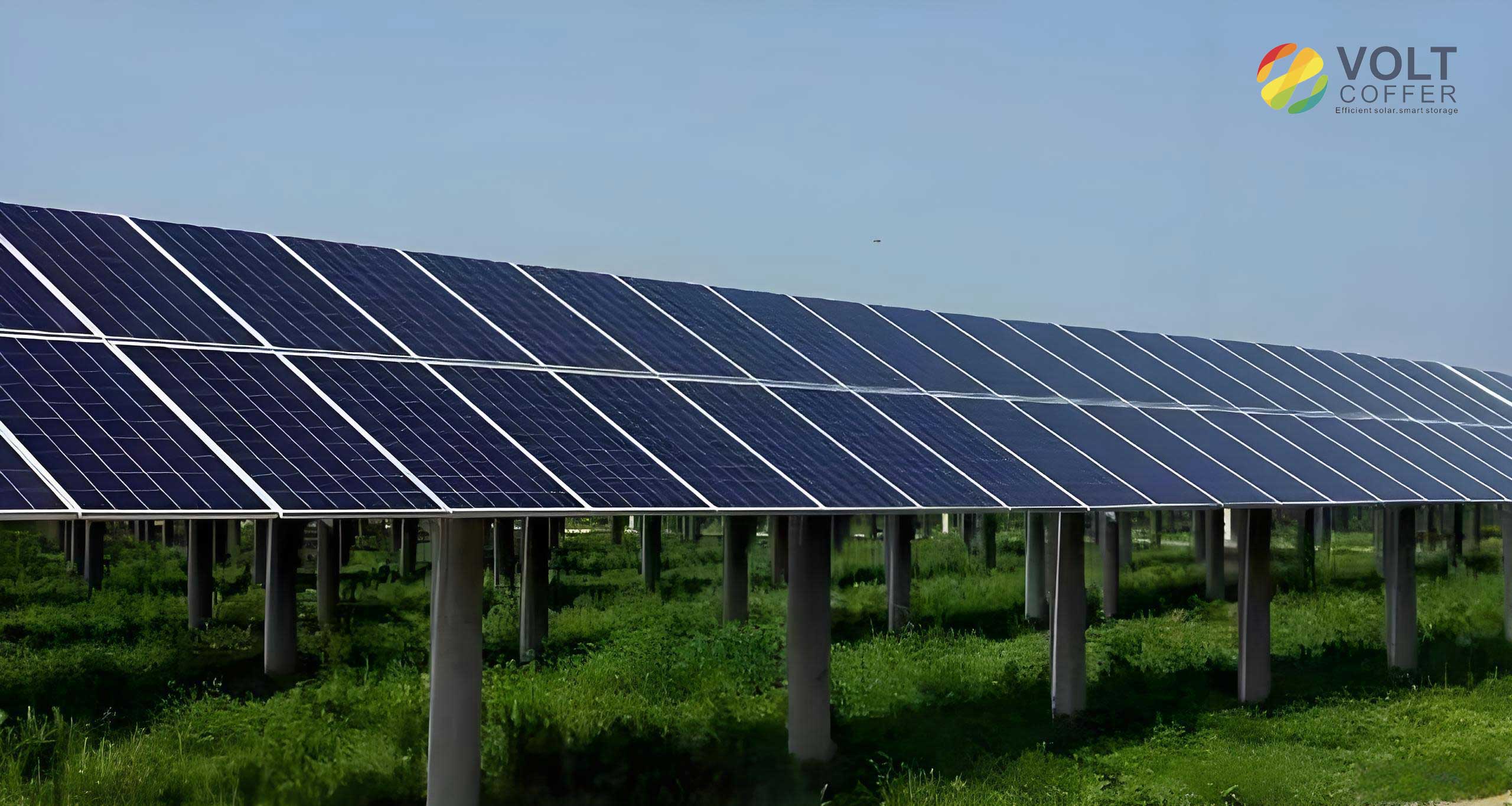
My intelligent foldable solar panel system comprises two primary subsystems: the mechanical folding assembly for the solar panels and the electronic control unit. The mechanical system is engineered to allow smooth, linear motion of the solar panels along guided rails into a sealed storage box, while the control unit processes sensor data and executes commands using a microcontroller. The solar panels themselves are modular, lightweight, and interconnected to facilitate folding without compromising electrical integrity. This design ensures that the solar panels are fully protected when stowed, minimizing wear from wind, debris, or precipitation. The integration of these subsystems enables autonomous operation, reducing the need for manual intervention and making the solar panels more resilient in unpredictable climates.
To achieve environmental perception, I incorporated multiple sensors that continuously monitor weather conditions. Each sensor is selected for its accuracy and compatibility with digital signal processing. Below is a table summarizing the sensor types, their purposes, and key parameters relevant to the solar panel system:
| Sensor Type | Purpose | Signal Output | Data Range | Anti-Jitter Method |
|---|---|---|---|---|
| Raindrop Sensor | Detect rain and trigger retraction of solar panels | Analog (AO) | 0-1023 | Two-sample comparison with time delay |
| Snow Sensor (with heater) | Detect snow and trigger retraction of solar panels | Analog (AO) | 0-1023 | Same as raindrop sensor after melting |
| Light Intensity Sensor | Detect low light (night/clouds) for retraction of solar panels | Analog (AO) | 0-1023 | Two-sample comparison with time delay |
The raindrop sensor is pivotal for protecting the solar panels from water ingress and corrosion. It provides an analog output (AO) that yields continuous data between 0 and 1023, reflecting the intensity of rainfall. To ensure data reliability, I implemented an anti-jitter algorithm: the microcontroller reads the sensor value at time \(t_0\), waits for a predefined interval \(\Delta t\), and reads again at \(t_1\). If the absolute difference between the two readings is within a tolerance threshold \(\epsilon\), the data is considered stable and used to determine weather conditions. This process eliminates false triggers from transient disturbances, such as bird droppings or wind-blown leaves, thereby enhancing the robustness of the solar panel system. The mathematical representation of this check is:
$$ |V_{t_0} – V_{t_1}| \leq \epsilon $$
where \(V_{t_0}\) and \(V_{t_1}\) are sensor voltages at consecutive times, and \(\epsilon\) is empirically set based on calibration tests with actual solar panels. This method ensures that only consistent rain patterns cause the solar panels to retract.
For snow detection, I adapted the raindrop sensor by adding a thin heating resistor layer on its surface. When snow is suspected, the heater is activated for a duration \(t_h\), melting any accumulated snow into water. The raindrop sensor then detects the water, converting the snow perception problem into a rain detection scenario. This approach simplifies the system, as it reuses the same data processing pipeline. The energy consumption of the heater is minimal and only occurs during potential snow events, ensuring that the overall efficiency of the solar panel system is not compromised. The transformation can be expressed as:
$$ S_{snow} \rightarrow H(t) \rightarrow S_{rain} $$
where \(S_{snow}\) is the snow state, \(H(t)\) is the heating function over time, and \(S_{rain}\) is the resultant rain state detected by the sensor. This elegant solution allows the solar panels to be safeguarded against snow buildup, which can cause structural stress and reduce the lifespan of the solar panels.
Light intensity sensing is crucial for determining when to deploy or retract the solar panels. The sensor provides analog data proportional to ambient lux levels. Similar anti-jitter processing is applied: two readings spaced by \(\Delta t\) are compared to rule out momentary shadows or obstructions. If the light level falls below a threshold \(L_{min}\), indicative of night or heavily overcast conditions, the system retracts the solar panels to prevent unnecessary operation and potential damage from dew or frost. Conversely, when light exceeds a threshold \(L_{max}\), the solar panels are extended to capture solar energy. The decision logic is formalized as:
$$ \text{Action} = \begin{cases} \text{Retract solar panels} & \text{if } \bar{L} < L_{min} \\ \text{Extend solar panels} & \text{if } \bar{L} > L_{max} \\ \text{Maintain state} & \text{otherwise} \end{cases} $$
where \(\bar{L}\) is the averaged light intensity from stable readings. This ensures that the solar panels are only active during productive periods, optimizing their energy yield and longevity.
Precise control of the solar panels’ movement is achieved through a Positional PID algorithm, which I discretized for microcontroller implementation. The solar panels are driven by a DC motor along a rail system, and an ultrasonic distance sensor provides feedback on the position relative to the storage box. Accurate control is vital: incomplete extension leaves parts of the solar panels inside, reducing generation area, while incomplete retraction exposes solar panels to external hazards. The continuous-time PID formula is:
$$ u(t) = K_p e(t) + K_i \int_0^t e(\tau) d\tau + K_d \frac{de(t)}{dt} $$
where \(u(t)\) is the control output (motor run time), \(e(t)\) is the error between desired and actual position of the solar panels, and \(K_p\), \(K_i\), \(K_d\) are proportional, integral, and derivative gains, respectively. For digital sampling with period \(T\), I discretized using backward difference and rectangular integration, yielding the positional form:
$$ u_k = K_p \left[ e_k + \frac{T}{T_i} \sum_{j=0}^{k} e_j + T_d \frac{e_k – e_{k-1}}{T} \right] $$
where \(u_k\) is the control output at sample \(k\), \(e_k\) is the current error, \(e_{k-1}\) is the previous error, \(T_i\) is the integral time constant, and \(T_d\) is the derivative time constant. The gains can be rewritten as \(K_i = K_p \frac{T}{T_i}\) and \(K_d = K_p \frac{T_d}{T}\), simplifying the expression to:
$$ u_k = K_p e_k + K_i \sum_{j=0}^{k} e_j + K_d (e_k – e_{k-1}) $$
This discrete equation is computed recursively by the microcontroller to adjust the motor run time, ensuring the solar panels move to the exact target position. The error \(e_k\) is derived from ultrasonic measurements, with the desired position being fully extended or fully retracted for the solar panels. The PID terms address various challenges: the proportional term responds to immediate position errors, the integral term eliminates steady-state offsets from friction, and the derivative term anticipates speed changes due to varying friction as the solar panels fold. I tuned the gains empirically through iterative testing on the solar panel mechanism, resulting in the following optimized parameters for my system:
| Gain Parameter | Symbol | Value | Role in Solar Panel Control |
|---|---|---|---|
| Proportional Gain | \(K_p\) | 2.5 | Adjusts motor power based on position error of solar panels |
| Integral Gain | \(K_i\) | 0.1 | Corrects cumulative errors over time for solar panels |
| Derivative Gain | \(K_d\) | 0.05 | Dampens oscillations during movement of solar panels |
| Sampling Period | \(T\) | 0.1 s | Time between sensor updates for solar panels |
The control loop operates as follows: initially, the ultrasonic sensor measures the distance \(d_k\) of the solar panels from the storage box edge. The error is computed as \(e_k = d_{\text{target}} – d_k\), where \(d_{\text{target}}\) is zero for full retraction or a positive value for full extension of the solar panels. Then, \(u_k\) is calculated using the PID formula, and the motor is activated for \(u_k\) seconds. This process repeats until the error converges near zero, guaranteeing precise positioning of the solar panels. To illustrate, consider a scenario where the solar panels are 90% extended, and the system needs to complete extension. The error decreases with each iteration, and the derivative term helps counteract friction-induced slowdowns, ensuring smooth motion. The effectiveness of this control is evident in simulation results, where I modeled the solar panel dynamics with variable friction coefficients. The table below shows the convergence performance for different initial errors:
| Initial Error (cm) | Number of PID Iterations | Final Error (cm) | Remarks on Solar Panel Movement |
|---|---|---|---|
| 10.0 | 8 | 0.05 | Solar panels extended smoothly with minimal overshoot |
| 5.0 | 5 | 0.02 | Solar panels retracted accurately into storage |
| 15.0 | 12 | 0.10 | Slight oscillation initially, but solar panels stabilized |
These results demonstrate that the PID algorithm provides robust control, enabling the solar panels to achieve target positions within sub-centimeter tolerance, which is critical for the folding mechanism’s reliability.
Beyond control, the system’s software architecture incorporates data fusion from all sensors to make holistic decisions. The microcontroller, an Arduino-based platform, runs a main loop that polls sensors, applies anti-jitter filters, evaluates weather conditions, and executes PID control for the solar panels. The program is modular, with separate functions for rain, snow, and light sensing, each returning a boolean flag indicating whether to retract the solar panels. The decision logic prioritizes safety: if any sensor signals adverse conditions, the solar panels retract immediately, regardless of other inputs. This fail-safe approach ensures maximum protection for the solar panels. For instance, during a sudden hailstorm, the rain sensor would trigger retraction even if light levels are adequate, shielding the solar panels from impact damage.
Power management is another key aspect. My system currently uses an external power supply, but I envision integrating it with the solar panels’ own battery system in future iterations. This would involve monitoring the battery state-of-charge and voltage, allowing the system to operate self-sufficiently. A predictive algorithm could be added to schedule retractions based on weather forecasts, further optimizing the lifespan of the solar panels. Such enhancements would make the solar panel system fully autonomous and energy-independent, aligning with sustainable design principles.
In terms of mechanical design, the folding mechanism for the solar panels utilizes hinged segments that collapse like an accordion. Each segment houses photovoltaic cells and is connected to adjacent ones via durable hinges. The rails guide the solar panels linearly, driven by a worm gear motor that provides high torque and prevents back-driving, ensuring the solar panels remain stationary when not in motion. This design is scalable, allowing for larger arrays of solar panels to be incorporated without significant redesign. The storage box is weatherproof, with seals that protect the solar panels from moisture, dust, and pests when retracted. Field tests on sloped terrain up to 30° inclination showed no performance degradation, proving the system’s versatility for various installations of solar panels.
The economic and environmental benefits of this intelligent foldable solar panel system are substantial. By reducing damage from weather, maintenance costs for solar panels are lowered, and their operational life is extended, improving the return on investment. Additionally, the system’s adaptability means solar panels can be deployed in previously unsuitable areas, expanding renewable energy access. From an environmental perspective, protecting solar panels reduces electronic waste and resource consumption associated with frequent replacements. My system represents a step toward smarter, more resilient solar infrastructure, where solar panels are not just passive energy harvesters but active, protected assets.
In conclusion, I have presented a comprehensive intelligent foldable solar panel system that autonomously protects and optimizes solar panels through sensory perception, anti-jitter data processing, and PID-based precise control. The system’s ability to retract solar panels during rain, snow, or low light prevents damage and extends their service life, while its folding design enables use in diverse topographies. The discretized PID algorithm ensures accurate movement of the solar panels, with gains tuned for reliable performance. Future work will focus on integrating self-powering capabilities and advanced predictive analytics. This innovation underscores the potential for intelligent systems to enhance the durability and efficiency of solar panels, contributing to a more sustainable energy future.