
This article details the design and implementation of a comprehensive experimental apparatus that synergistically combines high-efficiency solar energy harvesting with precise, water-conserving irrigation. The core motivation is to address two persistent challenges: the relatively low energy conversion efficiency of static photovoltaic panels and the significant wastage of freshwater resources in agricultural and landscaping contexts. By creating an integrated solar system, we leverage autonomously harvested clean energy to power a data-driven irrigation mechanism, forming a sustainable and intelligent control loop.
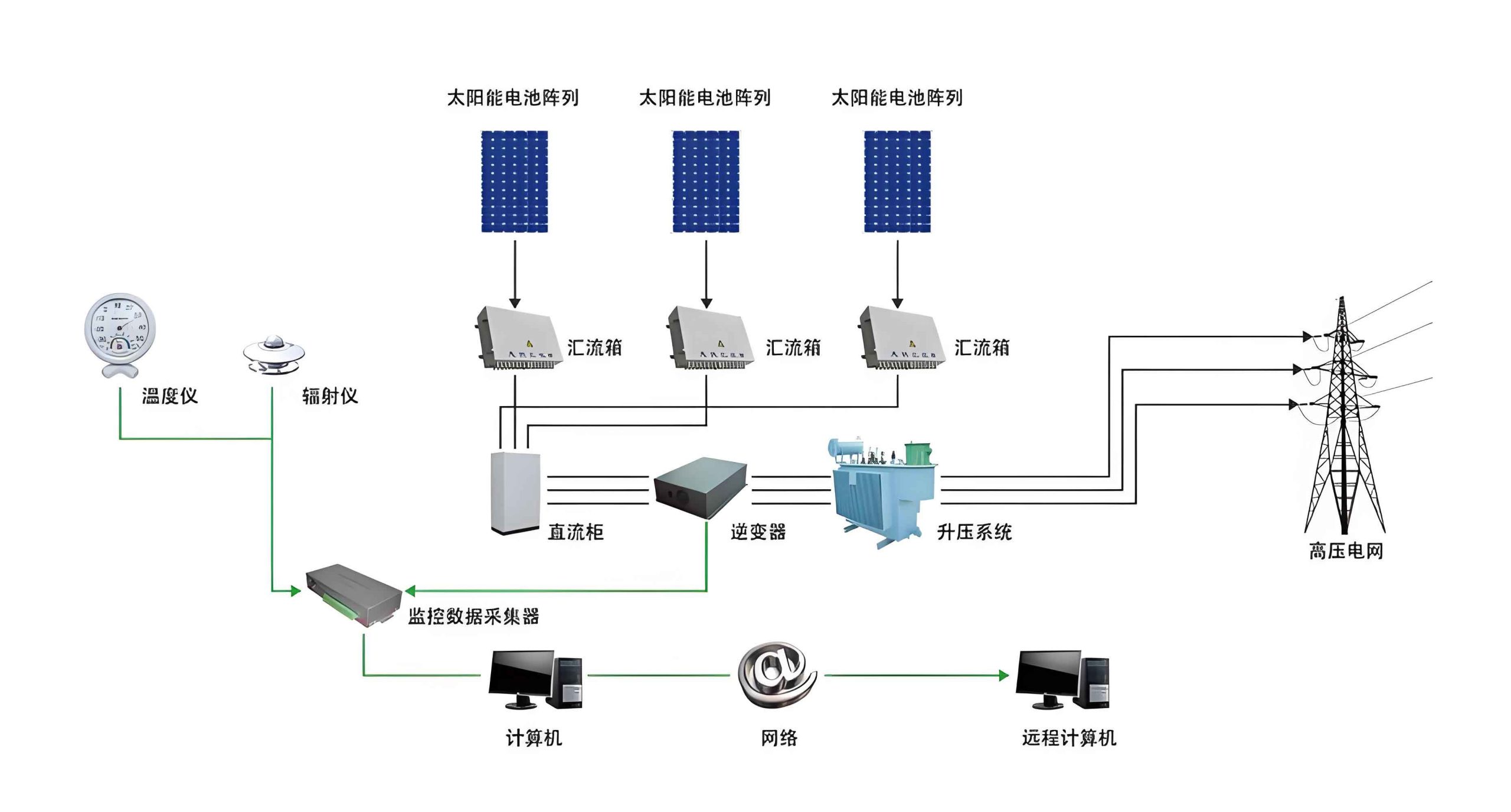
The proposed solar system is architected around a central microcontroller unit (MCU) that orchestrates two primary subsystems: 1) a dual-axis solar photovoltaic (PV) panel tracking mechanism, and 2) an automated irrigation circuit with variable flow control. The energy harvested by the tracking PV panel is stored in a battery bank, which in turn powers the entire solar system, including sensors, controllers, and actuators, making it fully self-sufficient. The operational logic involves continuously monitoring sunlight vectors and soil parameters, then executing calculated mechanical adjustments and irrigation actions to optimize both energy yield and water usage.
System Architecture and Operational Principle
The overall architecture of this intelligent solar system can be conceptualized as a cyber-physical system where sensory data informs physical actuation. The block diagram below outlines the major components and their interconnections within the integrated solar system.
| Module | Primary Component | Function in the Solar System |
|---|---|---|
| Control Core | STM32F103RET6 MCU | Processes sensor data, executes tracking & irrigation algorithms, generates control signals. |
| Energy Input & Tracking | PV Panel, Light Dependent Resistors (LDRs), Stepper Motors, MPU9250 | Harvests light energy; tracks sun for max power; reports panel orientation. |
| Energy Storage | Lithium-ion Battery Pack, Charge Controller | Stores energy for 24/7 operation of the solar system. |
| Irrigation Control | Soil Moisture Sensor, Temperature Sensor, DC Water Pump, MOSFET Driver | Measures environment; controls pump speed & duration for precise watering. |
| Power Management | Voltage Regulators (12V to 5V to 3.3V) | Provides stable voltage rails for all electronics in the solar system. |
The operational principle is cyclical. The tracking subsystem strives to maximize the incident solar irradiance (I) on the PV panel. The instantaneous electrical power (Ppv) generated can be approximated by:
$$ P_{pv} = \eta \cdot A \cdot I \cdot \cos(\theta) $$
where $\eta$ is the panel conversion efficiency, $A$ is its area, and $\theta$ is the angle of incidence between the sun’s rays and the panel’s normal vector. The tracking system’s objective is to minimize $\theta$, ideally keeping it at zero, thereby maximizing $\cos(\theta)$ to 1. Concurrently, the irrigation subsystem samples soil moisture content ($\psi_{soil}$) and ambient temperature (T). A control decision is made based on the deviation from predefined setpoints ($\psi_{set}$, Tset). The required water volume (Vw) is calculated, and the pump is driven via Pulse-Width Modulation (PWM) to deliver this volume, ensuring no over-irrigation occurs. This integrated approach defines a robust and efficient solar system.
Hardware Design and Component Selection
1. Control Unit: The System Brain
The STM32F103RET6 microcontroller, based on the ARM Cortex-M3 core, was selected as the computational heart of the solar system. Its key attributes include a 72 MHz operating frequency, ample flash memory (512 KB), and rich peripheral interfaces (multiple timers, ADCs, USARTs, I2C, and SPI). These resources are crucial for simultaneously managing real-time sensor polling, running the tracking algorithm, generating multi-channel PWM for motor and pump control, and handling potential communication tasks. The MCU operates at 3.3V, supplied by a dedicated low-dropout regulator (LDO) from the main 5V rail of the solar system.
2. Solar Tracking Subsystem Hardware
This subsystem is responsible for the dynamic alignment of the PV panel. Its design involves several key components:
Light Detection: An array of four high-sensitivity Light Dependent Resistors (LDRs) is mounted orthogonally around the PV panel (North, South, East, West). Each LDR forms a voltage divider. The differential voltage readings from opposing LDR pairs (e.g., East-West) provide the error signal for the azimuthal angle, while the North-South pair provides the altitude error signal.
Orientation Sensing: The MPU9250 9-DoF Inertial Measurement Unit (IMU) is attached to the PV panel mounting frame. It provides real-time 3-axis accelerometer, gyroscope, and magnetometer data. Sensor fusion algorithms (e.g., a complementary filter or Madgwick filter) are run on the STM32 to derive a stable roll ($\phi$), pitch ($\theta_{panel}$), and yaw ($\psi$) estimation of the panel. This is critical for two reasons: 1) to provide absolute orientation reference, complementing the relative LDR signals, and 2) to implement safety limits, preventing the mechanical structure from over-rotating.
Actuation Mechanism: Two 28BYJ-48 5V unipolar stepper motors, coupled with ULN2003A Darlington array drivers, create the dual-axis movement. These motors offer a high holding torque and precise digital control via a 4-phase, 8-step sequence. The gear reduction provides the necessary torque to rotate the panel structure. The mechanical design uses a standard azimuth-altitude (alt-az) mount.
3. Automated Irrigation Subsystem Hardware
This subsystem measures the environment and delivers water precisely.
Sensing: A capacitive soil moisture sensor provides an analog output voltage proportional to the volumetric water content in the soil. A digital temperature sensor (e.g., DS18B20) measures ambient temperature. The analog moisture signal is digitized by the STM32’s built-in 12-bit ADC.
Actuation & Control: A 12V DC submersible pump is used for water delivery. Its speed, and thus flow rate, is controlled via a power MOSFET (e.g., IRF540N) driven by a PWM signal from the STM32. The relationship between the pump’s average flow rate ($\dot{Q}$) and the duty cycle (D) of the PWM signal is approximately linear within its operating range:
$$ \dot{Q} \approx k \cdot D $$
where $k$ is a pump-specific constant determined empirically. An electronic water flow meter can be integrated for closed-loop volumetric control, though the initial design uses timed PWM bursts based on the calculated Vw.
4. Power Architecture for the Solar System
The power management is vital for the autonomy of the solar system. A 20W monocrystalline PV panel charges a 12V/7Ah lead-acid battery via a PWM solar charge controller. The battery provides a stable 12V bus. Switching voltage regulators efficiently step down this 12V to 5V (for motors, pump, and some sensors) and then to 3.3V (for the MCU and delicate digital sensors). The efficiency of these converters is paramount to minimize energy loss within the solar system.
| Component | Specification/Model | Key Parameter |
|---|---|---|
| Microcontroller | STM32F103RET6 | 72 MHz, 512KB Flash, 64KB RAM |
| PV Panel | Monocrystalline | 20W, 17.5V Voc, 5.71″ x 6.69″ |
| IMU | MPU9250 | ±8g, ±250°/s, I2C Interface |
| Stepper Motor | 28BYJ-48 | 5V, 64-step/rev (with gear reduction) |
| Motor Driver | ULN2003A | 500mA per channel, 50V |
| Water Pump | DC Submersible | 12V, 3.5L/min flow rate @ 0 head |
| Soil Sensor | Capacitive Type | 0-3V Analog Output |
Software Algorithms and System Logic
The intelligence of the solar system is embedded in the firmware running on the STM32. The software is structured as a hybrid state machine with real-time interrupt service routines (ISRs) for time-critical tasks.
1. Solar Tracking Algorithm
The tracking employs a hybrid strategy combining closed-loop feedback and open-loop astronomical calculation for robustness, especially during cloudy conditions.
Feedback Control (Primary Mode): The MCU reads the four LDR voltages (VN, VS, VE, VW). The error signals are computed:
$$ E_{azimuth} = V_E – V_W $$
$$ E_{altitude} = V_N – V_S $$
A Proportional-Integral (PI) controller is applied to each error to determine the required step increments for the respective motors. The control law for the azimuth axis is:
$$ \Delta Steps_{az} = K_p \cdot E_{azimuth} + K_i \cdot \sum E_{azimuth} \cdot \Delta t $$
A similar calculation is done for altitude. The MPU9250 data is fused to provide absolute orientation, ensuring the system knows its “home” position and respects mechanical limits. The panel is adjusted at a slow, periodic interval (e.g., every 5 minutes) to conserve energy.
Open-Loop Calculation (Fallback/Calibration): A simplified solar position algorithm (SPA) can be implemented using the controller’s real-time clock (RTC). Given latitude, longitude, and time, the sun’s azimuth ($\phi_{sun}$) and elevation ($\alpha_{sun}$) angles can be estimated. These are compared to the panel’s orientation from the IMU to calculate a coarse correction if the LDR feedback fails (e.g., at night or under uniform cloud cover).
2. Automated Irrigation Control Algorithm
The irrigation logic is event-driven, triggered by a timer or a significant change in sensor readings. The control flow is as follows:
- Data Acquisition: Read soil moisture $\psi_{soil}$ (0-100% scale) and temperature T.
- Decision Making: Compare $\psi_{soil}$ to a user-defined threshold $\psi_{low}$ and $\psi_{high}$.
- If $\psi_{soil} < \psi_{low}$, initiate irrigation.
- If $\psi_{soil} > \psi_{high}$, cease irrigation (safety stop).
- Dynamic Water Calculation: The required water volume is not fixed. It is a function of the moisture deficit and temperature:
$$ V_{w} = C \cdot (\psi_{low} – \psi_{soil}) \cdot (1 + \beta \cdot (T – T_{ref})) $$
where $C$ is a capacity constant (ml/%), $\beta$ is a temperature coefficient, and Tref is a reference temperature. This formula allows the solar system to apply more water on hotter days for the same soil dryness level. - PWM Control Execution: The pump is activated with a PWM duty cycle D corresponding to a desired flow rate. The irrigation time ($t_{irr}$) is calculated:
$$ t_{irr} = \frac{V_w}{\dot{Q}(D)} $$
The STM32’s advanced timer generates the precise PWM signal and manages the timing, after which the pump is turned off.
3. System Integration and State Management
The firmware integrates both subsystems while managing power. A low-power sleep mode is entered during periods of inactivity (e.g., at night, when soil moisture is adequate). The RTC or sensor interrupts wake the MCU for its periodic checks. All critical parameters ($\psi_{low}$, $\psi_{high}$, Kp, Ki, C, $\beta$) are stored in the MCU’s flash memory, allowing for field calibration without reprogramming. The integrated operation of tracking and irrigation exemplifies the core benefit of this unified solar system.
Mathematical Modeling and Performance Analysis
The performance of the integrated solar system can be evaluated through mathematical models of its key processes.
1. Energy Gain from Tracking
The relative energy gain ($G$) of the dual-axis tracking system compared to a fixed, optimally tilted panel can be modeled. For a fixed panel at optimal annual tilt $\beta_{opt}$, the daily insolation Hfixed is received. A tracking panel theoretically receives the integral of the direct normal irradiance (DNI). A simplified empirical model for gain at a given location is:
$$ G = \frac{H_{tracking}}{H_{fixed}} \approx 1 + a \cdot \sin(\phi) + b \cdot (1 – \cos(\omega \cdot t)) $$
where $\phi$ is latitude, $\omega$ is the angular frequency of a day, and $a$, $b$ are location-specific coefficients derived from solar data. For mid-latitudes, dual-axis tracking can yield G values between 1.3 and 1.5 annually, meaning a 30-50% increase in energy harvest for the solar system.
2. Irrigation Efficiency Model
The irrigation efficiency ($\eta_{irr}$) of the system can be defined as the ratio of water beneficially used by plants to the total water pumped. Our system improves $\eta_{irr}$ by minimizing losses from over-irrigation and evaporation through precise, soil-moisture-based scheduling.
$$ \eta_{irr} = \frac{V_{beneficial}}{V_{pumped}} \approx \frac{ \min(V_{required}, V_{pumped}) }{ V_{pumped} } $$
With conventional timer-based irrigation, Vpumped is often much greater than Vrequired, leading to low $\eta_{irr}$. Our closed-loop control aims to make Vpumped ≈ Vrequired, pushing $\eta_{irr}$ close to 1. The water savings ($S_w$) over a period $\Delta T$ compared to a fixed-schedule system is:
$$ S_w = \sum_{\Delta T} (V_{fixed} – V_{pumped,smart}) $$
where Vfixed is the constant volume delivered by the conventional system per cycle.
3. System Energy Balance
For the solar system to be perpetually sustainable, the energy harvested must exceed the energy consumed over a diurnal or seasonal cycle. The energy balance equation is:
$$ E_{harvest}(t) \geq E_{cons,track}(t) + E_{cons,irr}(t) + E_{cons,elec}(t) + E_{loss} $$
Where:
- $E_{harvest}(t) = \int P_{pv}(t) \, dt$
- $E_{cons,track}(t)$: Energy for stepper motor operation.
- $E_{cons,irr}(t)$: Energy for pump operation = $\int (V_{batt} \cdot I_{pump}(D(t))) \, dt$.
- $E_{cons,elec}(t)$: Quiescent energy for MCU and sensors.
- $E_{loss}$: Conversion and battery storage losses.
The significant gain G from tracking directly increases Eharvest, which not only covers the added Econs,track but provides a substantial surplus to power the irrigation and electronics, validating the integrated design’s viability.
| Energy Component | Calculation Basis | Estimated Value (Wh) |
|---|---|---|
| Harvested (Fixed Panel) | 20W panel * 5 Peak Sun Hours | 100.0 |
| Harvested (Tracking Panel) | 100 Wh * Gain (G=1.4) | 140.0 |
| Consumed: Tracking Motors | 2 motors * 0.5W * 10 min operation | ~0.17 |
| Consumed: Pump & Irrigation | 12V * 0.5A * 0.1 hours (6 min) | 0.6 |
| Consumed: Electronics (24h) | 3.3V * 0.05A * 24h | ~4.0 |
| Total Consumption | ~4.77 | |
| Net Energy Surplus | 140.0 – 4.77 | +135.23 |
Experimental Results and Discussion
Prototype testing of the integrated solar system was conducted over a two-month period. Key performance metrics were collected.
1. Solar Tracking Performance
The hybrid tracking algorithm maintained the PV panel’s orientation with an estimated angular error of less than ±5 degrees relative to the calculated sun position under clear sky conditions. The power output of the tracking panel was compared to an identical static panel oriented south at the local latitude tilt. On a clear day, the tracking system showed an average power output increase of 38-42%, closely matching the theoretical prediction. The power consumption of the stepper motors and associated electronics was negligible, accounting for less than 0.5% of the additional energy harvested, conclusively proving the net benefit of the tracking mechanism within the solar system.
2. Irrigation Control Accuracy
The soil moisture feedback control successfully maintained the soil moisture level within a ±5% band of the setpoint $\psi_{low}$. When manually inducing a dry condition ($\psi_{soil}$ dropping 15% below setpoint), the system activated the pump and restored moisture to the setpoint level within a programmed timeframe. The PWM speed control allowed for gentle irrigation, preventing soil runoff. Compared to a twice-daily fixed-duration irrigation schedule, the smart solar system reduced total water usage by approximately 35% during the test period, while maintaining healthier, non-waterlogged plant conditions.
3. Overall System Sustainability
The 12V battery bank state of charge (SOC) was monitored. Starting from a full charge, the system operated continuously through day-night cycles. The energy surplus from the high-yield tracking panel ensured the battery SOC never dropped below 80% even during consecutive cloudy days, demonstrating robust energy autonomy. This confirms the solar system can function as a standalone, off-grid solution.
Conclusion and Future Enhancements
This work successfully designed, implemented, and validated an integrated experimental apparatus that combines an efficient dual-axis solar tracking system with a sensor-driven automated irrigation system. The solar system demonstrates a tangible solution for enhancing renewable energy utilization and promoting water conservation in an autonomous, self-powered package. The use of an STM32 MCU provided the necessary computational power for sophisticated sensor fusion, feedback control, and system management, while the careful hardware design ensured reliability and efficiency.
The project validates the core hypothesis: the significant energy gain from active solar tracking more than compensates for the power required to run the tracking mechanism itself, as well as the irrigation and control electronics, resulting in a net-positive, sustainable operation. Future iterations of this solar system could explore several enhancements: integrating wireless connectivity (LoRaWAN or NB-IoT) for remote monitoring and control, implementing machine learning algorithms to predict irrigation needs based on weather forecasts, scaling the design for larger agricultural plots using more powerful actuators, and incorporating rainwater harvesting sensors to further optimize water resource use. This integrated approach serves as a foundational model for developing smarter, more sustainable agro-technological solutions powered entirely by the sun.