
As the global demand for renewable energy grows, solar power has emerged as a critical component of sustainable infrastructure. Photovoltaic panels, which convert sunlight directly into electricity, are often deployed in outdoor environments where they are susceptible to dust accumulation. This dust layer significantly reduces the efficiency of solar panels by blocking light absorption and increasing the risk of hotspots and hardware failures. Traditional methods for monitoring dust on photovoltaic panels rely on manual inspections, which are inefficient, costly, and prone to errors. In this paper, I propose a novel deep learning-based approach for automatically identifying the dust accumulation state on solar panels using an enhanced Inception network structure. Our method addresses the limitations of existing techniques by improving accuracy, reducing computational complexity, and enhancing generalization capabilities.
The accumulation of dust on photovoltaic panels is a pervasive issue that impacts energy output and system longevity. Research has shown that even thin layers of dust can lead to substantial power losses, and in severe cases, cause permanent damage to solar panels. Existing approaches, such as those based on residual networks or image segmentation algorithms, often struggle with low accuracy or high computational demands. For instance, some methods achieve accuracies around 81-90%, but they require extensive parameters and longer inference times, making them unsuitable for real-time applications in photovoltaic power plants. Our work builds upon the Inception architecture, incorporating modifications like an optimized Stem module and a Swish-SE attention mechanism to overcome these challenges. By focusing on the unique characteristics of dust patterns on solar panels, our model achieves higher recognition rates while maintaining efficiency.
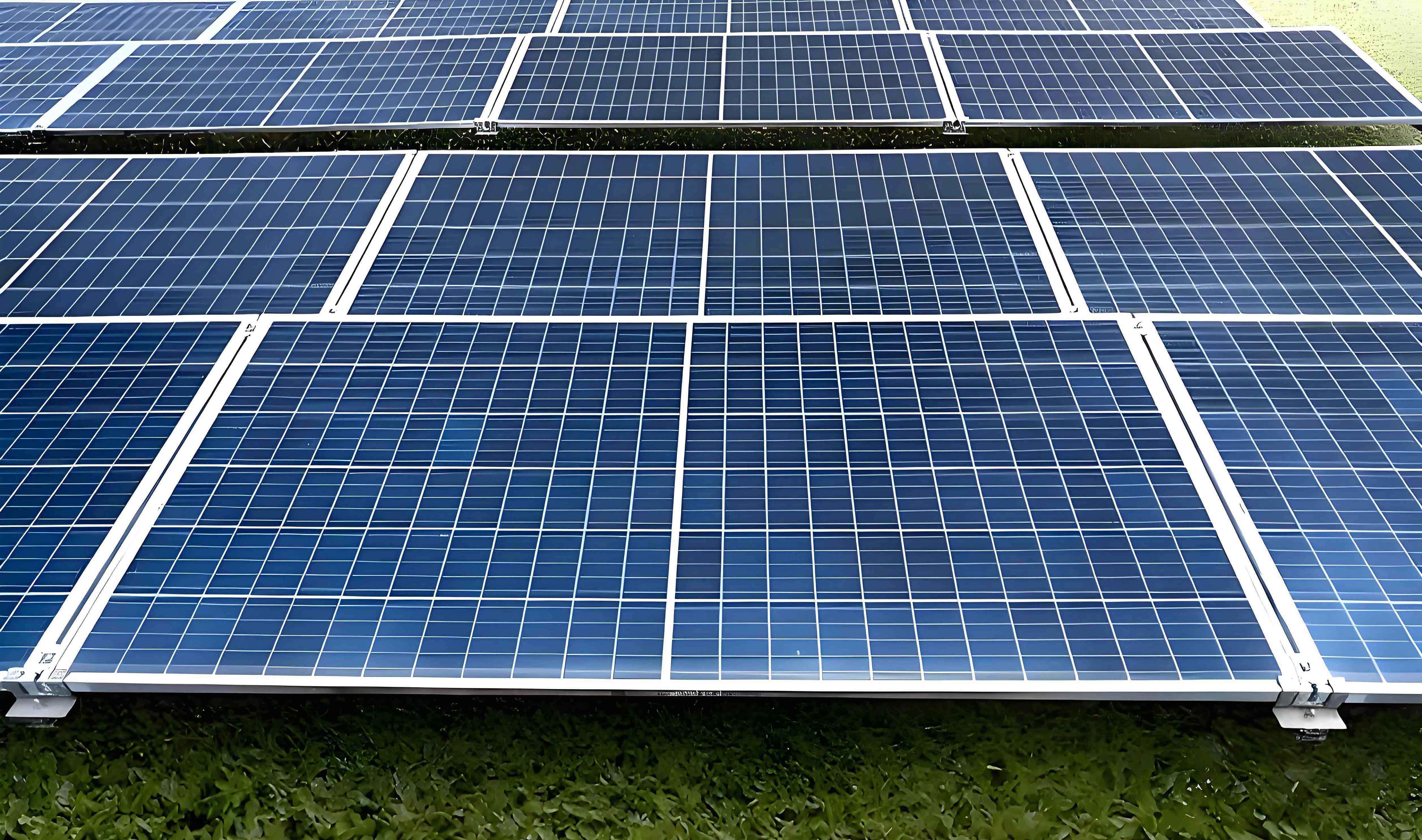
The core of our method lies in the Inception module, which allows for multi-scale feature extraction through parallel convolutional layers. This design enables the network to capture both local and global features of dust accumulation on photovoltaic panels, which is crucial for distinguishing between subtle differences in dust levels. The standard Inception module combines convolutions of varying sizes (e.g., 1×1, 3×3, and 5×5) along with pooling operations, reducing dimensionality and computational cost. In our implementation, we enhance this by integrating a customized Stem module at the network’s input stage. The Stem module processes the input images—resized to 299×299 pixels—through a series of convolutional layers with enlarged kernel sizes. Specifically, we replace typical 3×3 convolutions with 5×5 kernels in the initial phases, which expands the effective receptive field early in the network. This modification helps in capturing broader contextual information from the photovoltaic panel images, leading to better feature representation without a significant increase in parameters.
Mathematically, the Stem module operates in four stages. Let $X$ be the input image tensor of dimensions $299 \times 299 \times 3$. The first stage applies a convolution with a 5×5 kernel and 32 filters, followed by another 5×5 convolution with 32 filters, and then a 5×5 convolution with 64 filters, using appropriate padding and strides to maintain spatial dimensions. This can be represented as:
$$Y_1 = \text{Conv}_{5 \times 5, 32}(X)$$
$$Y_2 = \text{Conv}_{5 \times 5, 32}(Y_1)$$
$$Y_3 = \text{Conv}_{5 \times 5, 64}(Y_2)$$
Subsequent stages involve max pooling and additional convolutions to further refine the features. By increasing the kernel size, we enhance the model’s ability to detect dust patterns across larger areas of the solar panels, which is vital for accurate state classification.
In addition to the Stem module, we incorporate a Swish-SE (Swish Squeeze-and-Excitation) attention mechanism to improve feature selectivity. The Swish-SE module dynamically recalibrates channel-wise feature responses by emphasizing informative features and suppressing less useful ones. For a feature map $U$ with dimensions $H \times W \times C$, the Squeeze operation applies global average pooling to produce a channel descriptor $z \in \mathbb{R}^C$, where each element $z_c$ is computed as:
$$z_c = \frac{1}{H \times W} \sum_{i=1}^{H} \sum_{j=1}^{W} U_c(i, j)$$
The Excitation operation then uses two fully connected layers and the Swish activation function to generate attention weights. The Swish function, defined as $\text{Swish}(x) = x \cdot \sigma(x)$, where $\sigma$ is the sigmoid function, introduces non-linearity that helps in better gradient flow compared to traditional ReLU. The attention weights $s$ are obtained as:
$$s = \sigma(W_2 \cdot \text{Swish}(W_1 \cdot z))$$
where $W_1$ and $W_2$ are weights of the fully connected layers. Finally, the feature map is scaled by these weights: $\tilde{U}_c = s_c \cdot U_c$. This process allows the model to focus on relevant dust-related features in photovoltaic panels, enhancing discrimination between different accumulation states.
The overall network architecture consists of the Stem module, followed by multiple Inception variants (Inception-A, Inception-B, and Inception-C), Swish-SE modules, and fully connected layers with a Softmax output for classification. The Inception-A, Inception-B, and Inception-C modules are derived from the standard Inception structure but include decomposed convolutions and additional branches to increase non-linearity and receptive field. For example, Inception-A uses parallel paths with 1×1 and 3×3 convolutions, while Inception-B incorporates 1×7 and 7×1 convolutions to capture horizontal and vertical features efficiently. This design is particularly beneficial for detecting dust patterns on solar panels, which may exhibit directional dependencies due to environmental factors.
To train the model, we compiled a dataset of 3,015 images of photovoltaic panels, categorized into three dust accumulation states: no dust, light dust, and heavy dust. The images were collected from various photovoltaic power plants and augmented through techniques like random scaling, brightness adjustment, and rotation to enhance diversity. We split the dataset into training (80%), validation (10%), and test (10%) sets. During training, we used the Adam optimizer due to its adaptive learning rate properties, which helps in converging faster and avoiding local minima. The update rules for Adam are as follows:
$$m_t = \beta_1 m_{t-1} + (1 – \beta_1) g_t$$
$$v_t = \beta_2 v_{t-1} + (1 – \beta_2) g_t^2$$
$$\hat{m}_t = \frac{m_t}{1 – \beta_1^t}$$
$$\hat{v}_t = \frac{v_t}{1 – \beta_2^t}$$
$$\theta_{t+1} = \theta_t – \eta \frac{\hat{m}_t}{\sqrt{\hat{v}_t} + \epsilon}$$
where $g_t$ is the gradient at time step $t$, $\beta_1 = 0.9$, $\beta_2 = 0.999$, $\eta$ is the learning rate, and $\epsilon = 10^{-8}$. We combined Warmup and polynomial learning rate scheduling to optimize training. For the first 20 epochs, the learning rate $\eta_w$ increased linearly from 0.0005 to 0.001:
$$\eta_w = \eta_{\text{start}} + \left( \frac{\eta_0 – \eta_{\text{start}}}{i_w} \right) \cdot i_{\text{epoch}}$$
where $\eta_{\text{start}} = 0.0005$, $\eta_0 = 0.001$, and $i_w = 20$. For the remaining epochs, we used a polynomial decay:
$$\eta_p = \eta_0 \left(1 – \frac{i_{\text{epoch}} – i_w}{i_{\text{num}} – i_w}\right)^p$$
with $i_{\text{num}} = 60$ and $p = 0.9$. This strategy helps in stabilizing training and improving generalization for photovoltaic dust recognition.
The loss function was categorical cross-entropy, suitable for multi-class classification. For a batch of $n$ samples and $m$ classes, the loss $L$ is computed as:
$$L = -\frac{1}{n} \sum_{j=0}^{n-1} \sum_{r=0}^{m-1} y_{j,r} \log(P_{j,r})$$
where $y_{j,r}$ is the ground truth label and $P_{j,r}$ is the predicted probability for class $r$. To prevent overfitting, we added dropout layers and batch normalization after each convolutional layer.
Experimental results demonstrate the effectiveness of our method. We evaluated the model using metrics such as accuracy, precision, recall, and F1-score. The following table summarizes the performance on the test set compared to other models like Inception-V3 and MobileNet-V2:
| Model | Accuracy (%) | Precision (%) | Recall (%) | F1-Score (%) |
|---|---|---|---|---|
| MobileNet-V2 | 91.14 | 91.14 | 100 | 95.36 |
| Inception-V3 | 95.41 | 95.08 | 100 | 97.48 |
| Our Model | 97.05 | 97.38 | 100 | 98.67 |
Our model achieved an accuracy of 97.05%, outperforming Inception-V3 by 1.64% and MobileNet-V2 by 5.91%. This improvement is attributed to the enhanced Stem module and Swish-SE attention, which better capture dust features on solar panels. Additionally, we analyzed computational efficiency, as shown in the table below:
| Model | Parameters (M) | Training Time (s/epoch) | Inference Time (ms/image) |
|---|---|---|---|
| MobileNet-V2 | 2.23 | 10.89 | 5.66 |
| Inception-V3 | 20.78 | 16.47 | 11.43 |
| Our Model | 3.59 | 15.68 | 9.03 |
Our model has only 3.59 million parameters, significantly fewer than Inception-V3, and offers a faster inference time, making it suitable for real-time applications in photovoltaic monitoring systems. To validate the contributions of individual components, we conducted ablation studies, as detailed in the next table:
| Model Variant | Accuracy (%) | Precision (%) | Recall (%) | F1-Score (%) |
|---|---|---|---|---|
| Base Model | 89.83 | 89.83 | 100 | 94.64 |
| + Improved Stem | 92.79 | 92.46 | 100 | 96.08 |
| + Swish-SE | 95.41 | 95.41 | 100 | 97.65 |
| Full Model | 97.05 | 97.38 | 100 | 98.67 |
The results show that each modification—improved Stem and Swish-SE—progressively enhances performance, with the full model achieving the best results. This underscores the importance of our architectural choices in addressing the challenges of dust accumulation recognition in photovoltaic systems.
In conclusion, the proposed Inception-based framework with an optimized Stem module and Swish-SE attention mechanism provides an efficient and accurate solution for monitoring dust on solar panels. By leveraging deep learning, we can automate the detection process, reduce maintenance costs, and improve the overall efficiency of photovoltaic power plants. Future work will focus on extending the classification to more granular dust levels and integrating the model into embedded systems for on-site deployment. The continuous advancement of such methods will play a key role in optimizing the performance and longevity of solar energy infrastructure.