
The continuous demand for high-performance energy storage has cemented the lithium-ion battery as a cornerstone technology for portable electronics, electric vehicles, and grid storage systems. Its supremacy stems from a favorable combination of high energy density, long cycle life, and lack of memory effect. The anode material is a critical component dictating the capacity, safety, rate capability, and longevity of the lithium-ion battery. Among various candidates, graphite remains the dominant commercial anode due to its low cost, excellent electrical conductivity, minimal volume change during cycling, and suitable lithium intercalation potential. However, the inherent instability of the graphite-electrolyte interface poses significant challenges. During the initial lithiation cycle, electrolyte components decompose on the graphite surface to form a Solid Electrolyte Interphase (SEI). An ideal SEI is ionically conductive yet electronically insulating, preventing further electrolyte reduction. Unfortunately, the naturally formed SEI on pristine graphite is often heterogeneous, mechanically fragile, and prone to cracking during repeated lithium-ion insertion/extraction cycles. This leads to continuous reformation of the SEI, perpetually consuming active lithium ions and electrolyte, which manifests as low initial coulombic efficiency (ICE), rapid capacity fade, and poor rate performance.
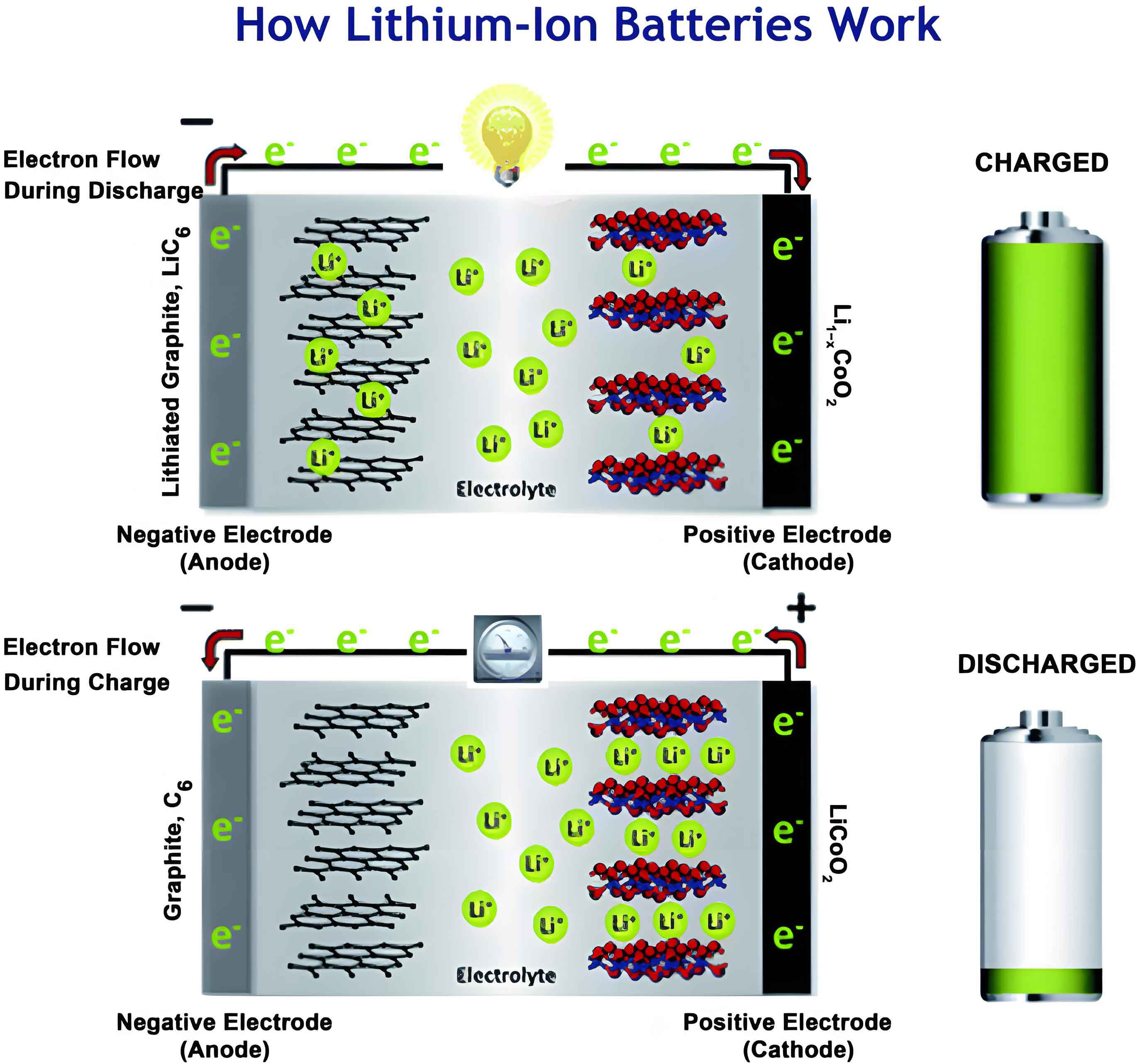
To address these shortcomings, surface modification of graphite has emerged as a powerful strategy. Coating the graphite particles with a thin, uniform, and stable layer can act as an artificial SEI, suppressing parasitic reactions and stabilizing the interface. Various materials, including carbon, polymers, and metal oxides, have been explored for this purpose. Aluminum oxide (Al2O3) is particularly attractive due to its excellent chemical and electrochemical stability, mechanical strength, natural abundance, and ability to facilitate Li+ transport while blocking electrons. While advanced techniques like Atomic Layer Deposition (ALD) can produce perfect conformal coatings, they are often prohibitively expensive and slow for large-scale manufacturing. Sol-gel methods offer a lower-cost alternative but can involve complex gelation processes and high energy consumption for solvent removal.
In this work, we present a facile, scalable, and cost-effective precipitation method for uniformly coating graphite with Al2O3. This approach involves the in-situ formation of an Al(OH)3 precursor layer on graphite, followed by a simple thermal conversion to Al2O3. We systematically investigate the effect of coating weight on the morphology, structure, and, most importantly, the electrochemical performance of the graphite anode in a lithium-ion battery. Our results demonstrate that an optimized Al2O3 coating significantly enhances the ICE, cycle stability, and rate capability, providing a practical pathway for upgrading commercial graphite materials.
Experimental Methodology: Synthesis and Characterization
1. Material Synthesis via Precipitation Method
The synthesis of Al2O3-coated graphite (denoted as C-Al2O3) was conducted through a controlled precipitation process. In a typical procedure, 1.0 g of commercial spherical graphite (Pristine-C) was dispersed in 100 mL of deionized water under ultrasonic agitation for 20 minutes. A predetermined volume of 0.2 M Al(NO3)3·9H2O aqueous solution was added dropwise to the well-dispersed graphite slurry under vigorous stirring. Subsequently, a 1.1 M ammonia solution (NH3·H2O) was introduced to adjust the pH of the mixture to 6.0, initiating the precipitation of Al(OH)3. The reaction was maintained at 80°C for 3 hours. The resulting solid product, graphite coated with Al(OH)3 [C-Al(OH)3], was collected by filtration, washed thoroughly with ethanol, and dried at 80°C. The final C-Al2O3 material was obtained by calcining the precursor in a tube furnace at 600°C for 3 hours under a nitrogen atmosphere with a heating rate of 5°C/min. By varying the amount of Al(NO3)3 solution added, we prepared samples with different Al2O3 coating weights, labeled as C-Al2O3-1 (0.56 wt%), C-Al2O3-2 (1.03 wt%), and C-Al2O3-3 (1.39 wt%).
2. Material Characterization Techniques
The composition of the coating was confirmed using Inductively Coupled Plasma Optical Emission Spectrometry (ICP-OES). Phase identification was performed via X-ray Diffraction (XRD). The thermal decomposition behavior of the C-Al(OH)3 precursor was analyzed by Thermogravimetric Analysis (TGA). The surface morphology and elemental distribution of the particles were examined using Scanning Electron Microscopy (SEM), Transmission Electron Microscopy (TEM), and Energy-Dispersive X-ray Spectroscopy (EDS). The surface charge properties (ζ-potential) of the graphite and the aluminum-containing colloid were measured to understand the coating mechanism.
3. Electrochemical Evaluation
Electrodes were fabricated by mixing the active material (pristine or coated graphite), conductive carbon (Super P), and polyvinylidene fluoride (PVDF) binder in a weight ratio of 90:3:7 in N-methyl-2-pyrrolidone (NMP) solvent. The slurry was cast onto a copper foil current collector and dried. CR2032 coin cells were assembled in an argon-filled glovebox using lithium metal as the counter/reference electrode, a Celgard 2400 separator, and an electrolyte of 1 M LiPF6 in a mixture of ethylene carbonate (EC), diethyl carbonate (DEC), and dimethyl carbonate (DMC) (1:1:1 by volume). Galvanostatic charge-discharge tests were conducted between 0.01 V and 3.0 V (vs. Li+/Li) to evaluate cycling performance and rate capability. Cyclic voltammetry (CV) and electrochemical impedance spectroscopy (EIS) measurements were performed to analyze the electrochemical kinetics and interface properties.
Results and Discussion
1. Material Characterization and Coating Mechanism
The XRD patterns of all samples, including the coated ones, showed characteristic diffraction peaks of graphite at approximately 26.4°, 44.4°, and 54.6°, corresponding to the (002), (101), and (004) crystal planes, respectively. No distinct peaks for crystalline Al2O3 were detected, suggesting the coating was either amorphous or too thin to be detected by XRD. A separate experiment, precipitating and calcining Al(OH)3 without graphite, confirmed the formation of low-crystallinity Al2O3. TGA analysis of the C-Al(OH)3 precursor clearly showed a weight loss step between 200°C and 400°C, corresponding to the dehydration and conversion of Al(OH)3 to Al2O3.
SEM images revealed that the spherical morphology of the graphite was preserved after coating. However, the surface of the coated particles, particularly C-Al2O3-2, appeared significantly smoother compared to the rough surface of the pristine graphite. TEM and EDS mapping provided conclusive evidence of a uniform and conformal Al2O3 layer on the graphite surface. The EDS maps for C-Al2O3-2 clearly showed the presence and homogeneous distribution of Al and O elements over the carbon matrix.
The success of this simple precipitation method can be attributed to favorable electrostatic interactions. ζ-potential measurements showed that the pristine graphite particles were negatively charged in water (pH=6), while the in-situ formed Al(OH)3 colloid was positively charged. This charge difference facilitates the spontaneous and uniform adsorption of the Al-containing colloidal species onto the graphite surface, forming a precursor layer without the need for complex surfactants or coupling agents. The reaction can be summarized as:
$$ \text{Al}^{3+} + 3\text{NH}_3\cdot\text{H}_2\text{O} \rightarrow \text{Al(OH)}_3\downarrow + 3\text{NH}_4^+ $$
Followed by the thermal decomposition:
$$ 2\text{Al(OH)}_3 \xrightarrow{\Delta} \text{Al}_2\text{O}_3 + 3\text{H}_2\text{O} $$
2. Electrochemical Performance in Lithium-Ion Batteries
The electrochemical performance of the Al2O3-coated graphite was systematically evaluated and compared against the uncoated material in a lithium-ion battery half-cell configuration.
Initial Coulombic Efficiency (ICE): The ICE is a critical parameter indicating the amount of irreversible lithium loss during the first cycle, primarily due to SEI formation. The ICE values were 86.75% for Pristine-C, 90.91% for C-Al2O3-1, 91.64% for C-Al2O3-2, and 89.54% for C-Al2O3-3. The improvement in ICE for the coated samples, especially C-Al2O3-2, confirms that the Al2O3 layer acts as an effective artificial SEI. It passivates the graphite surface, reduces direct contact with the electrolyte, and thereby minimizes the irreversible consumption of lithium ions to form a native SEI. The slight decrease in ICE for the heavily coated C-Al2O3-3 might be due to increased interfacial resistance hindering initial lithium-ion intercalation.
Rate Capability: The ability of an anode to deliver capacity at high current densities is vital for fast-charging applications. The rate performance was tested from 0.1C to 1.0C (where 1C = 372 mA g-1). C-Al2O3-2 exhibited the best performance across all rates. For instance, at the high rate of 1.0C, it delivered the highest specific capacity among all samples. The superior rate capability of C-Al2O3-2 can be attributed to its optimal coating, which stabilizes the interface without significantly impeding ionic transport. A coating that is too thin (C-Al2O3-1) may not provide sufficient protection during high-rate cycling, while a coating that is too thick (C-Al2O3-3) increases the diffusion barrier for Li+.
Cycling Stability: Long-term cycling tests at 0.1C provided the most striking evidence of the coating’s benefit. The results are summarized in the table below and visually compared in the subsequent chart. Pristine-C suffered from rapid capacity decay, retaining only 67.99% of its capacity after 100 cycles. In stark contrast, C-Al2O3-2 demonstrated exceptional stability, maintaining 98.59% of its capacity over the same period. This dramatic improvement underscores the role of the Al2O3 coating in creating a robust and stable electrode-electrolyte interface. It suppresses the continuous breakdown and reformation of the SEI film, a primary cause of capacity fading and lithium inventory loss in a lithium-ion battery.
| Sample | Initial Coulombic Efficiency (%) | Discharge Capacity at 100th Cycle (mAh g-1) | Capacity Retention after 100 Cycles (%) | Coating Method (from literature comparison) |
|---|---|---|---|---|
| Pristine-C | 86.75 | 212.59 | 67.99 | N/A |
| C-Al2O3-1 (0.56 wt%) | 90.91 | ~330 (estimated) | ~93 (estimated) | Precipitation (This work) |
| C-Al2O3-2 (1.03 wt%) | 91.64 | 354.37 | 98.59 | Precipitation (This work) |
| C-Al2O3-3 (1.39 wt%) | 89.54 | ~310 (estimated) | ~88 (estimated) | Precipitation (This work) |
Electrochemical Kinetics and Interface Analysis: CV curves showed that the Al2O3 coating did not alter the fundamental lithium intercalation/de-intercalation redox peaks of graphite but did reduce the intensity of the SEI formation peak in the first cycle, consistent with the ICE results. EIS analysis provided quantitative insight into the interfacial resistance. The Nyquist plots were fitted to an equivalent circuit model to extract the resistance of the SEI layer (RSEI) and the charge transfer resistance (Rct). C-Al2O3-2 exhibited the lowest combined interfacial resistance. This indicates that the optimal Al2O3 coating promotes the formation of a thinner, more conductive, and more stable interface, facilitating faster Li+ transfer kinetics. The Rct can be related to the charge transfer process described by the Butler-Volmer equation, where a lower Rct implies a higher exchange current density (i0):
$$ i = i_0 \left[ \exp\left(\frac{\alpha_a F \eta}{RT}\right) – \exp\left(-\frac{\alpha_c F \eta}{RT}\right) \right] $$
Here, \(i\) is the current density, \(i_0\) is the exchange current density, \(\alpha\) is the transfer coefficient, \(F\) is Faraday’s constant, \(\eta\) is the overpotential, \(R\) is the gas constant, and \(T\) is the temperature. A well-designed coating like that in C-Al2O3-2 minimizes \(\eta\) for a given \(i\), enhancing rate performance.
3. Mechanistic Understanding of Performance Enhancement
The superior performance of the optimally coated graphite in a lithium-ion battery stems from multiple synergistic effects facilitated by the Al2O3 layer:
1. Pre-formed Artificial SEI: The Al2O3 layer serves as a physical barrier that immediately passivates the graphite surface upon contact with the electrolyte. This pre-formed “artificial SEI” is more uniform and stable than the electrochemically formed native SEI. It significantly reduces the extent of initial electrolyte decomposition, conserving active lithium and improving ICE.
2. Mechanical and Chemical Stabilization: During cycling, graphite undergoes slight volume changes. The native SEI is brittle and cracks under this strain, exposing fresh graphite to the electrolyte and triggering further SEI growth. The Al2O3 coating, with its good mechanical properties, accommodates this strain and maintains its integrity. It acts as a protective shield, preventing continuous SEI reformation and the associated consumption of lithium ions, which is the root cause of the outstanding cycle life. The overall cell reaction with a stabilized interface can be viewed as more reversible:
$$ \text{Li}_x\text{C}_6 \ \rightleftharpoons \ x\text{Li}^+ + x\text{e}^- + \text{C}_6 \quad \text{(with stable interface)} $$
3. Optimal Ionic Transport: An excessively thick coating (as in C-Al2O3-3) increases the diffusion path length for Li+, harming rate capability. The 1.03 wt% coating in C-Al2O3-2 represents a “Goldilocks zone”—it is thick enough to provide excellent protection and interface stabilization but thin enough to allow rapid Li+ transport. This is reflected in its low RSEI and Rct values.
The effectiveness of our precipitation method is competitive with other coating techniques, as shown in the comparative table below:
| Anode Material (Reference) | Coating Method | Key Electrochemical Outcome |
|---|---|---|
| MCMB (Literature 1) | Double Hydrolysis | ~98.6% retention after 100 cycles at 0.2C |
| Natural Graphite (Literature 2) | Sol-gel | High ICE (90.7%), stable fast-charging |
| C-Al2O3-2 (This Work) | Precipitation | 98.6% retention after 100 cycles at 0.1C, superior ICE (91.6%) |
Conclusion and Perspective
In summary, we have successfully developed a simple, scalable, and effective precipitation method to coat graphite anode material with a uniform Al2O3 layer. The coating process leverages electrostatic attraction for uniform precursor deposition, followed by a straightforward thermal conversion. When applied in a lithium-ion battery, the Al2O3 coating, at an optimal weight of approximately 1.03%, functions as an excellent artificial SEI. It delivers a comprehensive enhancement in electrochemical performance: a higher initial coulombic efficiency (~91.6%), exceptional long-term cycling stability (98.6% capacity retention after 100 cycles), and improved rate capability. These benefits arise from the coating’s ability to suppress parasitic reactions, mechanically stabilize the electrode-electrolyte interface, and minimize continuous lithium inventory loss.
This work highlights that significant performance gains in commercial graphite for lithium-ion batteries can be achieved through cost-effective and scalable wet-chemical coating techniques, without resorting to complex or expensive processes like ALD. The presented precipitation method offers a promising and practical route for the industrial production of upgraded graphite anode materials, contributing to the development of more durable, efficient, and fast-charging lithium-ion batteries. Future work could explore the application of this coating strategy to other anode materials (e.g., silicon blends) or the use of other metal oxide coatings via similar facile precipitation routes.