
In recent years, the rapid development of new energy vehicles has become a crucial pathway toward achieving carbon neutrality. Lithium-ion batteries, with their high energy density, high power density, and stable charge-discharge characteristics, have emerged as the primary energy source for electric vehicles. However, the performance of lithium-ion batteries deteriorates significantly under low-temperature conditions. Capacity fades, internal resistance increases, and lithium plating may occur during charging, posing severe safety risks. This limitation severely restricts the widespread application of electric vehicles in cold climates, such as high-latitude or high-altitude regions where temperatures can drop below -30°C. Therefore, developing effective low-temperature heating solutions is imperative to enhance the all-climate adaptability of lithium-ion batteries.
Heating methods for lithium-ion batteries can be broadly categorized into external and internal heating. External heating, including convective heating, phase-change heating, and electric heating elements, transfers heat from the outside to the inside. While relatively easy to implement, external heating often leads to uneven temperature distribution and slow heating rates due to thermal resistance. In contrast, internal heating generates heat directly within the battery, enabling faster and more uniform temperature rise. Techniques such as pulse current heating, alternating current (AC) heating, and self-heating battery structures have been explored. Among these, self-heating lithium-ion batteries, which incorporate built-in heating elements, offer a promising approach for rapid low-temperature heating without requiring external power sources or complex thermal management systems.
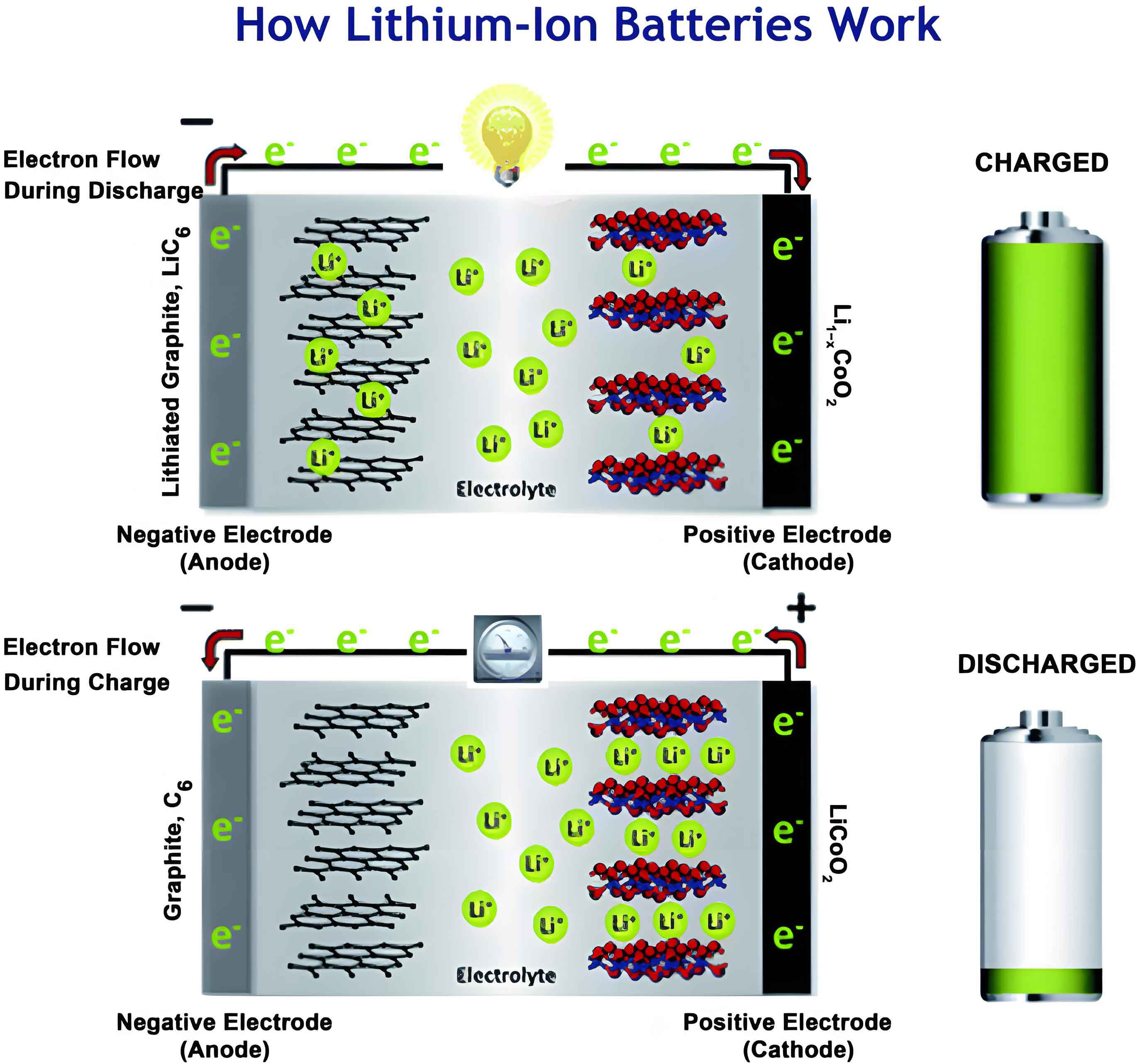
This article presents a novel all-climate self-heating lithium-ion battery based on the 18650 cylindrical configuration. The core innovation lies in utilizing the battery’s central metal shaft as an internal heating element. By electrically triggering the shaft, heat is generated from the inside out, enabling extreme heating rates at low temperatures. The design, fabrication, and experimental validation of this self-heating lithium-ion battery are detailed. Furthermore, an electrochemical-thermal coupled model is developed to simulate the heating process and analyze internal temperature fields. Finally, a multi-objective optimization framework is established to derive an optimal heating strategy that balances heating rate and energy consumption.
Design and Fabrication of the Self-Heating Lithium-Ion Battery
The self-heating lithium-ion battery is developed from a standard 18650 cylindrical cell. The central shaft, originally made of stainless steel with a resistance of approximately 100 mΩ, is repurposed as a heating element. This approach leverages direct contact between the shaft and the battery core, minimizing heat loss and enabling efficient heat transfer. The fabrication process involves four key steps: (1) Notching: The battery casing is carefully cut near the positive terminal to avoid damaging internal components. (2) Shaft modification: The central shaft is partially extracted. (3) Welding: A copper wire is soldered to one end of the shaft, insulated with high-temperature tape, and connected to the negative terminal. An insulating spacer is placed between the connection point and the positive cap to ensure electrical isolation. (4) Sealing: The positive cap is repositioned, and the notched area is sealed with hot-melt adhesive. The final assembly allows the shaft to serve as a resistive heater when a current is passed through it via an external circuit controlled by a MOSFET switch.
The operational circuit for the self-heating lithium-ion battery includes a protection resistor, a MOSFET switch, a signal generator, and a data acquisition system. The signal generator controls the switching frequency and duty cycle, enabling intermittent current flow through the shaft. During the “on” period, current passes through the shaft, generating Joule heat ($q_J = I^2 R_c$, where $I$ is current and $R_c$ is shaft resistance). This heat rapidly raises the temperature of the battery core, which then conducts outward to the surface. The “off” period allows for thermal equilibration. This pulsed heating method mitigates excessive polarization and reduces energy consumption.
Experimental tests were conducted to validate the functionality of the self-heating lithium-ion battery. The battery was first subjected to standard charge-discharge cycles to confirm normal electrochemical performance. Then, low-temperature heating experiments were performed in an environmental chamber at -20°C. Temperature sensors were attached to the positive, middle, and negative regions of the battery surface. With a protection resistor of 50 mΩ and a duty cycle of 60%, the battery was heated from -20°C to 0°C. Results showed that the self-heating lithium-ion battery achieved a heating rate of over 20°C/min, with uniform temperature distribution across the surface. The feasibility of using the central shaft as a heating element was thus confirmed.
Electrochemical-Thermal Coupled Modeling
To analyze the internal behavior of the self-heating lithium-ion battery during heating, a coupled electrochemical-thermal model was developed. The model integrates a pseudo-two-dimensional (P2D) electrochemical model with a thermal model to capture the interplay between electrical and thermal dynamics.
Electrochemical Model
The P2D model simulates lithium-ion transport and reaction kinetics within the battery. It divides the cell into three regions: positive electrode, separator, and negative electrode. The governing equations include solid-phase diffusion, electrolyte diffusion, charge conservation, and Butler-Volmer kinetics. However, traditional models assume constant parameters, which is inadequate for the rapid temperature variations in self-heating. Therefore, key parameters are modified using Arrhenius relationships to account for temperature dependence:
Solid-phase diffusion coefficient: $$D_s(T) = D_{s,ref} \exp\left[\frac{E_{a,D}}{R}\left(\frac{1}{T_{ref}} – \frac{1}{T}\right)\right]$$
Liquid-phase diffusion coefficient: $$D_e(T) = D_{e,ref} \exp\left[\frac{E_{a,D}}{R}\left(\frac{1}{T_{ref}} – \frac{1}{T}\right)\right]$$
Solid-phase conductivity: $$\sigma_s(T) = \sigma_{s,ref} \exp\left(-\frac{E_{a,\sigma}}{RT}\right)$$
Liquid-phase conductivity: $$\sigma_e(T) = \sigma_{e,ref} \exp\left(-\frac{E_{a,\sigma}}{RT}\right)$$
Reaction rate constant: $$k(T) = k_{ref} \exp\left[\frac{E_{a,k}}{R}\left(\frac{1}{T_{ref}} – \frac{1}{T}\right)\right]$$
where $T$ is temperature, $T_{ref}$ is reference temperature, $E_a$ is activation energy, and $R$ is the gas constant. The model input is the total circuit resistance, which alternates between a finite value (during heating) and infinity (during off periods) based on the duty cycle. This approach accurately represents the intermittent heating process.
Thermal Model
The thermal model accounts for heat generation and transfer within the cylindrical battery. Heat sources include reversible heat ($q_r$), ohmic heat ($q_o$), polarization heat ($q_p$), mixing heat ($q_m$), and shaft Joule heat ($q_J$). The total heat generation rate per unit volume is:
$$q_{total} = q_r + q_o + q_p + q_m + q_J$$
where
$$q_r = j \cdot T \frac{\partial E_{OCV}}{\partial T}$$
$$q_o = \sigma_s^{eff} \left(\frac{\partial \phi_s}{\partial x}\right)^2 + \sigma_e^{eff} \left(\frac{\partial \phi_e}{\partial x}\right)^2 + \frac{2RT\sigma_e^{eff}}{F} (1 – t_+) \frac{\partial \ln c_e}{\partial x} \frac{\partial \phi_e}{\partial x}$$
$$q_p = j (\phi_s – \phi_e – E_{OCV} – j R_{SEI})$$
$$q_J = f(t) \cdot I^2 R_c$$
Here, $j$ is reaction current density, $E_{OCV}$ is open-circuit voltage, $\phi_s$ and $\phi_e$ are solid and liquid potentials, $c_e$ is electrolyte concentration, $t_+$ is transference number, $R_{SEI}$ is SEI film resistance, $I$ is circuit current, $R_c$ is shaft resistance, and $f(t)$ is a periodic function representing the duty cycle (1 during on, 0 during off).
Heat transfer is described by the cylindrical coordinate heat conduction equation with internal heat generation:
$$\rho c_p \frac{\partial T}{\partial t} = \lambda_r \frac{1}{r} \frac{\partial}{\partial r}\left(r \frac{\partial T}{\partial r}\right) + \lambda_\phi \frac{1}{r^2} \frac{\partial^2 T}{\partial \phi^2} + \lambda_z \frac{\partial^2 T}{\partial z^2} + q_{total}$$
where $\rho$ is density, $c_p$ is specific heat, $\lambda$ is thermal conductivity in radial, angular, and axial directions. Boundary conditions follow Newton’s law of cooling: $-\lambda \frac{\partial T}{\partial n} = h(T – T_{amb})$, with $h$ as convection coefficient and $T_{amb}$ as ambient temperature.
Model Coupling and Simulation Results
The electrochemical and thermal models are coupled bidirectionally: temperature from the thermal model affects electrochemical parameters via Arrhenius equations, while heat generation from the electrochemical model influences temperature distribution. The coupled model was implemented in COMSOL Multiphysics and validated against experimental data. Simulations for a self-heating lithium-ion battery with 50 mΩ protection resistor and 60% duty cycle showed good agreement with measured voltage and temperature profiles.
Simulation results reveal the internal temperature field evolution during heating. Initially, the shaft temperature rises rapidly, creating a large temperature gradient (6–7°C) between the shaft and the electrode materials. Within 10 seconds, the gradient increases to 8–10°C as heat generation outpaces conduction. Subsequently, heat transfer to the electrodes accelerates their temperature rise, reducing the gradient. However, as heating continues, the gradient slightly rebounds due to decreased conduction rate. This internal heating mechanism minimizes surface temperature hysteresis, enabling faster overall warming compared to external heating methods. After heating stops, the temperature equilibrates within 20 seconds, achieving uniform distribution.
Multi-Objective Optimization of Heating Strategy
To maximize the efficiency of the self-heating lithium-ion battery, a multi-objective optimization framework is established. The goal is to find the optimal combination of protection resistance ($r$) and duty cycle ($d$) that balances heating rate ($v_T$) and energy consumption rate ($E_r$). These objectives are defined as:
$$v_T = \frac{T_e – T_0}{t_a}$$
$$E_r = \frac{\int_0^{t_a} I \, dt}{\eta \cdot CAP_0}$$
where $T_e$ and $T_0$ are final and initial temperatures, $t_a$ is heating time, $I$ is current, $\eta$ is discharge efficiency, and $CAP_0$ is battery capacity. Both $v_T$ and $E_r$ are functions of $r$ and $d$, derived from experimental data and model simulations.
The optimization problem is formulated as:
$$\begin{aligned}
&\text{minimize} \quad f_1(r, d) = -v_T(r, d) \\
&\text{minimize} \quad f_2(r, d) = E_r(r, d) \\
&\text{subject to} \quad 30 \leq r \leq 70 \, \text{m}\Omega \\
&\quad 30 \leq d \leq 70 \%
\end{aligned}$$
Note that maximizing $v_T$ is equivalent to minimizing $-v_T$. The constraints reflect practical ranges for resistance and duty cycle.
The non-dominated sorting genetic algorithm II (NSGA-II) is employed to solve this multi-objective problem. NSGA-II is an evolutionary algorithm that efficiently explores the Pareto frontier, representing trade-offs between conflicting objectives. The algorithm parameters include a population size of 100, 200 generations, crossover probability of 0.9, and mutation probability of 0.1. The Pareto frontier obtained from NSGA-II consists of numerous non-dominated solutions, each offering a unique compromise between heating rate and energy consumption.
To aid in selecting the best compromise solution, K-means clustering is applied to the Pareto set. The algorithm groups solutions into clusters based on Euclidean distance in the objective space. The solution closest to the cluster center of the most balanced group is chosen as the optimal strategy. This approach reduces subjectivity in selection.
The optimization results indicate that the optimal heating strategy for the self-heating lithium-ion battery is a protection resistance of 33.80 mΩ and a duty cycle of 55.16%. This strategy yields a heating rate of 25.53°C/min and an energy consumption rate of 6.27% of the battery capacity when heating from -20°C to 0°C. Compared to other combinations, this strategy offers an excellent balance: high heating speed with minimal energy drain, making it suitable for real-world electric vehicle applications in cold climates.
| Protection Resistance (mΩ) | Duty Cycle (%) | Heating Rate (°C/min) | Energy Consumption Rate (%) |
|---|---|---|---|
| 30.00 | 70.00 | 28.10 | 8.95 |
| 33.80 | 55.16 | 25.53 | 6.27 |
| 50.00 | 60.00 | 20.45 | 5.80 |
| 70.00 | 30.00 | 15.20 | 4.10 |
The table above summarizes key strategies along the Pareto frontier. The optimal solution (row 2) provides a superior trade-off: while slightly lower in heating rate than the most aggressive strategy (row 1), it significantly reduces energy consumption. This is critical for electric vehicles where battery energy must be conserved for driving range.
Discussion and Implications
The development of the all-climate self-heating lithium-ion battery addresses a major bottleneck in cold-weather electric vehicle operation. By integrating heating functionality directly into the battery structure, this design eliminates the need for external heaters, simplifying thermal management systems and reducing weight and cost. The internal heating approach ensures rapid and uniform temperature rise, mitigating low-temperature performance degradation.
The electrochemical-thermal model provides deep insights into the heating process. It demonstrates that the self-heating lithium-ion battery achieves faster surface warming compared to external methods due to reduced thermal inertia. The model also highlights the importance of temperature-dependent parameters, which must be accounted for in accurate simulations. Future work could extend the model to include aging effects, such as SEI growth and lithium plating, to assess long-term impacts of repeated heating cycles.
The multi-objective optimization framework offers a systematic method for tailoring heating strategies to specific applications. For instance, in extreme cold where rapid heating is paramount, a higher heating rate strategy may be preferred despite higher energy consumption. Conversely, in moderate cold, energy efficiency might be prioritized. The NSGA-II algorithm efficiently explores these trade-offs, and K-means clustering aids in practical decision-making.
Several challenges remain for the commercialization of self-heating lithium-ion batteries. These include scalability to larger battery formats (e.g., prismatic or pouch cells), integration into battery packs with thermal uniformity considerations, and cost-effectiveness in mass production. Additionally, safety during heating—such as avoiding excessive temperatures or internal shorts—requires rigorous testing and control algorithms.
Conclusion
This article presented a comprehensive study on an all-climate self-heating lithium-ion battery and its low-temperature heating strategy. The battery design utilizes the central shaft as an internal heating element, enabling extreme heating rates from the inside out. Experimental tests confirmed the feasibility and effectiveness of this approach. An electrochemical-thermal coupled model was developed to simulate the heating process, revealing internal temperature dynamics and validating the design. Furthermore, a multi-objective optimization framework using NSGA-II and K-means clustering was established to derive an optimal heating strategy that balances heating rate and energy consumption. The optimal strategy—33.80 mΩ protection resistance and 55.16% duty cycle—achieves a heating rate of 25.53°C/min with only 6.27% energy consumption, making it highly suitable for electric vehicles in cold climates.
The self-heating lithium-ion battery represents a significant advancement in battery technology for all-climate applications. By overcoming low-temperature limitations, it can accelerate the adoption of electric vehicles in regions with harsh winters, contributing to reduced greenhouse gas emissions and sustainable transportation. Future research will focus on pack-level integration, aging analysis, and real-world validation to bring this technology closer to market readiness.