
In recent years, perovskite solar cells have emerged as a promising third-generation photovoltaic technology due to their solution processability, tunable bandgaps, and high power conversion efficiencies. However, organic-inorganic hybrid perovskite solar cells often suffer from instability under environmental stressors such as humidity and temperature, limiting their commercialization potential. In contrast, all-inorganic perovskite materials, particularly CsPbBr3, exhibit superior thermal and moisture stability, making them ideal candidates for long-lasting devices. Despite these advantages, the efficiency of CsPbBr3-based perovskite solar cells remains significantly below the theoretical Shockley-Queisser limit, primarily due to interface defects and energy level mismatches between the electron transport layer and the perovskite film. In this study, we investigate the interface modification of TiO2 electron transport layers with alkali metal fluorides (NaF, KF, RbF, CsF) to address these challenges. Our results demonstrate that CsF treatment synergistically passivates defects at the buried interface, optimizes energy level alignment, and enhances the overall performance and stability of CsPbBr3 perovskite solar cells.
The global energy demand and environmental concerns have accelerated the development of efficient and clean renewable energy technologies. Solar energy, as an abundant and sustainable resource, has garnered significant attention for its conversion into electricity. Perovskite solar cells have shown remarkable progress, with efficiencies soaring from 3.8% to over 27% within a decade, positioning them as leaders in next-generation photovoltaics. However, the instability of organic components in hybrid perovskites poses a major hurdle for practical applications. All-inorganic perovskites, such as CsPbX3 (X = Cl, Br, I), offer improved stability, with CsPbBr3 standing out due to its wide bandgap of approximately 2.3 eV and exceptional environmental resilience. Although CsPbBr3 perovskite solar cells typically exhibit lower efficiencies compared to their narrower-bandgap counterparts, their potential for tandem structures or reflective mirror applications can extend operational lifetimes. The limited solubility of CsPbBr3 in polar solvents often necessitates multi-step deposition methods, leading to inhomogeneous crystallization and high defect densities in the bulk film. Previous studies have explored various strategies, including additive engineering and solvent engineering, to improve film quality and device performance. For instance, the use of specific phosphine additives or optimized solvent ratios has been shown to enhance crystallization and compatibility with large-area deposition. Nonetheless, interface issues, particularly at the electron transport layer/perovskite junction, remain a critical area for improvement.
In efficient perovskite solar cells, the electron transport layer plays a pivotal role in charge extraction, interface recombination, and overall device stability. TiO2 is a commonly used electron transport material, but its surface oxygen vacancies, grain boundary defects, and energy level misalignment with perovskites can lead to significant carrier recombination and transport losses. For CsPbBr3-based devices, the interface between TiO2 and CsPbBr3 often presents a substantial energy barrier, impeding electron transfer and limiting performance. To mitigate these issues, interface modification with buffer layers or passivation agents has been widely adopted. Alkali metal fluorides, in particular, have shown promise as additives or interface modifiers due to their ability to reduce defect densities and improve energy level matching. For example, RbF incorporation in SnO2 has been reported to decrease interface defect density and increase open-circuit voltage, while metal fluorides like NaF and MgFx have been used as intermediate layers to enhance electron extraction and stability. However, most studies focus on the individual effects of cations or anions, with limited exploration of their synergistic actions, especially in all-inorganic perovskites. Our work systematically examines the impact of various alkali metal fluorides on the TiO2/CsPbBr3 buried interface, revealing that CsF provides the most significant benefits through dual passivation mechanisms involving both cations and anions.
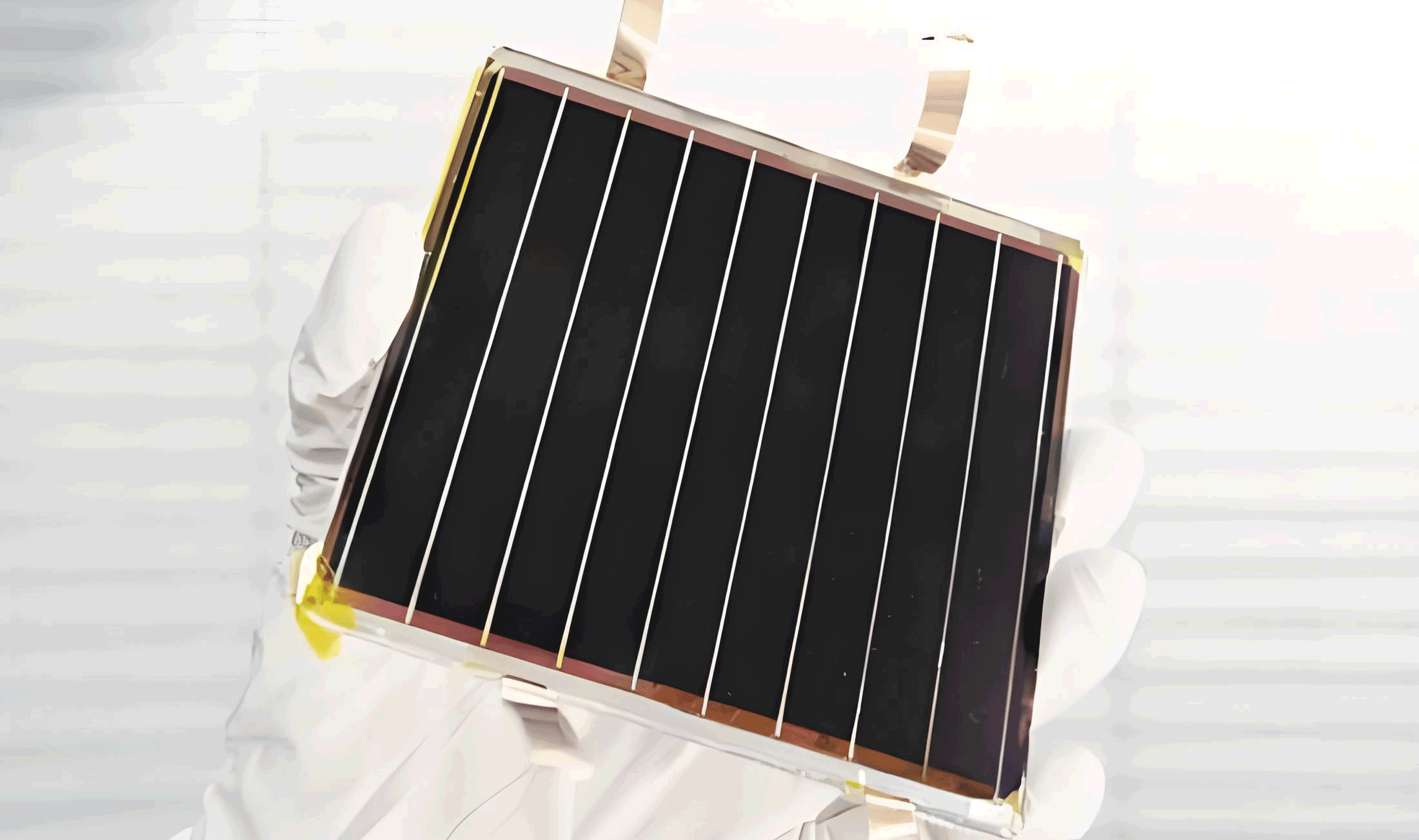
In our experimental approach, we fabricated CsPbBr3 perovskite solar cells with a structure consisting of FTO/TiO2/alkali metal fluoride/CsPbBr3/carbon electrode. The TiO2 electron transport layer was deposited via TiCl4 treatment followed by annealing at 500°C. Alkali metal fluoride solutions (NaF, KF, RbF, CsF) in isopropanol were spin-coated onto the TiO2 layer at a concentration of 1 mg mL⁻¹, followed by annealing at 100°C for 10 minutes. The CsPbBr3 perovskite layer was formed using a two-step sequential deposition method: first, a PbBr2 solution in DMF was spin-coated and annealed at 100°C, followed by the application of a CsBr aqueous solution and high-temperature annealing at 250°C. Finally, a carbon electrode was applied using a screen-printing technique. Characterization included scanning electron microscopy (SEM), X-ray diffraction (XRD), photoluminescence (PL) spectroscopy, time-resolved photoluminescence (TRPL), ultraviolet-visible (UV-Vis) spectroscopy, X-ray photoelectron spectroscopy (XPS), ultraviolet photoelectron spectroscopy (UPS), and electrochemical measurements such as electrochemical impedance spectroscopy (EIS), transient photocurrent (TPC), transient photovoltage (TPV), capacitance-voltage (C-V), Mott-Schottky (M-S) analysis, and space-charge-limited current (SCLC) measurements.
The morphology of the TiO2 films with and without alkali metal fluoride modification was examined using SEM. The images revealed that all modified TiO2 films maintained a smooth and uniform surface without significant agglomeration or large particles, indicating that the alkali metal fluorides did not adversely affect the TiO2 morphology. However, the subsequent CsPbBr3 films showed notable differences. The control sample (without modification) exhibited amorphous phases, poor surface coverage, and small grain sizes, which could increase interface contact resistance. In contrast, alkali metal fluoride-treated samples displayed larger average grain sizes and improved film uniformity. Among them, the CsF-modified sample demonstrated the most favorable morphology, with the smoothest surface and the most developed crystal growth. Statistical analysis of grain sizes confirmed that all modified samples had larger average grain diameters than the control, with the CsF sample reaching approximately 1166 nm, the highest among all. This enhancement in film quality is crucial for reducing non-radiative recombination losses and improving charge transport in perovskite solar cells.
XRD analysis was conducted to investigate the crystallinity and structural properties of the CsPbBr3 films. The diffraction patterns showed characteristic peaks at 15.2°, 21.7°, 26.5°, 30.4°, and 38.1°, corresponding to the (100), (110), (111), (200), and (211) planes of the CsPbBr3 perovskite structure, respectively. The introduction of alkali metal fluorides led to an increase in the intensity of the (110) peak, with the enhancement following the order CsF > RbF > KF > NaF. This trend aligns with the ionic radii of the alkali metal cations, suggesting that Cs⁺, with its suitable ionic radius, promotes better reaction with PbBr2 during deposition, thereby suppressing the formation of Pb²⁺ and Br⁻ vacancies and improving overall crystallinity. The XRD results corroborate the SEM findings, confirming that alkali metal fluoride modification enhances the crystalline quality of CsPbBr3 films.
Photoluminescence studies provided insights into the optoelectronic properties of the perovskite films. Steady-state PL spectra showed significant fluorescence quenching in the alkali metal fluoride-modified samples, indicating reduced defect-assisted non-radiative recombination and improved electron extraction capabilities. Additionally, a blue shift in the PL peak positions was observed, likely due to the passivation of shallow-level defects at the buried interface, which increased the effective bandgap of the films. TRPL decay curves were fitted using a bi-exponential function to extract fast (τ₁) and slow (τ₂) decay lifetimes, representing interface carrier transport and bulk defect-related recombination, respectively. The average decay lifetime (τ_ave) was calculated using the formula: $$ au_{ ext{ave}} = \frac{A_1 au_1^2 + A_2 au_2^2}{A_1 au_1 + A_2 au_2}$$ where A₁ and A₂ are the relative amplitudes. The results showed that all modified samples had shorter τ_ave values compared to the control, with the CsF sample exhibiting the most pronounced reduction. This indicates enhanced charge extraction and lower defect density, consistent with the PL observations.
UV-Vis absorption spectra revealed that all CsPbBr3 films had a characteristic absorption edge around 525 nm, with no significant shift in peak positions, suggesting that the alkali metal fluorides do not incorporate into the perovskite lattice but instead reside at the interface. However, the modified films exhibited higher absorption intensities in the 400–530 nm range, implying improved light harvesting and potential for higher photocurrent generation. The Urbach energy (E_u), which quantifies the disorder and defect density in the films, was calculated from the absorption spectra using the equation: $$\alpha = \alpha_0 \exp\left(\frac{E}{E_u}\right)$$ where α is the absorption coefficient, α₀ is a constant, and E is the photon energy. The control film had an E_u value of 78.660 meV, while the NaF-, KF-, RbF-, and CsF-modified films showed reduced values of 66.787, 67.999, 68.189, and 62.712 meV, respectively. This reduction in Urbach energy confirms that alkali metal fluoride treatment decreases lattice disorder and defect density, which can lead to higher open-circuit voltages and fill factors in perovskite solar cells.
To elucidate the mechanism behind the performance improvement, XPS and UPS analyses were performed on TiO2 films with and without CsF modification. XPS survey spectra confirmed the presence of Ti, O, Cs, and F elements on the CsF-treated TiO2 surface. High-resolution spectra of Ti 2p and O 1s regions showed shifts toward lower binding energies after CsF treatment, indicating increased electron density around Ti atoms and strong chemical interactions between CsF and TiO2. Specifically, the F⁻ ions likely occupy oxygen vacancy sites and form stable coordination with Ti⁴⁺, passivating surface defects and promoting the oxidation of Ti³⁺ to Ti⁴⁺. This passivation effect enhances electron injection and reduces recombination at the interface. UPS measurements were used to determine the work function, valence band maximum, and conduction band minimum of the TiO2 and TiO2/CsF films. The energy levels were calculated using the equations: $$E_F = E_{ ext{cut-off}} – 21.2 ext{ eV}$$ $$E_{ ext{VB}} = E_F – E_{ ext{onset}}$$ $$E_{ ext{CB}} = E_{ ext{VB}} + E_g$$ where E_g is the bandgap of TiO2 (3.18 eV). The results indicated that CsF modification created a graded energy level structure at the CsPbBr3/TiO2 interface, reducing the energy barrier and facilitating better electron extraction and charge separation. This optimization is critical for improving the performance of perovskite solar cells.
The photovoltaic performance of the devices was evaluated through current density-voltage (J-V) measurements under standard AM 1.5 G illumination. The key parameters, including open-circuit voltage (V_OC), short-circuit current density (J_SC), fill factor (FF), and power conversion efficiency (PCE), are summarized in Table 1. All alkali metal fluoride-modified devices showed improvements in V_OC, FF, and PCE compared to the control. The CsF-modified device achieved the best performance, with a V_OC of 1.63 V, J_SC of 7.69 mA cm⁻², FF of 83.38%, and PCE of 10.52%, up from 1.52 V, 7.03 mA cm⁻², 72.12%, and 7.71% for the control device, respectively. We also investigated the effect of CsF concentration and found that 1 mg mL⁻¹ provided the optimal results, with higher concentrations leading to efficiency degradation, possibly due to excessive CsF impairing charge transport. The enhanced performance is attributed to effective defect passivation and improved energy level alignment at the buried interface.
| Sample | V_OC (V) | J_SC (mA cm⁻²) | FF (%) | PCE (%) |
|---|---|---|---|---|
| Control | 1.52 | 7.03 | 72.12 | 7.71 |
| NaF | 1.60 | 7.43 | 81.11 | 9.64 |
| KF | 1.57 | 7.48 | 81.62 | 9.58 |
| RbF | 1.60 | 7.42 | 82.05 | 9.74 |
| CsF | 1.63 | 7.69 | 83.38 | 10.52 |
Stability tests were conducted on unencapsulated devices stored under ambient conditions (approximately 20% relative humidity, 25°C) for 30 days. The CsF-modified devices retained over 90% of their initial PCE, whereas the control devices degraded to about 90% of their original efficiency. Additionally, steady-state power output measurements under continuous illumination for 400 seconds showed no significant decay for the CsF devices, with a stabilized PCE of 9.47%, compared to 7.16% for the control. The improved stability is likely due to the strong chemical bonding at the interface, which suppresses defect generation and enhances interfacial adhesion.
Electrochemical characterization provided further insights into the carrier recombination and transport dynamics. The dependence of J_SC and V_OC on light intensity (I) was analyzed to understand recombination mechanisms. J_SC follows a power-law relationship: $$J_{ ext{SC}} \propto I^\alpha$$ where α close to 1 indicates minimal non-radiative recombination. The α value increased from 0.986 for the control to 0.998 for the CsF-modified device, suggesting suppressed bimolecular recombination. Similarly, V_OC varies with I as: $$V_{ ext{OC}} = \frac{nkT}{q} \ln(I) + ext{constant}$$ where n is the ideality factor. A lower n value (from 3.24 to 2.16 after CsF treatment) indicates reduced trap-assisted recombination, confirming effective defect passivation.
TPC and TPV measurements were performed to study charge extraction and recombination lifetimes. The TPC decay time decreased from 299.11 μs for the control to 185.55 μs for the CsF device, reflecting faster charge extraction. The TPV decay time increased from 4.41 ms to 7.84 ms, indicating longer carrier lifetimes and reduced recombination rates. These results demonstrate that CsF modification enhances charge separation and collection while minimizing non-radiative losses.
EIS analysis in the dark revealed two semicircles in the Nyquist plots, corresponding to charge transport resistance (R_ct) at high frequencies and charge recombination resistance (R_rec) at low frequencies. The CsF-modified devices exhibited lower R_ct and higher R_rec values, implying improved charge transfer and suppressed recombination. C-V measurements showed lower capacitance for the CsF devices in the 0–2 V range, indicating a wider depletion region and stronger built-in electric field, which reduces interface charge accumulation. M-S analysis yielded a higher built-in potential (V_bi) of 1.67 V for the CsF device compared to 1.26 V for the control, facilitating better exciton separation and higher V_OC. Dark J-V curves showed reduced leakage current for the CsF devices, confirming fewer current leakage paths and lower charge recombination. SCLC measurements were used to estimate the trap density (n_t) using the formula: $$V_{ ext{TFL}} = \frac{e n_t d^2}{2\epsilon_0 \epsilon_r}$$ where V_TFL is the trap-filling limit voltage, e is the elementary charge, d is the film thickness, ε₀ is the vacuum permittivity, and ε_r is the relative permittivity of CsPbBr3 (approximately 22). The lower V_TFL for the CsF device indicates a reduction in trap density, leading to improved carrier transport.
In conclusion, our study demonstrates that interface modification of TiO2 electron transport layers with alkali metal fluorides, particularly CsF, significantly enhances the performance and stability of all-inorganic CsPbBr3 perovskite solar cells. The synergistic passivation effect, involving F⁻ ions binding to Ti⁴⁺ to eliminate oxygen vacancies and Cs⁺ ions filling A-site cation vacancies in CsPbBr3, reduces interface defect density and optimizes energy level alignment. This results in larger grain sizes, improved crystallinity, enhanced charge extraction, and suppressed non-radiative recombination. The optimized CsF-modified devices achieve a PCE of 10.52% with excellent stability, retaining over 90% of initial efficiency after 30 days in ambient conditions. These findings highlight the importance of dual cation-anion passivation strategies and band engineering for developing high-efficiency and stable perovskite solar cells. Future work could explore other functional molecules or salts to further optimize interface properties and push the boundaries of all-inorganic perovskite photovoltaics.
The development of efficient and stable perovskite solar cells is crucial for advancing renewable energy technologies. The all-inorganic CsPbBr3 perovskite solar cell, with its inherent stability, represents a significant step forward. However, interface issues remain a key challenge. Our approach of using alkali metal fluorides for buried interface passivation offers a versatile and effective solution. The chemical interactions at the interface, as confirmed by XPS and UPS, play a vital role in enhancing device performance. The reduction in Urbach energy and trap density, along with improved energy level alignment, contributes to higher voltages and fill factors. The electrochemical analyses provide comprehensive evidence of reduced recombination and enhanced charge transport. This work not only improves the efficiency of CsPbBr3 perovskite solar cells but also provides insights into interface engineering strategies that can be applied to other perovskite compositions and device architectures.
In summary, the integration of alkali metal fluorides into the electron transport layer of perovskite solar cells represents a promising avenue for achieving high-performance and durable photovoltaic devices. The synergistic effects of cation and anion passivation, combined with band structure optimization, address critical issues in all-inorganic perovskites. As research in this field progresses, further innovations in interface design and material selection will undoubtedly lead to even greater advancements in perovskite solar cell technology, bringing us closer to realizing their full potential in sustainable energy applications.
The potential of perovskite solar cells to revolutionize the photovoltaic industry is immense, and all-inorganic variants like CsPbBr3 offer a path toward commercialization by overcoming stability barriers. Our findings on alkali metal fluoride modification provide a scalable and cost-effective method to enhance device efficiency and longevity. The use of simple solution-based processes aligns with the low-cost manufacturing requirements for widespread adoption. Moreover, the principles of interface passivation and energy level tuning explored here can be extended to other types of perovskite solar cells, including those with mixed halides or cations. Continued research in this direction will likely yield further improvements, potentially bridging the gap between laboratory results and industrial applications.
Overall, the journey toward high-efficiency and stable perovskite solar cells is fueled by innovative materials and interface engineering. The role of alkali metal fluorides, as demonstrated in this study, underscores the importance of holistic approaches that consider both chemical and electronic aspects of device design. As we continue to unravel the complexities of perovskite interfaces, we move closer to unlocking the full potential of this exciting technology for a sustainable energy future.