
In the pursuit of carbon neutrality and the construction of a new power system, the integration of intermittent renewable energy sources such as wind and solar has placed unprecedented demands on grid flexibility. New energy storage systems (ESS) have emerged as a critical enabler, capable of smoothing fluctuations, providing frequency regulation, and ensuring grid stability. However, the diversity of storage technologies, the complexity of multi-scenario operations, and the need to balance technical performance with economic viability pose significant challenges. This article presents a first-person perspective on how artificial intelligence (AI) and data-driven approaches are revolutionizing the optimal scheduling of energy storage system. We explore core technological pathways, multi-scenario coordination mechanisms, and the delicate trade-off between technical and economic objectives, drawing insights from recent research and our own experiences in this field.
| Storage Technology | Typical Representative | Energy Density | Response Time | Scale & Lifetime | Key Advantages | Typical Applications |
|---|---|---|---|---|---|---|
| Electrochemical Storage | Lithium-ion Battery | High | Seconds/milliseconds | Small to medium; limited cycle life | Fast response, flexible deployment | Frequency regulation, smoothing, user-side |
| Gravity Storage | Vertical, inclined track | Medium | Minutes | Large; long lifetime | Environmentally friendly, low cost | Peak shaving, large-capacity storage |
| Compressed Air Energy Storage | CAES (e.g., CO₂-based) | Medium | Minutes | Large; long lifetime | High capacity, long duration | Grid-side peak regulation, backup |
| Flywheel Energy Storage | FESS | Low | Milliseconds | Small to medium; long cycle life | High power density, extremely fast response | Frequency regulation, premium power |
Core Technological Pathways for Energy Storage System Optimization
Role of AI and Data-Driven Techniques
In our work, we have found that AI and data-driven methods are indispensable for addressing the uncertainties and complexities inherent in energy storage system operations. By leveraging machine learning algorithms, we can construct accurate predictive models that forecast key parameters such as state of charge (SOC), state of health (SOH), and system degradation. For instance, we have studied the application of reinforcement learning to optimize the charging and discharging schedules of a wind-solar-compressed air energy storage system, achieving an 8.3% reduction in operational costs through a self-attention mechanism embedded in a twin delayed deep deterministic policy gradient (TD3-AC) algorithm. Similarly, multi-agent deep deterministic policy gradient (MADDPG) has been employed to coordinate distributed energy storage systems, enabling multi-objective optimization that simultaneously considers economic returns and technical constraints.
Digital twin technology further enhances our capabilities. By creating a virtual replica of the physical energy storage system, we can simulate various operational scenarios in real time and optimize lifecycle performance. In a study on tunnel energy storage systems, we utilized digital twins to model fire smoke dynamics from thermal runaway events, allowing us to design dynamic control strategies that improve safety. However, we must acknowledge the inherent limitations: data-driven models require large volumes of high-quality training data, and the presence of noise, missing values, or outliers can degrade generalization. Moreover, most existing models focus on single-type storage technologies (e.g., lithium-ion batteries), leaving a gap in modeling hybrid configurations such as gravity-electrochemical systems. We are actively exploring hybrid physics-informed machine learning approaches to bridge this gap.
Thermal Management and Battery Management as Foundational Technologies
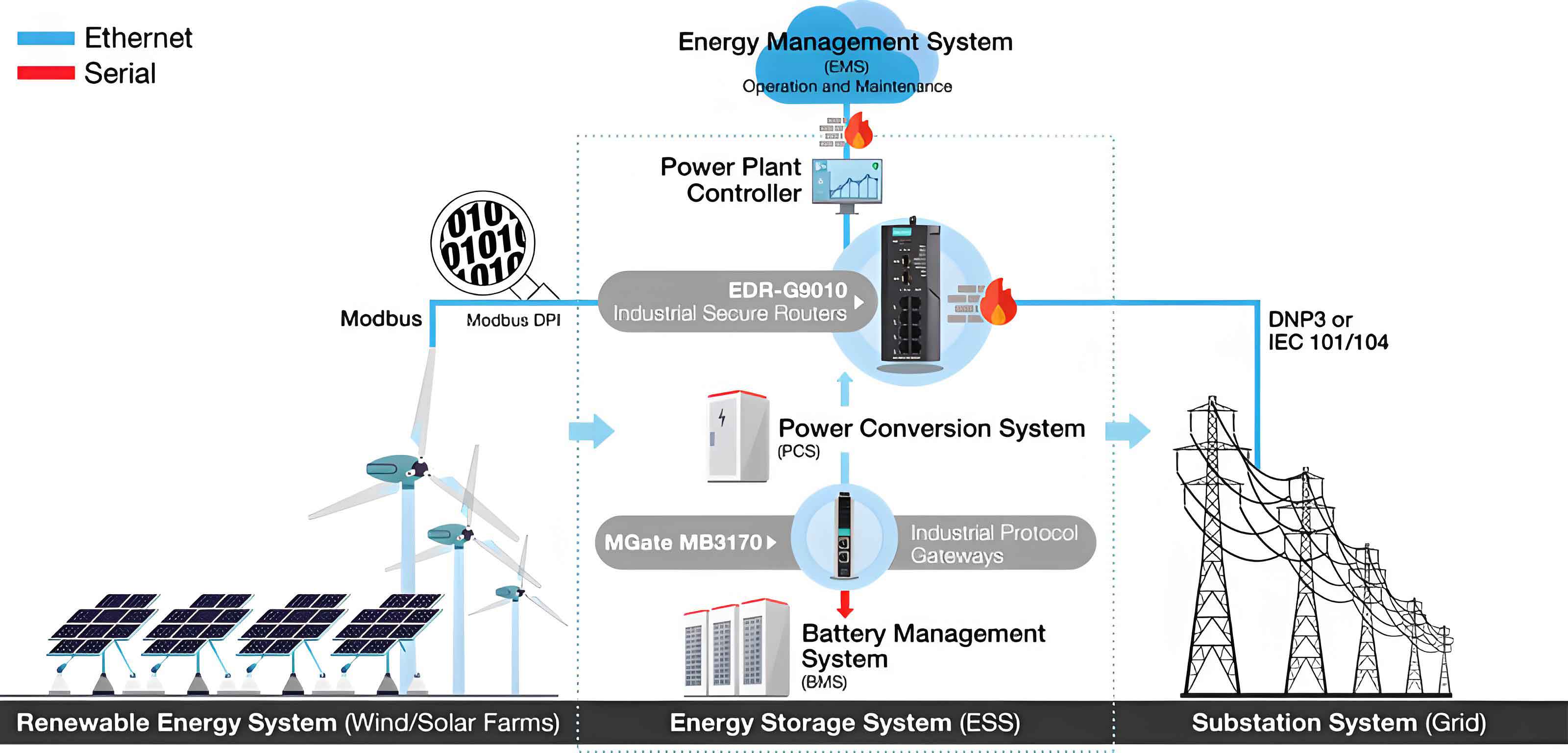
Ensuring the safe and reliable operation of energy storage system relies heavily on effective thermal management and battery management systems (BMS). In extreme environments or during prolonged high-power operation, thermal runaway poses a serious threat. We have investigated passive and active cooling techniques, such as heat pipe designs for portable energy storage units, which are compact and cost-effective for confined spaces. For large-scale systems, we explored the integration of carbon dioxide-based thermal cycles with active cooling to maintain optimal temperature ranges, thereby improving overall efficiency. In hot and dusty industrial settings, we proposed combined thermal recovery and active cooling cycles using CO₂ as a working fluid to ensure stable operation of massive storage installations.
Battery management is equally critical. We focused on SOC and SOH estimation to maintain cell consistency and extend battery life. By employing a clustering algorithm that merges model-driven and data-driven approaches, we can accurately estimate SOC and SOH under various testing conditions, providing reliable inputs for scheduling strategies. Reconfigurable battery network architectures have also been introduced, where thermal signals are used to optimize SOC distribution and mitigate hot spots. In the context of electric vehicles, we developed cloud-edge collaborative monitoring systems to prevent faults and ensure safe operation under extreme temperatures.
Coordination Mechanisms for Energy Storage Systems in Multiple Scenarios
Multi-Energy Complementary System Optimization
Multi-energy systems that integrate electricity, heat, and hydrogen can significantly enhance renewable energy accommodation and operational flexibility. We have worked on optimizing hybrid electric-hydrogen storage systems, where ultra-short-term wind power predictions are used to proactively schedule hydrogen production and storage, reducing energy curtailment. In power-to-heat systems, we employed long short-term memory (LSTM) networks to predict multi-load demands, and then used electric-thermal hybrid storage as an active dispatch resource, achieving 3.67% to 11.12% reduction in operating costs compared to conventional methods. For wind-thermal-storage coupled systems, we adjusted the heating mode of heat network heaters during valley periods to balance wind power output and heat demand, effectively lowering the curtailment rate.
Multi-time-scale coordination is essential. We implemented a day-ahead and intra-day rolling scheduling framework for electric-hydrogen systems, improving dispatch accuracy and reducing operational costs by approximately 7.86%. For data center applications with multiple energy storage systems, we generated scenarios based on computing load and renewable generation profiles, then applied K-means clustering to handle uncertainties in day-ahead and intra-day stages. This approach allowed us to meet both the data center’s reliability requirements and the economic benefits of the storage owner. Despite these advances, the absence of a unified scheduling framework that covers all energy carriers (electricity, heat, hydrogen) remains a challenge. We are developing a cross-energy-network scheduling architecture that can handle multi-carrier interactions.
We can formalize the optimization problem for a multi-energy storage system as follows:
$$ \min_{P_{i,t}, S_{i,t}} \sum_{t=1}^{T} \left( c_{\text{grid},t} \cdot P_{\text{grid},t} + \sum_{i} c_{i} \cdot P_{i,t} + \lambda \cdot \text{degradation}_{i,t} \right) $$
subject to energy balance, storage dynamics, power limits, and SOC constraints:
$$ P_{\text{grid},t} + \sum_{i} P_{i,t} = L_t + P_{\text{curtail},t} $$
$$ S_{i,t+1} = S_{i,t} + \eta_i^{\text{ch}} P_{i,t}^{\text{ch}} \Delta t – \frac{1}{\eta_i^{\text{dis}}} P_{i,t}^{\text{dis}} \Delta t $$
$$ 0 \leq S_{i,t} \leq S_i^{\max}, \quad 0 \leq P_{i,t}^{\text{ch}} \leq P_{i}^{\text{ch,max}}, \quad 0 \leq P_{i,t}^{\text{dis}} \leq P_{i}^{\text{dis,max}} $$
where: i indexes different storage systems; t is time step; cgrid,t is electricity price; ci is variable cost; λ is degradation cost factor; Pgrid,t is grid exchange; Lt is load; Si,t is state of energy; ηch, ηdis are charging/discharging efficiencies.
Distributed and Gravity Storage System Scenario Adaptation
Distributed energy storage systems (DESS) exhibit large-scale and spatially dispersed characteristics. Using multi-agent reinforcement learning, we have developed scheduling strategies that allow each DESS unit to autonomously optimize its operation while contributing to overall grid objectives. In an industrial park setting, combining distributed photovoltaic, storage, and dynamic electricity prices enabled peak shaving and cost savings of 15%–20%. We also applied modular modeling to heterogeneous energy systems (solar PV, CHP, storage) and optimized their joint operation, achieving cost reductions of 3%–6%. Two-stage mobile storage scheduling based on probabilistic voltage sensitivity and model predictive control improved task completion rates in active distribution networks by optimally allocating charging tasks. Furthermore, an improved particle swarm optimization algorithm was used to coordinate multiple storage types and electric vehicles, reducing distribution network operating costs.
Gravity storage, a novel technology, offers unique advantages in certain contexts. Vertical gravity storage is suitable for water-scarce regions and provides flexibility with moderate efficiency; we have addressed mechanical impact issues through transmission design improvements. Inclined track gravity storage leverages natural terrain to reduce construction costs, and the track-based operation enhances energy transfer efficiency. We have explored combining gravity storage with electrochemical storage to exploit their complementary characteristics: gravity for large-scale, long-duration energy shifting, and electrochemical for fast ramping and short-duration balancing. The “source-grid-storage” collaborative model we proposed integrates both types: during peak hours, gravity and electrochemical systems work together with other generation assets to support distribution network loads while accommodating renewable energy feed-in.
Balancing Economic and Technical Objectives in Energy Storage System Scheduling
A key challenge in scheduling energy storage system is to simultaneously satisfy technical requirements (e.g., grid stability, response speed) and economic goals (minimized cost, maximized revenue). We have addressed this in several studies. For charging stations, we developed a mixed-integer linear programming (MILP) model that dispatches storage in both day-ahead energy and frequency regulation markets, improving operational efficiency and peak reduction while increasing profitability. For photovoltaic plus storage charging stations, we employed the NSGA-III multi-objective optimization algorithm to minimize both grid load variance and operating & maintenance costs, achieving smooth power output. In wind-hydrogen coupled systems, we established a two-layer Stackelberg game model that uses market mechanisms to balance supply and demand, thereby enhancing the competitiveness of wind power in electricity markets. For photovoltaic systems with storage, we conducted multi-time-scale dispatch optimization considering both energy and frequency regulation market revenues.
The introduction of dynamic tariffs and demand response has further improved economic viability. Based on dynamic carbon emission factors, we proposed a low-carbon dispatch strategy that accounts for generator commitments, achieving an optimal balance between running costs and environmental targets. However, several shortcomings remain. First, economic models for multi-scenario coordination are still incomplete; they often focus on large-scale storage and fail to fully capture the impacts of power market design and policy incentives. Second, the long-term degradation of storage systems over their full lifecycle is rarely incorporated. We emphasize the need for a comprehensive lifecycle cost assessment framework that includes capacity fade, calendar aging, and operation-dependent wear. Without this, scheduling decisions may appear optimal in the short term but lead to premature replacement and hidden costs.
We can express the multi-objective optimization problem for economic-technical balance as:
$$ \min \left[ f_1(\mathbf{x}), f_2(\mathbf{x}), f_3(\mathbf{x}) \right] $$
where:
$$ f_1 = \text{Total operational cost} = \sum_t \left( C_{\text{O&M},t} + C_{\text{degradation},t} + C_{\text{grid},t} \right) $$
$$ f_2 = \text{Grid impact} = \frac{1}{T} \sum_t \left( P_{\text{net},t} – \overline{P}_{\text{net}} \right)^2 $$
$$ f_3 = \text{Response performance} = \max_i \left| \Delta P_{i,t} \right| + \text{ramping violations} $$
subject to the same storage dynamics and constraints as earlier. Weighted sum or Pareto-based methods (e.g., NSGA-III) are used to find trade-off solutions.
Conclusions and Future Outlook
Our research demonstrates that AI-empowered optimal scheduling of energy storage system can be structured around the triad of “technology-driven, scenario-adapted, and benefit-balanced.” By applying AI and data-driven modeling, we improve prediction accuracy and decision quality; thermal and battery management ensure safety and longevity; multi-energy complementarity and distributed/gravity storage adapt to diverse scenarios; and market mechanisms align economic viability with technical feasibility. Nevertheless, three major challenges persist:
- Data-driven models lack generalization across diverse storage technologies and hybrid configurations that combine multiple physical mechanisms.
- There is no comprehensive system-level framework that coordinates scheduling across all possible scenarios (multi-carrier, multi-timescale, multi-agent).
- Full lifecycle economic evaluation and safety under extreme conditions are insufficiently addressed.
Future work should focus on hybrid physics-informed machine learning to improve model adaptability to different storage types; development of multi-agent game-theoretic frameworks for cross-energy-network and multi-timescale coordination; and establishment of complete lifecycle cost models integrated with market regulatory designs. By combining technological innovation with supportive policies, we can unlock the full potential of new energy storage system for a sustainable and resilient power grid.