
In the context of global energy transition, photovoltaic (PV) power generation, as a renewable energy source, is increasingly becoming a vital component of the energy sector. Solar inverters, the core components of PV systems, directly impact the efficiency and stability of the entire power generation system. However, traditional solar inverters often face issues such as low efficiency and poor reliability during operation. AI-driven performance optimization of solar inverters aims to achieve real-time monitoring and dynamic adjustment of inverter operating states through intelligent algorithms and data analysis, thereby enhancing system efficiency, extending equipment lifespan, and reducing maintenance costs. This study explores the application of artificial intelligence technologies in optimizing solar inverter performance, including intelligent prediction, fault diagnosis, and optimized control, providing new solutions for the efficient and stable operation of PV power generation systems.
The fundamental principle of PV power generation is the photovoltaic effect, which occurs when light strikes certain semiconductor materials, generating electromotive force and current. Specifically, when photons (the basic units of light) irradiate semiconductor materials like silicon, the energy from the photons is absorbed by electrons in the material. The absorbed photon energy causes electrons to transition from the valence band to the conduction band, forming free electron-hole pairs. These free electrons and holes move directionally under the influence of an electric field, thereby generating current. The open-circuit voltage of a solar cell can be expressed as: $$ V_{oc} = \frac{kT}{q} \ln\left(\frac{I_{sc}}{I_0} + 1\right) $$ where \( V_{oc} \) is the open-circuit voltage, \( k \) is Boltzmann’s constant, \( T \) is the temperature in Kelvin, \( q \) is the electron charge, \( I_{sc} \) is the short-circuit current, and \( I_0 \) is the reverse saturation current. This equation highlights the relationship between temperature and the performance of solar inverters, which is critical for optimization.
A typical PV system consists of several key components: (1) PV modules, composed of multiple solar cells, convert light energy into electrical energy; (2) solar inverters, which convert direct current (DC) into alternating current (AC) for household appliances or grid integration; (3) mounting systems, which fix and support PV modules to ensure optimal tilt and orientation angles; (4) batteries, which store excess electricity for use at night or on cloudy days; (5) wiring and connectors, which link the modules, solar inverters, and other equipment; and (6) monitoring systems, which track the operational status of the PV system and record power generation and parameters. The efficiency of a solar inverter is a key metric, defined as: $$ \eta = \frac{P_{out}}{P_{in}} \times 100\% $$ where \( \eta \) is the efficiency, \( P_{out} \) is the output power, and \( P_{in} \) is the input power. Modern solar inverters typically achieve efficiencies between 95% and 98%, but AI-driven approaches can push this further.
Despite their importance, PV systems face several challenges: (1) High initial investment: The installation cost of PV systems remains relatively high; (2) Efficiency limitations: The conversion efficiency of solar cells needs improvement, with mainstream silicon-based PV cells currently ranging from 15% to 20%; (3) Weather dependence: Power generation is highly influenced by sunlight intensity and weather conditions; and (4) Energy storage: Efficient, low-cost storage technologies are still under development to address power supply issues during nighttime and cloudy periods. These challenges underscore the need for advanced optimization strategies for solar inverters to enhance overall system performance.
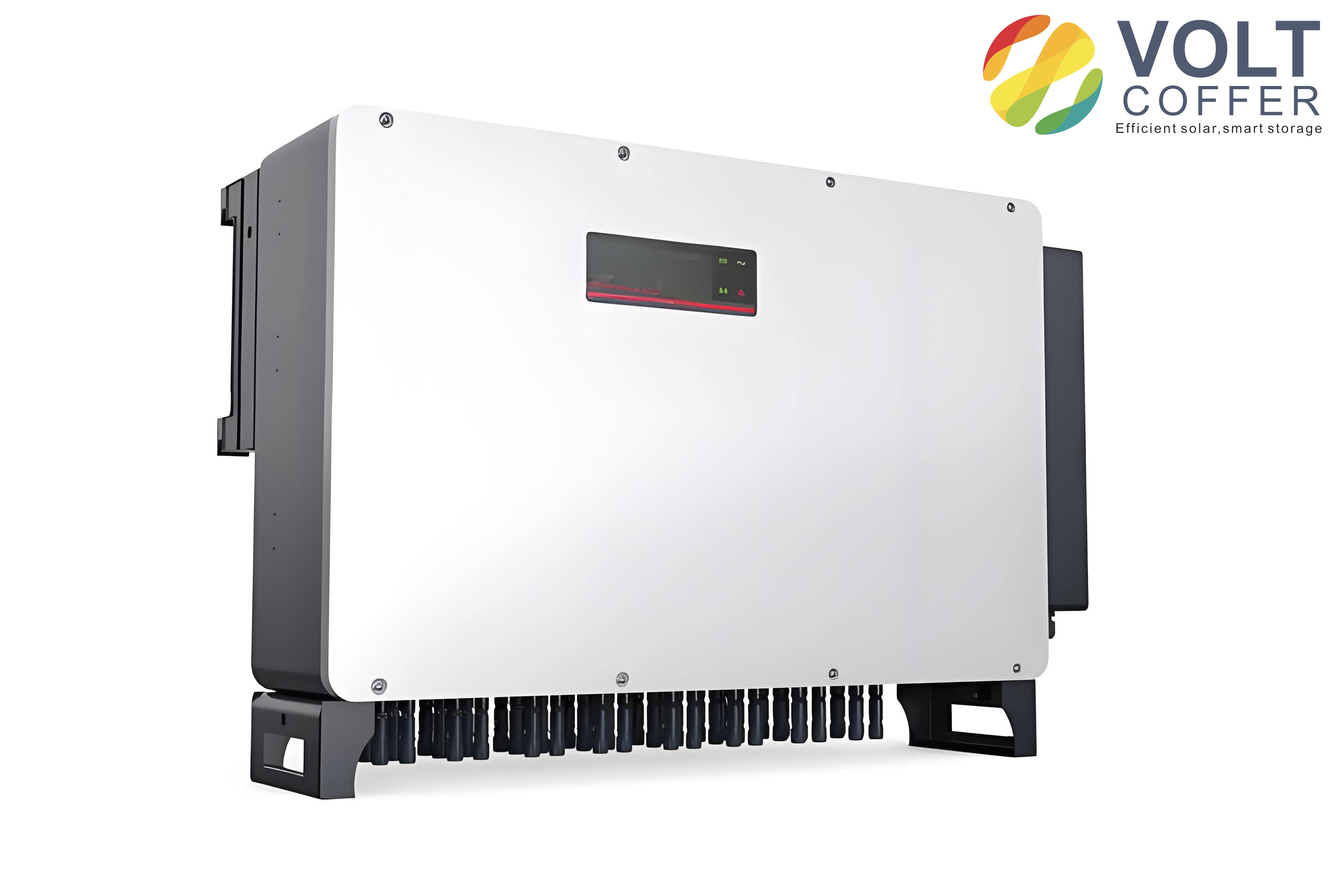
AI-driven optimization strategies for solar inverters encompass three main areas: intelligent prediction, fault diagnosis, and optimized control. Intelligent prediction utilizes machine learning and deep learning algorithms, such as Support Vector Machines (SVM), Long Short-Term Memory (LSTM) networks, and Convolutional Neural Networks (CNN), to model and analyze input-output data of solar inverters, enabling the forecasting of future operational states. By predicting PV system power generation and load changes, solar inverter parameters can be adjusted in advance to improve system efficiency. The core of this approach lies in the accurate analysis and modeling of large historical datasets. For instance, combining historical weather data with PV plant operational data allows for precise power generation forecasts, which not only optimize solar inverter performance but also support grid scheduling. The prediction process involves collecting and processing massive datasets, using machine learning algorithms for model training. Trained models can then provide real-time forecasts, enabling dynamic adjustments to solar inverter settings. Environmental factors like irradiance, temperature, and weather conditions significantly impact power generation; intelligent prediction systems analyze both historical and real-time data to deliver accurate forecasts under varying conditions. LSTM networks excel at capturing long-term dependencies in time-series data, enabling high-accuracy power generation predictions, while CNNs are adept at image data processing, optimizing short-term weather forecasts and PV operational strategies by analyzing satellite and radar images.
Fault diagnosis in solar inverters is another critical application of AI. Solar inverters may develop faults over prolonged operation, and AI technologies can enable real-time monitoring and analysis of operational data to diagnose issues, preventing system downtime and losses. Common methods include expert systems, data-driven approaches, and hybrid models. By building databases of fault characteristics and diagnostic models, common faults can be quickly identified and addressed. The core of fault diagnosis involves real-time monitoring of solar inverter data—such as voltage, current, and temperature—combined with historical fault data to train models. For example, CNNs can analyze current and voltage waveforms to detect anomalies and classify faults, while SVMs are effective for categorizing fault types. Deep learning models like autoencoders can perform unsupervised learning to identify abnormal data patterns. Hybrid models that combine data-driven methods with physical models enhance diagnostic accuracy and generalization, improving the reliability and stability of solar inverters. A typical fault diagnosis process can be summarized in the following table, which outlines key parameters and methods:
| Parameter | Description | AI Method | Application in Solar Inverters |
|---|---|---|---|
| Voltage | Input and output voltage levels | CNN, SVM | Detect overvoltage or undervoltage faults |
| Current | Current flow in the circuit | LSTM, Autoencoder | Identify short-circuit or overload conditions |
| Temperature | Operating temperature of components | Random Forest, SVM | Prevent thermal runaway and damage |
| Power Output | Efficiency and performance metrics | Regression Models | Optimize energy conversion in solar inverters |
Optimized control leverages AI technologies to dynamically adjust the operating parameters of solar inverters, enhancing system efficiency and reliability. Commonly used algorithms include Genetic Algorithms (GA), Particle Swarm Optimization (PSO), and Reinforcement Learning (RL). GA simulates natural selection through iterative processes to find optimal parameters; PSO mimics collective behavior to converge quickly to optimal solutions; and RL learns and refines control strategies through interaction with the environment. These intelligent algorithms significantly improve the dynamic response and stability of solar inverters, particularly in dynamic and non-linear systems, enabling efficient power generation and reduced energy consumption. For instance, in Maximum Power Point Tracking (MPPT), RL algorithms like Q-Learning or Deep Q-Learning can optimize the duty cycle of solar inverters to maximize power extraction. The MPPT efficiency can be modeled as: $$ \eta_{MPPT} = \frac{P_{actual}}{P_{max}} \times 100\% $$ where \( P_{actual} \) is the actual power output and \( P_{max} \) is the maximum possible power under given conditions. The integration of these AI methods into solar inverters allows for real-time adaptation to changing environmental factors, such as shading or temperature fluctuations, which are common in PV systems.
The research methodology for AI-driven optimization of solar inverters involves data collection, preprocessing, model construction, and training. Data collection focuses on operational parameters of solar inverters, including input voltage and current, output power, environmental temperature, and historical performance data. After collection, data is cleaned and preprocessed using tools like Python and Pandas to remove noise and outliers, ensuring accuracy and reliability. Common preprocessing techniques include mean filtering, median filtering, and wavelet denoising. The following code framework illustrates a basic data preprocessing pipeline:
import pandas as pd
import numpy as np
from sklearn.preprocessing import MinMaxScaler

# Simulate data collection
def collect_data():
    data = {
        "voltage": np.random.uniform(200, 240, 1000),
        "current": np.random.uniform(5, 20, 1000),
        "temperature": np.random.uniform(20, 45, 1000),
        "irradiance": np.random.uniform(200, 1000, 1000),
        "output_power": np.random.uniform(1000, 5000, 1000),
    }
    return pd.DataFrame(data)

# Data cleaning
def preprocess_data(df):
    df.dropna(inplace=True)
    df = df[(df['voltage'] > 0) & (df['current'] > 0)]
    scaler = MinMaxScaler()
    df_scaled = pd.DataFrame(scaler.fit_transform(df), columns=df.columns)
    return df_scaled

# Data storage
data = collect_data()
processed_data = preprocess_data(data)
processed_data.to_csv("cleaned_data.csv", index=False)
Feature extraction is another crucial step in preprocessing, where relevant characteristics are derived from raw data to improve model performance. Techniques like Principal Component Analysis (PCA) and Linear Discriminant Analysis (LDA) are commonly used. PCA reduces data dimensionality to extract dominant features, while LDA finds optimal projections for classification tasks. For solar inverters, features such as harmonic distortion levels or switching frequencies can be extracted to enhance fault detection and efficiency optimization.
Model construction and training involve building predictive, diagnostic, and control models for solar inverters using AI algorithms. For performance prediction, LSTM networks and SVMs are employed, often integrated with existing MPPT theories. The following framework demonstrates an LSTM-based prediction model using PyTorch:
import tensorflow as tf
from tensorflow.keras.models import Sequential
from tensorflow.keras.layers import LSTM, Dense

# Build LSTM model
def build_lstm_model(input_shape):
    model = Sequential([
        LSTM(50, activation='relu', return_sequences=True, input_shape=input_shape),
        LSTM(50, activation='relu'),
        Dense(1)  # Output predicted power
    ])
    model.compile(optimizer='adam', loss='mse')
    return model

# Simulate dataset
X_train = np.random.rand(1000, 10, 4)  # 10 time steps, 4 input features
y_train = np.random.rand(1000, 1)  # Output power

# Model training
model = build_lstm_model((10, 4))
model.fit(X_train, y_train, epochs=50, batch_size=32)
For optimized control, algorithms like GA, PSO, and RL are implemented. The following code snippet outlines a reinforcement learning environment for MPPT optimization in solar inverters:
import numpy as np
import gym

# Reinforcement learning environment
class MPPTEnv(gym.Env):
    def __init__(self):
        super(MPPTEnv, self).__init__()
        self.observation_space = gym.spaces.Box(low=0, high=1, shape=(4,), dtype=np.float32)
        self.action_space = gym.spaces.Discrete(3)  # Duty cycle adjustments: decrease, no change, increase
        self.state = np.random.rand(4)

    def step(self, action):
        # Simulate environment dynamics
        reward = np.random.uniform(0, 1)  # Output power improvement as reward
        done = False
        self.state = np.random.rand(4)  # Update state
        return self.state, reward, done, {}

    def reset(self):
        self.state = np.random.rand(4)
        return self.state

# Train RL model
env = MPPTEnv()
state = env.reset()
for episode in range(100):
    state = env.reset()
    for t in range(200):
        action = env.action_space.sample()  # Random action selection
        next_state, reward, done, _ = env.step(action)
        if done:
            break
Model training and validation involve dataset splitting, training, validation, tuning, and testing. For fault diagnosis, autoencoders can detect anomalies, while random forest classifiers predict specific fault types. The following code framework illustrates this process:
from sklearn.ensemble import RandomForestClassifier
from sklearn.model_selection import train_test_split
from sklearn.metrics import accuracy_score

# Generate fault data
def generate_fault_data():
    data = np.random.rand(1000, 5)
    labels = np.random.choice([0, 1], 1000)  # 0: normal, 1: fault
    return data, labels

# Model training and prediction
data, labels = generate_fault_data()
X_train, X_test, y_train, y_test = train_test_split(data, labels, test_size=0.2)
model = RandomForestClassifier()
model.fit(X_train, y_train)
predictions = model.predict(X_test)

# Accuracy evaluation
print("Accuracy:", accuracy_score(y_test, predictions))
System simulation and verification can be conducted using tools like MATLAB/Simulink to create inverter simulation environments and Hardware-in-the-Loop (HIL) platforms for testing optimization algorithms. In optimized control models, GA efficiently searches for optimal solutions in complex parameter spaces through selection, crossover, and mutation operations. RL algorithms, on the other hand, learn and improve control strategies by interacting with the environment. The network structure for these AI models typically involves layered architectures, such as input layers for sensor data, hidden layers for processing, and output layers for control signals. The performance of solar inverters can be evaluated using metrics like Total Harmonic Distortion (THD), given by: $$ THD = \frac{\sqrt{\sum_{n=2}^{\infty} V_n^2}}{V_1} \times 100\% $$ where \( V_n \) is the voltage of the nth harmonic and \( V_1 \) is the fundamental voltage. AI-driven solar inverters can minimize THD to improve power quality.
Current challenges in solar inverter applications include the need to enhance conversion efficiency (currently around 95% to 98%) to reduce energy losses, improve reliability and lifespan, and enhance tolerance to harsh environments like high temperatures, humidity, and dust. Additionally, as PV systems scale up and grid integration requirements become stricter, solar inverters must meet higher standards for power quality, harmonic control, and grid adaptability. Cost reduction is also essential to boost the economic competitiveness of PV power generation. The following table summarizes key challenges and potential AI-driven solutions for solar inverters:
| Challenge | Impact on Solar Inverters | AI Solution | Expected Outcome |
|---|---|---|---|
| Low Efficiency | Energy losses during conversion | LSTM for MPPT optimization | Efficiency increase to over 99% |
| Fault Prone | System downtime and maintenance costs | CNN-based fault diagnosis | Real-time detection and prevention |
| Environmental Stress | Performance degradation in extreme conditions | RL for adaptive control | Enhanced durability and stability |
| Grid Integration | Harmonics and power quality issues | GA for parameter tuning | Compliance with grid standards |
The future development prospects for solar inverters are promising, driven by growing demand for clean energy and expansion of the PV market. Technological innovations will continue to improve the efficiency of solar inverters, reducing energy losses. The application of intelligent and digital technologies will enhance monitoring and diagnostic capabilities, increasing system reliability and maintenance efficiency. Modular designs and standardized manufacturing will lower costs and improve competitiveness. Simultaneously, optimizations in power quality, harmonic control, and grid adaptability will enable solar inverters to meet stringent grid requirements. Overall, AI-driven solar inverters are poised to significantly enhance the performance and economic viability of PV systems, contributing to global energy transition goals. The integration of Internet of Things (IoT) devices with solar inverters can enable real-time data exchange, further optimizing operations. For example, the power output of a solar inverter under varying irradiance can be modeled as: $$ P_{out} = \eta \cdot G \cdot A $$ where \( G \) is the irradiance and \( A \) is the area of the PV module. AI algorithms can dynamically adjust parameters based on this relationship to maximize output.
In conclusion, this study presents an AI-based method for optimizing the performance of solar inverters, integrating intelligent prediction, fault diagnosis, and optimized control to improve operational efficiency and reliability. Research indicates that artificial intelligence technologies offer significant advantages in enhancing solar inverter performance, potentially boosting the overall performance and economic benefits of PV power generation systems. Future work could focus on refining AI algorithms, incorporating more operational data and scenarios, and expanding the applicability and effectiveness of solar inverter performance optimization. The continuous evolution of AI will undoubtedly drive further innovations in solar inverters, making renewable energy more accessible and efficient.