
Thermal runaway safety remains a critical bottleneck constraining the widespread deployment of lithium-ion battery energy storage systems. Among various mitigation strategies, thermal barrier techniques using insulating materials present a robust and passive approach to arrest the cascading failure within a battery module. This article, from a research and experimental perspective, investigates the efficacy of aerogel mats in suppressing thermal runaway propagation in large-format LiFePO4 battery modules. We systematically explore the influence of varying aerogel mat thicknesses on the heat transfer dynamics and the ultimate success of containment.
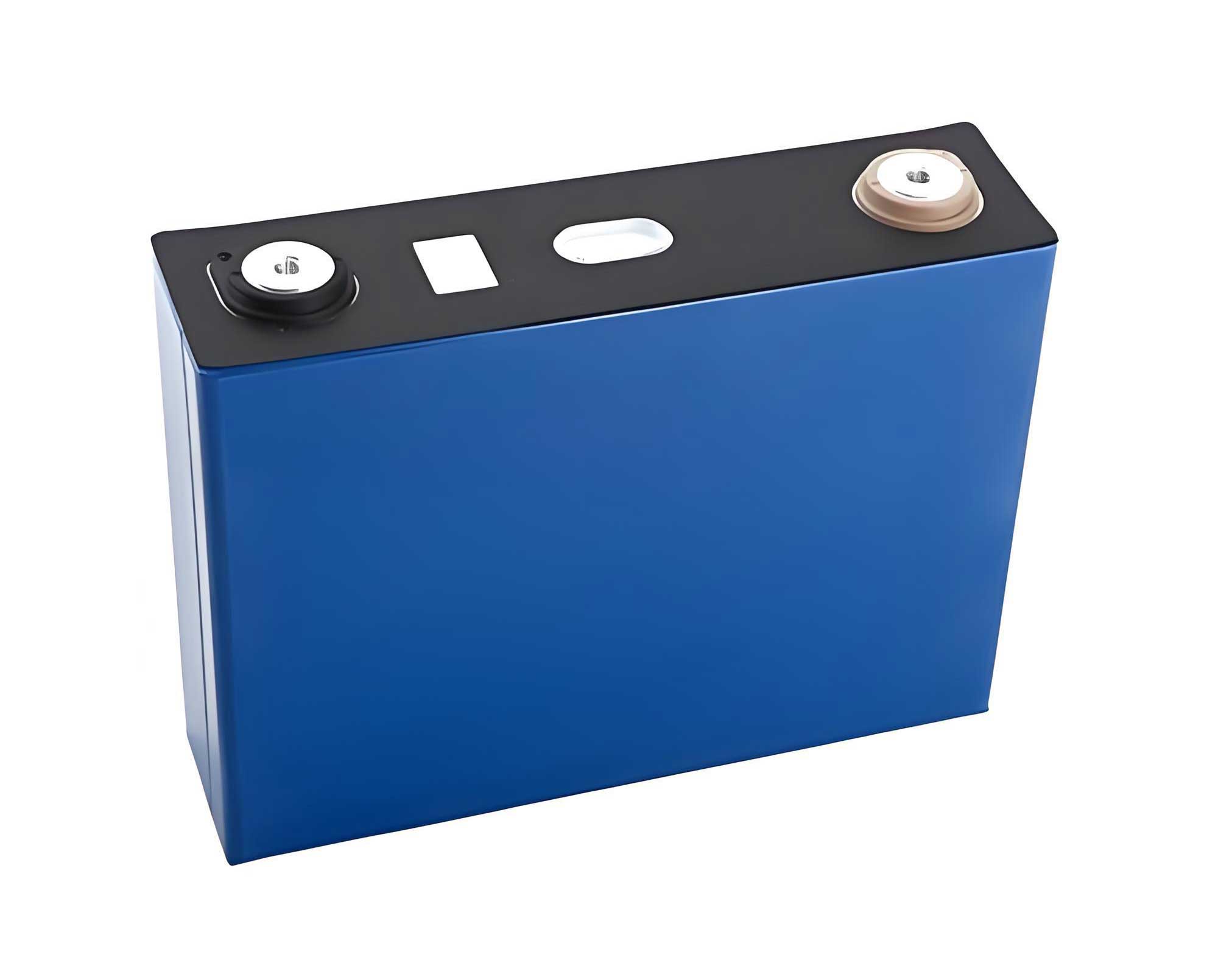
The fundamental challenge with any LiFePO4 battery module lies in its inherent risk during fault conditions. While known for better thermal stability compared to some cathode chemistries, a large-format LiFePO4 battery, when driven into thermal runaway, releases substantial energy and high-temperature ejecta. This can readily initiate thermal runaway in adjacent cells, leading to module- or pack-level catastrophe. The heat transfer mechanism driving this propagation can be simplified using Fourier’s law for one-dimensional conduction through a barrier material positioned between cells:
$$ q = -k A \frac{\Delta T}{L} $$
where \( q \) is the heat transfer rate (W), \( k \) is the thermal conductivity of the barrier (W/m·K), \( A \) is the cross-sectional area (m²), \( \Delta T \) is the temperature difference across the barrier (K), and \( L \) is the barrier thickness (m). This relationship highlights that for a given thermal insult, reducing the effective thermal conductivity \( k \) and/or increasing the barrier thickness \( L \) will reduce the heat flux \( q \) to the neighboring cell, thereby delaying or preventing its critical heating.
Aerogel mats, composed primarily of nano-silica networks, offer exceptionally low thermal conductivity, often below 0.02 W/(m·K), making them a prime candidate for this application. When placed between individual LiFePO4 battery cells, they act as a formidable resistive layer against conductive and radiative heat transfer during a thermal runaway event. The performance of such a barrier is not merely binary but quantifiable in terms of delay time and containment success.
Experimental Investigation on LiFePO4 Battery Modules
Our experimental setup was designed to emulate a realistic thermal abuse scenario within a compact LiFePO4 battery module. The core module consisted of five prismatic 55 Ah LiFePO4 cells connected in series, forming a module with a nominal voltage of 16 V and an energy capacity of 880 Wh. Each LiFePO4 battery was initially charged to 100% State of Charge (SOC).
The key variable was the aerogel mat thickness inserted between every adjacent pair of LiFePO4 battery cells. Four distinct test conditions were established, as summarized in Table 1.
| Test Case | Aerogel Mat Thickness (mm) | LiFePO4 Battery SOC | Primary Objective |
|---|---|---|---|
| 1 | 0.0 (No Mat) | 100% | Establish baseline propagation characteristics. |
| 2 | 0.5 | 100% | Evaluate minimum viable thickness for delay. |
| 3 | 1.2 | 100% | Assess improved inhibition performance. |
| 4 | 3.0 | 100% | Investigate superior containment capability. |
Thermal runaway was initiated in the first cell (Cell #1) using a constant-power 300 W heater attached to its side surface. An array of K-type thermocouples monitored the surface temperature at the geometric center of each LiFePO4 battery cell face. For tests with aerogel mats, thermocouples were placed on both sides of the mat to capture the temperature gradient across this critical interface. The propagation was considered suppressed if, following the thermal runaway of a preceding cell, the subsequent LiFePO4 battery did not undergo thermal runaway (defined by a surface temperature rise rate > 5 °C/s) within one hour and its temperature exhibited a declining trend.
Results and Analysis: Propagation Dynamics and Barrier Efficacy
Baseline Propagation (No Aerogel Mat)
In the absence of any barrier, thermal runaway propagated sequentially through all five LiFePO4 battery cells. The process followed a characteristic pattern: heater-induced temperature rise, safety vent opening (gas release), followed by a sharp temperature spike marking thermal runaway. The heat from the runaway cell rapidly elevated the temperature of its neighbor, inducing the same failure sequence. The total time for the entire LiFePO4 battery module to succumb was relatively short, providing a stark reference for the effectiveness of subsequent interventions.
Effect of Aerogel Mat Thickness on Propagation Timeline
The insertion of aerogel mats fundamentally altered the heat transfer dynamics. To quantify the delay effect, we define the Thermal Propagation Time Interval (\( t_d \)) between the onset of thermal runaway in two adjacent LiFePO4 battery cells:
$$ t_d^{(i \to j)} = t_j – t_i \quad (j = i+1) $$
where \( t_i \) and \( t_j \) are the thermal runaway onset times for cell \( i \) and cell \( j \), respectively.
The measured intervals for different aerogel mat thicknesses are consolidated in Table 2. A clear trend is observable: the presence of an aerogel mat increases every propagation time interval. Furthermore, the time intervals generally increase with the thickness of the aerogel mat, demonstrating a direct correlation between barrier mass and inhibition performance for the LiFePO4 battery module.
| Test Case (Mat Thickness) | \( t_d^{(1 \to 2)} \) (s) | \( t_d^{(2 \to 3)} \) (s) | \( t_d^{(3 \to 4)} \) (s) | \( t_d^{(4 \to 5)} \) (s) |
|---|---|---|---|---|
| 0.0 mm (Baseline) | 611 | 658 | 528 | 261 |
| 0.5 mm | 1158 | 1073 | 380 | Propagation Stopped |
| 1.2 mm | 1102 | 1294 | 693 | Propagation Stopped |
| 3.0 mm | 3869 | 1206 | Propagation Stopped | N/A |
An interesting secondary observation is the shortening of later intervals (e.g., \( t_d^{(3 \to 4)} \)) compared to earlier ones in some cases. This is attributed to the pre-heating effect; subsequent LiFePO4 battery cells start their thermal abuse from a higher initial temperature and experience a longer duration of elevated temperature from preceding runaway events, reducing the additional energy required for them to reach their own thermal runaway threshold.
Quantifying Thermal Barrier Efficiency
To compare the overall effectiveness of different aerogel mats in protecting the LiFePO4 battery module, we define a Thermal Barrier Efficiency (\( \eta \)). For configurations where propagation was completely stopped after the \( n \)-th cell, we calculate the total delay time for the first \( n \) cells to fail and compare it to the baseline time for the same number of cells. For the 0.5 mm and 1.2 mm mats, propagation was arrested after the 4th LiFePO4 battery cell. The efficiency is calculated as:
$$ \eta_{0.5} = \frac{T_{total, 0.5mm} – T_{total, baseline}}{T_{total, baseline}} \times 100\% $$
where \( T_{total, 0.5mm} = t_d^{(1 \to 2)} + t_d^{(2 \to 3)} + t_d^{(3 \to 4)} \) for the 0.5 mm case, and similarly for the baseline and 1.2 mm case. For the 3.0 mm mat, propagation stopped after the 3rd LiFePO4 battery cell, so the comparison is made for the time taken for three cells to fail.
$$
\eta_{0.5} = \frac{(1158+1073+380) – (611+658+528)}{(611+658+528)} \times 100\% \approx 45.6\%
$$
$$
\eta_{1.2} = \frac{(1102+1294+693) – (611+658+528)}{(611+658+528)} \times 100\% \approx 71.9\%
$$
$$
\eta_{3.0} = \frac{(3869+1206) – (611+658)}{(611+658)} \times 100\% \approx 299.9\%
$$
These calculations, summarized in Table 3, powerfully demonstrate the impact of thickness. While the 0.5 mm mat provides a significant delay, the 3.0 mm mat increases the total propagation time for the first three LiFePO4 battery cells by nearly 300% compared to the baseline, showcasing an exceptionally high barrier efficiency.
| Aerogel Mat Thickness | Cells Involved in Calculation | Total Propagation Time (s) | Thermal Barrier Efficiency (\( \eta \)) |
|---|---|---|---|
| 0.0 mm (Baseline) | Cells 1-4 | 1797 | 0% (Reference) |
| 0.5 mm | Cells 1-4 | 2611 | +45.6% |
| 1.2 mm | Cells 1-4 | 3089 | +71.9% |
| 0.0 mm (Baseline) | Cells 1-3 | 1269 | 0% (Reference) |
| 3.0 mm | Cells 1-3 | 5075 | +299.9% |
Temperature Gradient Analysis Across the Barrier
The insulating capability of the aerogel mat is directly reflected in the temperature difference (\( \Delta T \)) developed across it during a thermal runaway event. By placing thermocouples on both faces of the mat (one on the runaway cell side, one on the target cell side), we can measure this gradient. A larger \( \Delta T \) indicates that more heat is being “blocked” by the mat, preventing it from reaching the adjacent LiFePO4 battery. Our data consistently showed that for a given thermal runaway event, the measured \( \Delta T \) across the aerogel mat increased with the mat’s thickness. For instance, during the thermal runaway of the second cell, the peak \( \Delta T \) values were approximately 254°C for the 0.5 mm mat and 173°C for the 3.0 mm mat. This counter-intuitive result—where a thicker, more effective insulator results in a lower measured temperature on the protected side—actually confirms its superior performance. The thicker mat has a higher thermal resistance \( R_{th} \), given by:
$$ R_{th} = \frac{L}{kA} $$
With a larger \( L \), \( R_{th} \) increases. For a similar heat generation rate on the hot side, the temperature drop across the mat (\( \Delta T = q \cdot R_{th} \)) would be larger if \( q \) were constant. However, the thicker mat also significantly reduces the heat flux \( q \) reaching the protected LiFePO4 battery cell, thereby keeping its temperature lower and more uniform, which is the ultimate goal of containment.
Conclusions and Engineering Implications for LiFePO4 Battery Systems
This experimental investigation provides clear, quantitative evidence that aerogel mats are a highly effective solution for mitigating thermal runaway propagation in LiFePO4 battery modules. The key findings are:
- Effective Suppression: Aerogel mats with a thickness of 0.5 mm and above can successfully arrest the chain reaction of thermal runaway in a module of large-format 55 Ah LiFePO4 battery cells under the tested abuse condition.
- Thickness-Dependent Performance: The inhibition performance is strongly correlated with the aerogel mat thickness. Thicker mats provide exponentially greater delay times and higher thermal barrier efficiency. The 3.0 mm mat improved the propagation time for the first three LiFePO4 battery cells by approximately 300% compared to the unprotected baseline.
- Pre-Heating Effect: In successfully inhibited modules, the later cells experience prolonged exposure to elevated temperatures. This pre-conditioning effect means that if the barrier were to be breached or bypassed, the subsequent LiFePO4 battery could fail more quickly, a critical factor for safety system design.
- Thermal Gradient Evidence: Temperature measurements confirm the role of the aerogel mat as a high-performance thermal resistor, creating a significant temperature gradient that protects adjacent cells within the LiFePO4 battery module.
For engineers designing safe energy storage systems based on LiFePO4 battery technology, the integration of aerogel mats between cells or modules presents a viable and passive fire-hardening strategy. The choice of optimal thickness involves a trade-off between safety performance, volume/weight penalties, and cost. Based on this study, even a thin aerogel mat layer offers substantial propagation delay, while thicker mats can potentially isolate a fault to a very small number of cells within a LiFePO4 battery pack. Future work should focus on optimizing the placement (full wrapping vs. inter-cell sheets), coupling aerogel with active cooling systems, and validating performance under different initiation scenarios (e.g., internal short circuit, overcharge) for comprehensive safety assurance of LiFePO4 battery energy storage systems.