
The rapid global deployment of photovoltaic technology is a cornerstone of the transition to a sustainable energy future. Among the various technologies, cadmium telluride (CdTe) thin film solar panels have established themselves as a leading commercial contender due to their high efficiency, low cost of production, and competitive energy payback time. However, the responsible management of these panels at their end-of-life (EOL) presents a significant challenge and opportunity. CdTe thin film solar panels contain the scarce semiconductor metal tellurium (Te) and the regulated heavy metal cadmium (Cd). The primary production of tellurium is limited, as it is mostly obtained as a by-product of copper refining. Conversely, cadmium is a toxic element with strict environmental controls. Therefore, developing efficient, economical, and environmentally sound recycling processes is paramount to closing the material loop, mitigating potential environmental risks, and ensuring the long-term sustainability of the CdTe photovoltaic industry.
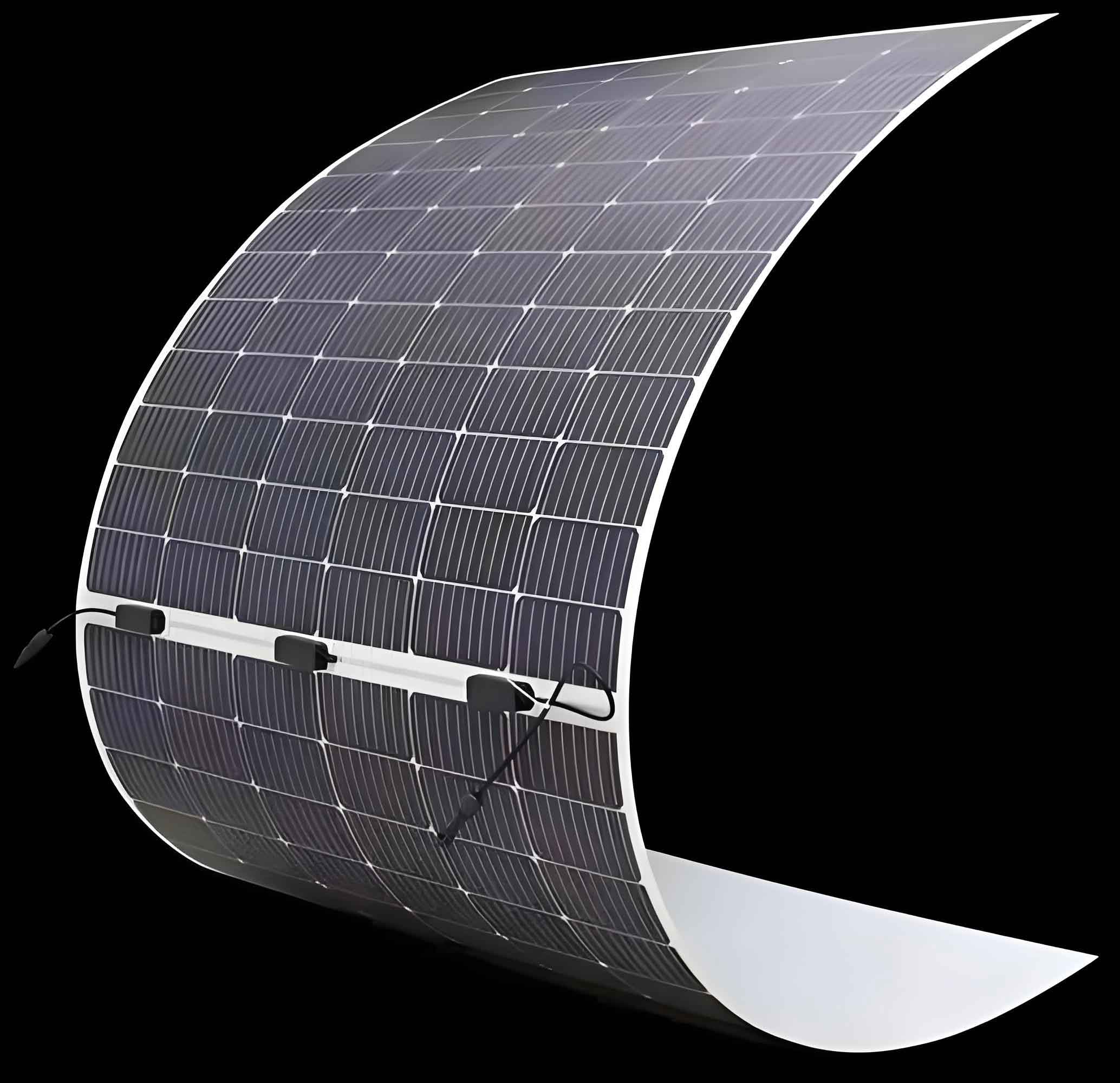
Current recycling strategies for EOL CdTe thin film solar panels can be broadly categorized into hydrometallurgical (liquid-phase) and pyrometallurgical (vapor-phase) methods. Hydrometallurgical approaches typically involve mechanical separation, followed by acid or alkaline leaching to dissolve the semiconductor layer, and subsequent purification steps to recover Te and Cd. While these methods can achieve high purity, they often involve long process flows, generate large volumes of acidic or alkaline wastewater containing heavy metals, and require complex solvent extraction or precipitation stages. Pyrometallurgical methods, such as vacuum distillation or chlorination-volatilization, operate at high temperatures to separate the volatile components. These can be efficient but often demand sophisticated equipment, high energy input, and precise control of atmosphere and pressure, leading to significant capital and operational costs.
In this study, we investigate an alternative thermal processing route: oxidative roasting. This method leverages the distinct physicochemical properties of CdTe and its oxidation products. Cadmium telluride is susceptible to oxidation in the presence of air at elevated temperatures. The resulting oxides, tellurium dioxide (TeO2) and cadmium oxide (CdO), possess characteristics highly favorable for separation. Specifically, TeO2 has a relatively low melting point (733°C) and sublimes readily above this temperature. Cadmium oxide, while not melting, also sublimes at temperatures above approximately 700°C. The core principle of our method is to oxidize the CdTe layer within the crushed panel matrix and then exploit the sublimation of these oxides at a carefully controlled temperature, allowing them to be carried away in the gas stream and subsequently collected via condensation or filtration, leaving behind a cleaned glass cullet. This approach aims to simplify the process, minimize secondary waste generation, and provide an economically viable pathway for resource recovery from spent CdTe thin film solar panels.
1. Experimental Methodology
1.1. Materials and Preparation
The feed material for this investigation consisted of decommissioned CdTe thin film solar panels. The panels typically have a multilayer structure: a front glass superstrate, transparent conductive oxide (TCO) layer, CdS/CdTe semiconductor stack, back contact, and a polymer encapsulant (often Ethylene-Vinyl Acetate, EVA) sealed with a back sheet or glass. The initial step involved manual and mechanical dismantling to remove aluminum frames and junction boxes. The core glass laminate was then subjected to a multi-stage size reduction process.
- Primary Crushing: The laminated sheets were broken into fragments of approximately 2-4 cm using a jaw crusher.
- Secondary Crushing: These fragments were further reduced to sub-1 cm pieces using a disc mill.
- Grinding: The material was finally ground into a fine powder using an agate mortar and pestle to increase the surface area for subsequent oxidative reactions.
The chemical composition of the ground powder was analyzed using X-ray Fluorescence (XRF). The major components, as expected, were glass-forming oxides. The critical target elements, Te and Cd, were present in the range of several hundred parts per million. A representative composition is summarized in Table 1.
| Component | SiO2 | Na2O | CaO | MgO | Al2O3 | Te* | Cd* | Others |
|---|---|---|---|---|---|---|---|---|
| Content (wt%) | ~68.5 | ~9.8 | ~15.4 | ~3.1 | ~1.5 | ~0.1 | ~0.05 | ~2.55 |
*Te and Cd are reported as elemental equivalents from XRF analysis of their oxides.
1.2. Oxidative Roasting Procedure
The experimental setup centered on a high-temperature tube furnace capable of operating up to 1300°C with ambient air as the oxidizing atmosphere. For each experiment, a precisely weighed sample (typically 10-20 g) of the ground panel powder was placed in an alumina crucible. The crucible was then positioned in the uniform temperature zone of the furnace.
The furnace was heated from room temperature to the designated target temperature at a controlled rate of 10°C per minute. Once the target temperature was reached, it was maintained (dwell time) for a specified duration. During this roasting period, several key processes occurred simultaneously:
- Oxidation of Organics: The polymer encapsulant (EVA) and other organic components decomposed and combusted.
- Oxidation of CdTe: The semiconductor material reacted with oxygen.
$$2CdTe(s) + 3O_2(g) \xrightarrow{\Delta} 2CdO(s) + 2TeO_2(s)$$ - Sublimation of Oxides: At sufficient temperature, the formed TeO2 and CdO sublimed into the gas phase.
$$TeO_2(s) \xrightarrow{>733^\circ C} TeO_2(g)$$
$$CdO(s) \xrightarrow{>700^\circ C} CdO(g)$$
The gaseous oxides, along with combustion products, were carried by the air flow out of the hot zone. In a scaled-up process, these would be directed to a baghouse filter or a condensation chamber for recovery. In this bench-scale study, the primary metric was the removal efficiency from the solid residue. After the dwell time, the furnace was allowed to cool naturally to room temperature. The solid residue, hereafter referred to as “roasted cullet” or “calcine,” was carefully collected from the crucible.
1.3. Analysis and Recovery Calculation
The effectiveness of the oxidative roasting process was evaluated by analyzing the Te and Cd content remaining in the roasted cullet. The cullet was again ground and homogenized. The concentrations of Te and Cd (reported as their oxide forms, TeO2 and CdO, via XRF or as elemental via ICP-MS) were determined.
The recovery rate (R) for each target element (Te or Cd) was calculated based on a mass balance approach, assuming negligible physical loss of the solid matrix during handling. The formula used is:
$$R_{\text{Element}} (\%) = \left(1 – \frac{C_{\text{residue}} \times M_{\text{residue}}}{C_{\text{feed}} \times M_{\text{feed}}}\right) \times 100\%$$
Where:
\(C_{\text{residue}}\) = Concentration of the element in the roasted cullet.
\(M_{\text{residue}}\) = Mass of the roasted cullet.
\(C_{\text{feed}}\) = Concentration of the element in the original feed powder.
\(M_{\text{feed}}\) = Mass of the original feed powder.
The parameters systematically investigated were:
- Roasting Temperature: Varied between 400°C and 900°C.
- Roasting Time (Dwell Time): Varied between 30 and 90 minutes at optimal temperature.
2. Results and Discussion
2.1. Influence of Roasting Temperature
The roasting temperature is the most critical parameter, as it governs the kinetics of oxidation, the decomposition of organics, the softening of glass, and the rate of sublimation for TeO2 and CdO. A series of exploratory experiments was conducted to understand the thermal behavior of the panel composite.
At lower temperatures (400-500°C), the EVA encapsulant was fully pyrolyzed and combusted. The glass substrate showed signs of softening at around 450°C but did not melt. Crucially, at these temperatures, the sublimation of the oxides is minimal. At 600°C, the glass matrix began to fuse into a melt, which is beneficial as it may help liberate the embedded semiconductor particles, exposing them to the oxidizing atmosphere. However, efficient sublimation requires temperatures above the sublimation points of the oxides.
To quantify the temperature effect on recovery, experiments were conducted between 600°C and 800°C with a fixed dwell time of 30 minutes. The concentration of Te and Cd remaining in the solid residue decreased significantly with increasing temperature, as shown in Table 2.
| Roasting Temperature (°C) | Dwell Time (min) | CdO in Residue (wt%) | TeO2 in Residue (wt%) | Estimated Cd Recovery (%) | Estimated Te Recovery (%) |
|---|---|---|---|---|---|
| 600 | 30 | 0.060 | 0.050 | ~62.5 | ~70.6 |
| 650 | 30 | 0.050 | 0.030 | ~68.8 | ~82.4 |
| 750 | 30 | 0.033 | 0.024 | ~79.4 | ~85.9 |
| 800 | 30 | 0.030 | 0.021 | ~81.3 | ~87.6 |
The data indicates a strong positive correlation between temperature and recovery in the 600-750°C range. The recovery improvements are due to increased oxidation and sublimation rates governed by the Arrhenius equation. The reaction rate constant \(k\) is expressed as:
$$k = A e^{-E_a/(RT)}$$
where \(E_a\) is the activation energy for the sublimation process, \(R\) is the gas constant, and \(T\) is the absolute temperature. A higher \(T\) exponentially increases \(k\), driving the sublimation process more effectively.
Between 750°C and 800°C, the marginal gain in recovery diminishes. This suggests that at 750°C, the process approaches a practical equilibrium or maximum removal under the given gas flow and sample geometry conditions. Considering energy consumption and potential volatilization of other minor glass components (e.g., alkali oxides), 750°C was selected as the optimal temperature for further investigation. This temperature is sufficiently high to ensure complete organic removal, glass melt formation, and rapid sublimation of both TeO2 and CdO, which is essential for processing CdTe thin film solar panels efficiently.
2.2. Influence of Roasting Time
With the temperature fixed at the optimal 750°C, the influence of dwell time was studied. The dwell time must be sufficient for the heat to penetrate the sample bed, for the oxidation reactions to go to completion, and for the sublimated vapors to diffuse out of the melt and be carried away. The results are presented in Table 3.
| Roasting Temperature (°C) | Dwell Time (min) | CdO in Residue (wt%) | TeO2 in Residue (wt%) | Estimated Cd Recovery (%) | Estimated Te Recovery (%) |
|---|---|---|---|---|---|
| 750 | 30 | 0.033 | 0.024 | ~79.4 | ~85.9 |
| 750 | 60 | 0.029 | 0.021 | ~81.9 | ~87.6 |
| 750 | 90 | 0.027 | 0.019 | ~83.1 | ~88.8 |
Extending the dwell time from 30 to 60 minutes led to a noticeable decrease in the residual oxide content, enhancing recovery. This corresponds to allowing more time for the diffusion-controlled sublimation process to occur from within the molten glass matrix. The process can be modeled simplistically using Fick’s laws of diffusion, where the amount of material sublimated is proportional to the square root of time for a diffusion-limited mechanism. However, the improvement from 60 to 90 minutes was less significant, indicating a transition towards a rate-limiting step other than diffusion from the bulk (e.g., equilibrium vapor pressure conditions at the surface). For an industrial process aiming for high throughput, a 60-minute dwell time represents a favorable balance between high recovery and operational efficiency in recycling lines for thin film solar panels.
2.3. Optimal Condition Verification and Process Efficacy
Based on the parametric study, a verification experiment was conducted under the identified optimal conditions: a roasting temperature of 750°C and a dwell time of 60 minutes. The results confirmed the efficacy of the oxidative roasting method for reclaiming valuable materials from decommissioned CdTe thin film solar panels.
| Parameter | CdO in Residue (wt%) | TeO2 in Residue (wt%) | Cd in Residue (ppm) | Te in Residue (ppm) | Final Cd Recovery (%) | Final Te Recovery (%) |
|---|---|---|---|---|---|---|
| Value | 0.029 | 0.021 | ~47 | ~58 | 89.27 | 93.96 |
The final recoveries of 89.27% for Cd and 93.96% for Te are highly promising. The slightly higher recovery of Te is consistent with the physicochemical properties of its oxide; TeO2 has a defined melting point and may form a low-viscosity melt that facilitates its own vaporization, whereas CdO sublimates directly from the solid state. The residual concentrations of Te and Cd in the glass cullet (~58 ppm and ~47 ppm, respectively) are significantly reduced from their initial values. This “cleaned” glass cullet could potentially be directed to other recycling streams (e.g., glass wool or construction aggregate) with a much lower leaching risk, addressing a major environmental concern associated with landfilling CdTe thin film solar panels.
The proposed mechanism is effective because it integrates several steps into one unit operation: organic destruction, semiconductor oxidation, and volatilization separation. The process avoids the use of liquid acids or solvents, thereby eliminating the generation of toxic aqueous effluents that are characteristic of hydrometallurgical routes for treating thin film solar panels.
3. Process Implications and Scaling Considerations
The oxidative roasting method presents a streamlined alternative for the recycling of CdTe thin film solar panels. Its simplicity is a key advantage. The core process requires essentially a high-temperature roasting furnace (similar to those used in metallurgy or ceramics) coupled with an off-gas treatment system designed to capture fine oxide fumes. This is less complex than systems requiring vacuum, controlled reactive atmospheres, or multi-stage leaching and purification.
From an economic perspective, the primary cost drivers are energy for heating and gas cleaning. The optimal temperature of 750°C is lower than the melting point of pure silica but is sufficient for soda-lime glass, which is the typical substrate. This temperature range is industrially accessible and less energy-intensive than processes operating above 1000°C. The recovered TeO2 and CdO fumes, collected in a baghouse filter, form a concentrated secondary raw material. This mixed oxide powder can then be processed in a dedicated tellurium or cadmium refinery using conventional hydrometallurgical methods (e.g., dissolution in acid, followed by selective recovery). The volume and complexity of this secondary refining step are drastically reduced compared to treating the entire panel mass.
Environmental benefits are significant. The process destroys organic encapsulants thermally. Heavy metals are stabilized in the oxide form within the filter cake, preventing their dispersion. The volume of solid waste is reduced to inert glass cullet and a small amount of concentrated filter dust, both of which are more manageable than untreated panel fragments. This aligns with the principles of a circular economy for photovoltaic materials, ensuring that critical and hazardous materials from thin film solar panels are effectively captured and redirected into new production cycles.
For industrial implementation, further engineering studies are warranted. These include:
- Optimizing Gas Flow and Atmosphere: Determining the minimum air flow required for oxidation and vapor entrainment, and potentially using slightly enriched oxygen to enhance kinetics.
- Off-gas System Design: Engineering an efficient condensation and filtration system to achieve high collection efficiency for the sub-micron oxide particles. The design must handle the thermal load and potential abrasiveness of the dust.
- Continuous Process Development: Transitioning from batch crucible tests to a continuous process, such as using a rotary kiln, which would be essential for handling the large volume of retiring thin film solar panels in the coming decades.
- Fate of Other Elements: Investigating the behavior of other panel components, such as the tin from SnO2 TCO layers or other dopants, during the roasting process.
4. Conclusion
This experimental study demonstrates the high feasibility of using oxidative roasting as a primary treatment step for the recovery of tellurium and cadmium from end-of-life CdTe thin film solar panels. The method capitalizes on the fundamental properties of CdTe and its oxides—specifically, the ease of oxidation and the subsequent sublimation of TeO2 and CdO at elevated temperatures.
The key findings are:
- The optimal operating parameters for maximum recovery were identified as a roasting temperature of 750°C and a dwell time of 60 minutes under an air atmosphere.
- Under these conditions, recovery rates of 93.96% for tellurium and 89.27% for cadmium were achieved, effectively concentrating these valuable and regulated elements into a collectible oxide fume.
- The process simultaneously destroys the polymer encapsulant and yields a cleaned glass residue, addressing multiple aspects of panel decommissioning in a single thermal step.
Compared to conventional hydrometallurgical or complex pyrometallurgical methods, the oxidative roasting approach offers a simpler, more direct pathway. It minimizes the generation of secondary liquid wastes, reduces process stages, and likely offers a favorable economic profile due to its operational simplicity. This work contributes a viable technical solution to the growing challenge of photovoltaic waste management, supporting the sustainable life-cycle of CdTe thin film solar panels by enabling efficient closed-loop recycling of their critical material constituents. Future work should focus on pilot-scale validation and integrated system design to advance this technology toward commercial application.