
As the global demand for energy storage solutions surges, the limitations of lithium-ion batteries (LIBs) become increasingly apparent due to resource scarcity and cost concerns. In this context, I turn my attention to sodium-ion batteries (SIBs) as a promising alternative. Sodium is abundant in the Earth’s crust, with reserves over a thousand times greater than lithium, making sodium-ion battery technology a cost-effective and sustainable option for large-scale energy storage. The working principle of a sodium-ion battery is similar to that of lithium-ion batteries, relying on the reversible insertion and extraction of sodium ions between the cathode and anode. This article explores the recent progress in electrode materials for sodium-ion batteries, focusing on cathode and anode developments, and discusses the industrialization trajectory. Throughout, I will emphasize key aspects using tables and formulas to summarize critical data and concepts, while repeatedly highlighting the term “sodium-ion battery” to underscore its importance.
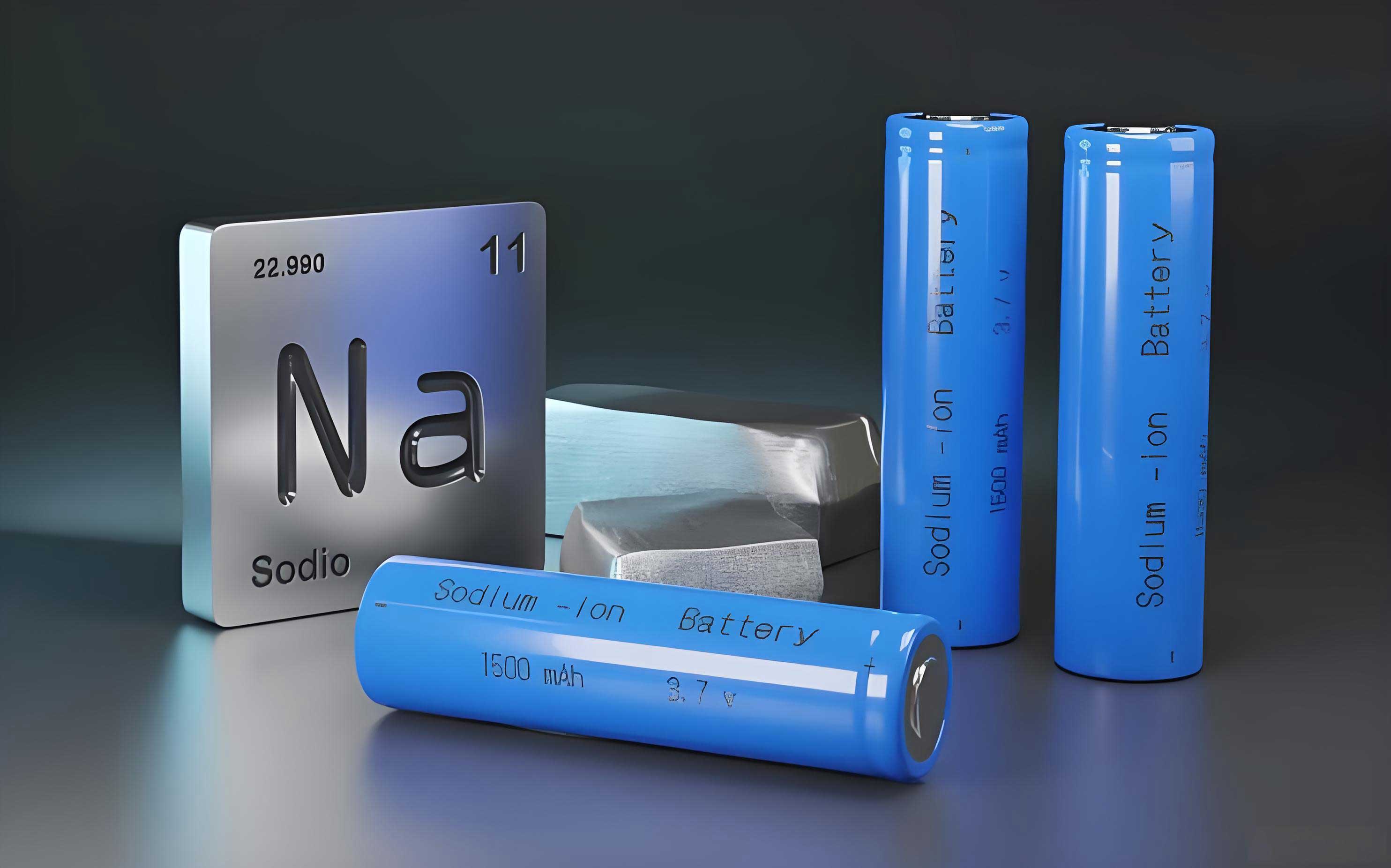
The evolution of sodium-ion battery technology has been revitalized in recent years, driven by the need for affordable storage systems. Electrode materials are pivotal in determining the performance, cost, and safety of sodium-ion batteries. For cathodes, insertion-type materials such as layered transition metal oxides, polyanion compounds, and Prussian blue analogues are at the forefront of research. Anodes primarily involve hard carbon derivatives, which offer reasonable capacity and cycling stability. In this analysis, I delve into each category, assessing their electrochemical properties, challenges, and potential for commercialization. The sodium-ion battery landscape is rapidly evolving, with several companies advancing toward market-ready products, indicating a bright future for this technology.
Cathode Materials for Sodium-Ion Batteries
Cathode materials in sodium-ion batteries must facilitate reversible sodium ion intercalation with high capacity, voltage, and cycle life. I categorize them into three main types: layered oxides, polyanion compounds, and Prussian blue analogues. Each has distinct structural and electrochemical characteristics that influence their suitability for sodium-ion battery applications.
Layered Transition Metal Oxides
Layered oxides with the general formula $$ \text{Na}_x\text{MO}_2 $$ (where M is a transition metal) are prominent due to their high energy density. Based on the stacking sequence, they are classified into O3 and P2 types. The P2 phase generally exhibits better rate capability and stability, while O3 phases offer higher specific capacity. For instance, O3-type NaFeO2 shows reversible sodium extraction/insertion, but its performance is sensitive to voltage cut-offs. The electrochemical reaction can be represented as:
$$ \text{NaFeO}_2 \leftrightarrow \text{Na}_{1-x}\text{FeO}_2 + x\text{Na}^+ + x e^- $$
with a reversible capacity around 80 mAh/g when charged below 3.5 V. In contrast, P2-type materials like Na0.67MnO2 demonstrate improved cycling, though they suffer from structural degradation over time. To enhance stability, doping strategies are employed; for example, introducing copper or nickel can suppress phase transitions. The table below summarizes key layered oxide cathodes for sodium-ion batteries:
| Material Type | Formula Example | Specific Capacity (mAh/g) | Average Voltage (V vs. Na/Na+) | Cycling Stability |
|---|---|---|---|---|
| O3-Type | NaFeO2 | ~80 | ~3.0 | Moderate |
| P2-Type | Na0.67MnO2 | ~120 | ~2.8 | Good |
| O3/P2 Hybrid | Na0.9Cu0.22Fe0.3Mn0.48O2 | ~100 | ~3.5 | Improved |
The sodium storage mechanism in layered oxides involves redox reactions of transition metals, such as Fe3+/Fe4+ or Mn3+/Mn4+. However, issues like moisture sensitivity and phase changes hinder long-term performance. Research indicates that controlling the sodium content and using protective coatings can mitigate these problems, paving the way for more durable sodium-ion battery cathodes.
Polyanion Compounds
Polyanion materials offer robust frameworks due to the presence of polyanionic groups (e.g., (PO4)3−, (SO4)2−), leading to high thermal stability and safety. A classic example is NASICON-type Na3V2(PO4)3, which provides two voltage plateaus corresponding to V3+/V4+ and V2+/V3+ redox couples. The sodium extraction/insertion can be expressed as:
$$ \text{Na}_3\text{V}_2(\text{PO}_4)_3 \leftrightarrow \text{Na}_{3-x}\text{V}_2(\text{PO}_4)_3 + x\text{Na}^+ + x e^- $$
with a theoretical capacity of about 117 mAh/g for the V3+/V4+ transition. Fluorinated variants like Na3V2(PO4)2F3 deliver higher voltages, enhancing energy density. However, toxicity concerns with vanadium and fluorine pose environmental challenges. Recent studies focus on iron-based polyanions, such as Na2Fe2(SO4)3 or Na2Fe2P2O7, to reduce costs. The table below compares polyanion cathodes for sodium-ion batteries:
| Material | Formula | Specific Capacity (mAh/g) | Voltage Plateau (V) | Advantages |
|---|---|---|---|---|
| NASICON | Na3V2(PO4)3 | ~110 | 3.4 and 1.6 | Good cycle life |
| Fluorophosphate | Na3V2(PO4)2F3 | ~120 | 3.6 and 4.1 | High voltage |
| Iron Sulfate | Na2Fe2(SO4)3 | ~100 | ~3.8 | Low cost |
The structural stability of polyanion compounds arises from the strong covalent bonds in the polyanionic units, which minimize volume changes during sodium cycling. For sodium-ion battery applications, optimizing carbon coating and particle morphology has been shown to improve electronic conductivity and rate capability.
Prussian Blue Analogues
Prussian blue analogues (PBAs) with the general formula $$ A_xM[\text{Fe(CN)}_6]_y \cdot n\text{H}_2O $$ (where A is Na, K, etc., and M is a transition metal) are attractive due to their open framework and facile synthesis. The three-dimensional channels allow rapid sodium ion diffusion, enabling high-rate performance. For example, Na1.63Fe2(CN)6·1.75H2O exhibits a capacity of 130 mAh/g at room temperature, with redox activity from Fe2+/Fe3+ couples. The reaction can be simplified as:
$$ \text{Na}_{1.63}\text{Fe}_2(\text{CN})_6 \leftrightarrow \text{Na}_{1.63-x}\text{Fe}_2(\text{CN})_6 + x\text{Na}^+ + x e^- $$
However, the presence of lattice water often leads to capacity fading and poor initial Coulombic efficiency. Strategies like thermal treatment or doping with other metals (e.g., Ni, Co) have been explored to reduce water content and stabilize the structure. The table below outlines key PBA cathodes for sodium-ion batteries:
| PBA Type | Example Composition | Specific Capacity (mAh/g) | Average Voltage (V) | Challenges |
|---|---|---|---|---|
| Iron-based | Na1.63Fe2(CN)6 | ~130 | ~3.2 | Water sensitivity |
| Manganese-iron | Na1.72MnFe(CN)6 | ~130 | ~3.2 | Cycle life |
| Doped variants | Na2CoMn(CN)6 | ~140 (theoretical) | ~3.5 | Synthesis control |
Despite challenges, Prussian blue analogues hold promise for low-cost sodium-ion battery production, especially for stationary storage where weight is less critical. Ongoing research aims to perfect drying processes and minimize defects to harness their full potential.
Anode Materials for Sodium-Ion Batteries
Anode materials must accommodate sodium ions with minimal volume expansion and high reversibility. While various options exist, hard carbon (HC) is the most advanced for sodium-ion battery applications. Derived from biomass or polymers, hard carbon exhibits a disordered structure with micropores that provide active sites for sodium storage. The sodium insertion mechanism involves three pathways: intercalation between graphene-like layers, adsorption on surfaces and defects, and pore filling. The overall reaction can be represented as:
$$ \text{C} + x\text{Na}^+ + x e^- \leftrightarrow \text{Na}_x\text{C} $$
with typical capacities ranging from 250 to 300 mAh/g. However, hard carbon anodes often suffer from low initial Coulombic efficiency due to irreversible sodium consumption in solid electrolyte interphase (SEI) formation and side reactions. To address this, modifications such as heteroatom doping (e.g., nitrogen, sulfur) or pre-sodiation have been proposed. The table below summarizes anode materials for sodium-ion batteries:
| Anode Material | Type | Specific Capacity (mAh/g) | Initial Coulombic Efficiency (%) | Cycling Performance |
|---|---|---|---|---|
| Hard Carbon | Biomass-derived | ~250-300 | 70-85 | Good |
| Hard Carbon | Polymer-derived | ~200-280 | 65-80 | Moderate |
| Alloy-based | Sn, Sb composites | ~400-600 | Low (~50) | Poor due to volume change |
Alternative anodes like titanium-based oxides (e.g., Na2Ti3O7) offer better stability but lower capacity. For sodium-ion battery commercialization, hard carbon remains the preferred choice due to its balance of performance and cost. Research continues to optimize pyrolysis conditions and surface chemistry to enhance efficiency and rate capability.
Industrialization of Sodium-Ion Batteries
The transition from lab-scale research to commercial products is accelerating for sodium-ion battery technology. Several companies worldwide are developing proprietary chemistries and manufacturing processes. For instance, some firms focus on layered oxide cathodes combined with hard carbon anodes, achieving energy densities around 100-160 Wh/kg in prototype cells. Others leverage Prussian blue analogues for their rapid charging capabilities, targeting applications like data center backup and electric vehicles. The sodium-ion battery market is driven by the need for low-cost storage, especially in sectors where lithium-ion batteries are economically prohibitive.
Key industrial advancements include the use of earth-abundant materials, compatibility with existing lithium-ion battery production lines, and improved safety profiles. For example, sodium-ion batteries exhibit better thermal stability and can operate over a wider temperature range. The following table highlights recent industrial progress in sodium-ion battery technology:
| Company/Initiative | Cathode Material | Anode Material | Energy Density (Wh/kg) | Target Applications |
|---|---|---|---|---|
| Company A | Layered oxide (Cu-based) | Hard carbon from coal | ~100-120 | E-bikes, energy storage |
| Company B | Prussian blue analogue | Hard carbon | ~70-90 | Stationary storage, UPS |
| Company C | Polyanion (vanadium-based) | Hard carbon | ~80-100 | Grid storage |
Challenges remain in scaling up production, reducing costs further, and ensuring long cycle life. However, with continued investment and policy support, sodium-ion battery systems are poised to complement lithium-ion batteries in the energy storage landscape. The potential for recycling and sustainability adds to their appeal, making sodium-ion battery technology a cornerstone of future renewable energy integration.
Future Perspectives and Conclusion
Looking ahead, the development of sodium-ion battery technology hinges on material innovations and system optimization. For cathodes, research is directed toward manganese-rich layered oxides and water-stable Prussian blue analogues to enhance performance and reduce costs. Polyanion compounds may see renewed interest if toxicity issues are mitigated. For anodes, hard carbon modifications and novel composites could push capacities closer to theoretical limits. Additionally, electrolyte formulations tailored for sodium-ion batteries—such as ether-based or concentrated salts—may improve interfacial stability and cycling efficiency.
From a broader perspective, the sodium-ion battery ecosystem must address integration challenges, including battery management systems and pack design. Standardization of materials and manufacturing processes will be crucial for mass adoption. I believe that sodium-ion batteries will play a vital role in decarbonizing the energy sector, particularly for large-scale storage where cost and safety are paramount. The synergy between academic research and industrial deployment will accelerate this transition, ultimately making sodium-ion battery technology a mainstream solution.
In conclusion, sodium-ion batteries represent a transformative energy storage platform with immense potential. Through continuous advances in electrode materials—ranging from layered oxides and polyanions to Prussian blue cathodes, and hard carbon anodes—the performance gaps are narrowing. The ongoing industrialization efforts signal a promising future where sodium-ion batteries complement or even replace lithium-ion batteries in many applications. As I reflect on the progress, it is clear that the sodium-ion battery field is vibrant and evolving, poised to contribute significantly to a sustainable energy future.