
In recent years, the growing demand for energy storage solutions has highlighted the limitations of lithium-ion batteries, primarily due to lithium resource scarcity and uneven distribution. As a result, sodium-ion batteries have garnered significant attention as a promising alternative. Sodium-ion batteries leverage abundant and low-cost sodium resources, making them ideal for large-scale energy storage applications, such as grid storage and low-speed electric vehicles. Among the various components of a sodium-ion battery, the cathode material plays a crucial role in determining energy density, cost, and overall performance. In this context, iron-based sulfate cathode materials have emerged as a focal point of research due to their high operating voltage, economic viability, and environmental sustainability. This article reviews the progress in iron-based sulfate cathode materials for sodium-ion batteries, emphasizing their structural characteristics, synthesis methods, and strategies for performance enhancement. I will delve into the electrochemical properties, challenges, and future directions, with a particular focus on how these materials can advance the sodium-ion battery technology.
The sodium-ion battery operates on principles similar to lithium-ion batteries, involving the intercalation and deintercalation of sodium ions between the cathode and anode. The general reaction can be represented as:
$$ \text{Cathode: } \text{Na}_x\text{M}_y(\text{SO}_4)_z \leftrightarrow \text{Na}_{x-\delta}\text{M}_y(\text{SO}_4)_z + \delta\text{Na}^+ + \delta e^- $$
$$ \text{Anode: } \text{Na}^+ + e^- + \text{Host} \leftrightarrow \text{NaHost} $$
Where M represents transition metals like iron. The average voltage of a sodium-ion battery cell is influenced by the cathode material’s redox potential, which for iron-based sulfates is notably high due to the inductive effect of the sulfate group. This high voltage contributes to improved energy density, a key metric for battery performance calculated as:
$$ \text{Energy Density} = \text{Capacity} \times \text{Average Voltage} $$
For instance, the alluaudite-type Na2+2xFe2-x(SO4)3 offers an average voltage of approximately 3.8 V versus Na+/Na, which is among the highest for iron-based cathodes in sodium-ion batteries. This makes it a compelling candidate for high-energy applications. The following sections explore the types of iron-based sulfate materials, their synthesis, and optimization approaches.
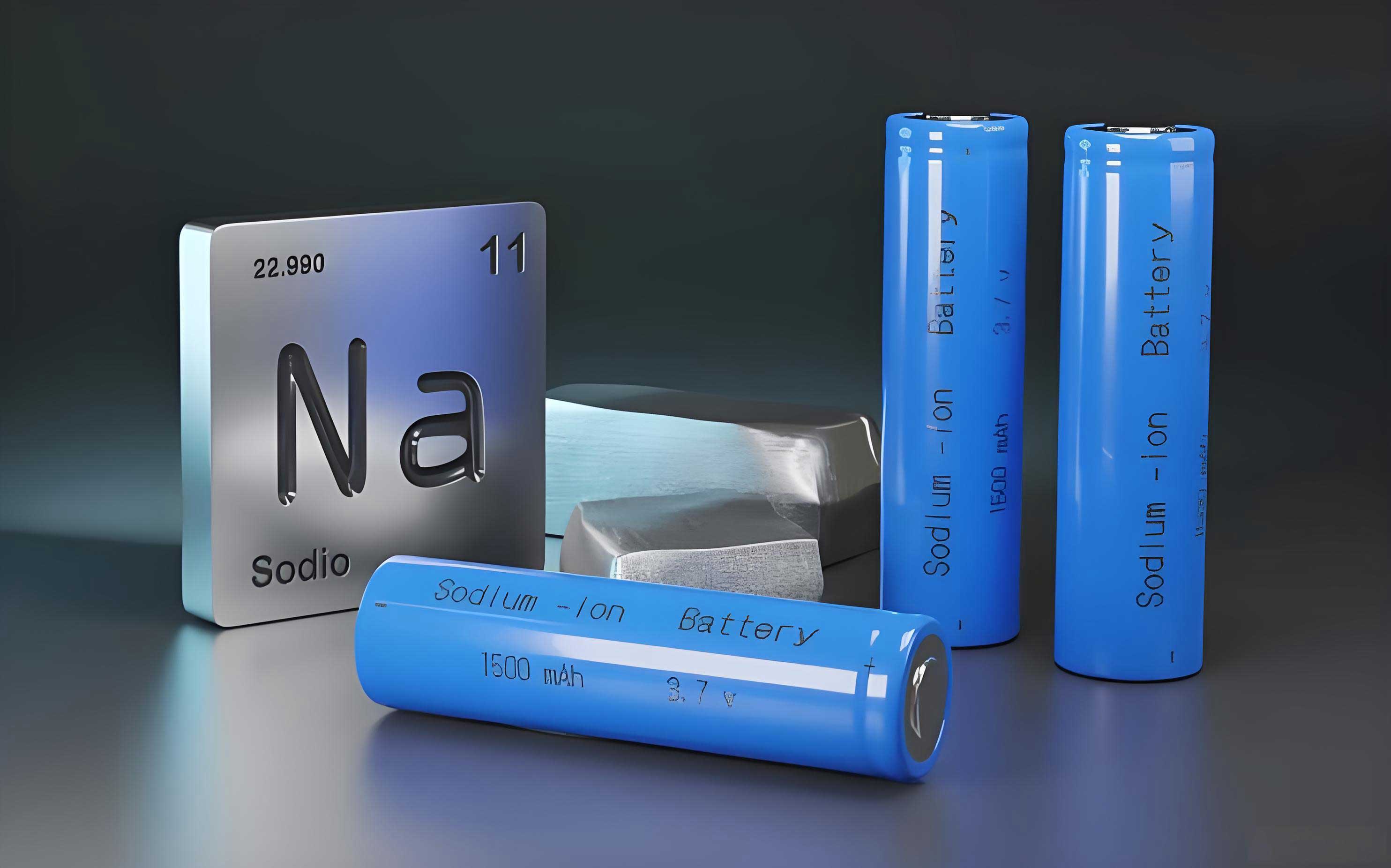
Iron-based sulfate cathode materials primarily include hydrated and anhydrous compounds, such as Na2Fe(SO4)2·nH2O (where n = 0, 2, 4), NaFe(SO4)2, and the alluaudite-type Na2+2xFe2-x(SO4)3. These materials exhibit varying electrochemical properties due to differences in crystal structure and water content. For example, the redox potential of the Fe3+/Fe2+ couple in these materials can be expressed as:
$$ E = E^0 – \frac{RT}{nF} \ln\left(\frac{[\text{Fe}^{2+}]}{[\text{Fe}^{3+}]}\right) $$
Where E0 is the standard potential, R is the gas constant, T is temperature, n is the number of electrons transferred, and F is Faraday’s constant. In Na2Fe(SO4)2·2H2O, the voltage is around 3.25 V, while in anhydrous Na2Fe(SO4)2, it reaches 3.6 V. The alluaudite-type materials, however, achieve up to 3.8 V, enhancing the energy density of sodium-ion batteries. Table 1 summarizes the key properties of these iron-based sulfate cathode materials, highlighting their theoretical capacity, average voltage, and structural features.
| Material | Crystal Structure | Theoretical Capacity (mAh/g) | Average Voltage (V vs. Na+/Na) | Remarks |
|---|---|---|---|---|
| Na2Fe(SO4)2·4H2O | Blödite-type | ~70 | 3.3 | Hydrated, moderate stability |
| Na2Fe(SO4)2·2H2O | Kröhnkite-type | ~70 | 3.25 | Hydrated, prone to dehydration |
| Na2Fe(SO4)2 | Anhydrous | ~100 | 3.6 | High thermal stability |
| NaFe(SO4)2 | Eldfellite-type | ~80 | 3.0 | Low cost, but limited capacity |
| Na2+2xFe2-x(SO4)3 (x=0.25) | Alluaudite-type | ~110 | 3.8 | High voltage, stable framework |
The alluaudite-type Na2+2xFe2-x(SO4)3 is particularly noteworthy for sodium-ion batteries. Its three-dimensional framework, composed of FeO6 octahedra and SO4 tetrahedra, provides open channels for sodium ion diffusion, leading to good kinetics. The sodium ion diffusion coefficient D can be estimated using the Arrhenius equation:
$$ D = D_0 \exp\left(-\frac{E_a}{RT}\right) $$
Where D0 is the pre-exponential factor and Ea is the activation energy. For Na2Fe2(SO4)3, studies indicate a high ionic conductivity, which is beneficial for fast-charging sodium-ion batteries. However, electronic conductivity remains a challenge, often requiring composite formation with carbon materials.
Synthesis methods for iron-based sulfate cathode materials significantly impact their purity, morphology, and electrochemical performance. Common techniques include low-temperature solid-state synthesis, spray drying, freeze drying, and others. Each method has distinct advantages and limitations, as summarized in Table 2. The choice of synthesis route is critical because sulfate groups are sensitive to moisture and high temperatures, potentially leading to decomposition or impurity formation.
| Synthesis Method | Advantages | Disadvantages | Typical Impurities | Impact on Sodium-Ion Battery Performance |
|---|---|---|---|---|
| Low-Temperature Solid-State | Simple, scalable, cost-effective | Particle agglomeration, lower purity | FeSO4, Fe3O4 | Moderate capacity, requires carbon coating |
| Spray Drying | Uniform morphology, short annealing time | High energy consumption, limited scalability | Minimal | Good rate capability, but capacity may be lower |
| Freeze Drying | High purity, controlled particle size | Time-consuming, expensive | None | High capacity and cycling stability |
| Co-precipitation | Precise stoichiometry, homogeneous mixing | Complex process, multiple parameters | Variable | Depends on carbon integration |
| Ionothermal | Tunable morphology, low temperature | Ionic liquid cost, recovery issues | Low | Moderate electrochemical performance |
In low-temperature solid-state synthesis, precursors like Na2SO4 and FeSO4·7H2O are mixed and heated under inert atmosphere at around 350°C. The reaction can be represented as:
$$ (1+x)\text{Na}_2\text{SO}_4 + (2-x)\text{FeSO}_4 \rightarrow \text{Na}_{2+2x}\text{Fe}_{2-x}(\text{SO}_4)_3 + \text{by-products} $$
To minimize impurities, excess Na2SO4 is often used, leading to non-stoichiometric compositions. For spray drying, an aqueous solution of precursors is atomized and dried, forming intermediate hydrates that decompose upon annealing. This method yields spherical particles suitable for electrode fabrication in sodium-ion batteries. Freeze drying, on the other hand, involves rapid freezing and sublimation, resulting in nanomaterials with enhanced surface area and ion diffusion paths. The performance of sodium-ion batteries using these materials is often evaluated through galvanostatic charge-discharge tests, where the capacity retention over cycles is a key metric.
To address the inherent limitations of iron-based sulfate cathodes, such as poor electronic conductivity and air sensitivity, various performance enhancement strategies have been developed. These include surface modification with carbon coatings and structural design through nanoengineering. Carbon coating, typically using graphene, carbon nanotubes, or conductive carbon black, forms a protective layer that prevents oxidation and improves electron transport. The effectiveness of carbon coating can be quantified by the enhancement in electronic conductivity σ, given by:
$$ \sigma = \sigma_0 + \Delta\sigma_{\text{carbon}} $$
Where σ0 is the intrinsic conductivity of the sulfate material and Δσcarbon is the contribution from carbon. In many cases, carbon coating can increase conductivity by several orders of magnitude, directly benefiting the rate capability of sodium-ion batteries. Additionally, structural design approaches, such as creating porous architectures or hybrid composites, facilitate sodium ion diffusion and accommodate volume changes during cycling. For example, embedding Na2+2xFe2-x(SO4)3 nanoparticles in a graphene network reduces the diffusion length for sodium ions, as described by the diffusion equation:
$$ \tau = \frac{L^2}{D} $$
Where τ is the diffusion time and L is the diffusion length. Shorter L values, achieved through nanostructuring, lead to faster kinetics and better performance at high currents. Table 3 compares different optimization strategies and their impact on the electrochemical properties of iron-based sulfate cathodes in sodium-ion batteries.
| Optimization Strategy | Materials Used | Key Improvements | Challenges | Typical Performance in Sodium-Ion Batteries |
|---|---|---|---|---|
| Carbon Coating | Graphene, Super P, CNTs | Enhanced electronic conductivity, moisture resistance | Uniform coating, cost of carbon materials | Capacity up to 110 mAh/g at 0.1C, cycle life >1000 cycles |
| Nanostructuring | Nanoparticles, nanofibers | Increased surface area, reduced ion diffusion path | Synthesis complexity, stability issues | High rate capability (e.g., 80 mAh/g at 20C) |
| Hybrid Composites | Graphene oxide, porous carbon | Combined ionic and electronic conduction | Integration uniformity, scalability | Energy density ~140 Wh/kg in full cells |
| Doping | Nitrogen-doped carbon | Improved wettability and conductivity | Controlled doping levels | Better cycling stability at high voltages |
In my analysis, I find that the integration of carbon materials not only boosts conductivity but also mitigates the air sensitivity of sulfate groups. For instance, in a sodium-ion battery with a Na2.4Fe1.8(SO4)3@graphene cathode, the carbon layer acts as a barrier against humidity, preserving the material’s integrity during storage and operation. This is crucial for commercializing sodium-ion batteries, as it reduces preprocessing requirements and costs. Moreover, structural designs like core-shell or porous frameworks enhance the mechanical stability, accommodating the strain from sodium ion insertion/extraction. The strain ε can be expressed as:
$$ \epsilon = \frac{\Delta V}{V_0} $$
Where ΔV is the volume change and V0 is the initial volume. For alluaudite-type materials, volume changes are relatively small (less than 5%), contributing to long cycle life in sodium-ion batteries.
Looking ahead, the development of iron-based sulfate cathode materials for sodium-ion batteries faces several challenges. First, achieving high electronic conductivity without compromising the structural stability remains a key hurdle. Second, scalability of synthesis methods, particularly those yielding high-purity materials, needs improvement to meet industrial demands. Third, compatibility with electrolytes and anodes in full-cell configurations must be optimized to enhance energy density and safety. Future research directions could include exploring new sulfate-based compounds with multi-electron redox reactions, developing solid-state electrolytes to enable higher voltage operation, and designing advanced composites through machine learning approaches. For example, the search for new materials could involve computational screening using density functional theory (DFT) to predict properties like voltage and stability. The voltage V for a sodium insertion compound can be estimated from the Gibbs free energy change ΔG:
$$ V = -\frac{\Delta G}{nF} $$
Where n is the number of sodium ions transferred. By tailoring compositions, such as introducing mixed anions or transition metals, it may be possible to achieve higher capacities and voltages for sodium-ion batteries.
In conclusion, iron-based sulfate cathode materials offer a compelling combination of high voltage, low cost, and environmental friendliness for sodium-ion batteries. Through advances in synthesis and optimization strategies, these materials have demonstrated promising electrochemical performance, including high energy density and long cycle life. As research progresses, I believe that iron-based sulfates will play a pivotal role in the commercialization of sodium-ion batteries, particularly for applications where cost and sustainability are paramount. Continued innovation in material design and battery engineering will be essential to overcome existing limitations and unlock the full potential of sodium-ion battery technology.
To summarize the key points, I have provided an overview of iron-based sulfate cathode materials, their synthesis methods, and performance enhancement strategies. The integration of tables and formulas helps illustrate the technical aspects, while the repeated emphasis on sodium-ion batteries underscores their importance in the energy storage landscape. As I move forward, I will continue to monitor developments in this field, with the goal of contributing to the advancement of efficient and affordable sodium-ion batteries for a sustainable future.