
In the context of global carbon neutrality and energy transition, the combination of renewable energy generation and large-scale energy storage has become a mainstream model for constructing new power systems. Electrochemical energy storage technology, represented by lithium-ion batteries, is the most widely deployed and applied form of energy storage due to its excellent cycle performance, flexibility, high energy density, and relatively low construction costs. However, as the installed capacity of lithium-ion battery energy storage systems grows rapidly, safety concerns have emerged as a critical bottleneck limiting their large-scale adoption. Numerous incidents worldwide, including fires and explosions, highlight the urgent need for comprehensive safety prevention and control strategies. In this review, we analyze recent research progress in safety technologies for lithium-ion battery energy storage systems, focusing on intrinsic safety of energy storage cells, thermal runaway propagation inhibition, active monitoring and early warning, thermal management, and multi-level safety control systems. We emphasize the importance of integrating material innovations, advanced monitoring, and intelligent management to enhance the safety and reliability of energy storage cells in large-scale applications.
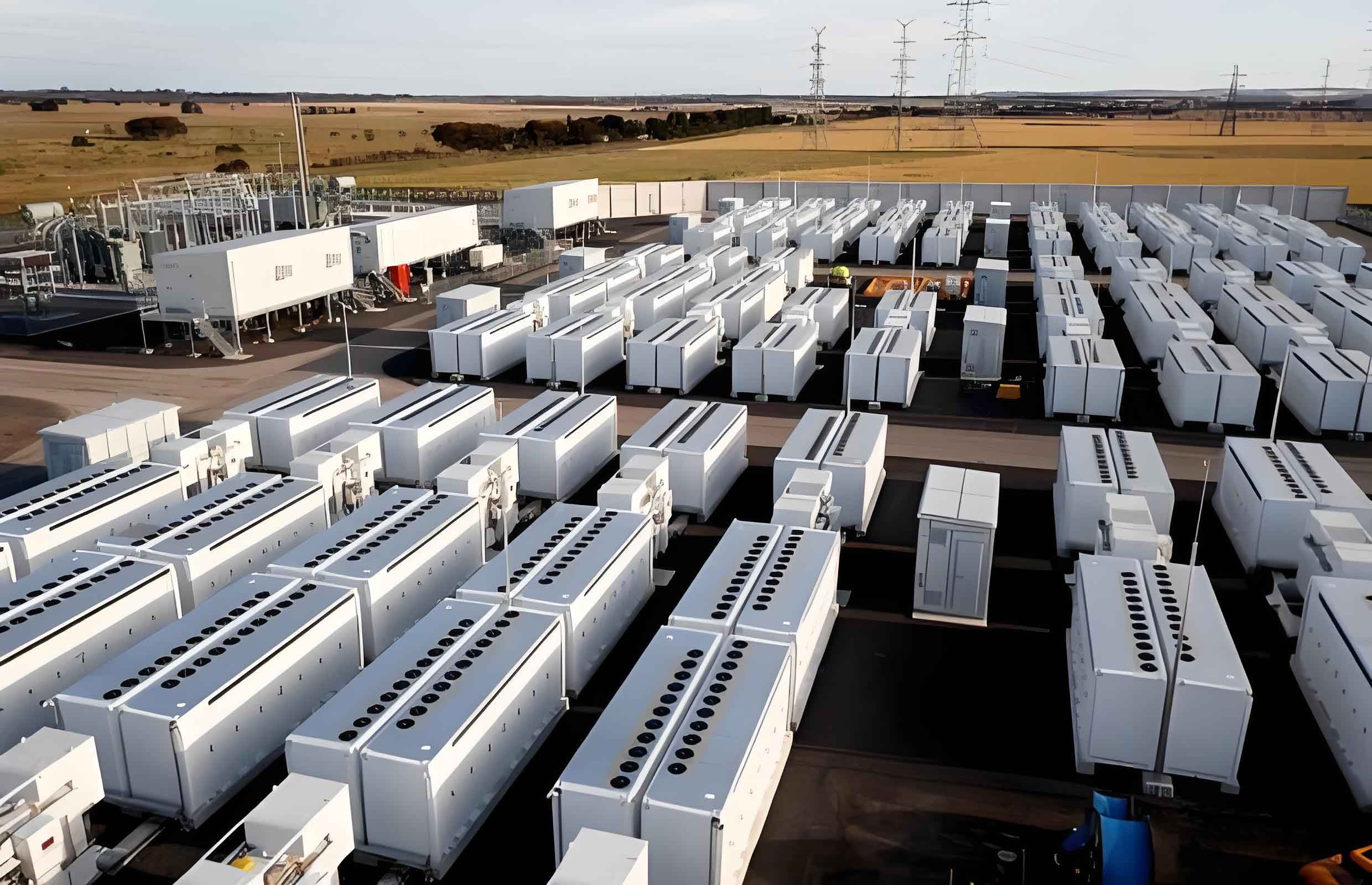
The structure of a typical lithium-ion battery energy storage system, such as containerized setups, integrates numerous energy storage cells, battery management systems (BMS), energy management systems (EMS), power conversion systems (PCS), cooling systems, and fire suppression equipment into a standardized container. These systems often use lithium iron phosphate (LFP) cells, such as the 280 Ah variant, configured in series and parallel to form battery packs and clusters. A single energy storage container can house thousands of energy storage cells, leading to significant safety risks if thermal runaway occurs. The organic electrolytes in these energy storage cells are highly flammable, and internal short circuits—often caused by lithium dendrite growth—can trigger thermal runaway, resulting in rapid fire spread and potential explosions. We discuss the key characteristics of energy storage system fires, including fast development, high temperatures exceeding 1000°C, and challenges in extinguishment due to gas emissions. To address these issues, safety measures must span the entire lifecycle, from cell manufacturing to operation and post-accident response, with a focus on improving the intrinsic safety of energy storage cells and implementing robust external controls.
Intrinsic Safety Technologies for Energy Storage Cells
Enhancing the intrinsic safety of energy storage cells is fundamental to mitigating risks in energy storage systems. We explore modifications to key components—electrolytes, separators, and electrode materials—to reduce inherent flammability and improve thermal stability. For electrolytes, the low flash point and combustibility of organic carbonates pose significant hazards. Researchers have investigated additives like phosphorous, fluorine, and silicon-based compounds to impart flame-retardant properties. For instance, dimethyl methylphosphonate (DMMP) has been shown to suppress flame size and burning intensity in electrolytes. Similarly, fluorinated ethers and phosphate-based additives, such as pentafluoroethoxyl cyclotriphosphazene (PFPN), can render electrolytes non-flammable at specific concentrations. Ionic liquids and concentrated electrolyte systems also offer enhanced safety by reducing volatility and improving thermal stability. The general effectiveness of these additives can be summarized using the following equation for flame suppression efficiency $E_f$:
$$E_f = \frac{C_a}{C_t} \times \eta_r$$
where $C_a$ is the additive concentration, $C_t$ is the total electrolyte concentration, and $\eta_r$ is the retardation coefficient dependent on the additive type. Table 1 compares common electrolyte additives and their impact on safety parameters.
| Additive Type | Example Compounds | Flame Retardancy | Impact on Ionic Conductivity | Thermal Stability |
|---|---|---|---|---|
| Phosphorous-based | DMMP, TCPP | High | Moderate decrease | Improved |
| Fluorinated solvents | Perfluoroether, PFMP | Non-flammable at >50% | Low to moderate | High |
| Ionic liquids | LiTFSI/FEC blends | Excellent | High with optimization | Very high |
| Silicon-based | TEOS, VTEOS | Moderate | Minimal impact | Enhanced |
Separators play a critical role in preventing internal short circuits. Conventional polyolefin separators suffer from thermal shrinkage at high temperatures, leading to failures. We review advancements in high-temperature resistant separators, such as polyimide (PI) nanofibers fabricated via electrospinning, which exhibit minimal shrinkage (<1%) at 180°C. Ceramic-coated separators with Al2O3 or SiO2 enhance mechanical strength and thermal stability. For example, composite separators with flame-retardant coatings like hexaphenoxy cyclotriphosphazene can achieve self-extinguishing properties. The thermal stability of a separator can be modeled using the Arrhenius equation for degradation rate $k_d$:
$$k_d = A e^{-E_a / RT}$$
where $A$ is the pre-exponential factor, $E_a$ is the activation energy, $R$ is the gas constant, and $T$ is the temperature. Improved separators for energy storage cells show higher $E_a$ values, delaying thermal runaway.
Electrode materials, particularly cathodes like NCM and anodes like graphite, are modified through doping and coating to enhance structural and thermal stability. Surface coatings with oxides (e.g., TiO2, Al2O3) or polymers (e.g., polyaniline) reduce side reactions and inhibit oxygen release. Gradient doping with elements like yttrium or tellurium in NCA cathodes improves cycle performance and raises thermal decomposition onset temperatures. For anodes, silicon-based composites are being explored to mitigate lithium plating. The thermal runaway onset temperature $T_{onset}$ for an electrode can be expressed as:
$$T_{onset} = T_0 + \Delta T_{coat}$$
where $T_0$ is the base onset temperature and $\Delta T_{coat}$ is the increase due to coating or doping. These intrinsic modifications collectively enhance the safety of energy storage cells, though scalability and cost remain challenges for large-scale deployment.
Thermal Runaway Propagation and Inhibition
Thermal runaway in energy storage cells involves exothermic reactions that release heat, leading to cascading failures in densely packed systems. We examine various fire suppression agents and cooling methods to inhibit propagation. Common agents include water-based systems, gases like Novec1230 and HFC-227ea, and fine water mist. Experimental studies on LFP battery modules show that fine water mist effectively extinguishes flames and prevents re-ignition due to its cooling capacity, whereas gas agents may allow re-ignition. For instance, fine water mist at 0.2 MPa pressure reduces temperature peaks by over 400°C in module-level fires. The cooling efficiency $\eta_c$ of an agent can be quantified as:
$$\eta_c = \frac{\dot{Q}_{removed}}{\dot{Q}_{generated}}$$
where $\dot{Q}_{removed}$ is the heat removal rate and $\dot{Q}_{generated}$ is the heat generation rate during thermal runaway. Advanced emulsions, such as perfluorohexone-based “oil-in-water” microemulsions, demonstrate superior cooling by lowering battery surface temperatures by up to 145°C. Table 2 compares the performance of different suppression agents for energy storage cell fires.
| Agent Type | Example | Extinguishing Time | Cooling Rate (°C/min) | Re-ignition Risk | Application Notes |
|---|---|---|---|---|---|
| Water-based | Fine water mist | Fast (<2 min) | 0.24 | Low | Ideal for module-level fires |
| Gas agents | HFC-227ea, Novec1230 | Rapid (~1 min) | 0.05-0.15 | Moderate to high | Limited cooling; suitable for early stage |
| Dry powder | ABC powder | Moderate | Low | High | Not recommended for deep-seated fires |
| Liquid nitrogen | Cryogenic cooling | Slow | 0.07 | Very low | Effective for propagation inhibition |
| Emulsions | Perfluorohexone microemulsion | Fast | 0.15-0.20 | Low | Enhanced penetration and cooling |
In addition to suppression, physical barriers and phase change materials (PCMs) are used to absorb heat and delay propagation. The heat absorption $Q_{abs}$ by a PCM can be calculated as:
$$Q_{abs} = m \cdot [c_p \cdot \Delta T + L_f]$$
where $m$ is the mass, $c_p$ is the specific heat, $\Delta T$ is the temperature change, and $L_f$ is the latent heat of fusion. Integrating these agents into cluster-level and system-level designs is crucial for containing incidents in energy storage cells. However, current消防 systems often lack integration, highlighting the need for modular and intelligent solutions.
Active Monitoring and Early Warning Technologies
Early detection of anomalies in energy storage cells is vital for preventing thermal runaway. We discuss three main approaches: electrical signal-based monitoring, data-model hybrid systems, and gas/liquid emission analysis. Traditional smoke and temperature detectors are inadequate for early warning, as they respond too late. Instead, electrochemical impedance spectroscopy (EIS) and internal resistance measurements provide real-time insights into cell health. For example, single-frequency impedance at X1 Hz and X100 Hz can detect changes associated with internal short circuits, offering warnings over 5 minutes before thermal runaway. The impedance modulus $|Z|$ correlates with internal temperature $T_{int}$ and state of charge (SOC), as modeled by:
$$|Z| = A \cdot e^{B / T_{int}} + C \cdot SOC$$
where $A$, $B$, and $C$ are constants derived from experimental data. Hybrid systems combining equivalent circuit models with machine learning, such as convolutional neural networks (CNN) and long short-term memory (LSTM) networks, achieve high accuracy (e.g., 97.73% for internal short circuit detection). These models process voltage, current, and temperature data to predict failures. For instance, a CNN-BiGRU-Attention model can analyze operational deviations and trigger alerts based on threshold analysis.
Gas emission analysis focuses on detecting characteristic gases like hydrogen, carbon monoxide, and volatile organic compounds released during early thermal runaway. Hydrogen, for instance, can be detected 13 minutes before ignition, providing a critical window for intervention. AI-based image recognition systems identify vaporized electrolytes or smoke in storage areas, reducing response times by 5–10 minutes compared to conventional detectors. The concentration $C_g$ of a gas species over time $t$ can be described by:
$$C_g(t) = C_0 \cdot e^{-k t} + \alpha \cdot \dot{Q}_{gas}$$
where $C_0$ is the initial concentration, $k$ is the decay constant, and $\alpha$ is the gas generation rate from reactions. Multi-sensor fusion, integrating gas detectors with BMS and thermal cameras, enables hierarchical warnings. For example, Level 1 alerts for slight gas increases and Level 2 for critical thresholds, coupled with automatic suppression activation. Table 3 summarizes key monitoring techniques for energy storage cells.
| Technology | Parameters Monitored | Detection Time Ahead of Event | Accuracy/Reliability | Implementation Complexity |
|---|---|---|---|---|
| EIS and Impedance | Internal resistance, temperature | 5–15 minutes | High | Moderate (requires specialized equipment) |
| Data-Model Hybrid | Voltage, current, temperature trends | 10–30 minutes | >97% | High (needs training data) |
| Gas Sensors | H2, CO, CO2, VOCs | 10–20 minutes | Moderate to high | Low to moderate |
| AI Image Recognition | Smoke, vapor, flame images | 1–5 minutes | ~83.65% precision | Moderate (depends on camera quality) |
| Multi-sensor Fusion | Combined electrical, gas, thermal data | 15–25 minutes | Very high | High (integration challenges) |
These systems, when integrated with energy storage management systems, provide a proactive safety framework for energy storage cells, reducing the likelihood of catastrophic failures.
Thermal Management Safety Technologies
Effective thermal management is essential to maintain uniform temperatures and prevent hotspots in energy storage cells, which can accelerate degradation and trigger thermal runaway. We evaluate air cooling, liquid cooling, phase change materials (PCMs), and heat pipes. Air cooling, widely used in containerized systems due to its simplicity and low cost, relies on forced convection to dissipate heat. However, it may struggle with high-density configurations. Numerical simulations using k-ε turbulence models show that adding deflectors in air ducts can improve temperature uniformity, reducing maximum cell temperatures to 34°C and keeping differentials below 5°C at 0.5C charging rates. The heat transfer rate $\dot{Q}_{air}$ in air cooling is given by:
$$\dot{Q}_{air} = h \cdot A \cdot (T_{cell} – T_{air})$$
where $h$ is the convective heat transfer coefficient, $A$ is the surface area, $T_{cell}$ is the cell temperature, and $T_{air}$ is the air temperature.
Liquid cooling, though more efficient, poses leakage risks that could cause short circuits in energy storage cells. Designs with serpentine tubes and direct contact surfaces enhance heat exchange, but adoption is limited in large-scale storage. Immersion cooling, using dielectric fluids like transformer oil, offers superior performance by submerging cells. Experiments with 10 Ah soft-pack cells show full immersion at 13.2 cm depth and 0.8 L/min flow rate optimizes cooling, maintaining temperatures below 25°C at 2C discharge. The cooling capacity $\dot{Q}_{liquid}$ can be expressed as:
$$\dot{Q}_{liquid} = \dot{m} \cdot c_p \cdot \Delta T_{fluid}$$
where $\dot{m}$ is the mass flow rate, $c_p$ is the specific heat of the fluid, and $\Delta T_{fluid}$ is the temperature rise across the system.
PCMs and heat pipes provide passive cooling by absorbing latent heat. Composite PCMs, such as low-eutectic fatty acids with silver-modified expanded graphite, exhibit high enthalpy and thermal conductivity, reducing temperature rises in high-rate applications. For example, PCMs with 3% silver content achieve phase change temperatures suitable for energy storage cells, while heat pipes combined with PCMs extend thermal buffering to 300 minutes. The effectiveness of a PCM-based system is quantified by the thermal energy storage density $\rho_{TES}$:
$$\rho_{TES} = \frac{Q_{abs}}{V}$$
where $V$ is the volume. Despite advancements, PCM and heat pipe systems face challenges in cost and integration for container-scale deployment. Table 4 compares thermal management technologies for energy storage cells.
| Technology | Cooling Mechanism | Temperature Uniformity | Energy Efficiency | Scalability for Large Systems | Key Limitations |
|---|---|---|---|---|---|
| Air Cooling | Forced convection | Moderate (ΔT ~5°C) | Low to moderate | High | Limited heat removal at high loads |
| Liquid Cooling | Direct contact or immersion | High (ΔT <3°C) | High | Moderate | Leakage risks, complexity |
| Phase Change Materials | Latent heat absorption | Very high | High | Low to moderate | Volume and weight penalties |
| Heat Pipes | Capillary action and evaporation | High | Very high | Low | Cost and integration issues |
| Hybrid Systems | Combined methods (e.g., PCM + liquid) | Very high | Very high | Moderate | Optimization required |
Optimizing thermal management strategies, such as EMS-based control curves that adjust cooling based on cell temperature, can reduce energy consumption and improve safety for energy storage cells. Future directions include smart systems that dynamically respond to operational conditions.
Multi-level Safety Prevention and Control Systems
Integrating various safety technologies into a cohesive multi-level framework is crucial for comprehensive protection of energy storage systems. We review designs that combine early warning, cluster-level suppression, and space-level firefighting. For instance, a typical multi-level system might include gas-based agents for initial cluster-level fires and water-based systems for full-container incidents. Hierarchical alerts—Level 1 for gas concentration thresholds and Level 2 for critical temperatures—enable staged responses, with automatic suppression activated after a 3-minute delay to confirm threats. The overall safety performance $S_{system}$ can be modeled as a function of component efficiencies:
$$S_{system} = \prod_{i=1}^{n} \eta_i \cdot \left(1 – \frac{t_{response}}{t_{event}}\right)$$
where $\eta_i$ represents the efficiency of each safety layer (e.g., monitoring, suppression), $t_{response}$ is the system response time, and $t_{event}$ is the time to thermal runaway.
Advanced systems employ “immersion-style” solutions that flood battery compartments with fire-retardant fluids, simultaneously extinguishing flames and cooling energy storage cells. AI-driven monitoring platforms, such as energy storage management systems (ESMS), use kernel density estimation and LSTM models to assess cell health and predict faults, enabling real-time control across terminal, local, and device levels. For gigawatt-scale installations, redundant designs with water mist, aerosol, and flooding agents provide fail-safe operation. The integration of BMS, EMS, and消防 systems ensures that anomalies in energy storage cells trigger coordinated actions, from ventilation adjustments to full shutdown. This approach minimizes economic losses and enhances reliability, supporting the scalable deployment of lithium-ion battery energy storage.
Conclusion
In this review, we have examined the latest advancements in safety prevention and control technologies for lithium-ion battery energy storage systems, with a focus on energy storage cells. Key findings indicate that intrinsic safety improvements through material modifications—such as flame-retardant electrolytes, high-temperature separators, and stable electrodes—are foundational but must be combined with external measures for comprehensive protection. Thermal runaway inhibition benefits from advanced suppression agents like fine water mist and emulsions, though integrated消防 systems require better compatibility and intelligence. Active monitoring using impedance spectroscopy, data-model hybrids, and gas detection offers early warnings, while multi-sensor fusion enhances accuracy. Thermal management remains dominated by air cooling due to practicality, but liquid cooling and PCMs show promise for future optimization. Multi-level safety systems, integrating预警, cluster-level suppression, and space-level responses, represent the most effective strategy for large-scale applications.
Looking ahead, the development of solid-state and aqueous batteries could revolutionize intrinsic safety for energy storage cells. Meanwhile, AI and simulation tools, such as fire dynamics simulators, will enable more predictive and adaptive control. We emphasize the importance of standardizing safety protocols and fostering interdisciplinary research to address the complex challenges of energy storage system security. By advancing these technologies, we can ensure the reliable and safe integration of lithium-ion battery energy storage into global energy networks, supporting the transition to sustainable power systems.