
In the realm of energy storage, lithium ion batteries have become indispensable due to their high energy density and widespread application in portable electronics, electric vehicles, and grid storage. However, understanding the intricate internal reactions and states within a lithium ion battery is crucial for optimizing performance and longevity. Electrochemical measurements often provide aggregated information from all battery components, making it challenging to dissect individual electrode behaviors. To address this, reference electrodes are employed as a third electrode to establish a stable potential, enabling real-time, in-situ monitoring of positive and negative electrodes separately. This review, from our perspective, delves into the research progress of reference electrodes for lithium ion batteries, covering materials, fabrication methods, applications, and optimization strategies. We emphasize the importance of reference electrodes in elucidating aging mechanisms, impedance analysis, and potential monitoring, while highlighting key challenges and future directions. Throughout, we aim to underscore the critical role of reference electrodes in advancing lithium ion battery technology.
The ideal reference electrode for a lithium ion battery should exhibit a constant potential, reversibility adhering to the Nernst equation, and non-polarizability where potential remains unaffected by current. However, the complex electrochemistry in lithium ion batteries often leads to non-Nernstian behavior, making perfect reference electrodes elusive. Commonly studied materials include lithium metal, binary lithium alloys, and lithium-containing compounds, each with distinct advantages and drawbacks. We explore these in detail, leveraging tables and formulas to summarize their characteristics.
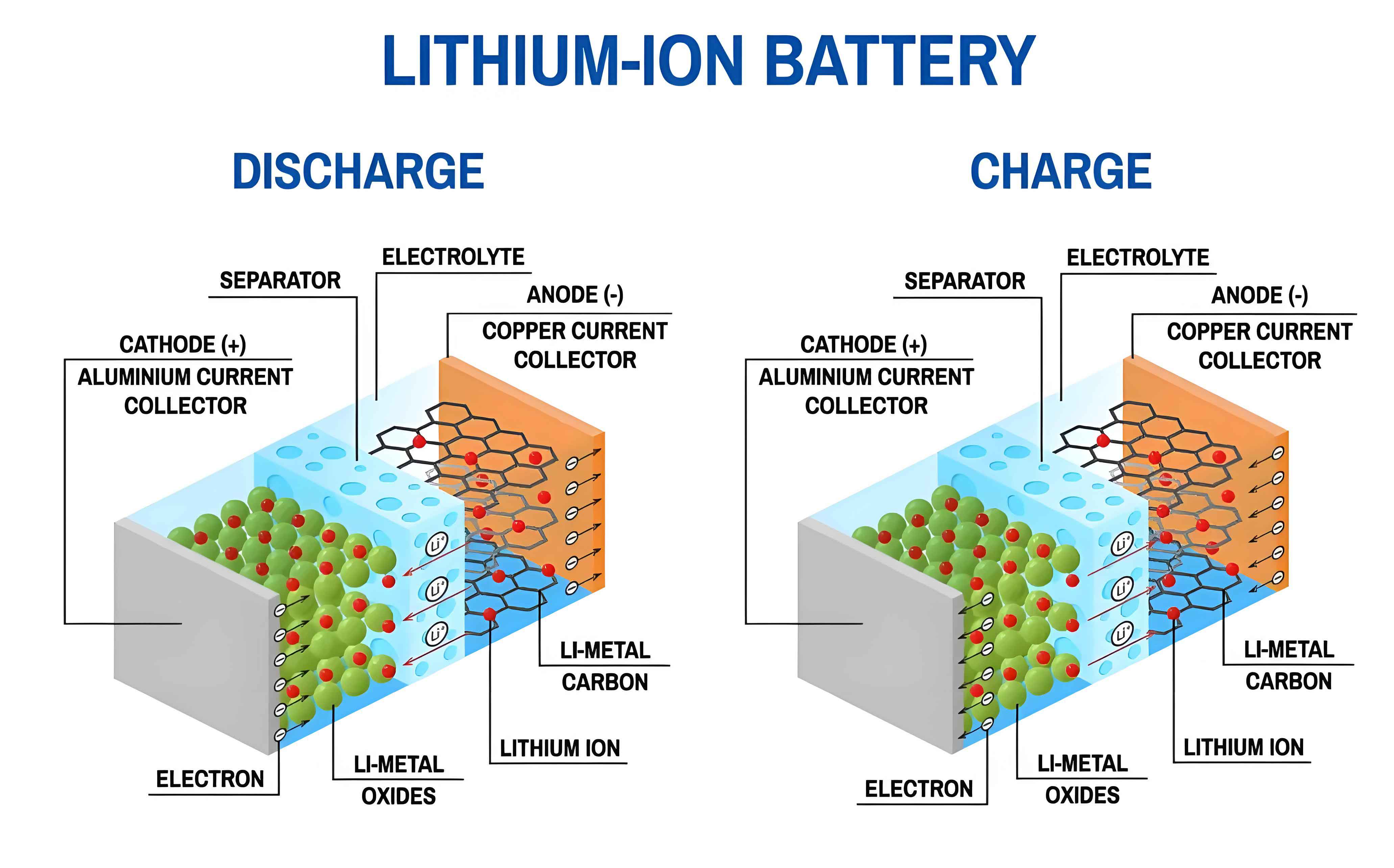
Characteristics and Types of Reference Electrodes
Reference electrodes serve as a benchmark for measuring electrode potentials in lithium ion batteries. Their performance hinges on material properties, which we categorize into three primary types.
Lithium Metal Reference Electrodes
Lithium metal is widely used due to its availability and reversibility. Typically, it is combined with current collectors like copper or nickel to form a reference electrode. For instance, small lithium foils can be attached to nickel wires or plates, or lithium can be electrodeposited onto copper wires to create uniform layers. In specialized three-electrode setups, lithium metal is simply shaped and placed in designated cavities. However, long-term stability is a significant limitation for lithium metal reference electrodes in lithium ion batteries. Potential drift occurs over time, often due to solid electrolyte interphase (SEI) growth consuming lithium. Increasing lithium loading, such as by infusing lithium into nickel foam, can extend service life but requires careful sizing to minimize blocking effects. Moreover, the potential of lithium electrodes varies across different electrolytes, complicating accurate potential referencing. The reaction can be represented as:
$$ \text{Li}^+ + e^- \rightleftharpoons \text{Li} $$
This simplicity makes lithium metal a common choice, but its drawbacks necessitate alternatives for prolonged studies in lithium ion batteries.
Binary Lithium Alloy Reference Electrodes
Lithium alloys offer theoretical advantages: the alloying metals are readily available in high-purity wire forms, and compared to in-situ electrodeposited lithium, alloys exhibit lower volume expansion and specific surface area, reducing self-delithiation side reactions. Common examples include Li-Sn, Li-Al, and Li-Au alloys. These require pre-lithiation to achieve a stable reference potential. For example, Li-Au alloy prepared via in-situ electrochemical alloying shows an open-circuit potential around 310 mV vs. Li/Li+ and demonstrates notable stability over 500 hours under cycling and elevated temperatures (40°C). However, lithium alloys often display multiple potential plateaus, as seen in lithiation curves for gold wires, with plateaus near 250 mV and 125 mV. Thus, pre-lithiation must be meticulously controlled to attain the desired reference potential. Techniques like electrochemical quartz crystal microbalance (EQCM) enable precise alloying, preventing over-lithiation. The alloying reaction generally follows:
$$ \text{Li}^+ + e^- + \text{M} \rightleftharpoons \text{LiM} $$
where M is a metal like Sn, Al, or Au. Despite benefits, self-discharge and potential drift from lithium loss remain concerns for lithium alloy reference electrodes in lithium ion batteries.
Lithium-Containing Compound Reference Electrodes
Compounds such as Li4Ti5O12 (LTO, ~1.5 V vs. Li/Li+) and LiFePO4 (LFP, ~3.4 V vs. Li/Li+) exhibit broad potential plateaus due to two-phase mechanisms, aiding potential stability even during unexpected state-of-charge (SOC) fluctuations. These are typically fabricated by coating powders onto current collectors like copper or nickel wires. For instance, LTO powder mixed with conductive graphite and polyvinylidene fluoride (PVDF) binder can be applied to flattened copper wires, dried, and electrochemically oxidized in a glovebox to achieve a stable potential. Alternatively, chemically reduced LTO powder using lithium naphthalenide, blended with PVDF in N-methyl-2-pyrrolidone (NMP) and coated on nickel mesh, suits various solid electrolyte systems. Built-in LTO reference electrodes have been designed for LiFePO4/graphite cells, facilitating long-term in-situ monitoring of potential, lithium-ion diffusion coefficients, and electrochemical impedance spectra. The two-phase reaction for LTO is:
$$ \text{Li}_4\text{Ti}_5\text{O}_{12} + 3\text{Li}^+ + 3e^- \rightleftharpoons \text{Li}_7\text{Ti}_5\text{O}_{12} $$
This mechanism renders LTO nearly ideal as a non-polarizable material, with potential stability across wide temperature ranges and extended periods, making it superior for reference electrodes in lithium ion batteries.
To summarize, we present a comparison of these reference electrode materials in Table 1, highlighting their pros and cons in the context of lithium ion batteries.
| Material Type | Advantages | Disadvantages |
|---|---|---|
| Lithium Metal | Stable potential, readily available, easy data processing | High fabrication environment requirements, difficult micro-electrode fabrication, prone to electrolyte reaction and contamination, impedance increases with aging, measurements affected by temperature and cycling |
| Binary Lithium Alloy | Minimal side reactions with electrolyte, no lithium dendrite formation, stable potential over long durations, micron-scale alloy layer thickness negligible for impedance | Requires pre-treatment for stable potential, multiple plateaus necessitate careful pre-lithiation, potential drift from lithium loss, self-discharge, poor storability |
| Lithium-Containing Compounds (e.g., LTO, LFP) | Broad potential plateau, resilience to potential fluctuations, good reversibility | Requires oxidation to specific SOC, potential drift from lithium loss |
From our analysis, lithium-containing compounds like LTO, with their two-phase mechanism, offer the most reliable performance as reference electrodes in lithium ion batteries.
Applications of Reference Electrodes in Lithium Ion Batteries
Reference electrodes are pivotal in diagnosing and enhancing lithium ion battery performance. We explore their applications in aging mechanism studies, impedance spectroscopy, and electrode potential monitoring.
Aging Mechanism Studies
As lithium ion batteries age, performance degrades due to complex interfacial and structural changes. Reference electrodes enable separate evaluation of electrode-level contributions, informing lifespan prediction models and control strategies. For example, using lithium foil reference electrodes in commercial 18650 cells with NMC-LMO/graphite systems revealed that during aging, cathode resistance increased nearly threefold, while anode resistance remained relatively constant under both calendar and cycle aging. Similarly, in AA-type LiCoO2/MCMB lithium ion batteries, lithium metal reference electrodes indicated that structural changes in the LiCoO2 cathode were primarily responsible for capacity fade and discharge voltage drop after multiple cycles. In solid polymer electrolyte-based LiNi1/3Co1/3Mn1/3O2/graphite cells, lithium reference electrodes identified continuous irreversible loss at the graphite anode as the main factor for cycle capacity decline, with reversible cathode capacity loss being secondary. These insights underscore the value of reference electrodes in pinpointing degradation sources in lithium ion batteries.
Impedance Spectroscopy Analysis
Electrochemical impedance spectroscopy (EIS) is a powerful tool for probing electrochemical processes across different time scales, aiding in-situ diagnosis of SOC and state-of-health (SOH). Reference electrodes facilitate impedance deconvolution into anode and cathode components. For instance, embedded indium reference electrodes in all-solid-state TiS2/Li2S-P2S5/Li4.4Si cells showed negligible cathode impedance change but a 2–3 fold increase in anode impedance after initial charging, attributed to kinetic differences in alloying/dealloying reactions at the lithium-silicon anode. This highlights the need to optimize alloying kinetics. In LiFePO4/graphite lithium ion batteries, Li-Au alloy reference electrodes revealed that anode SEI impedance was more sensitive to the mass ratio of vinylene carbonate (VC) to active material than to VC concentration, guiding electrolyte development. Additionally, LTO-based thin-film reference electrodes in LiMn2O4-blended oxide/graphite power lithium ion batteries indicated that the anode contributed 60–74% of total impedance across SOC ranges, identifying it as the primary impedance source. The impedance of a lithium ion battery can be modeled using equivalent circuits, where reference electrodes help assign circuit elements to specific electrodes. A simplified Randles circuit for an electrode includes solution resistance (Rs), charge transfer resistance (Rct), double-layer capacitance (Cdl), and Warburg impedance (Zw):
$$ Z = R_s + \frac{1}{\frac{1}{R_{ct}} + j\omega C_{dl}} + Z_w $$
where ω is angular frequency. Reference electrodes enable separate fitting for anode and cathode, refining models for lithium ion batteries.
Electrode Potential Monitoring
Electrode potential directly influences electrochemical reactions, such as lithium plating on graphite anodes, which jeopardizes performance and safety. Reference electrodes allow precise anode potential tracking to avoid lithium deposition. For example, lithium metal reference electrodes placed near anodes in LiNixCoyMnzO2/graphite lithium ion batteries helped determine conditions for lithium plating based on temperature, charge rate, and cutoff voltage interactions. Similarly, in-situ plated lithium on copper wire reference electrodes in LiNi0.5Co0.2Mn0.3O2/graphite cells showed that high currents rapidly increased cathode potential and decreased anode potential, leading to lithium deposition when anode potential went negative. Optimizing charge currents is thus vital for longevity. Moreover, accurate anode potential measurement enables fast-charging protocols. Copper wire reference electrodes in large-format commercial lithium ion batteries informed charging strategies that prevented lithium deposition over 100 cycles while reducing charging time by 40%. Embedded LTO reference electrodes in LiNi0.6Co0.2Mn0.2O2/graphite pouch cells supported stepwise charging programs; at 4C and 23°C, charging paused when anode potential reached 0 V vs. Li/Li+ or cell voltage hit 4.15 V, then resumed at lower rates (3.0C, 2.0C, etc.), shortening time to 80% SOC by ~30% compared to constant-current charging. These applications demonstrate how reference electrodes empower smarter management of lithium ion batteries.
We summarize key application areas and findings in Table 2, emphasizing the role of reference electrodes in lithium ion battery research.
| Application Area | Key Insights Enabled by Reference Electrodes | Impact on Lithium Ion Battery Development |
|---|---|---|
| Aging Mechanism Analysis | Cathode resistance dominates aging in NMC-LMO/graphite cells; anode irreversible loss is primary in polymer electrolyte cells | Guides material selection and cycling protocols to extend lifespan |
| Impedance Spectroscopy | Anode contributes 60-74% of total impedance in power cells; VC ratio affects anode SEI more than concentration | Improves electrolyte formulation and electrode design for lower impedance |
| Electrode Potential Monitoring | Identifies lithium plating conditions; enables fast-charging strategies without deposition | Enhances safety and enables rapid charging for electric vehicles |
Optimization of Reference Electrodes for Lithium Ion Batteries
Accurate measurements with reference electrodes require minimizing distortions from geometric and electrochemical asymmetries. We discuss optimization strategies, including shape, position, and other enhancements, supported by formulas and tables.
Shape Optimization
The geometry of a reference electrode significantly affects measurement accuracy. Point-like or wire-like reference electrodes can introduce artifacts due to radial non-uniform current distribution, whereas mesh-like designs promote geometric symmetry. Finite element method (FEM) simulations compare point, wire, and mesh reference electrodes, showing that mesh types yield minimal error in impedance spectra. For instance, aluminum mesh coated with LTO powder as a reference electrode validated simulations, confirming that point electrodes produce artifacts from asymmetries, but mesh electrodes do not. Mesh reference electrodes offer ideal geometric symmetry, requiring only attention to wire diameter and pore size. Laser-perforated mesh reference electrodes with hexagonal pore arrays (50 μm pores) on LFP-coated aluminum foil address blocking issues and match lithium metal reference electrode results in pouch cells. Nanosized LTO electrode materials and appropriate mesh sizing are essential for reliable outcomes in lithium ion batteries. The effectiveness of a mesh reference electrode can be quantified by its coverage area and porosity. If Amesh is the mesh area and Apores is the pore area, porosity φ is:
$$ \phi = \frac{A_{\text{pores}}}{A_{\text{mesh}}} $$
High φ reduces blocking but must balance mechanical stability. For accurate measurements in lithium ion batteries, φ > 0.5 is often recommended.
Position Optimization
Reference electrode placement must avoid interfering with current paths between working and counter electrodes while being sufficiently close to capture true potential. Common positions are between electrodes (internal) or outside electrode regions (external), each with trade-offs. FEM simulations for point reference electrodes indicate that internal placement minimizes errors from electrolyte conductivity variations and electrode misalignment. In pouch-type lithium ion batteries, internal mesh reference electrodes better track electrolyte potential changes across frequencies and provide more accurate electrode potential measurements. To reduce blocking effects, internal reference electrodes should be sized small or designed as thin, sparse meshes. For example, in coaxial three-electrode cells, a reference electrode centered within a ring counter electrode minimizes artifacts if counter electrode impedance is low. Similarly, coin cells with central holes in both working and counter electrodes for reference electrode access maintain symmetry, preventing radial current-induced distortions. External reference electrodes are simpler but prone to errors from electrolyte resistance, especially in low-conductivity electrolytes. The potential error ΔE due to electrolyte resistance Re and current I can be estimated as:
$$ \Delta E = I \cdot R_e \cdot f(d) $$
where f(d) is a function of distance d between reference and working electrodes. For internal reference electrodes, d is minimized, reducing ΔE. We summarize optimal positions for different lithium ion battery configurations in Table 3.
| Battery Configuration | Recommended Position | Rationale |
|---|---|---|
| Swagelok-type with coaxial design | Internal, centered along axis | Minimizes radial current distortions up to high frequencies (50 kHz) |
| Pouch cells with mesh reference | Internal, between electrodes | Accurately tracks potential and impedance with minimal blocking |
| Coin cells with hole alignment | Internal, behind central holes | Ensures symmetry to avoid impedance artifacts |
| Systems with low electrolyte conductivity | Internal, close to working electrode | Reduces error from electrolyte resistance |
Other Optimization Approaches
Beyond shape and position, several methods enhance reference electrode performance in lithium ion batteries. First, integrated micro-reference electrode arrays can average measurements to compensate for lead impedance artifacts. For example, embedding seven micro-reference electrodes and averaging two separate three-electrode EIS measurements yields better results than artifact compensation bridges. Second, using low-resistance counter electrodes, such as graphite films on lithium metal, reduces artifacts in impedance spectra. If Rce is counter electrode resistance and Rwe is working electrode resistance, the condition Rce << Rwe minimizes distortions. Third, employing low-resistance electrolytes diminishes measurement errors from uneven concentration distributions. The electrolyte conductivity σ should be maximized, with typical values for lithium ion battery electrolytes around 10 mS/cm. Fourth, theoretical corrections can address residual artifacts. A simple formula corrects impedance pseudo-inductive loops caused by reference wire diameter and surface resistance:
$$ Z_{\text{corrected}} = Z_{\text{measured}} – j\omega L_{\text{artifact}} $$
where Lartifact is an inductive artifact term proportional to wire radius and surface resistance. Additionally, confidence bounds for reference electrode measurements can be established by analyzing key parameters like charge rate, reference electrode width, and electrolyte diffusion coefficient. If ΔEmax is the maximum potential error, it can be expressed as:
$$ \Delta E_{\text{max}} = k \cdot \frac{I w}{D} $$
where k is a constant, I is current density, w is reference electrode width, and D is electrolyte diffusion coefficient. Selecting parameters to keep ΔEmax < 10 mV ensures reliability. These optimizations collectively improve the fidelity of reference electrode data in lithium ion batteries.
Conclusion and Future Perspectives
In this review, we have explored the advancements in reference electrodes for lithium ion batteries, emphasizing their critical role in deconvoluting electrode-level information. From material selection to optimization strategies, reference electrodes enable detailed insights into aging mechanisms, impedance behavior, and potential dynamics, driving improvements in lithium ion battery performance and safety. Among materials, lithium-containing compounds like LTO stand out for their stable two-phase potentials, making them promising for long-term studies. In terms of design, mesh-shaped internal reference electrodes offer superior geometric symmetry, minimizing measurement artifacts. However, challenges persist, such as potential drift from lithium loss and fabrication complexities.
Looking ahead, several directions warrant attention. First, further development of robust reference electrode materials with intrinsic stability across diverse electrolyte systems is needed for lithium ion batteries. Compounds with flat voltage plateaus, perhaps exploring new lithium titanates or phosphates, could be investigated. Second, standardized three-electrode cell designs that integrate mesh reference electrodes seamlessly into commercial lithium ion battery formats (e.g., cylindrical, pouch) would enhance reproducibility. Collaborative efforts to establish testing protocols could accelerate adoption. Third, advanced modeling and correction algorithms should be refined to account for residual asymmetries, perhaps using machine learning to predict and compensate artifacts in real-time. Fourth, extending reference electrode applications to emerging lithium ion battery technologies, such as silicon-anode or solid-state batteries, will be crucial for their development. Finally, in-situ characterization techniques combining reference electrodes with spectroscopy or microscopy could provide multimodal insights into degradation processes.
In conclusion, reference electrodes are indispensable tools for unraveling the complexities of lithium ion batteries. By continuing to optimize their materials, shapes, and placements, we can achieve more accurate diagnostics and control, ultimately contributing to safer, longer-lasting, and higher-performance lithium ion batteries for a sustainable energy future. We hope this review inspires further innovation in this vital area of energy storage research.