
The relentless growth in global energy demand, coupled with mounting concerns over environmental sustainability, has positioned electrochemical energy storage as a cornerstone technology for the future. For decades, lithium-ion batteries (LIBs) have dominated the landscape of portable electronics and electric mobility. However, the increasing geopolitical and supply chain risks associated with finite and unevenly distributed lithium resources, alongside persistent safety issues and high costs, have spurred the search for complementary or alternative technologies. Among these, sodium-ion batteries (SIBs) have re-emerged as a highly promising candidate, primarily due to the natural abundance, low cost, and widespread availability of sodium, offering a more sustainable and economically viable pathway for large-scale stationary energy storage and specific mobility applications.
The fundamental working principle of a sodium-ion battery parallels that of its lithium counterpart, revolving around the reversible shuttling of sodium ions between the cathode and anode through an electrolyte medium during charge and discharge cycles. Upon charging, sodium ions are extracted from the cathode structure, migrate through the electrolyte, and are inserted into the anode matrix, with electrons compensating this movement via an external circuit. The process reverses during discharge, powering an external load.
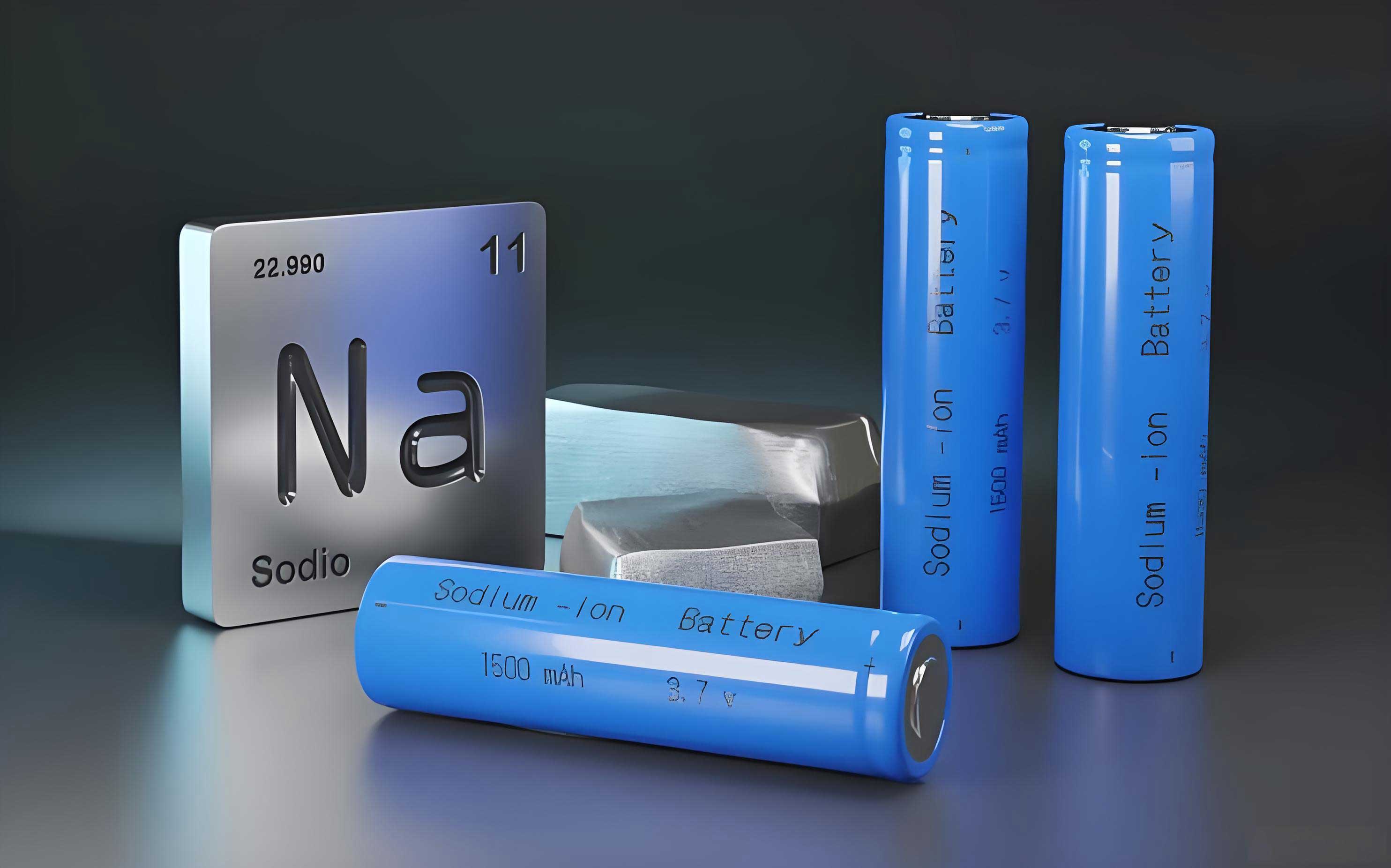
While sharing a similar operating mechanism with LIBs, the sodium-ion battery system possesses distinct characteristics arising from the different physicochemical properties of the Na+ ion compared to Li+, such as its larger ionic radius (1.02 Å for Na+ vs. 0.76 Å for Li+) and lower Lewis acidity. These differences dictate the choice of viable electrode materials and directly influence the resulting energy density, rate capability, and longevity of the cell. Presently, state-of-the-art sodium-ion battery technology can deliver energy densities in the range of 120–180 Wh kg–1, which, while typically lower than advanced LIBs, is sufficient for numerous applications including grid storage, low-speed electric vehicles, and backup power systems. A key advantage often highlighted for the sodium-ion battery is its potentially superior performance in low-temperature (low-T) environments, a critical frontier for energy storage in cold climates, high-altitude operations, and space exploration. However, significant challenges remain in realizing this potential, as the electrochemical kinetics and interfacial stability of electrode materials are severely hampered as temperatures drop.
The performance decay of sodium-ion batteries at sub-zero temperatures is a multifaceted problem stemming from the synchronized degradation of all cell components. The core issues can be quantitatively and qualitatively described as follows:
- Electrolyte Solidification and Increased Viscosity: The ionic conductivity ($\sigma$) of a liquid electrolyte is inversely related to its viscosity ($\eta$) as described by the Stokes-Einstein relation for dilute solutions: $\sigma \propto \frac{1}{\eta}$. As temperature ($T$) decreases, $\eta$ increases exponentially, leading to a dramatic drop in $\sigma$ and severely impeding Na+ transport. Furthermore, the melting point of salts and solvents can be approached, leading to partial solidification.
- Sluggish Charge Transfer and Solid-State Diffusion: The kinetics of charge transfer at the electrode/electrolyte interface and solid-state diffusion within the electrode material are thermally activated processes. Their rates follow an Arrhenius-type relationship: $k = A \exp\left(-\frac{E_a}{RT}\right)$, where $k$ is the rate constant, $E_a$ is the activation energy, $R$ is the gas constant, and $T$ is the absolute temperature. A lower $T$ exponentially reduces $k$. The larger size of Na+ often results in higher $E_a$ for diffusion within crystal lattices compared to Li+, exacerbating the low-T kinetic limitations.
- Increased Interfacial Impedance and Unstable Interphases: The formation and properties of the solid-electrolyte interphase (SEI) on the anode and the cathode-electrolyte interphase (CEI) are temperature-sensitive. At low temperatures, these interphases tend to form unevenly, becoming thicker and more resistive. This significantly increases the overall cell impedance ($R_{\text{interface}}$), leading to severe polarization, capacity loss, and poor cycling stability.
- Structural Contraction and Phase Transition Issues: Many cathode materials for sodium-ion batteries undergo anisotropic lattice contraction upon cooling. This can narrow or even block the diffusion pathways for Na+, increasing diffusion barriers. Furthermore, some materials experience detrimental phase transitions at low temperatures or under high polarization induced by slow kinetics, leading to irreversible structural damage.
The synergistic effect of these factors often leads to a catastrophic failure mode for the sodium-ion battery at low temperatures, characterized by rapid capacity fade, plummeting Coulombic efficiency, and inability to charge at reasonable rates.
The performance of a sodium-ion battery is fundamentally dictated by its cathode material, as it largely determines the operating voltage, specific capacity, and thus the overall energy density. Three major families of cathode materials are at the forefront of sodium-ion battery research, each with distinct advantages and intrinsic challenges that are magnified at low temperatures.
| Material Family | General Formula / Example | Key Advantages | Intrinsic Challenges at Room Temperature | Exacerbated Problems at Low Temperature |
|---|---|---|---|---|
| Layered Transition Metal Oxides (TMOs) | NaxMO2 (M = Ni, Mn, Co, Fe, etc.); P2 or O3 type | High theoretical capacity, relatively easy synthesis. | Hygroscopicity, structural phase transitions upon deep (de)sodiation, transition metal dissolution. | Severe kinetic slowdown, increased lattice strain hindering Na+ diffusion, exacerbated interfacial side reactions. |
| Polyanionic Compounds | NaxMy(XO4)z (X = P, S, Si, etc.); e.g., Na3V2(PO4)3 (NVP) | Excellent structural/thermal stability, high operating voltage (inductive effect), long cycle life. | Low intrinsic electronic conductivity, limited specific capacity, often high molecular weight. | Very poor electronic/ionic conduction leading to massive polarization, near-complete capacity loss at moderate rates. |
| Prussian Blue Analogues (PBAs) | AxM[M'(CN)6]y·□·nH2O (A = Na, K; M, M’ = Fe, Mn, Ni, etc.) | Open 3D framework with large interstitial sites, potentially high capacity, low-cost synthesis. | Structural water and vacancies, poor crystallinity, low electronic conductivity, possible cyanide release. | Framework becomes more rigid, water can freeze, vacancy-rich structures become unstable, leading to rapid collapse. |
The Arrhenius law governing ionic diffusion can be used to model the capacity retention ($C_r$) at a given rate as a function of temperature for different material classes:
$$ C_r(T) \approx C_{r,0} \cdot \exp\left(-\frac{E_a^{\text{(diff)}} + E_a^{\text{(ct)}}}{R} \left(\frac{1}{T} – \frac{1}{T_0}\right)\right) $$
where $C_{r,0}$ is the capacity at reference temperature $T_0$ (e.g., 298 K), and $E_a^{\text{(diff)}}$ and $E_a^{\text{(ct)}}$ are the activation energies for solid-state diffusion and charge transfer, respectively. Polyanionic materials typically exhibit the highest $E_a^{\text{(diff)}}$, leading to the steepest decline in $C_r(T)$ with decreasing $T$.
Strategies for Enhancing Low-Temperature Performance in Sodium-Ion Battery Cathodes
To combat the severe low-temperature performance degradation, intensive research has focused on material engineering strategies aimed at improving interfacial stability, accelerating ionic/electronic transport, and reinforcing structural integrity. These strategies primarily fall into three categories: surface coating, ion doping, and microstructure control.
1. Surface Coating: Engineering a Stable and Conductive Interface
Applying a nanoscale protective layer on the surface of cathode particles is a highly effective strategy. This coating serves multiple purposes for the sodium-ion battery: (i) it acts as a physical barrier preventing direct contact between the active material and the electrolyte, thus suppressing detrimental interfacial side reactions and transition metal dissolution; (ii) it can scavenge harmful species like HF and H2O from the electrolyte; (iii) certain coatings (e.g., carbon, conductive polymers) enhance electronic conductivity at the particle surface; and (iv) some ionic-conductive coatings (e.g., fast-ion conductors) can provide an additional pathway for Na+ transport, lowering the interfacial impedance.
For layered oxides, coatings like Al2O3, AlOx, and NaTi2(PO4)3 (NTP) have proven effective. For instance, an amorphous AlOx coating on O′3-NaMn0.6Al0.4O2 not only provided electronic conduction but also created oxygen vacancies that facilitated ion transport. This coated cathode retained 83.2% of its capacity after 100 cycles at -20°C and 1C rate, significantly outperforming the bare material. The effectiveness of a coating $\Lambda$ in suppressing interfacial resistance growth can be modeled as a function of its ionic conductivity ($\sigma_{\text{ion}}$) and thickness ($d$):
$$ \Delta R_{\text{interface}} \propto \frac{d}{\sigma_{\text{ion}}} + \kappa \cdot t $$
where the first term is the coating’s contribution (which should be minimized) and the second term represents the growth of a resistive layer over time $t$ with rate constant $\kappa$, which the coating aims to reduce.
For polyanionic materials, carbon coating is almost indispensable due to their extremely low electronic conductivity. Advanced designs involve double carbon networks, such as amorphous carbon combined with reduced graphene oxide (rGO). A composite of Na3MnZr(PO4)3 microspheres embedded in a C-rGO network delivered 94.7 mAh g–1 at -15°C and maintained 79.6% capacity after 1500 cycles at this temperature, showcasing remarkable stability.
2. Ion Doping: Tailoring the Bulk Crystal Lattice
Ion doping involves the substitution of host cations in the crystal lattice with foreign ions. This strategy can modify the electronic structure, widen Na+ diffusion channels, stabilize the crystal structure against phase transitions, and even introduce new redox-active centers. Doping is a powerful tool to intrinsically improve the properties of a sodium-ion battery cathode.
- Layered Oxides: Doping with cations like Nb5+, Ti4+, Mg2+, or Cu2+ is common. Nb doping in P2-Na0.75Ni0.31Mn0.67Nb0.02O2 was shown to reduce the electronic band gap and lower the energy barrier for Na+ diffusion, especially at low sodium concentrations. This material exhibited extraordinary low-T performance, maintaining ~76% capacity after 1800 cycles at -40°C under a high current density of 368 mA g–1.
- Polyanionic Compounds: Doping in polyanion frameworks often aims to expand the lattice volume or improve electronic conductivity. For example, partial substitution of V3+ in NVP with other metals, or substitution of Na+ with larger K+ ions (as in Na3-xKxV2(PO4)3), can enlarge the Na+ migration pathways. The K+-doped sample delivered 72 mAh g–1 at -25°C, substantially outperforming the undoped NVP.
- Prussian Blue Analogues: Doping in PBAs, such as introducing Ni into a Co-based framework (Na2Co0.7Ni0.3[Fe(CN)6]), can suppress Jahn-Teller distortions, reduce ion migration barriers, and improve structural stability across wide temperature ranges.
The effect of a dopant on the activation energy for diffusion can be conceptualized. If doping expands the bottleneck size $r_b$ in a diffusion pathway, the resulting change in activation energy $\Delta E_a$ can be estimated by models considering the interaction energy between the migrating ion and the lattice:
$$ E_a \propto \frac{Z_{\text{ion}} \cdot Z_{\text{lattice}}}{r_b} $$
where $Z$ represents effective charges. Increasing $r_b$ through doping lowers $E_a$, directly benefiting low-T kinetics.
| Material (Strategy) | Modification Type | Low-T Test Condition | Key Performance Metric | Mechanistic Benefit |
|---|---|---|---|---|
| O3-NaMn0.6Al0.4O2@AlOx | Surface Coating | -20°C, 1C, 100 cycles | 83.2% capacity retention | Conductive coating with oxygen vacancies enhances interface stability & kinetics. |
| Na3MnZr(PO4)3@C-rGO | Surface Coating / Composite | -15°C, 5C, 1500 cycles | 79.6% capacity retention | Dual carbon network ensures superb electronic wiring and accommodates strain. |
| P2-Na0.75Ni0.31Mn0.67Nb0.02O2 | Ion Doping (Nb) | -40°C, 368 mA g-1, 1800 cycles | ~76% capacity retention | Doping lowers diffusion barrier and stabilizes structure at high voltage/low Na content. |
| Na3-xKxV2(PO4)3 | Ion Doping (K) | -25°C, low rate | 72 mAh g-1 discharge capacity | Lattice expansion by larger K+ ions facilitates Na+ mobility. |
| Single-crystal O3-NaCrO2 with (010) facets | Microstructure Control (Crystal Faceting) | -20°C, 1C, 100 cycles | 97.2% capacity retention | Exposing electrochemically active facets shortens and directs Na+ diffusion paths. |
| Prussian Blue / Carbon Nanotube Composite | Microstructure Control (Conductive Composite) | -25°C, 6C rate | 52 mAh g-1 discharge capacity | CNT network ensures percolating electronic conduction; PBA provides open channels. |
3. Microstructure and Architecture Control
This broad category involves designing the material’s physical form at the nano- to micro-scale to optimize transport pathways and mechanical stability for the sodium-ion battery.
- Morphology Engineering: Synthesizing materials as nanoparticles, nanowires, or nanosheets reduces the absolute distance Na+ must travel within the solid phase ($L_{\text{diff}}$), directly improving rate capability according to the diffusion time constant: $\tau \propto L_{\text{diff}}^2 / D$, where $D$ is the diffusion coefficient. For example, tunnel-type Na2Ti6O13 nanowires carbon-coated showed significantly better low-T performance compared to bulk counterparts.
- Crystal Facet Engineering: Controlling which crystal planes are predominantly exposed on particle surfaces can have a dramatic impact. For layered oxides, exposing the (010) family of facets, which contain open channels perpendicular to the layers, provides the shortest and most direct path for Na+ in/out-diffusion. Single-crystalline O3-NaCrO2 with tailored (010) active facets exhibited 97.2% capacity retention after 100 cycles at -20°C.
- Constructing Conductive Composites: Intimately combining active materials with high-conductivity matrices like carbon nanotubes (CNTs) or graphene creates a “highway” for electrons, ensuring every particle is well-wired even when the material’s own conductivity plummets at low temperature. A Prussian blue/CNT composite maintained a usable capacity of 52 mAh g–1 at a very high rate of 6C and -25°C, whereas the pure PBA material failed completely.
- Defect Engineering: Deliberately introducing certain defects, such as cationic vacancies or anion doping, can sometimes create more favorable local environments for Na+ hopping or even open up new diffusion pathways with lower energy barriers.
Conclusion and Future Perspectives
Significant strides have been made in understanding and mitigating the low-temperature performance limitations of sodium-ion batteries, with cathode material engineering being a central focus. Through strategic surface coating, targeted ion doping, and sophisticated microstructure control, researchers have successfully decoupled ionic/electronic transport from detrimental interfacial reactions, leading to sodium-ion battery cathodes that can operate robustly at temperatures as low as -40°C. These modifications address the core Arrhenius-type kinetic limitations by effectively lowering the activation energies for charge transfer ($E_a^{\text{(ct)}}$) and solid-state diffusion ($E_a^{\text{(diff)}}$).
However, the journey towards all-climate, high-performance sodium-ion batteries is far from complete. Future research must adopt a more holistic, system-level approach. Key challenges and corresponding forward-looking directions include:
- Electrolyte Co-Engineering: The cathode modifications discussed must be paired with advanced low-temperature electrolytes. Research should focus on formulating electrolytes with low freezing points, low viscosity, and high Na+ transference numbers. Localized high-concentration electrolytes (LHCEs), weakly solvating electrolytes, and novel salt/solvent combinations that promote the formation of thin, conductive, and stable interphases (SEI/CEI) at low temperatures are crucial.
- Multi-Scale and Multi-Technique Optimization: Future strategies will likely involve the synergistic combination of multiple approaches—for example, a doped material with an ion-conductive coating and a controlled nanocrystalline morphology. Advanced characterization techniques (in-situ/operando XRD, NMR, TEM) and multi-scale computational modeling (from DFT to continuum models) are essential to guide this rational design.
- Addressing the Full Cell and Long-Term Stability: Most studies report half-cell performance. It is imperative to evaluate promising cathodes in full cells paired with suitable anodes (e.g., hard carbon) and optimized electrolytes under realistic low-T conditions, including long-term cycling and shelf-life studies. The interplay between cathode degradation and anode (especially Na plating/stripping) behavior at low temperature is a critical area.
- Cost and Scalability: For the sodium-ion battery to fulfill its promise as a low-cost storage technology, modification strategies must be scalable and economically viable. Developing simple, one-pot synthesis methods that inherently produce coated, doped, or optimally structured materials is a key goal for translation from lab to industry.
In conclusion, the path to overcoming the low-temperature challenge for sodium-ion batteries is being paved by innovative material science. By continuing to deepen our understanding of the fundamental degradation mechanisms and creatively integrating modification strategies across electrodes, electrolytes, and interfaces, the vision of a durable, powerful, and cost-effective sodium-ion battery capable of operating efficiently across all climates is steadily becoming attainable. This progress will be instrumental in unlocking the full potential of the sodium-ion battery for global energy storage deployment.