
As a researcher in the field of photovoltaics, I have witnessed the rapid evolution of perovskite solar cells, which have emerged as a promising technology due to their high efficiency and low-cost fabrication. The power conversion efficiency of perovskite solar cells has surpassed 26% for single-junction devices and 29% for tandem configurations, highlighting their potential to revolutionize renewable energy. However, the commercialization of perovskite solar cells faces significant hurdles, particularly concerning the toxicity of lead (Pb) used in the active layer. In this article, I will explore the critical issue of lead leakage in perovskite solar cells, summarizing recent advances in physical mitigation strategies and lead recovery techniques. The integration of tables and mathematical models will help elucidate key concepts, and I will emphasize the importance of sustainable practices to minimize environmental impact.
Lead is a toxic heavy metal that poses severe risks to human health and ecosystems. In perovskite solar cells, lead is a key component of the light-absorbing material, typically in the form of halide perovskites like MAPbI3. Although the lead content in perovskite solar cells is relatively low compared to other sources, such as lead-acid batteries, its high solubility in water increases the risk of environmental contamination. For instance, a standard perovskite solar cell with a 550 nm thick active layer contains approximately 0.75 g·m−2 of lead, which is over 100 times higher than that in lead-based paints. The dissolution of lead into ionic forms, such as Pb2+, can lead to bioaccumulation in organisms, causing neurological damage, developmental issues in children, and cardiovascular problems in adults. Studies have shown that even low concentrations of lead iodide (PbI2), a common decomposition product of perovskite solar cells, can induce mortality and deformities in aquatic life, underscoring the urgency of addressing lead leakage.
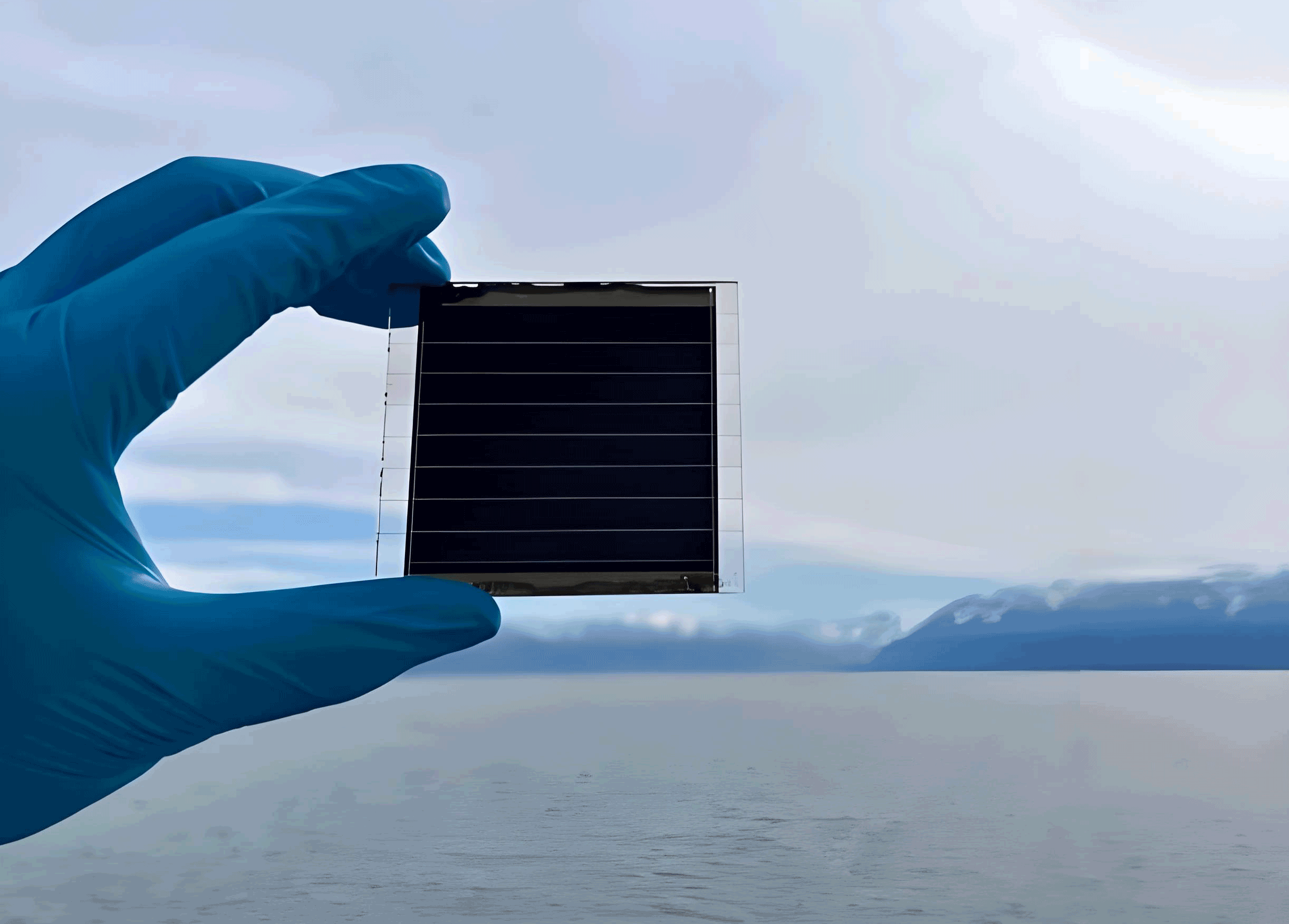
To quantify the impact of lead leakage, researchers have developed models that describe the diffusion of lead ions from damaged perovskite solar cells. The leakage rate can be expressed using Fick’s law of diffusion: $$ J = -D \frac{\partial C}{\partial x} $$ where \( J \) is the flux of lead ions, \( D \) is the diffusion coefficient, and \( \frac{\partial C}{\partial x} \) is the concentration gradient. In practice, the leakage rate depends on factors such as encapsulation quality, environmental conditions, and the integrity of the perovskite layer. For example, under simulated rainfall, an unencapsulated perovskite solar cell module can release lead at rates exceeding 30 mg·h−1·m−2, whereas advanced encapsulation can reduce this to below 0.1 mg·h−1·m−2. This highlights the critical role of physical barriers in mitigating lead leakage from perovskite solar cells.
Physical encapsulation methods are widely employed to enhance the stability and safety of perovskite solar cells. These methods involve sandwiching the device between protective layers to prevent exposure to moisture, oxygen, and mechanical stress. Common materials include ethylene-vinyl acetate (EVA) copolymers, glass substrates, and self-healing polymers. The effectiveness of encapsulation can be evaluated through accelerated aging tests and lead leakage assessments. For instance, epoxy-based polymers with low glass transition temperatures enable rapid self-repair upon heating, significantly reducing lead leakage. The following table summarizes the lead leakage rates for different encapsulation strategies under various environmental conditions:
| Encapsulation Method | Environmental Condition | Lead Leakage Rate (mg·h−1·m−2) |
|---|---|---|
| Glass/EVA/Perovskite Solar Cell/EVA/Glass | Simulated Rainfall | 30.0 |
| Epoxy-Based Self-Healing Polymer | Simulated Rainfall | 0.08 |
| Polymer Laminate with Glass Cover | High Humidity (85% RH) | 0.15 |
| Thermoplastic Polyurethane | Thermal Cycling (45–85°C) | 0.20 |
In addition to encapsulation, the design of the perovskite solar cell itself can influence lead leakage. For example, incorporating lead-chelating agents into the charge transport layers or perovskite precursor solutions can immobilize lead ions, reducing their mobility. The chelation reaction can be represented as: $$ \text{Pb}^{2+} + \text{L} \rightarrow \text{PbL} $$ where \( \text{L} \) denotes a chelating ligand. This approach not only enhances the stability of perovskite solar cells but also minimizes the risk of lead release upon device failure. Furthermore, the use of hydrophobic coatings on the perovskite layer can repel water, thereby slowing down the decomposition process. These strategies collectively contribute to the development of more robust perovskite solar cells with reduced environmental impact.
Lead recovery from end-of-life perovskite solar cells is another crucial aspect of sustainable technology. Various methods have been explored to extract and reuse lead from degraded devices, thereby minimizing waste and resource consumption. Electrochemical recycling, for instance, involves dissolving the perovskite layer in a deep eutectic solvent and depositing lead through electroplating. The overall reaction can be described by: $$ \text{PbI}_2 + 2e^- \rightarrow \text{Pb} + 2\text{I}^- $$ with a lead recovery efficiency exceeding 98%. Alternatively, chemical precipitation methods use solvents like N,N-dimethylformamide (DMF) to dissolve lead compounds, followed by the addition of precipitating agents such as ammonia to form lead hydroxide, which is then converted back to PbI2 for reuse in new perovskite solar cells. The table below compares different lead recovery techniques based on their efficiency and environmental footprint:
| Recovery Method | Process Description | Lead Recovery Efficiency (%) | PCE of New Perovskite Solar Cell (%) |
|---|---|---|---|
| Electrochemical Deposition | Dissolution in deep eutectic solvent and electroplating | 99.8 | 13.5 |
| Chemical Precipitation | DMF dissolution and NH3 precipitation | 95.7 | 11.4 |
| Thermal Degradation and Reformation | Heat treatment to form PbI2, then spin-coating with MAI | 90.0 | 14.8 |
| Solvent Extraction | Selective dissolution and separation | 92.5 | 12.0 |
The efficiency of lead recovery is often modeled using mass balance equations. For a typical perovskite solar cell module, the total lead mass \( m_{\text{Pb}} \) can be related to the recovery yield \( Y \) by: $$ Y = \frac{m_{\text{recovered}}}{m_{\text{initial}}} \times 100\% $$ where \( m_{\text{recovered}} \) is the mass of lead extracted, and \( m_{\text{initial}} \) is the initial lead content. High recovery rates not only reduce environmental hazards but also lower the production costs of perovskite solar cells by reusing valuable materials. Moreover, life-cycle assessments indicate that recycling lead from perovskite solar cells can significantly decrease the energy payback time and carbon footprint associated with their manufacturing.
Looking ahead, the future of perovskite solar cells relies on integrating advanced encapsulation with efficient recycling protocols. Innovations in materials science, such as the development of lead-absorbing polymers and multifunctional barriers, could further enhance the safety of perovskite solar cells. For example, embedding ion-exchange resins within encapsulation layers can capture lead ions upon leakage, preventing their release into the environment. Additionally, circular economy models should be adopted to facilitate the closed-loop recycling of all components in perovskite solar cells, including electrodes and substrates. Mathematical optimization techniques, such as linear programming, can be applied to maximize resource recovery: $$ \text{Maximize } Z = \sum_{i} w_i Y_i $$ where \( Z \) is the overall recovery objective, \( w_i \) are weighting factors, and \( Y_i \) are the recovery yields for different materials. This holistic approach will ensure that perovskite solar cells become a sustainable and environmentally friendly technology.
In conclusion, addressing lead leakage in perovskite solar cells is paramount for their widespread adoption. Through physical encapsulation methods and innovative recovery techniques, the risks associated with lead toxicity can be mitigated. As research progresses, the integration of these strategies will pave the way for safer and more efficient perovskite solar cells, contributing to a cleaner energy future. The continuous improvement in the stability and recyclability of perovskite solar cells underscores their potential to play a key role in the global transition to renewable energy sources.