
As a researcher in the field of energy storage, I have witnessed the growing interest in sodium-ion batteries as a promising alternative to lithium-ion batteries. The motivation stems from the need for cost-effective, safe, and abundant energy storage solutions, especially given the limitations of lithium resources. In this article, I will delve into the progress made in layered oxide cathode materials for sodium-ion batteries, highlighting key challenges and modification strategies. Sodium-ion batteries offer advantages such as lower cost due to the use of aluminum current collectors, enhanced safety, and excellent low-temperature performance. The cathode material is a critical component that significantly influences the overall performance of sodium-ion batteries. Among various cathode materials, layered oxides stand out due to their high energy density and good rate capability, making them a focal point of research. However, issues like irreversible phase transitions, poor air stability, and electrolyte decomposition hinder their practical application. To address these, numerous modification approaches have been developed, including element doping, surface coating, composite phase structures, and morphology control. In this comprehensive review, I aim to summarize these strategies and provide insights into future directions for sodium-ion battery technology.
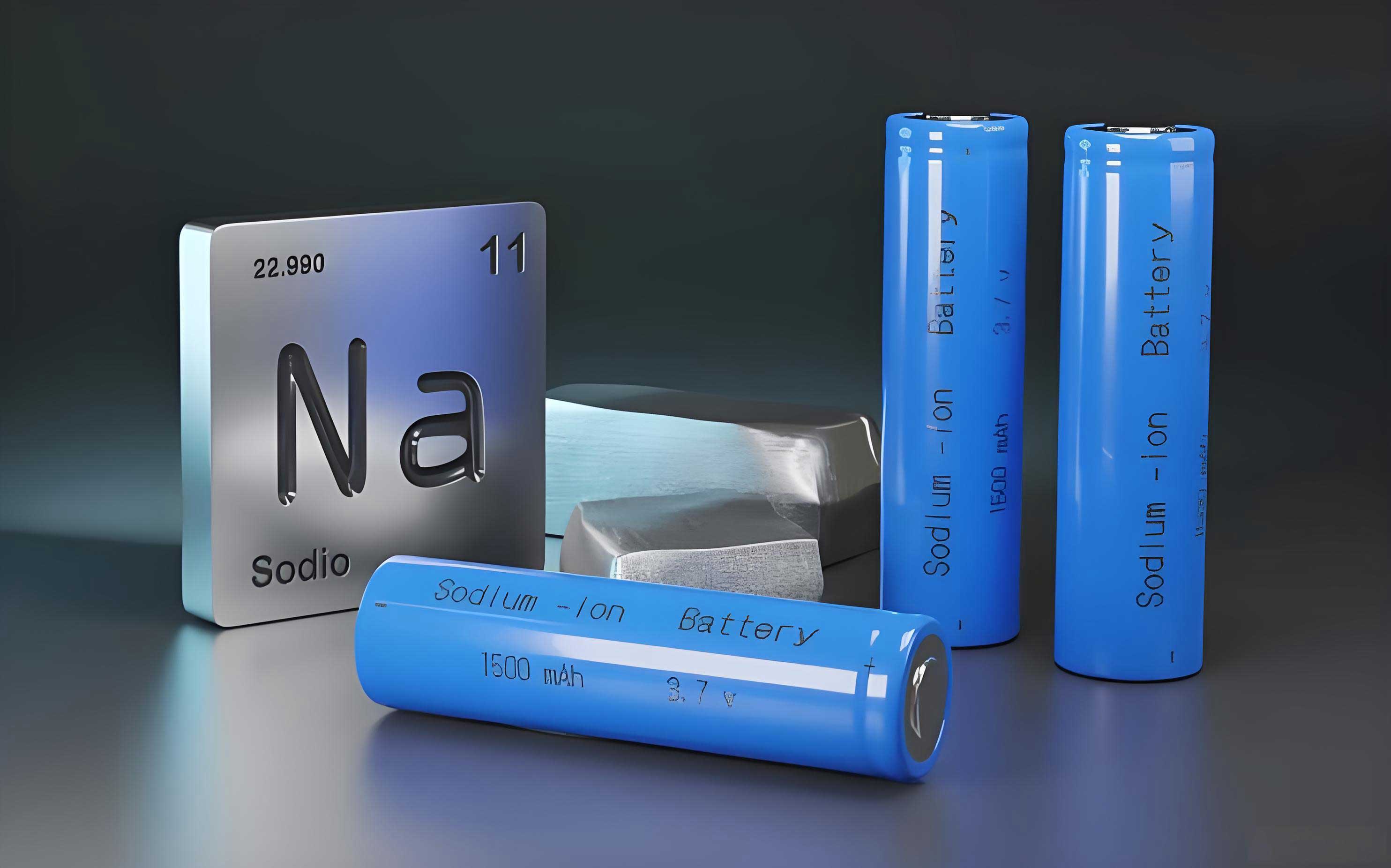
The working principle of a sodium-ion battery is similar to that of a lithium-ion battery, often described as a “rocking-chair” mechanism. During charging, sodium ions de-intercalate from the cathode, travel through the electrolyte, and intercalate into the anode, while electrons flow through the external circuit. The reverse occurs during discharge. This process is governed by the electrochemical reactions at the electrodes, which can be expressed using the Nernst equation for cell potential: $$E = E^0 – \frac{RT}{nF} \ln Q$$ where \(E\) is the cell potential, \(E^0\) is the standard potential, \(R\) is the gas constant, \(T\) is the temperature, \(n\) is the number of electrons transferred, \(F\) is Faraday’s constant, and \(Q\) is the reaction quotient. For sodium-ion batteries, the cathode materials typically involve layered oxides with the general formula NaxTMO2 (0.5 < x ≤ 1), where TM represents transition metals such as Mn, Ni, Co, Fe, or combinations thereof. The structure consists of alternating layers of TMO6 octahedra and sodium ions, providing two-dimensional pathways for sodium ion diffusion. The performance of these materials is crucial for advancing sodium-ion battery technology.
Layered oxide cathode materials for sodium-ion batteries are classified based on the stacking sequence of oxygen layers and the coordination environment of sodium ions. The main types are P2, P3, and O3 structures, as summarized in Table 1. In P2-type structures, sodium ions occupy trigonal prismatic sites with an ABBA oxygen stacking, while in O3-type structures, sodium ions occupy octahedral sites with an ABCABC stacking. P3-type structures have an ABBCCA stacking with sodium in trigonal prismatic sites. The choice of structure affects the sodium content, ion diffusion kinetics, and stability. For instance, P2-type materials often exhibit better rate performance due to open diffusion channels, but they may suffer from lower sodium content. In contrast, O3-type materials have higher initial sodium content but may experience more severe phase transitions. Understanding these structures is essential for optimizing sodium-ion battery cathodes.
| Structure Type | Sodium Coordination | Oxygen Stacking | Typical Formula | Key Properties |
|---|---|---|---|---|
| P2 | Trigonal Prismatic | ABBA | Na0.67Mn0.5Fe0.5O2 | High rate capability, but limited Na content |
| P3 | Trigonal Prismatic | ABBCCA | Na0.6Li0.2Mn0.8O2 | Intermediate stability, prone to phase changes |
| O3 | Octahedral | ABCABC | NaNi0.5Mn0.5O2 | High capacity, but irreversible phase transitions |
Despite the potential of layered oxide cathodes, several challenges limit their performance in sodium-ion batteries. These include irreversible phase transitions, electrolyte decomposition, transition metal ion migration, Jahn-Teller distortion from Mn3+, and poor air stability. Let’s explore each issue in detail. Irreversible phase transitions occur during charge-discharge cycles due to the large ionic radius of sodium (1.02 Å compared to 0.76 Å for lithium), leading to significant lattice strain. This can be described using the volume change ratio: $$\Delta V = \frac{V_{\text{charged}} – V_{\text{discharged}}}{V_{\text{discharged}}} \times 100\%$$ where \(\Delta V\) often exceeds 5% for many layered oxides, causing capacity fade. Electrolyte decomposition is another critical problem, as sodium salts like NaPF6 can react with trace water to form HF, which corrodes the cathode surface. The reaction can be represented as: $$\text{NaPF}_6 + \text{H}_2\text{O} \rightarrow \text{NaF} + \text{POF}_3 + 2\text{HF}$$ HF then dissolves transition metals, leading to capacity loss. Transition metal ion migration, particularly from the TM layer to the sodium layer, blocks sodium ion pathways, increasing polarization. For Mn-based materials, the Jahn-Teller effect from Mn3+ causes distortion in [MnO6] octahedra, reducing structural integrity. The distortion energy can be approximated using crystal field theory: $$E_{\text{JT}} = -\frac{2}{5} \Delta_{\text{oct}}$$ where \(\Delta_{\text{oct}}\) is the octahedral splitting parameter. Air stability is poor because layered oxides react with CO2 and H2O in the atmosphere, forming carbonates and hydroxides that degrade electrochemical performance. These challenges necessitate effective modification strategies for sodium-ion battery cathodes.
To overcome these issues, various modification strategies have been developed for layered oxide cathode materials in sodium-ion batteries. I will categorize them into bulk doping, surface coating, composite phase structures, morphology control, and integrated approaches. Bulk doping involves substituting ions in the crystal lattice to enhance structural stability. Common dopants include Al, Cu, Ti, Mg, and F. The effect of doping can be analyzed using the tolerance factor for perovskite-like structures: $$t = \frac{r_A + r_O}{\sqrt{2}(r_B + r_O)}$$ where \(r_A\), \(r_B\), and \(r_O\) are the ionic radii of the A-site (sodium), B-site (transition metal), and oxygen, respectively. Doping can adjust this factor to stabilize the structure. Surface coating applies a protective layer to prevent side reactions with the electrolyte. Materials like Al2O3, ZnO, and polymers are used. Composite phase structures combine different phases (e.g., P2/O3) to balance properties. Morphology control involves designing particles with specific shapes (e.g., spheres, nanorods) to improve packing density and ion diffusion. Integrated strategies combine multiple approaches for synergistic effects. Below, I summarize key modification methods in Table 2, highlighting their impact on sodium-ion battery performance.
| Strategy | Examples | Mechanism | Improvements in Sodium-Ion Batteries |
|---|---|---|---|
| Bulk Doping | Al-doped Na0.6Ni0.3Mn0.7O2 | Inhibits phase transitions, enhances oxygen redox reversibility | Increased capacity retention from 60% to 85% after 100 cycles |
| Surface Coating | Al2O3-coated Na2/3Fe1/2Mn1/2O2 | Reduces electrolyte decomposition, improves air stability | Capacity fade reduced by 20% in humid environments |
| Composite Phases | P2/O3-Na0.7Ni0.2Fe0.3Mn0.5O2 | Balances high capacity and structural stability | Rate capability of 86.5 mAh g-1 at 10C, 70% retention |
| Morphology Control | Spherical NaCrO2 particles | Enhances tap density and ion diffusion paths | 90% capacity retention after 800 cycles at 0.2C |
| Integrated Approach | Doped and coated NaNi0.4Fe0.2Mn0.4O2 | Combines bulk and surface stabilization | Cycle life extended by 50% compared to pristine material |
Bulk doping is a prevalent method to enhance the structural stability of layered oxide cathodes in sodium-ion batteries. By introducing foreign ions into the lattice, we can suppress detrimental phase transitions, improve ionic conductivity, and increase redox reversibility. For single-element doping, aluminum is widely used due to its strong Al-O bonds, which stabilize the crystal framework. In P2-Na0.6Ni0.3Mn0.7O2, Al doping expands the interlayer spacing, facilitating sodium ion diffusion. The diffusion coefficient \(D_{\text{Na}}\) can be estimated using the Arrhenius equation: $$D_{\text{Na}} = D_0 \exp\left(-\frac{E_a}{RT}\right)$$ where \(D_0\) is the pre-exponential factor and \(E_a\) is the activation energy. Doping reduces \(E_a\), enhancing rate performance. For multi-element doping, combinations like Li and Cu in Na0.72Li0.14Cu0.15Mn0.71O2 synergistically inhibit phase changes and manganese dissolution. The effectiveness of doping can be quantified by the capacity retention after cycling, often improving from 30% to over 80% in sodium-ion batteries. Additionally, doping at different sites (e.g., sodium sites vs. transition metal sites) offers tailored benefits. For instance, Y doping at sodium sites in P2-Na0.65Y0.025[Ni0.33Mn0.67]O2 acts as a pillar to reduce internal stress, while enhancing electronic conductivity. These modifications are crucial for advancing sodium-ion battery technology.
Surface coating is another key strategy to protect layered oxide cathodes from degradation in sodium-ion batteries. By applying a thin layer of inert material, we can minimize direct contact with the electrolyte, reducing side reactions and improving air stability. Common coatings include metal oxides (e.g., Al2O3, ZrO2), phosphates (e.g., Na3Zr2Si2PO12), and polymers (e.g., PMAA-AN). The coating thickness typically ranges from 5 to 20 nm, optimized to balance protection and ion transport. For example, in Al2O3-coated Na2/3Fe1/2Mn1/2O2, the coating suppresses the formation of Na2CO3·H2O when exposed to air, as shown by X-ray diffraction analysis. The improvement in air stability can be expressed as the reduction in surface carbonate concentration: $$C_{\text{carbonate}} \propto \exp(-k t)$$ where \(k\) is the degradation rate constant, which decreases with coating. In sodium-ion batteries, coated cathodes exhibit higher initial coulombic efficiency and longer cycle life. For instance, Na3Zr2Si2PO12-coated P2-Na0.612K0.056MnO2 shows a capacity retention of 71.7% after 50 cycles, compared to 50% for uncoated material. Polymer coatings like PMAA-AN further enhance interface stability by coordinating with transition metal ions, reducing Ni4+ formation at high voltages. These coatings are essential for practical sodium-ion battery applications.
Composite phase structures involve designing cathodes with multiple crystalline phases to leverage the advantages of each. For sodium-ion batteries, combining P2 and O3 phases can yield materials with high capacity and good stability. The phase ratio can be controlled by adjusting composition or synthesis conditions. In P2/O3-Na0.85Ni0.34Mn0.66-xTixO2, increasing Ti content raises the O3 phase fraction, improving capacity retention to 80.6% after 200 cycles. The composite structure mitigates volume changes during cycling, as the different phases buffer stress. The overall volume change \(\Delta V_{\text{total}}\) can be approximated by a weighted average: $$\Delta V_{\text{total}} = f_{\text{P2}} \Delta V_{\text{P2}} + f_{\text{O3}} \Delta V_{\text{O3}}$$ where \(f\) represents the phase fraction. By optimizing \(f_{\text{P2}}\) and \(f_{\text{O3}}\), we can minimize \(\Delta V_{\text{total}}\) below 2%, enhancing cycle life in sodium-ion batteries. Another approach is to create symbiotic structures like P2-OP4-O2 in Na0.67Li0.1Fe0.37Mn0.53O2, which suppresses oxygen loss and enables reversible anion redox. These composites often deliver high energy densities, with some achieving over 225 Wh kg-1 in full cells. The development of composite phases is a promising direction for next-generation sodium-ion battery cathodes.
Morphology control focuses on engineering the particle shape and size of layered oxide cathodes to improve electrochemical performance in sodium-ion batteries. Spherical particles, for instance, offer high tap density and uniform electrode fabrication, leading to better rate capability and cycle stability. The tap density \(\rho_{\text{tap}}\) can be related to particle sphericity \(\psi\): $$\rho_{\text{tap}} \propto \psi \cdot d^{-1}$$ where \(d\) is the particle diameter. Higher \(\psi\) values (close to 1 for spheres) increase packing efficiency. In practice, spherical NaCrO2 synthesized via hydrothermal methods shows 90% capacity retention after 800 cycles, compared to 61% for irregular particles. Nanostructured morphologies like nanorods, nanowires, and porous frameworks provide short diffusion paths for sodium ions, enhancing rate performance. For example, porous P2-Na2/3Ni1/3Mn2/3BO2 delivers 73.4 mAh g-1 at 20C, with 81% capacity retention after 500 cycles. The diffusion time \(t_{\text{diff}}\) for ions in nanoparticles scales with size \(L\): $$t_{\text{diff}} \approx \frac{L^2}{D_{\text{Na}}}$$ Reducing \(L\) from micrometers to nanometers decreases \(t_{\text{diff}}\) by orders of magnitude, crucial for fast-charging sodium-ion batteries. Additionally, controlled morphology can alleviate strain from phase transitions, as seen in Na2/3(Fe1/2Mn1/2)O2 nanofibers, which maintain 86.4% capacity after 80 cycles. Thus, morphology optimization is vital for high-performance sodium-ion battery electrodes.
Integrated modification strategies combine multiple approaches to address the multifaceted challenges of layered oxide cathodes in sodium-ion batteries. For example, doping and coating can be applied simultaneously to enhance both bulk and surface properties. In NaTi2(PO4)3-coated O3-NaNi1/3Fe1/3Mn1/3O2, Ti4+ ions diffuse into the bulk, expanding the interlayer spacing, while the coating protects against electrolyte corrosion. This dual effect improves capacity retention from 65% to 77.5% after 100 cycles in sodium-ion batteries. Another integrated method involves in-situ formation of doped coatings, as in MgF2-doped P2-Na0.76Ni0.225Mg0.025Mn0.75O1.95F0.05, where Mg2+ stabilizes the structure and F– enhances ionic conductivity. The synergistic benefit can be quantified by the enhancement factor \(\eta\): $$\eta = \frac{C_{\text{integrated}} – C_{\text{pristine}}}{C_{\text{pristine}}}$$ where \(C\) represents capacity or retention; values often exceed 30% for integrated strategies. Furthermore, combining doping with morphology control, such as in Y-doped spherical particles, yields cathodes with excellent low-temperature performance, delivering 77.3 mAh g-1 at -40°C. These integrated approaches are essential for developing robust sodium-ion battery systems for diverse applications.
Looking ahead, the future of layered oxide cathode materials in sodium-ion batteries hinges on addressing unresolved issues and exploring new frontiers. Key areas include understanding oxygen redox mechanisms, controlling Na+/vacancy ordering, and improving air stability. For P2-type materials, strategies like vacancy disorder through Li+ doping and oxygen stabilization via Mn-rich compositions are promising. In O3-type materials, high-entropy oxides with multiple transition metals offer enhanced stability due to configurational entropy; the entropy contribution \(\Delta S_{\text{mix}}\) can be calculated: $$\Delta S_{\text{mix}} = -R \sum_{i=1}^{n} x_i \ln x_i$$ where \(x_i\) is the mole fraction of each component. Maximizing \(\Delta S_{\text{mix}}\) can suppress phase segregation, benefiting sodium-ion battery longevity. Additionally, surface engineering with advanced coatings like solid electrolytes or conductive polymers will be crucial to mitigate interface degradation. Computational tools, such as density functional theory (DFT), can accelerate material discovery by predicting properties like formation energies: $$E_f = E_{\text{total}} – \sum_i n_i \mu_i$$ where \(E_{\text{total}}\) is the total energy, \(n_i\) is the number of atoms, and \(\mu_i\) is the chemical potential. These insights will guide the design of next-generation cathodes for sodium-ion batteries.
In conclusion, layered oxide cathode materials are pivotal for advancing sodium-ion battery technology. Through modification strategies like doping, coating, composite structures, and morphology control, significant progress has been made in enhancing capacity, stability, and rate performance. However, challenges remain in areas such as air stability and irreversible phase transitions. Future research should focus on integrated approaches, novel compositions, and in-depth mechanistic studies. By addressing these aspects, we can unlock the full potential of sodium-ion batteries as sustainable energy storage solutions. The journey towards commercialization requires continuous innovation, and I believe that with collaborative efforts, sodium-ion batteries will play a key role in the global energy landscape. As we move forward, the emphasis on cost-effectiveness and safety will drive further advancements, making sodium-ion batteries a compelling alternative to lithium-ion systems.