
In recent years, the growing concerns over environmental issues and energy crises have accelerated the need for advanced renewable energy technologies. However, renewable sources like wind and solar power suffer from intermittent energy conversion, making the development of large-scale energy storage systems imperative. Electrochemical energy storage stands out as an effective and practical solution. For decades, lithium-ion batteries (LIBs) have dominated the market due to their high energy density, long cycle life, and high operating voltage. Yet, the increasing demand for lithium has led to rising costs and scarcity of resources, limiting their scalability. This has spurred the exploration of alternative energy storage technologies, among which sodium-ion batteries (SIBs) have emerged as a promising candidate. SIBs share similar working mechanisms with LIBs but offer potential cost advantages, making them attractive for applications such as grid storage and electric vehicles. However, the performance of sodium-ion batteries is still in the early stages of development, with anode materials being a critical bottleneck. Carbonaceous materials, particularly hard carbon (HC), are considered the most promising anode materials for sodium-ion batteries due to their low cost, simple preparation, and good reproducibility. In this article, I will review the research progress on hard carbon anodes for sodium-ion batteries, focusing on sodium storage mechanisms, precursor selection, and optimization strategies in preparation processes.
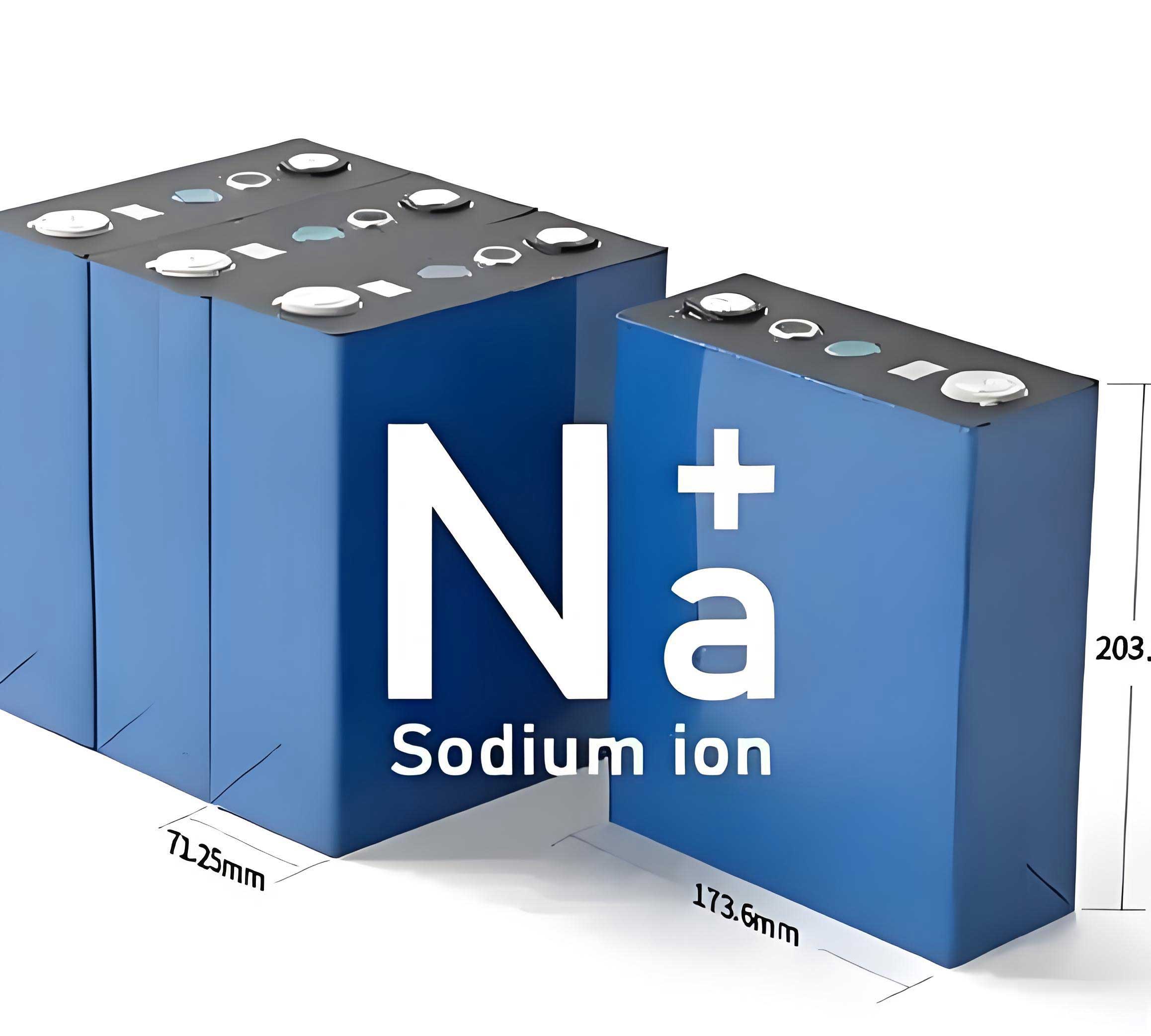
The working principle of sodium-ion batteries is analogous to that of lithium-ion batteries, involving the insertion and extraction of sodium ions between the cathode and anode during charge and discharge cycles. The anode material plays a pivotal role in determining the rate capability, cycle life, and Coulombic efficiency of sodium-ion batteries. Graphite, the standard anode for lithium-ion batteries, is unsuitable for sodium-ion batteries because the larger ionic radius of sodium (0.103 nm) compared to lithium (0.071 nm) prevents efficient intercalation into the narrow interlayer spacing of graphite (0.34 nm). Hard carbon, a non-graphitizable carbon, has gained attention as an anode material for sodium-ion batteries due to its disordered structure, larger interlayer spacing, and microporous architecture. These features facilitate sodium ion storage through various mechanisms, which I will delve into in the following sections. The performance of hard carbon in sodium-ion batteries is influenced by multiple factors, including the sodium storage mechanism, choice of precursor, and preparation techniques. Understanding these aspects is crucial for advancing hard carbon anodes toward commercialization in sodium-ion batteries.
Hard carbon is typically produced by pyrolysis of organic compounds or biomass-derived precursors at temperatures above 1000°C. Its structure consists of randomly oriented graphene-like domains, defects, and pores, which provide active sites for sodium ion storage. The reversible specific capacity of hard carbon anodes in sodium-ion batteries ranges from 250 to 350 mAh/g, but challenges such as low initial Coulombic efficiency (often below 90%) and poor rate performance hinder their practical application. To address these issues, researchers have investigated various sodium storage mechanisms and optimization strategies. In this review, I will discuss the current understanding of sodium storage in hard carbon, the impact of precursor selection on performance, and the effects of preparation processes like carbonization temperature, washing treatments, and doping. By synthesizing recent findings, I aim to provide insights into the design of high-performance hard carbon anodes for sodium-ion batteries.
Sodium Storage Mechanisms in Hard Carbon
The sodium storage mechanism in hard carbon is complex and has been debated in the literature. Several models have been proposed to explain the electrochemical behavior, particularly the distinction between the sloping region (above 0.1 V) and the plateau region (below 0.1 V) in charge-discharge curves. Understanding these mechanisms is essential for tailoring hard carbon properties to enhance performance in sodium-ion batteries. The primary models include the “insertion-adsorption” mechanism, the “adsorption-insertion” mechanism, and the “adsorption-filling” mechanism.
Initially, Stevens and Dahn proposed the “insertion-adsorption” mechanism based on studies of glucose-derived hard carbon. They suggested that the sloping region corresponds to sodium ion insertion between carbon layers, while the plateau region is associated with sodium adsorption in nanopores. However, this model has been challenged by observations that the plateau capacity increases with pyrolysis temperature up to around 1400°C, even as surface area and pore volume decrease. This led to the development of the “adsorption-insertion” mechanism, where the sloping region is attributed to sodium adsorption on defect sites and surfaces, and the plateau region results from sodium insertion into ordered graphite layers. Later, Bommier et al. expanded this into a three-stage model, incorporating sodium adsorption on pore surfaces at the end of the plateau. More recently, Zhang et al. proposed the “adsorption-filling” mechanism, arguing that sodium ions do not intercalate into carbon layers at all. Instead, the sloping capacity comes from adsorption on defects and isolated graphene sheets, and the plateau capacity arises from sodium filling in mesopores.
These mechanisms can be summarized using mathematical expressions. For instance, the total sodium storage capacity \( C_{\text{total}} \) in hard carbon can be expressed as the sum of contributions from different processes:
$$ C_{\text{total}} = C_{\text{slope}} + C_{\text{plateau}} $$
where \( C_{\text{slope}} \) represents capacity from adsorption or insertion in the sloping region, and \( C_{\text{plateau}} \) represents capacity from insertion or filling in the plateau region. The specific contributions depend on the hard carbon structure. For example, if we consider the adsorption-filling mechanism, \( C_{\text{slope}} \) can be related to defect concentration \( D \) and surface area \( S \):
$$ C_{\text{slope}} = k_1 \cdot D + k_2 \cdot S $$
and \( C_{\text{plateau}} \) can be linked to pore volume \( V_p \):
$$ C_{\text{plateau}} = k_3 \cdot V_p $$
where \( k_1, k_2, k_3 \) are proportionality constants. These relationships highlight how structural parameters influence sodium storage in hard carbon for sodium-ion batteries.
The debate over mechanisms stems from the diverse structures of hard carbon materials and the limitations of characterization techniques. Factors such as precursor type, pyrolysis conditions, and electrochemical testing protocols can affect the observed behavior. For instance, hard carbon with larger interlayer spacing (e.g., >0.37 nm) may favor insertion processes, while materials with abundant micropores may emphasize adsorption or filling. To illustrate the variability, Table 1 summarizes key mechanisms and their characteristics based on recent studies.
| Mechanism | Sloping Region Contribution | Plateau Region Contribution | Key Evidence |
|---|---|---|---|
| Insertion-Adsorption | Na+ insertion between layers | Na+ adsorption in nanopores | Early studies on glucose-derived HC |
| Adsorption-Insertion | Na+ adsorption on defects/surfaces | Na+ insertion into graphite domains | Increased plateau capacity with temperature |
| Adsorption-Filling | Na+ adsorption on defects/isolated sheets | Na+ filling in mesopores | Lack of intercalation evidence in nanofibers |
Further research is needed to unify these mechanisms, possibly through advanced in situ characterization methods. For sodium-ion batteries, clarifying the storage behavior will guide the design of hard carbon with optimized structures for high capacity and efficiency.
Precursor Selection for Hard Carbon Anodes
The choice of precursor significantly impacts the structure and electrochemical performance of hard carbon in sodium-ion batteries. Precursors can be broadly classified into synthetic organic compounds (e.g., polymers like polyacrylonitrile or phenolic resins) and biomass materials. Biomass precursors are particularly attractive due to their abundance, low cost, and sustainability. They often contain natural heteroatoms (e.g., N, S, P) and inherit hierarchical structures that can enhance sodium ion storage. The composition of biomass—mainly lignin, cellulose, and hemicellulose—plays a critical role in determining hard carbon properties.
Biomass-derived hard carbon typically exhibits larger interlayer spacing and more defects compared to synthetic precursors, which benefits sodium ion diffusion and storage. For example, lignin-rich precursors tend to yield hard carbon with higher carbon content and more turbostratic structures, leading to better electrochemical performance. In contrast, cellulose- or hemicellulose-rich precursors may produce hard carbon with higher surface area and micropores, which can improve rate capability but reduce initial Coulombic efficiency due to excessive solid-electrolyte interface (SEI) formation. The presence of inorganic impurities (ash content) in biomass also affects hard carbon quality; high ash content can lead to undesirable phases like SiC, increasing surface area and lowering efficiency.
To quantify the impact of precursor composition, I have compiled data from various studies on biomass-derived hard carbon for sodium-ion batteries. Table 2 summarizes the relationship between precursor type, composition, and electrochemical performance.
| Precursor Type | Lignin Content (%) | Ash Content (%) | Reversible Capacity (mAh/g) | Initial Coulombic Efficiency (%) | Key Observations |
|---|---|---|---|---|---|
| Woody Biomass (e.g., pine) | 20-30 | 1-5 | 290-315 | 80-85 | High carbon purity, suitable for SIB anodes |
| Agricultural Residues (e.g., rice husk) | 15-25 | 5-10 | 250-300 | 70-80 | Moderate performance, requires washing |
| Herbaceous Biomass (e.g., grass) | 10-20 | 5-15 | 200-250 | 60-75 | High surface area, low efficiency |
| Synthetic Polymers (e.g., phenolic resin) | N/A | Low | 270-320 | 75-85 | Controllable structure but higher cost |
From Table 2, it is evident that precursors with high lignin content and low ash content yield hard carbon with superior reversible capacity and initial Coulombic efficiency, making them ideal for sodium-ion battery anodes. For instance, woody biomass like pine or oak has been shown to produce hard carbon with capacities exceeding 300 mAh/g and efficiencies above 80%. In contrast, herbaceous biomass with high ash content often results in hard carbon with excessive surface area, leading to more SEI formation and lower efficiency. This underscores the importance of precursor selection in optimizing hard carbon for sodium-ion batteries.
Beyond composition, the natural microstructure of biomass precursors can be leveraged to create advantageous morphologies. For example, some biomass materials have inherent porosity or layered structures that are retained after pyrolysis, facilitating electrolyte infiltration and sodium ion transport. Additionally, heteroatoms present in biomass can be incorporated into the carbon matrix, introducing doping effects that enhance electronic conductivity and create active sites for sodium storage. I will discuss doping strategies in more detail later. Overall, biomass precursors offer a sustainable and cost-effective route for producing hard carbon anodes for sodium-ion batteries, but careful selection based on composition and purity is necessary to achieve high performance.
Optimization of Preparation Processes
The preparation process of hard carbon profoundly influences its structural characteristics and electrochemical behavior in sodium-ion batteries. Key parameters include carbonization temperature, heating rate, washing treatments, hydrothermal carbonization, pre-oxidation, and heteroatom doping. By tuning these parameters, researchers aim to enhance the reversible capacity, initial Coulombic efficiency, and rate performance of hard carbon anodes.
Carbonization Temperature and Heating Rate
Carbonization temperature is a critical factor that affects the interlayer spacing, graphitization degree, porosity, and surface area of hard carbon. Generally, higher temperatures lead to increased graphitization, reduced interlayer spacing, and decreased surface area due to pore collapse. However, there is an optimal temperature range for sodium-ion battery applications. Studies have shown that hard carbon pyrolyzed at around 1300-1400°C often exhibits the best balance between structure disorder and order, resulting in high plateau capacity. For example, rice husk-derived hard carbon carbonized at 1300°C demonstrated a reversible capacity of 372 mAh/g, attributed to its large interlayer distance and suitable oxygen content. The relationship between interlayer spacing \( d_{002} \) and temperature \( T \) can be approximated by:
$$ d_{002} = d_0 – \alpha \cdot T $$
where \( d_0 \) is the initial spacing and \( \alpha \) is a constant. As temperature increases, \( d_{002} \) decreases, affecting sodium ion intercalation.
Heating rate also plays a role. Slow heating rates (e.g., 0.25-1°C/min) during pyrolysis can reduce surface area and increase graphitization, leading to higher initial Coulombic efficiency. This is because slower heating allows for more ordered carbon structure formation and minimizes defect generation. For instance, hard carbon from camphor wood residue prepared with a heating rate of 0.25°C/min showed an initial Coulombic efficiency of 82.8%, compared to 60.8% for a rate of 5°C/min. The heating rate \( r \) can be linked to surface area \( S \) through an empirical equation:
$$ S = S_0 \cdot e^{-\beta r} $$
where \( S_0 \) is the surface area at high heating rate and \( \beta \) is a parameter. Lower \( r \) reduces \( S \), decreasing irreversible sodium loss from SEI formation.
Washing and Acid Treatment
Washing treatments, either before or after carbonization, are used to remove inorganic impurities from biomass precursors. These impurities, such as alkali metals, silicon, and calcium, can form crystalline phases during pyrolysis that increase surface area and reduce Coulombic efficiency. Washing with acids (e.g., HCl) or water can purify the precursor, leading to hard carbon with higher carbon purity and fewer defects. However, washing may also increase porosity and surface area, which can have mixed effects. For example, acid washing of peanut shells for two weeks resulted in hard carbon with a reversible capacity of 290 mAh/g, compared to 120 mAh/g for untreated samples. The effect of washing on capacity \( C \) can be modeled as:
$$ C = C_{\text{base}} + \gamma \cdot \Delta P $$
where \( C_{\text{base}} \) is the capacity without washing, \( \Delta P \) is the change in porosity, and \( \gamma \) is a coefficient. Washing generally improves capacity but may lower efficiency if surface area increases excessively.
Hydrothermal Carbonization and Pre-oxidation
Hydrothermal carbonization (HTC) is a pretreatment method that involves heating precursors in water at elevated temperatures (e.g., 180-250°C). This process can produce uniform carbon spheres with hierarchical porosity and oxygen-containing functional groups. These features enhance electrolyte wetting and sodium ion diffusion, improving rate performance. For instance, glucose-derived hard carbon via HTC exhibited a capacity retention of 31.1% at 2 C and 73.1% after 300 cycles at 0.5 C. The HTC process can be described by reaction kinetics, where the formation of carbon spheres follows a nucleation-growth mechanism.
Pre-oxidation, either in air or with oxidants like H2O2, introduces oxygen functional groups (e.g., C=O, C-O) into the precursor, which inhibits graphitization during carbonization and expands interlayer spacing. This increases sodium adsorption sites, boosting sloping capacity. Liquid-phase pre-oxidation has been shown to enhance rate performance due to higher C=O content. The expansion of interlayer spacing \( \Delta d \) due to oxygen incorporation can be expressed as:
$$ \Delta d = \kappa \cdot [O] $$
where \( [O] \) is the oxygen concentration and \( \kappa \) is a constant. This expansion facilitates sodium ion storage in sodium-ion batteries.
Heteroatom Doping
Doping hard carbon with heteroatoms such as nitrogen (N), sulfur (S), phosphorus (P), or boron (B) can modify electronic structure, interlayer spacing, and defect concentration. These changes improve electronic conductivity, create active sites, and enhance sodium ion storage. For example, N/P/O tri-doped porous carbon demonstrated a reversible capacity of 213.5 mAh/g after 2000 cycles at 1 A/g. Doping effects can be quantified using equations like:
$$ C_{\text{doped}} = C_{\text{undoped}} + \delta \cdot X_{\text{dopant}} $$
where \( X_{\text{dopant}} \) is the dopant concentration and \( \delta \) is a factor representing the contribution per dopant atom. Different dopants have distinct impacts: P or S doping expands interlayer spacing, increasing plateau capacity, while B doping increases defect concentration, raising sloping capacity but may reduce initial efficiency.
To summarize the effects of various preparation parameters, Table 3 provides an overview of optimization strategies and their outcomes for hard carbon in sodium-ion batteries.
| Optimization Strategy | Typical Conditions | Impact on Structure | Electrochemical Performance |
|---|---|---|---|
| Carbonization Temperature | 1300-1400°C | Balanced interlayer spacing and graphitization | High plateau capacity (~300-370 mAh/g) |
| Slow Heating Rate | 0.25-1°C/min | Reduced surface area, increased order | Improved initial CE (up to 85%) |
| Acid Washing | HCl treatment for days | Removed impurities, increased porosity | Enhanced capacity (up to 290 mAh/g) |
| Hydrothermal Carbonization | 200°C for 12 h | Uniform spheres, hierarchical pores | Better rate performance and cycling stability |
| Pre-oxidation | H2O2 or air treatment | Expanded interlayer spacing, oxygen groups | Increased sloping capacity, improved kinetics |
| Heteroatom Doping | N, S, P, B incorporation | Modified electronic structure, defects | High capacity and long cycle life |
These optimization strategies highlight the tunability of hard carbon properties for sodium-ion batteries. By combining multiple approaches, such as using lignin-rich biomass with slow pyrolysis and doping, it is possible to achieve hard carbon anodes with high capacity, efficiency, and rate capability.
Conclusion and Future Perspectives
In conclusion, hard carbon is a promising anode material for sodium-ion batteries due to its low cost, suitable interlayer spacing, and good sodium storage capacity. However, challenges such as low initial Coulombic efficiency and moderate rate performance need to be addressed for commercialization. Through this review, I have discussed the sodium storage mechanisms in hard carbon, emphasizing that the exact mechanism remains debated but likely involves a combination of adsorption, insertion, and filling processes. The choice of precursor, particularly biomass with high lignin and low ash content, significantly influences hard carbon performance. Furthermore, optimization of preparation processes—including carbonization temperature, heating rate, washing, hydrothermal treatment, pre-oxidation, and doping—can tailor hard carbon structure to enhance electrochemical properties.
Future research on hard carbon anodes for sodium-ion batteries should focus on several key areas. First, advanced in situ and operando characterization techniques, such as synchrotron X-ray diffraction and nuclear magnetic resonance, are needed to elucidate the sodium storage mechanisms more clearly. This will provide a foundation for rational design of hard carbon materials. Second, the development of scalable and cost-effective synthesis methods is crucial for mass production. Biomass precursors offer sustainability, but consistency in supply and composition must be ensured. Third, integrating hard carbon anodes with compatible electrolytes and cathodes in full sodium-ion battery cells will be essential to evaluate practical performance. For instance, electrolyte additives or solid electrolytes might mitigate SEI formation and improve initial efficiency.
Moreover, computational modeling and machine learning could accelerate the discovery of optimal hard carbon structures by predicting relationships between precursor properties, synthesis conditions, and electrochemical outcomes. For example, a model linking interlayer spacing \( d \), defect density \( \rho \), and capacity \( C \) could be developed:
$$ C = f(d, \rho, S, …) $$
where \( f \) is a function determined from data. Such approaches would streamline the optimization process for sodium-ion batteries.
Finally, while hard carbon anodes show great promise, alternative materials like alloy-based or compound anodes are also being explored. However, hard carbon remains a frontrunner due to its balance of performance and cost. By continuing to refine our understanding and fabrication techniques, hard carbon can play a pivotal role in advancing sodium-ion battery technology toward widespread adoption in energy storage applications.
In summary, the progress in hard carbon anodes for sodium-ion batteries is encouraging, but concerted efforts in fundamental research and engineering are needed to overcome existing limitations. As the demand for sustainable energy storage grows, sodium-ion batteries with high-performance hard carbon anodes could become a viable alternative to lithium-ion batteries, contributing to a greener and more resilient energy future.