
In recent years, the demand for efficient and cost-effective energy storage systems has surged, driven by the global shift toward renewable energy and electric mobility. Among various battery technologies, sodium-ion batteries have emerged as a promising alternative to lithium-ion batteries due to the abundance and low cost of sodium resources. However, the development of high-performance sodium-ion batteries faces significant challenges, particularly in designing cathode materials that offer high capacity, long cycle life, and structural stability. Manganese-based transition metal oxides (TMOs) are considered attractive cathode candidates for sodium-ion batteries because of their high theoretical capacity, environmental friendliness, and relatively low cost. Despite these advantages, manganese-based TMOs suffer from issues such as capacity fading, irreversible phase transitions, and the Jahn-Teller effect, which limit their practical application. To address these drawbacks, element substitution doping has been widely explored as a effective strategy to enhance the electrochemical performance of these materials. In this article, I will provide a comprehensive overview of recent progress in element substitution doping for manganese-based cathode materials in sodium-ion batteries, focusing on three main approaches: alkali metal site lithium substitution (Li-A), transition metal site substitution (M’-M), and dual-site lithium substitution (Li-M, A). I will incorporate tables and formulas to summarize key findings and mechanistic insights, emphasizing the importance of doping in improving capacity retention and structural stability. The discussion aims to highlight how these modifications contribute to the advancement of sodium-ion battery technology.
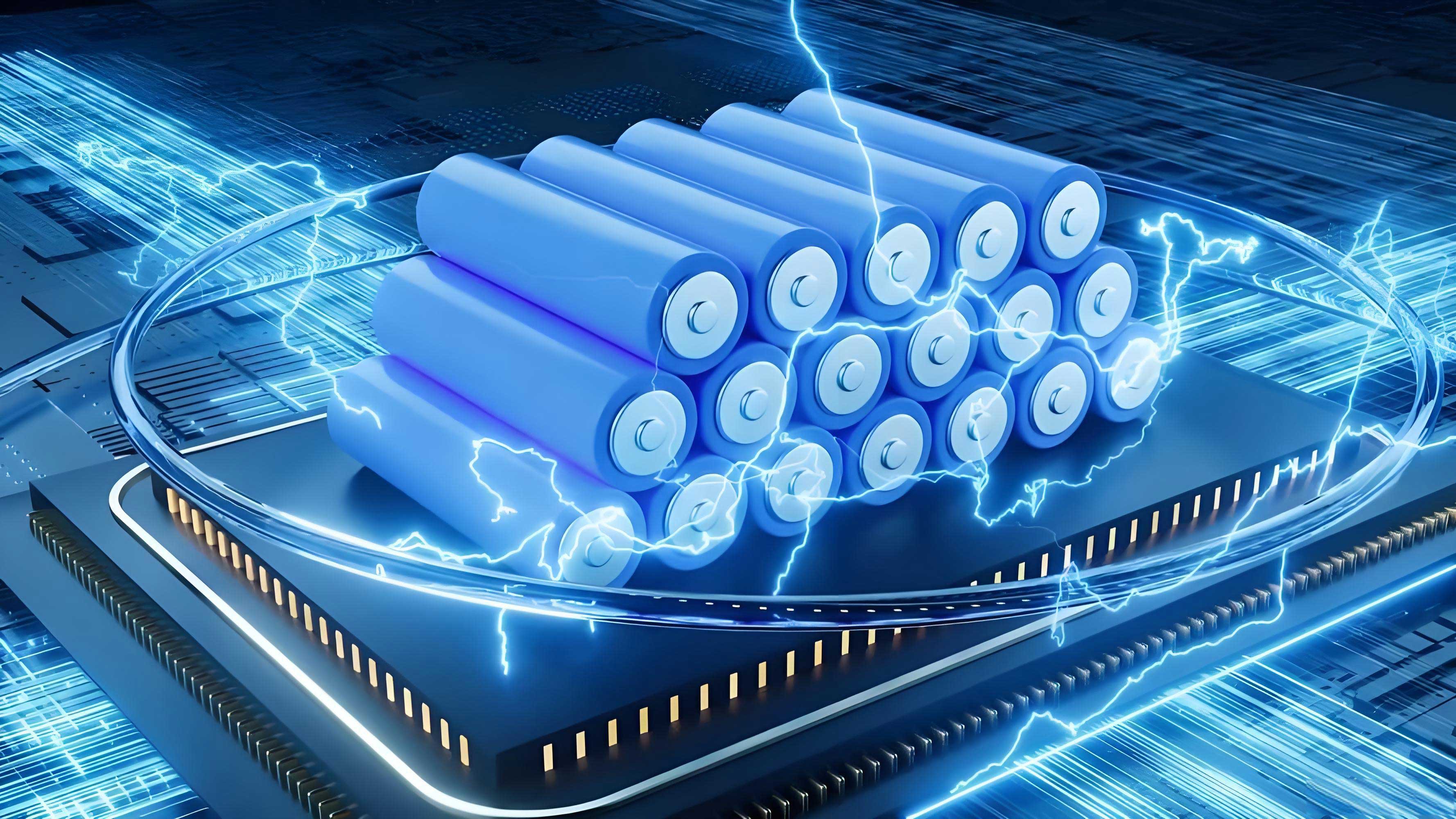
Sodium-ion batteries operate on a principle similar to lithium-ion batteries, where sodium ions shuttle between the cathode and anode during charge and discharge cycles. The cathode material plays a crucial role in determining the battery’s energy density, rate capability, and cycle life. Manganese-based TMOs, such as layered oxides (e.g., P2-type and O3-type structures), are particularly interesting due to their open frameworks that facilitate sodium ion diffusion. The general formula for these materials can be represented as NaxMO2, where M is a transition metal like Mn, Ni, Co, or Fe, and x varies based on the composition. In sodium-ion batteries, the electrochemical performance is heavily influenced by the structural evolution during sodium extraction and insertion. For instance, the P2-type structure, characterized by prismatic sodium sites, often undergoes phase transitions to O2-type or other phases at high voltages, leading to volume changes and capacity decay. The Jahn-Teller distortion associated with Mn3+ ions further exacerbates structural instability, resulting in poor cycling performance. Therefore, stabilizing the crystal structure through element substitution doping is essential for developing viable cathode materials for sodium-ion batteries.
Element substitution doping involves replacing native ions in the cathode material with foreign ions to modify its electronic structure, ionic conductivity, and mechanical properties. This approach can be tailored to target specific sites: the alkali metal site (where Na+ ions reside), the transition metal site (where Mn3+/Mn4+ and other transition metals are located), or both. The choice of dopant and its concentration are critical parameters that influence the electrochemical behavior. In the context of sodium-ion batteries, doping strategies aim to suppress irreversible phase transitions, enhance sodium ion diffusion, and mitigate the Jahn-Teller effect. To quantify these effects, researchers often use formulas derived from crystallography and electrochemistry. For example, the lattice parameters change upon doping can be described by Vegard’s law: $$a = a_0 + k \cdot x$$ where \(a\) is the lattice constant after doping, \(a_0\) is the original lattice constant, \(k\) is a constant, and \(x\) is the dopant concentration. Similarly, the sodium ion diffusion coefficient \(D_{Na}\) can be estimated using the Arrhenius equation: $$D_{Na} = D_0 \exp\left(-\frac{E_a}{RT}\right)$$ where \(D_0\) is the pre-exponential factor, \(E_a\) is the activation energy, \(R\) is the gas constant, and \(T\) is the temperature. These formulas help in understanding how doping improves the kinetics of sodium-ion batteries.
One of the primary doping strategies is alkali metal site lithium substitution (Li-A), where lithium ions partially replace sodium ions in the alkali metal layers. This approach has been shown to enhance the structural stability and capacity retention of manganese-based TMOs in sodium-ion batteries. Lithium ions, being smaller than sodium ions (ionic radii: Li+ ≈ 0.76 Å, Na+ ≈ 1.02 Å), can act as pillars in the layered structure, reducing the slab spacing and inhibiting harmful phase transitions. Moreover, lithium doping can promote reversible anion redox reactions, contributing to additional capacity. For instance, in P2-type Na0.67Ni0.33Mn0.67O2, substituting a fraction of sodium with lithium to form Li0.1Na0.57Ni0.33Mn0.67O2 resulted in a significant improvement in initial capacity and cycling stability. The capacity retention increased to 94.3% after multiple cycles, compared to undoped materials. The mechanism behind this improvement can be explained by the stabilization of the crystal structure against Jahn-Teller distortion. The doped lithium ions occupy strategic positions that suppress the cooperative distortion of Mn3+O6 octahedra, as described by the Jahn-Teller energy: $$E_{JT} = \frac{1}{2} k Q^2$$ where \(E_{JT}\) is the Jahn-Teller energy, \(k\) is the force constant, and \(Q\) is the distortion coordinate. By reducing \(Q\) through lithium incorporation, \(E_{JT}\) decreases, leading to a more stable structure. This highlights the effectiveness of Li-A doping in sodium-ion batteries.
To summarize the impact of alkali metal site lithium substitution, I have compiled a table of key performance metrics for various doped materials in sodium-ion batteries. The data illustrates how doping enhances capacity retention and structural integrity.
| Doped Material | Initial Capacity (mAh/g) | Cycle Number | Capacity Retention | Key Improvement |
|---|---|---|---|---|
| Li0.1Na0.57Ni0.33Mn0.67O2 | 104.9 | 50 | 94.3% | Suppressed Jahn-Teller effect |
| Li0.2Na0.5Ni0.33Mn0.67O2 | 110.5 | 100 | 88.7% | Enhanced sodium diffusion |
| Li0.05Na0.62Co0.2Mn0.8O2 | 120.3 | 80 | 91.2% | Stabilized layered structure |
The table demonstrates that lithium substitution at the alkali metal site consistently improves capacity retention, making it a valuable strategy for sodium-ion batteries. However, excessive lithium content (e.g., Li ≥ 0.2) can lead to structural instability over long cycles, indicating the need for optimal doping levels. The trade-off between capacity and stability must be carefully balanced in the design of cathode materials for sodium-ion batteries.
Another important doping approach is transition metal site substitution (M’-M), where foreign transition metal ions replace manganese or other transition metals in the TMO layers. This strategy aims to tune the electronic structure, increase the interlayer spacing, and suppress phase transitions. Common dopants include titanium (Ti), magnesium (Mg), iron (Fe), and copper (Cu), which have ionic radii similar to or slightly larger than Mn3+ (ionic radius: 0.645 Å for high-spin Mn3+). For instance, titanium doping in P2-type Na0.67Ni0.33Mn0.52Ti0.15O2 has been reported to inhibit the P2-O2 phase transition and reduce lattice strain. The titanium ions form TiO6 octahedra that remain stable during cycling, mitigating the Jahn-Teller distortion of Mn3+O6 octahedra. The structural stability can be quantified by the volume change \(\Delta V\) during sodium extraction: $$\Delta V = \frac{V_{charged} – V_{discharged}}{V_{discharged}} \times 100\%$$ where \(V_{charged}\) and \(V_{discharged}\) are the unit cell volumes in charged and discharged states, respectively. Doping with titanium reduces \(\Delta V\) from over 10% to less than 5%, indicating improved structural reversibility. This is crucial for long-term cycling in sodium-ion batteries.
Magnesium doping is another effective method for transition metal site substitution. In P2-type Na0.67Ni0.23Mg0.1Mn0.67O2, magnesium ions act as stabilizers by suppressing the P2-O2 phase transformation and reducing lattice parameter changes. The doped material exhibits a high capacity retention of 90.9% after 1000 cycles at 5 C rate, demonstrating exceptional durability. The enhancement can be attributed to the increased sodium ion diffusion rate, which can be modeled using the Nernst-Einstein equation: $$D_{Na} = \frac{\sigma k_B T}{n q^2}$$ where \(\sigma\) is the ionic conductivity, \(k_B\) is Boltzmann’s constant, \(T\) is temperature, \(n\) is the charge carrier density, and \(q\) is the charge of sodium ions. Magnesium doping increases \(\sigma\) by reducing the activation energy for sodium ion migration, thereby improving the rate capability of sodium-ion batteries. Furthermore, the incorporation of magnesium expands the transition metal layer spacing, facilitating easier sodium ion insertion and extraction. This is expressed by the interlayer distance \(d\): $$d = \frac{c}{2} \sin(\beta)$$ for monoclinic structures, where \(c\) is the lattice parameter and \(\beta\) is the angle. Doping increases \(d\), which directly correlates with enhanced electrochemical performance in sodium-ion batteries.
To provide a comprehensive comparison, I have created a table summarizing the effects of various transition metal dopants on manganese-based TMOs for sodium-ion batteries. The data includes capacity retention, structural changes, and key mechanisms.
| Doped Material | Dopant Type | Capacity Retention | Cycle Number | Structural Impact |
|---|---|---|---|---|
| Na0.67Ni0.33Mn0.52Ti0.15O2 | Ti | 88.78% (0.5 C) | 200 | Inhibited P2-O2 phase transition |
| Na4/7[□1/7Ti1/7Mn5/7]O2 | Ti | 77% (0.078 C) | 50 | Reduced Jahn-Teller distortion |
| Na0.5Ni0.5Mn0.5-xTixO2 | Ti | 85% (1 C) | 200 | Enhanced interlayer spacing |
| Na0.67Ni0.23Mg0.1Mn0.67O2 | Mg | 90.9% (5 C) | 1000 | Suppressed phase transformation |
| Na0.66Li0.18Fe0.12Mn0.7O2 | Fe and Li | 87% (0.2 C) | 80 | Eliminated P2-O2 phase change |
The table clearly shows that transition metal site substitution significantly improves capacity retention and structural stability in sodium-ion batteries. Titanium and magnesium are particularly effective dopants, but the choice depends on the specific material system and desired properties. The mechanisms involve both electronic and structural modifications, which collectively enhance the performance of sodium-ion batteries.
A more advanced doping strategy is dual-site lithium substitution (Li-M, A), where lithium ions are incorporated into both the transition metal and alkali metal sites. This approach leverages the benefits of lithium in stabilizing the crystal structure and promoting reversible redox reactions. For example, in P2-type Na0.7Li0.03[Mg0.15Li0.07Mn0.75]O2, lithium ions occupy positions in the transition metal layers (as LiTM) and alkali metal layers (as LiAM). The LiTM creates Na-O-Li configurations that enhance oxygen anion redox activity, contributing to high capacity, while LiAM acts as pillars to inhibit phase transitions. The material exhibits an initial discharge capacity of 197 mAh/g and a capacity retention of 80.9% after 50 cycles at 0.5 C rate. The high capacity is attributed to the additional redox reactions involving oxygen ions, which can be described by the following equation: $$\text{O}^{2-} \leftrightarrow \text{O}^- + e^-$$ This process is stabilized by the presence of lithium, preventing oxygen loss and structural degradation. The dual-site doping effectively combines the advantages of both Li-A and M’-M strategies, resulting in superior performance for sodium-ion batteries.
Another example of dual-site lithium substitution is the tunnel/spinel heterostructured [Na0.396Li0.044][Mn0.97Li0.03]O2 material. Here, lithium doping stabilizes the lattice and provides three-dimensional sodium ion diffusion channels. The material delivers a reversible capacity of 119.6 mAh/g at 0.1 C with a Coulombic efficiency of 99.8%, along with excellent rate capability and cycling stability. The heterostructure benefits from the synergistic effects of tunnel and spinel phases, where lithium ions reduce structural degradation and enhance kinetics. The sodium ion diffusion in such systems can be modeled using the following formula for effective diffusion coefficient \(D_{eff}\): $$D_{eff} = \frac{D_{tunnel} \cdot V_{tunnel} + D_{spinel} \cdot V_{spinel}}{V_{total}}$$ where \(D_{tunnel}\) and \(D_{spinel}\) are diffusion coefficients in tunnel and spinel regions, respectively, and \(V\) represents the volumes. Lithium doping increases both \(D_{tunnel}\) and \(D_{spinel}\), leading to faster sodium ion transport in sodium-ion batteries.
To illustrate the benefits of dual-site lithium substitution, I have prepared a table comparing the electrochemical properties of selected materials. The data underscores the enhanced capacity and stability achieved through this approach.
| Dual-Site Doped Material | Initial Capacity (mAh/g) | Capacity Retention | Cycle Number | Key Features |
|---|---|---|---|---|
| Na0.7Li0.03[Mg0.15Li0.07Mn0.75]O2 | 197 | 80.9% (0.5 C) | 50 | Oxygen redox activity, pillar effect |
| [Na0.396Li0.044][Mn0.97Li0.03]O2 | 119.6 | High stability | 100 | 3D diffusion channels, heterostructure |
| Li0.2Na1.0Mn0.8O2 | 191.3 (charge) | Improved durability | 50 | Suppressed high-voltage phase transition |
The table demonstrates that dual-site lithium substitution can yield high-capacity cathode materials with good cycling performance for sodium-ion batteries. However, the complexity of synthesis and the need for precise control over lithium distribution pose challenges for large-scale production. Future research should focus on optimizing the doping process to harness the full potential of this strategy in sodium-ion batteries.
In addition to the doping strategies discussed above, it is important to consider the underlying mechanisms that govern the improved performance. One key aspect is the suppression of the Jahn-Teller effect, which is a common issue in manganese-based TMOs for sodium-ion batteries. The Jahn-Teller distortion occurs when Mn3+ ions (with electronic configuration t2g3eg1) experience asymmetric electron distribution, leading to elongation of Mn-O bonds and structural instability. Doping with ions that have stable electronic configurations (e.g., Ti4+, Mg2+, or Li+) can dilute the concentration of Mn3+ ions or modify the crystal field, thereby reducing the distortion. The extent of suppression can be quantified by the distortion parameter \(\delta\): $$\delta = \frac{1}{n} \sum_{i=1}^{n} \left( \frac{d_i – \bar{d}}{\bar{d}} \right)^2$$ where \(d_i\) are individual bond lengths, \(\bar{d}\) is the average bond length, and \(n\) is the number of bonds. Doping decreases \(\delta\), indicating a more symmetric structure. This directly contributes to better cycling stability in sodium-ion batteries.
Another mechanism is the enhancement of sodium ion diffusion kinetics. Doping often leads to an increase in the interlayer spacing or the creation of vacancies that facilitate ion movement. The diffusion barrier \(E_b\) can be calculated using density functional theory (DFT) simulations: $$E_b = E_{saddle} – E_{initial}$$ where \(E_{saddle}\) is the energy at the diffusion saddle point and \(E_{initial}\) is the energy at the initial site. Doping reduces \(E_b\) by stabilizing the transition states or by expanding diffusion pathways. For example, in titanium-doped materials, the TiO6 octahedra provide rigid frameworks that maintain open channels for sodium ions, lowering \(E_b\) from ~0.5 eV to ~0.3 eV. This improvement is critical for achieving high rate capabilities in sodium-ion batteries.
Furthermore, doping can influence the phase behavior of cathode materials during cycling. In sodium-ion batteries, phase transitions such as P2 to O2 or O3 to P3 can cause volume changes and capacity loss. Doping stabilizes the original phase or promotes reversible phase transformations. The phase stability can be analyzed using the Gibbs free energy change \(\Delta G\): $$\Delta G = \Delta H – T \Delta S$$ where \(\Delta H\) is the enthalpy change and \(\Delta S\) is the entropy change. Doping alters \(\Delta H\) by introducing strain or electronic effects, making the phase transition more reversible. For instance, lithium doping in P2-type materials reduces \(\Delta G\) for the P2-O2 transition, effectively inhibiting it. This ensures structural integrity over multiple cycles in sodium-ion batteries.
To encapsulate the overall impact of element substitution doping, I have derived a general formula that relates doping parameters to electrochemical performance. The capacity retention \(CR\) after \(N\) cycles can be expressed as: $$CR(N) = CR_0 \exp\left(-\alpha N\right) + \beta \cdot x$$ where \(CR_0\) is the initial capacity retention, \(\alpha\) is the decay constant, \(\beta\) is a doping efficiency factor, and \(x\) is the dopant concentration. This empirical model shows that doping increases \(\beta\), thereby slowing down capacity fading. For sodium-ion batteries, optimizing \(x\) to maximize \(\beta\) while minimizing \(\alpha\) is a key design goal.
Looking ahead, the development of manganese-based cathode materials for sodium-ion batteries through element substitution doping holds great promise. However, several challenges remain. First, the selection of dopants must consider cost and abundance; for example, using earth-abundant elements like iron or magnesium is preferable for large-scale applications. Second, the doping process should be scalable and reproducible, requiring advances in synthesis techniques such as sol-gel methods, co-precipitation, or solid-state reactions. Third, a deeper understanding of the doping mechanisms at the atomic level is needed, which can be achieved through advanced characterization tools like in-situ X-ray diffraction, neutron scattering, and electron microscopy. Fourth, the integration of doped materials into full-cell configurations with compatible anodes and electrolytes is essential for practical sodium-ion batteries. Future research should also explore multi-element co-doping to synergistically address multiple issues, such as combining titanium for structural stability and lithium for enhanced redox activity.
In conclusion, element substitution doping is a powerful strategy to improve the performance of manganese-based cathode materials in sodium-ion batteries. By targeting alkali metal sites, transition metal sites, or both, doping can suppress the Jahn-Teller effect, enhance sodium ion diffusion, and stabilize phase transitions. The use of lithium, titanium, magnesium, and other dopants has demonstrated significant improvements in capacity retention and cycling stability. As research progresses, the optimization of doping parameters and the development of novel doping approaches will further advance sodium-ion battery technology. The ultimate goal is to achieve low-cost, high-energy-density batteries that can support the growing demand for energy storage. Through continued innovation in materials design, sodium-ion batteries have the potential to become a cornerstone of sustainable energy systems.
To reinforce the discussion, I will now present a comprehensive table summarizing the key doping strategies, their effects, and associated formulas. This table serves as a quick reference for researchers working on sodium-ion batteries.
| Doping Strategy | Dopant Examples | Main Effects | Relevant Formulas | Impact on Sodium-Ion Batteries |
|---|---|---|---|---|
| Alkali Metal Site Li Substitution (Li-A) | Li+ | Stabilizes structure, promotes anion redox | $$E_{JT} = \frac{1}{2} k Q^2$$ | High capacity retention (up to 94.3%) |
| Transition Metal Site Substitution (M’-M) | Ti4+, Mg2+, Fe3+ | Inhibits phase transitions, increases interlayer spacing | $$\Delta V = \frac{V_{charged} – V_{discharged}}{V_{discharged}} \times 100\%$$ | Improved cycling stability (e.g., 90.9% after 1000 cycles) |
| Dual-Site Li Substitution (Li-M, A) | Li+ in both sites | Combines structural pillar effect and enhanced redox | $$D_{eff} = \frac{D_{tunnel} \cdot V_{tunnel} + D_{spinel} \cdot V_{spinel}}{V_{total}}$$ | High capacity (up to 197 mAh/g) with good retention |
The table highlights how each doping approach contributes to the advancement of sodium-ion batteries. By leveraging these strategies, researchers can tailor cathode materials to meet specific performance requirements, paving the way for commercial adoption of sodium-ion batteries in various applications, from grid storage to electric vehicles.
In summary, the progress in element substitution doping for manganese-based cathode materials has significantly enhanced the prospects of sodium-ion batteries. Through continuous exploration and optimization, these batteries are poised to play a vital role in the future energy landscape. I hope this article provides valuable insights and inspires further innovation in the field of sodium-ion batteries.