
In recent years, the rapid evolution of electric vehicles (EVs), portable electronics, and emerging technologies like flying cars (eVTOL) has placed unprecedented demands on energy storage systems. Among these, lithium-ion batteries stand out due to their high energy density, long cycle life, and low self-discharge rates. However, achieving the next generation of high-energy lithium-ion batteries requires meticulous optimization of every component, from electrodes and electrolytes to often-overlooked elements like binders. As a researcher in this field, I have observed that binders, though typically constituting only about 5% of the electrode mass, play a pivotal role in determining battery performance. In this article, I will explore the critical functions of binders, the limitations of traditional systems, and the latest advancements in novel binder designs that address challenges such as high energy density, fast charging, long cycle life, and enhanced safety. Throughout, I will emphasize the importance of binders in lithium-ion batteries, using tables and formulas to summarize key insights, and provide a forward-looking perspective on future directions.
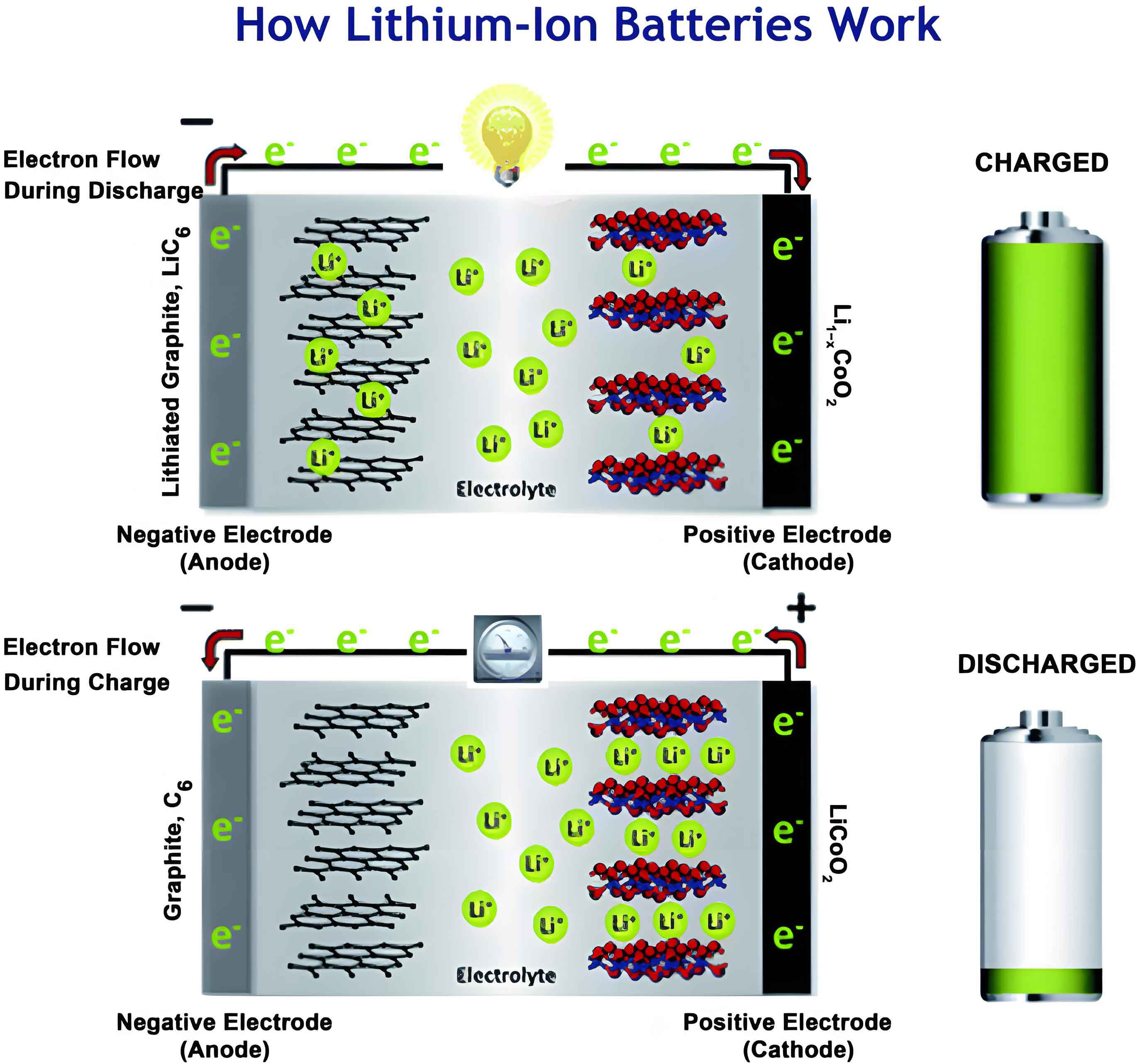
The role of binders in lithium-ion batteries cannot be overstated. They serve as the glue that holds active materials, conductive additives, and current collectors together, ensuring mechanical integrity during repeated charge-discharge cycles. In high-energy lithium-ion batteries, where electrodes undergo significant volume changes—such as with silicon anodes (up to 400% expansion) or sulfur cathodes (around 80% expansion)—the binder must provide robust adhesion and flexibility. Traditional binders like polyvinylidene fluoride (PVDF) have been widely used due to their electrochemical stability and compatibility with conventional electrolytes. However, PVDF suffers from drawbacks such as poor adhesion, limited ability to buffer mechanical stress, and insufficient conductivity, which hinder its application in next-generation lithium-ion batteries. As I delve into this topic, I will highlight how innovative binder designs are overcoming these limitations, enabling lithium-ion batteries to meet the rigorous demands of modern applications.
To understand the evolution of binders, it is essential to first consider their fundamental properties. A binder’s performance in a lithium-ion battery is governed by factors like adhesion strength, mechanical elasticity, ionic and electronic conductivity, and thermal stability. The adhesion force, for instance, can be described by interactions such as van der Waals forces, hydrogen bonding, and covalent bonding. In many cases, the adhesion energy \(E_{\text{adh}}\) between a binder and a substrate can be approximated using the following formula derived from surface energy considerations:
$$E_{\text{adh}} = \gamma_{\text{binder}} + \gamma_{\text{substrate}} – \gamma_{\text{interface}}$$
where \(\gamma\) represents surface energies. For lithium-ion battery electrodes, enhancing \(E_{\text{adh}}\) is crucial to prevent delamination and maintain electrical contact. Moreover, the mechanical stress \(\sigma\) generated during volume changes in active materials can be modeled using elasticity theory:
$$\sigma = E \cdot \epsilon$$
where \(E\) is the elastic modulus of the binder and \(\epsilon\) is the strain due to volume expansion. An ideal binder for lithium-ion batteries should exhibit a low modulus to accommodate strain without cracking, yet high toughness to dissipate energy. These principles underpin the development of advanced binders, which I will categorize into four main types: high-adhesion binders, volume-change accommodating binders, conductive binders, and binders for extreme conditions. Each category addresses specific challenges in lithium-ion batteries, and their progress is summarized in Table 1.
| Binder Type | Key Features | Target Electrode Materials | Performance Improvements | Challenges |
|---|---|---|---|---|
| High-Adhesion Binders | Rich polar groups (e.g., -COOH, -OH), cross-linked networks, strong interfacial bonding | Silicon anodes, high-voltage cathodes | Enhanced peel strength, reduced particle detachment, improved cycle stability | Balancing adhesion with flexibility, processing complexity |
| Volume-Change Accommodating Binders | Elastic polymers, self-healing capabilities, dynamic bonds, 3D networks | Silicon anodes, sulfur cathodes | Stress dissipation, crack resistance, >80% capacity retention after hundreds of cycles | Maintaining conductivity, cost-effectiveness |
| Conductive Binders | Inherent electronic conductivity, reduced need for conductive additives, polymer composites | Sulfur cathodes, low-conductivity cathodes | Higher energy density, improved rate capability, fast charging support | Achieving both adhesion and conductivity, stability under cycling |
| Extreme-Condition Binders | Thermal stability, flame retardancy, wide temperature operation, inorganic components | High-temperature cathodes, sulfur cathodes for safety | Operation up to 160°C, flame resistance, enhanced safety in lithium-ion batteries | Integrating with electrode materials, scalability |
High-adhesion binders are designed to address the weak interfacial bonds in traditional systems. In lithium-ion batteries, especially with high-capacity anodes like silicon, strong adhesion prevents active material detachment from current collectors during cycling. Recent studies have focused on incorporating polar functional groups, such as carboxylates and hydroxyls, into polymer chains. For example, binders based on carboxymethyl cellulose (CMC) and polyacrylic acid (PAA) form multiple hydrogen bonds with electrode surfaces, significantly enhancing adhesion. The adhesion force \(F_{\text{adh}}\) can be enhanced by the number of functional groups \(n\) and their bonding energy \(E_b\):
$$F_{\text{adh}} \propto n \cdot E_b$$
Cross-linking strategies further improve adhesion by creating three-dimensional networks that anchor particles. In my research, I have explored how such binders can increase the peel strength by over 50 times compared to PVDF, leading to more stable lithium-ion battery electrodes. This is critical for applications like flying cars, where mechanical vibrations and high loads demand robust electrode structures.
Volume-change accommodating binders are essential for electrodes that undergo large expansions, such as silicon anodes in lithium-ion batteries. These binders must absorb mechanical stress without degrading. Elastic polymers, like those derived from polyurethane or rubber-based composites, exhibit high elongation at break (over 300%) to buffer volume changes. Additionally, self-healing binders with dynamic covalent bonds (e.g., disulfide or hydrogen bonds) can repair cracks during cycling, maintaining electrode integrity. The self-healing efficiency \(\eta_{\text{heal}}\) can be expressed as:
$$\eta_{\text{heal}} = \frac{\sigma_{\text{healed}}}{\sigma_{\text{original}}} \times 100\%$$
where \(\sigma\) denotes mechanical strength. In practice, binders with self-healing properties have enabled silicon anodes to retain over 90% capacity after 200 cycles in lithium-ion batteries. This progress is vital for extending the lifespan of high-energy lithium-ion batteries used in electric vehicles and grid storage.
Conductive binders represent a paradigm shift by eliminating or reducing the need for separate conductive additives, thereby increasing the energy density of lithium-ion batteries. Traditionally, binders are insulators, requiring carbon black or graphene to facilitate electron transport. However, conductive polymers like poly(3,4-ethylenedioxythiophene) (PEDOT) or polyaniline (PANI) can serve dual roles as binders and conductors. The electronic conductivity \(\sigma_e\) of such binders follows percolation theory:
$$\sigma_e = \sigma_0 (p – p_c)^t$$
where \(p\) is the volume fraction of conductive material, \(p_c\) is the percolation threshold, and \(t\) is a critical exponent. By integrating conductive networks, these binders enhance rate capability, allowing lithium-ion batteries to support fast charging—a key requirement for EVs and eVTOLs. For instance, sulfur cathodes with conductive binders have demonstrated capacities above 700 mAh/g at 4C rates in lithium-ion batteries, showcasing their potential for high-power applications.
Extreme-condition binders are developed to ensure lithium-ion battery safety and performance under harsh environments. High operating temperatures, often exceeding 55°C in automotive applications, can accelerate binder degradation and electrode failure. Binders with high thermal stability, such as those based on polyimide or inorganic polymers, decompose at temperatures above 500°C, preventing thermal runaway. Furthermore, flame-retardant binders incorporating phosphorus or nitrogen compounds release non-flammable gases when heated, quenching fires. The thermal stability can be quantified by the decomposition temperature \(T_d\), and flame retardancy by the limiting oxygen index (LOI):
$$LOI = \frac{[O_2]}{[O_2] + [N_2]} \times 100\%$$
where higher LOI values indicate better flame resistance. In lithium-ion batteries, especially those with sulfur cathodes prone to combustion, such binders have reduced flammability while maintaining electrochemical performance. This aligns with the safety imperative for lithium-ion batteries in mass transportation.
To further illustrate the advancements, let’s consider specific examples and their impact on lithium-ion battery metrics. For high-energy lithium-ion batteries, the area capacity \(C_A\) (in mAh/cm²) is a critical parameter, influenced by binder content and electrode loading. It can be expressed as:
$$C_A = \frac{m_{\text{active}} \cdot C_{\text{theoretical}}}{A}$$
where \(m_{\text{active}}\) is the mass of active material, \(C_{\text{theoretical}}\) is its theoretical capacity, and \(A\) is electrode area. Advanced binders enable higher \(m_{\text{active}}\) by improving adhesion and reducing inactive components, thus boosting \(C_A\). Additionally, the cycle life \(N_{\text{cycle}}\) of a lithium-ion battery correlates with binder durability, often modeled by empirical degradation laws:
$$N_{\text{cycle}} = k \cdot \left( \frac{\Delta V}{\epsilon_{\text{max}}} \right)^{-m}$$
where \(k\) and \(m\) are constants, \(\Delta V\) is the volume change per cycle, and \(\epsilon_{\text{max}}\) is the maximum strain the binder can endure. Binders that minimize \(\Delta V\) or increase \(\epsilon_{\text{max}}\) extend \(N_{\text{cycle}}\), crucial for long-lasting lithium-ion batteries.
| Binder Category | Typical Materials | Adhesion Strength (N/m) | Conductivity (S/cm) | Cycle Life (Cycles to 80% Capacity) | Temperature Range (°C) |
|---|---|---|---|---|---|
| High-Adhesion | CMC-PAA composites, grafted PVDF | 50-200 | 10⁻¹⁰ – 10⁻⁸ | 500-1000 | -20 to 60 |
| Volume-Change Accommodating | Self-healing polymers, elastic networks | 30-100 | 10⁻¹² – 10⁻¹⁰ | 300-600 | -30 to 70 |
| Conductive | PEDOT:PSS, PANI composites | 20-80 | 10⁻³ – 10⁻¹ | 200-500 | -40 to 80 |
| Extreme-Condition | Polyimide, flame-retardant polymers | 40-150 | 10⁻¹⁰ – 10⁻⁸ | 400-800 | -50 to 160 |
The integration of these binder innovations into lithium-ion battery manufacturing poses both opportunities and challenges. From a processing perspective, water-based binders are gaining traction due to environmental and cost benefits, but they require careful formulation to avoid electrode corrosion. Moreover, the interaction between binders and electrolytes in lithium-ion batteries is complex; for instance, binder swelling can affect ion transport or lead to parasitic reactions. The swelling ratio \(S\) is defined as:
$$S = \frac{V_{\text{swollen}} – V_{\text{dry}}}{V_{\text{dry}}} \times 100\%$$
where \(V\) denotes volume. Excessive swelling in lithium-ion batteries can reduce ionic conductivity and mechanical integrity, so binders with controlled swelling are desirable. Future research should focus on multifunctional binders that combine adhesion, conductivity, and stability, tailored for specific electrode chemistries in lithium-ion batteries.
Looking ahead, the development of binders for lithium-ion batteries will likely involve biomimetic designs, such as those inspired by natural polymers with self-healing or adaptive properties. Additionally, computational modeling can accelerate binder discovery by predicting properties like adhesion energy and elastic modulus. For example, molecular dynamics simulations can estimate the interaction energy \(E_{\text{inter}}\) between binder molecules and electrode surfaces:
$$E_{\text{inter}} = \sum_{i,j} \left( \frac{A_{ij}}{r_{ij}^{12}} – \frac{B_{ij}}{r_{ij}^6} \right)$$
where \(A_{ij}\) and \(B_{ij}\) are parameters for van der Waals interactions, and \(r_{ij}\) is the distance between atoms. Such approaches can guide the synthesis of next-generation binders for high-energy lithium-ion batteries.
In conclusion, binders are a critical yet underexplored component in lithium-ion batteries, with significant impact on performance, safety, and longevity. The advancements in high-adhesion, volume-change accommodating, conductive, and extreme-condition binders are paving the way for lithium-ion batteries that meet the demands of advanced applications like flying cars and fast-charging EVs. However, challenges remain in scalability, cost, and integration with emerging electrode materials. As I reflect on this field, I believe that interdisciplinary collaboration—combining polymer science, electrochemistry, and engineering—will be key to unlocking the full potential of binders in lithium-ion batteries. By continuing to innovate in binder design, we can enable lithium-ion batteries to achieve higher energy densities, faster charging rates, and enhanced safety, ultimately driving the transition to a sustainable energy future.
To summarize the key points, I have compiled the following formula that encapsulates the ideal binder properties for a lithium-ion battery:
$$B_{\text{ideal}} = \alpha A_{\text{adh}} + \beta E_{\text{elastic}} + \gamma C_{\text{cond}} + \delta T_{\text{stable}}$$
where \(B_{\text{ideal}}\) represents the overall binder performance, and \(\alpha, \beta, \gamma, \delta\) are weighting factors for adhesion, elasticity, conductivity, and thermal stability, respectively. Optimizing these parameters will be crucial for the next generation of lithium-ion batteries. As research progresses, I anticipate that binders will evolve from passive components to active contributors in lithium-ion battery systems, enabling breakthroughs that redefine energy storage limits.